Reading comprehension Normal Consonant Digraphs Worksheets for Ages 4-6
6 filtered results
-
From - To
Boost your child's reading skills with our engaging Reading Comprehension Worksheets focused on Normal Consonant Digraphs, designed specifically for ages 4-6. These beautifully illustrated worksheets help young learners effectively recognize and pronounce blended consonant sounds like "ch," "sh," "th," and "wh." Our exercises combine fun activities with educational content that reinforces phonics concepts, enhances vocabulary, and improves overall reading comprehension. Perfect for classroom settings or at-home learning, these worksheets are an excellent resource for nurturing emerging readers and setting a strong foundation for future literacy success. Unlock your child's potential with our expertly crafted educational tools!
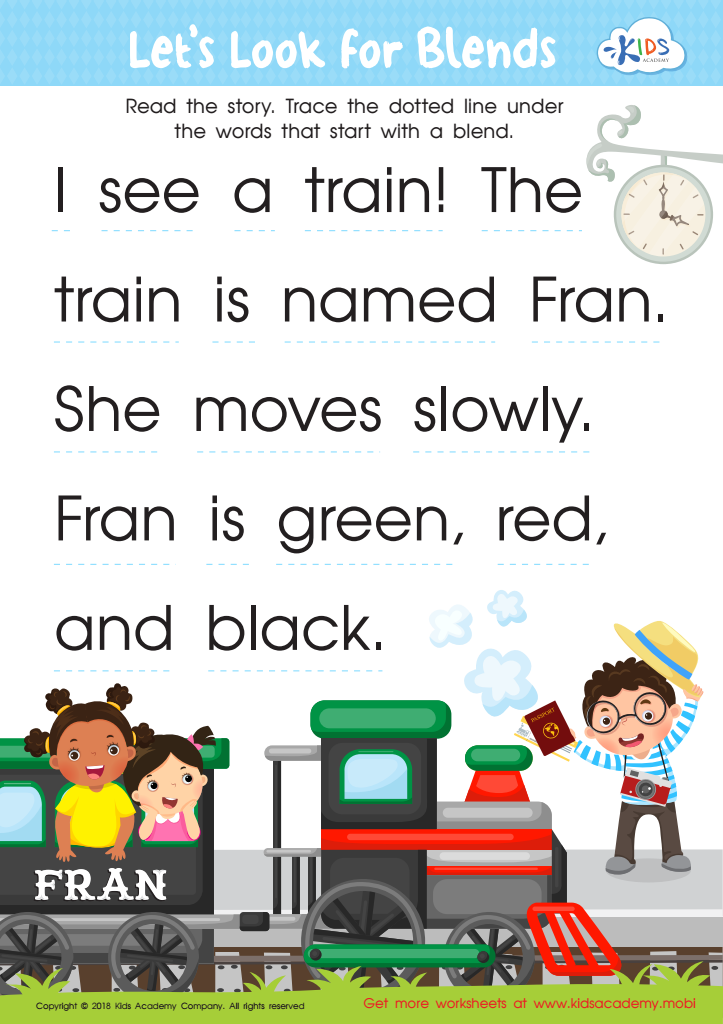
Let's Look for Blends Worksheet
 Assign to My Students
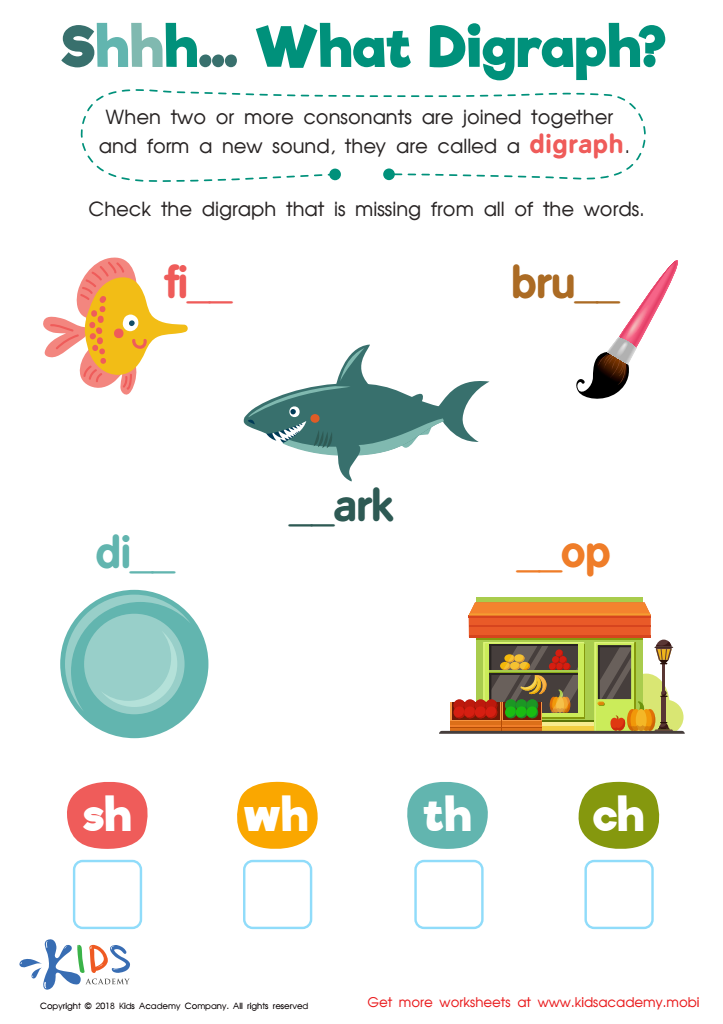
Shhh... What Digraph? Worksheet
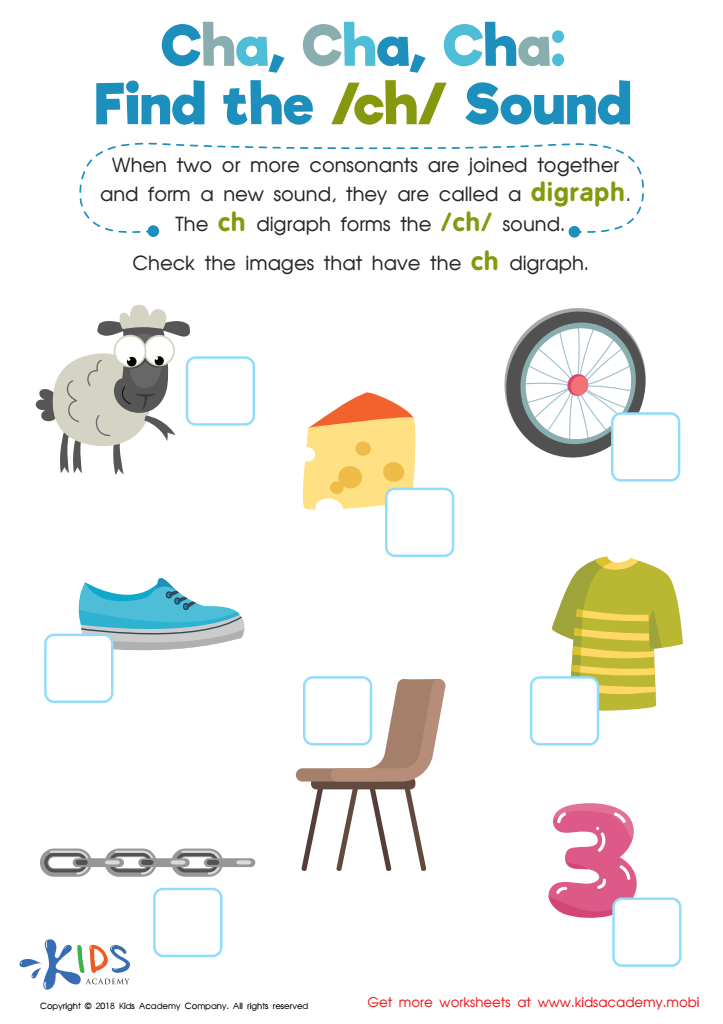
Cha, Cha, Cha: Find the /Ch/ Sound Worksheet
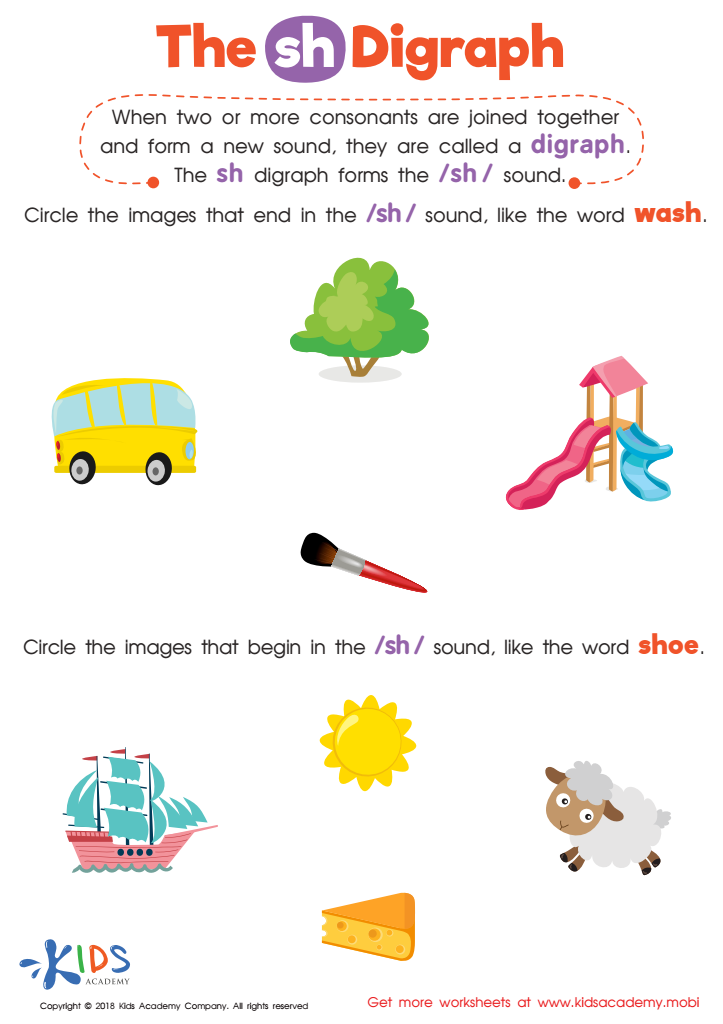
The SH Digraph Worksheet
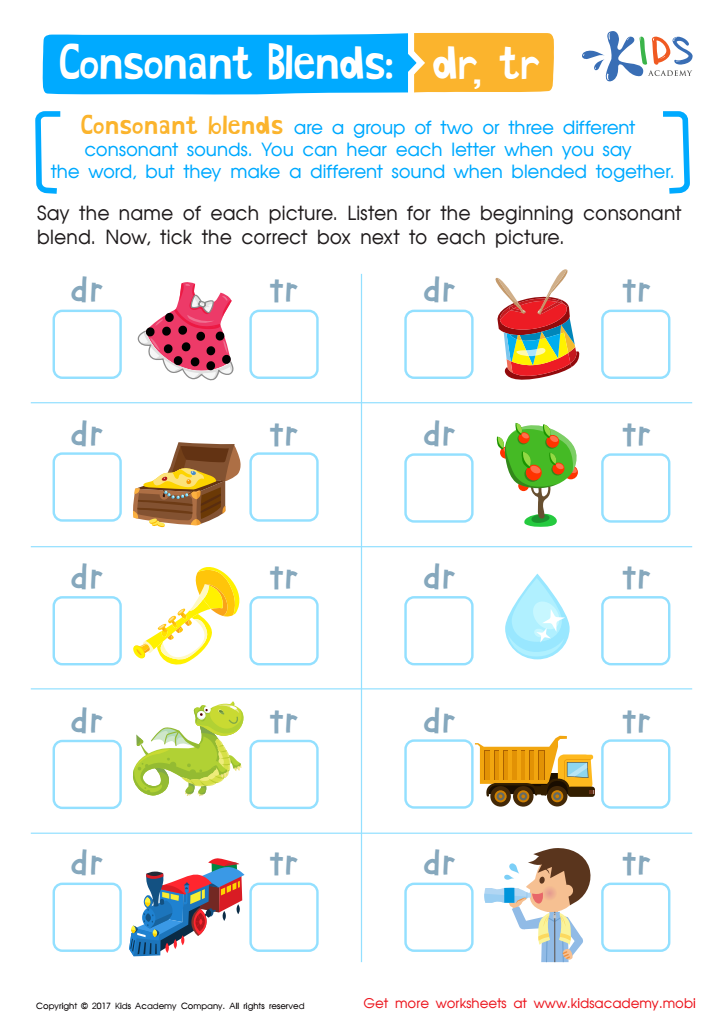
Consonant Blends: "Dr" and "Tr" Printable
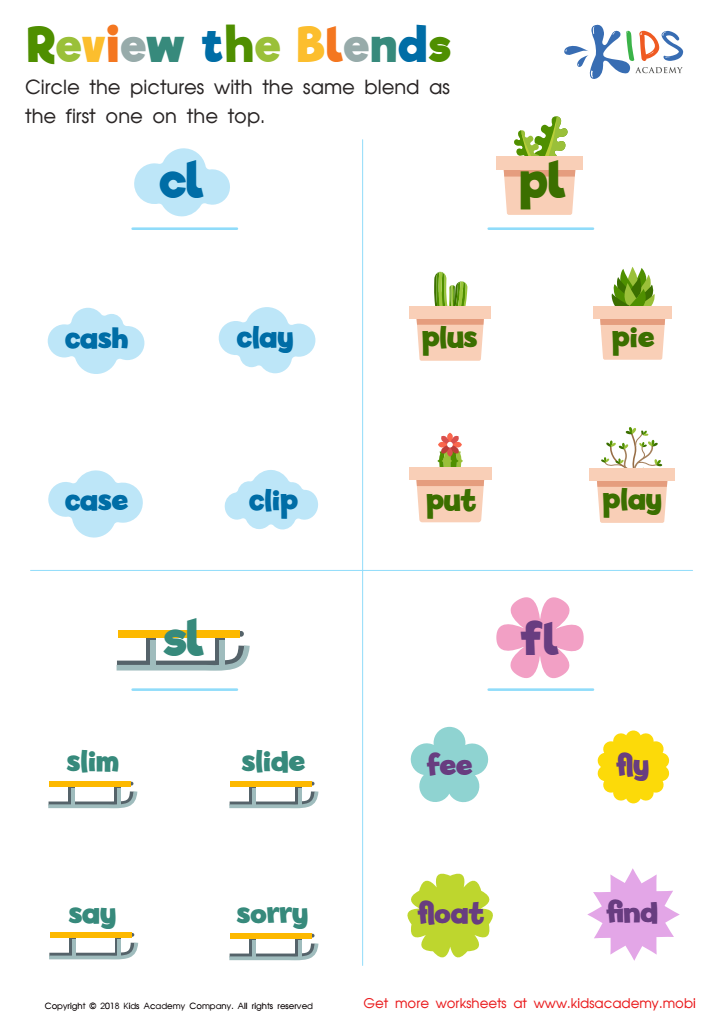
Review the Blends Worksheet


Parents and teachers should prioritize reading comprehension and understanding normal consonant digraphs for children aged 4-6 because these foundational skills are vital for literacy development. Reading comprehension enables children to understand and derive meaning from texts, fostering a love for reading, enhancing imagination, and promoting critical thinking. Children begin to connect words with ideas, boosting their language skills and cognitive development. Normal consonant digraphs, such as "ch," "sh," "th," and "ph," are pairs of consonants that represent unique sounds. Mastering these helps children decode written language more effectively, aiding in accurate and fluent reading.
Proficiency in reading comprehension and consonant digraphs equips children to tackle complex texts in the future and thrive academically. These skills aid in recognizing word patterns, expanding vocabulary, and improving spelling. Early exposure to reading and phonics lays a robust linguistic foundation, contributing positively to their academic journey and communication abilities. Encouraging reading from an early age ensures smoother transitions in schooling, saves them from future struggles with reading, and supports positive emotional growth as they gain confidence in their abilities. Therefore, understanding and nurturing these essential skills early in life is a crucial step in fostering well-rounded development for young learners.