Reading readiness Normal Alphabet Worksheets for Ages 4-6
5 filtered results
-
From - To
Unlock the door to early literacy with our Reading Readiness Normal Alphabet Worksheets for Ages 4-6. Tailored specifically for young learners, these engaging printable worksheets foster essential reading skills such as letter recognition and phonemic awareness. Each activity is designed to captivate and educate, featuring vibrant images and interactive exercises. Whether kids are tracing letters, matching them with corresponding sounds, or identifying them in fun contexts, they are building a solid foundation for future reading success. Perfect for parents and educators, these worksheets make learning the alphabet an exciting adventure for every child. Start nurturing a love for reading today!
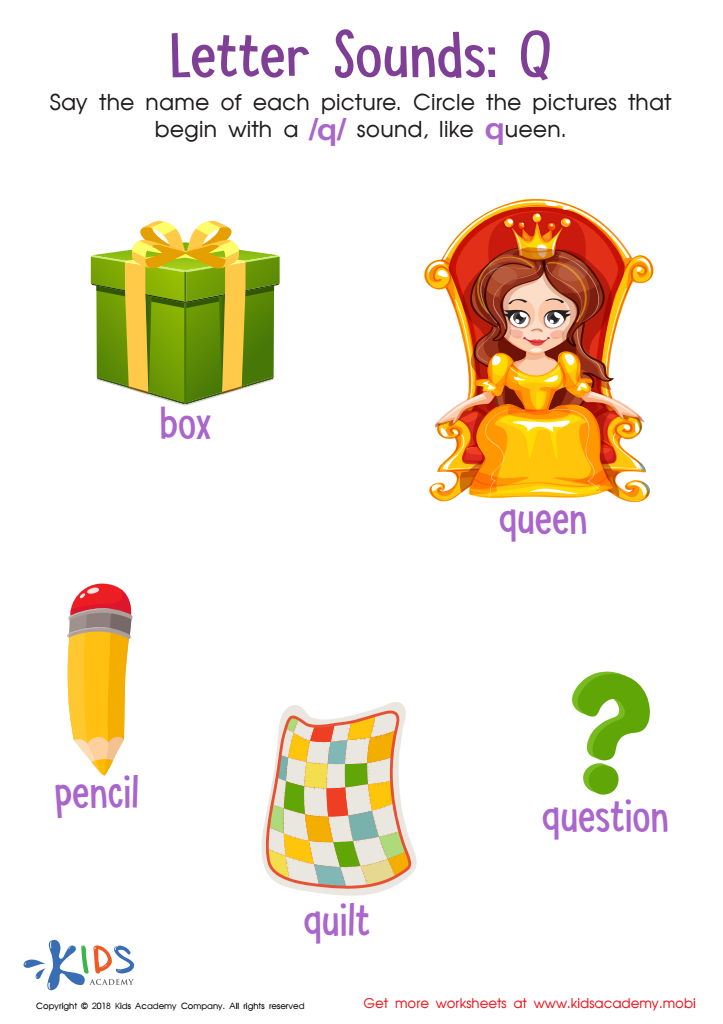
Letter Q Sounds Worksheet
 Assign to My Students
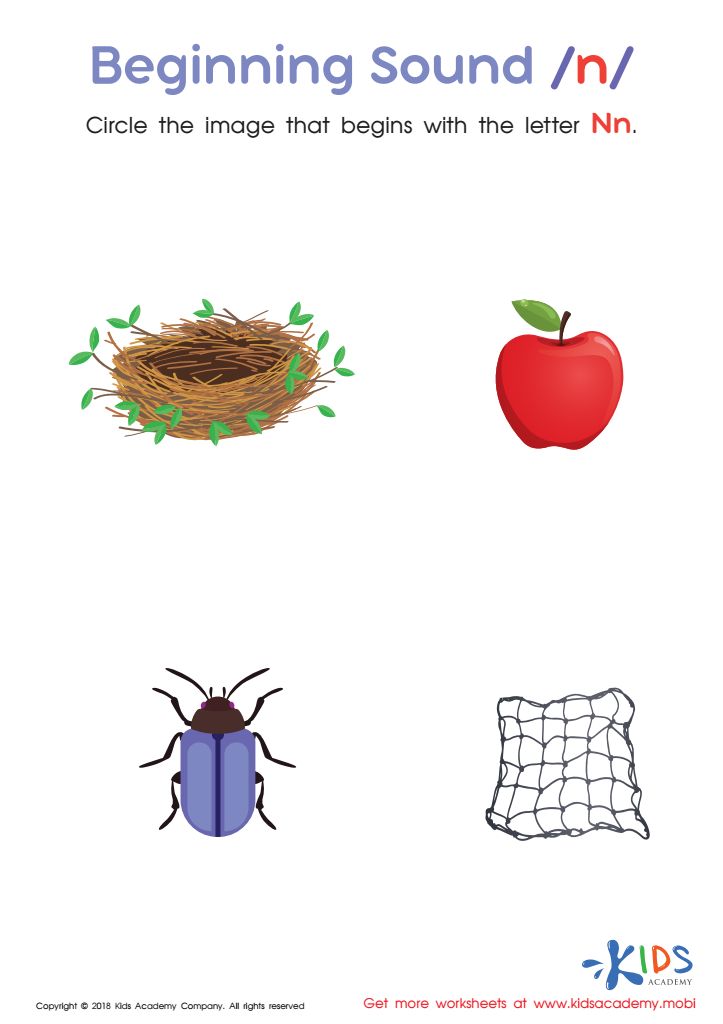
Beginning Sound «n» Worksheet
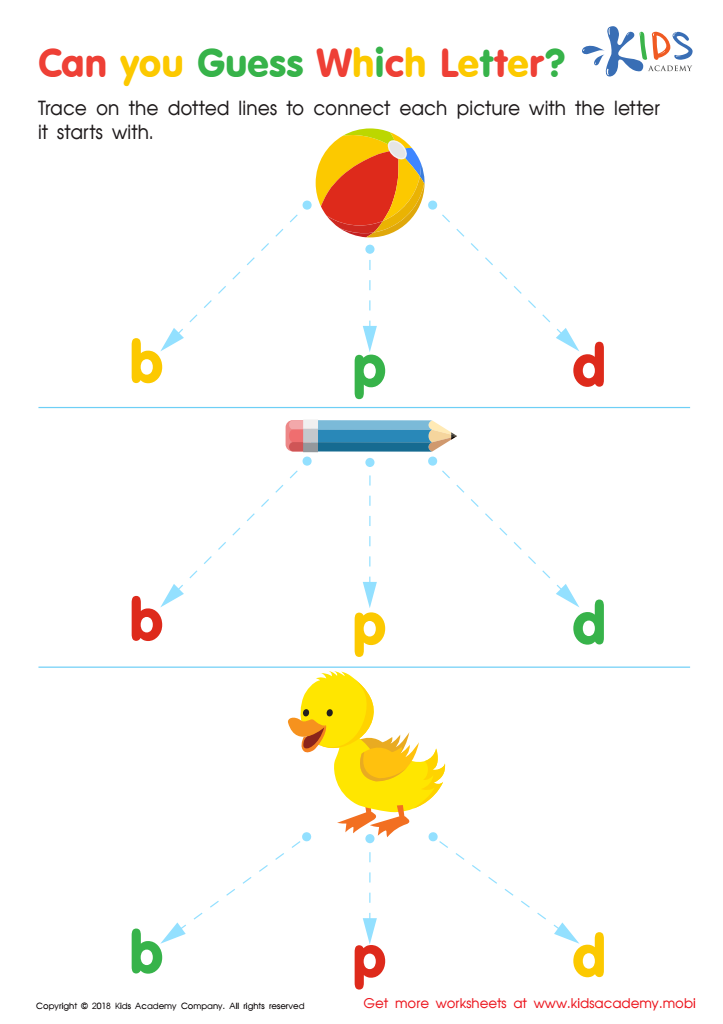
Can you Guess Which Letter? Worksheet
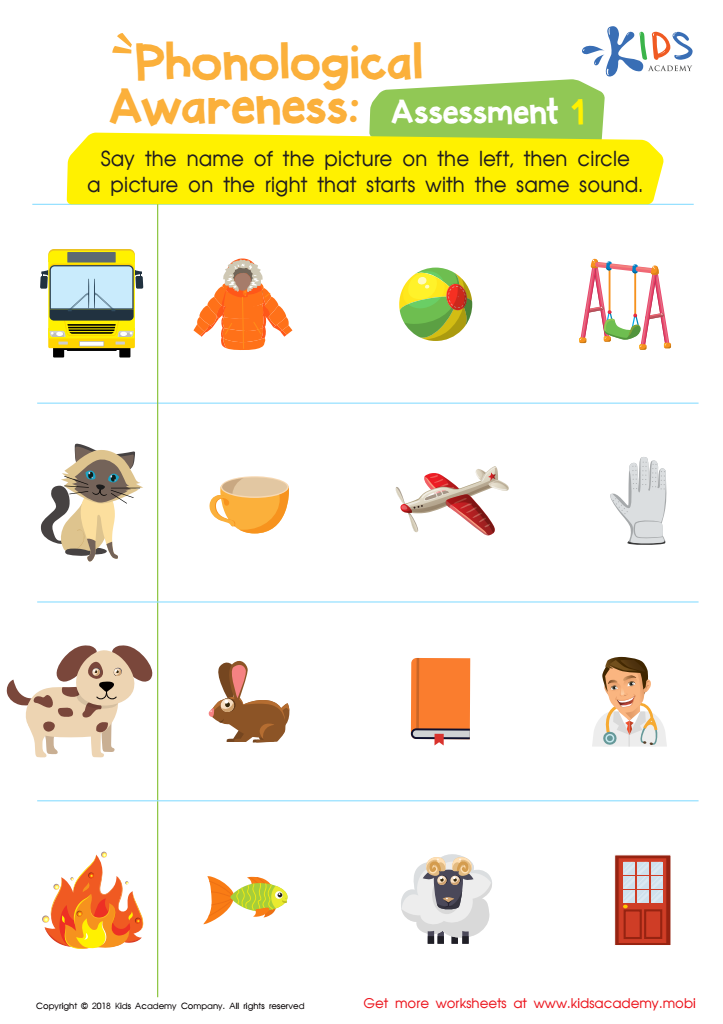
Phonological Awareness: Assessment 1 Worksheet
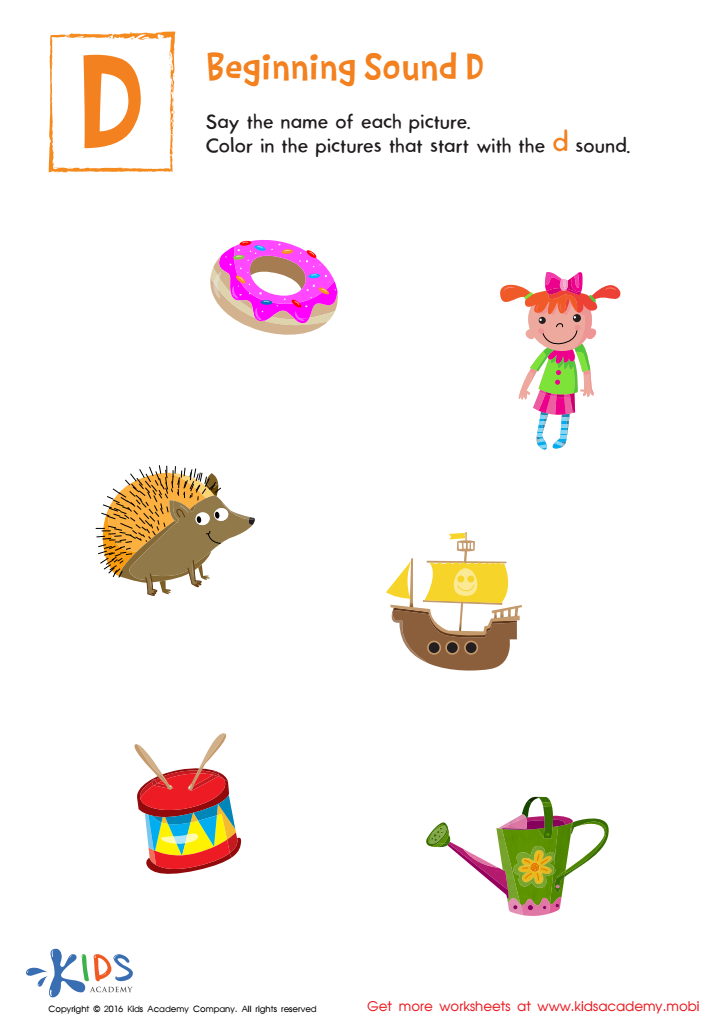
Beginning Sound D Worksheet






Reading readiness, or the level of preparedness a child has for learning to read, is crucial for early literacy development, particularly for children aged 4-6. By focusing on a Normal Alphabet, parents and teachers can significantly aid this developmental stage. This period is foundational for setting the stage for more complex reading and writing tasks.
Understanding the Normal Alphabet enables young learners to recognize letters and their corresponding sounds, a prerequisite for phonemic awareness—the ability to hear, identify, and manipulate phonemes, the smallest units of sound. This forms the bedrock of reading skills, as children begin to decode words and comprehend texts.
Furthermore, children who develop strong reading readiness skills tend to exhibit greater academic achievement not only in language arts but across all subjects. Literacy is intertwined with cognitive development; as children process stories and information, they enhance their memory, attention, and critical thinking skills.
Social-emotional growth is another key factor. Early reading proficiency can build a child's self-confidence, foster a love for learning, and reduce frustrations associated with reading difficulties. By prioritizing reading readiness and familiarity with the alphabet, parents and teachers provide children with essential tools for a successful educational journey. This nurturing foundation paves the way for lifelong learning and curiosity.







