Filters

54 filtered results

Clear all filters
Favorites
With answer key
Interactive

54 filtered results

Difficulty Level

Grade


Subject

    Check out this FREE Trial Lesson on Chess for age 4-6!

    Special Moves: Promotion

    Favorites
    With answer key
    Interactive
    • 4-6
    • Chess
    • Normal
    How Bishops Move Worksheet
    How Bishops Move Worksheet

    How Bishops Move Worksheet

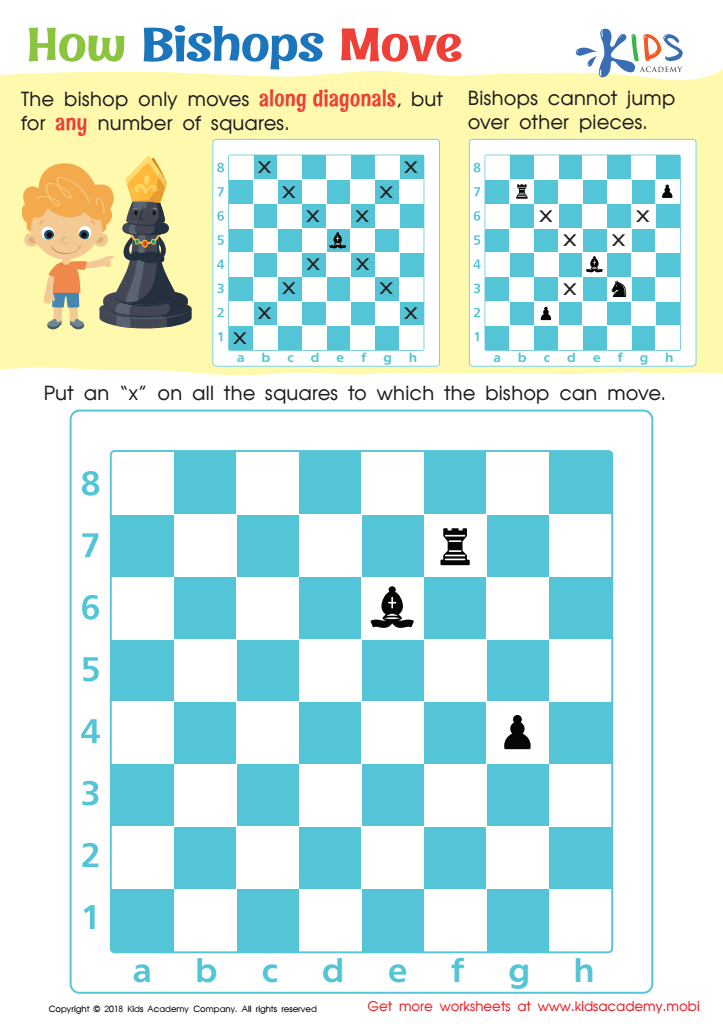
    There is no such thing as too much sharpening of skills. Encourage your child to learn more about chess technicalities with this simple worksheet. It shows them how a bishop moves: along diagonals any number of squares, but it can't jump over other pieces.
    How Bishops Move Worksheet
    Worksheet
    Rook and Bishop Worksheet
    Rook and Bishop Worksheet

    Rook and Bishop Worksheet

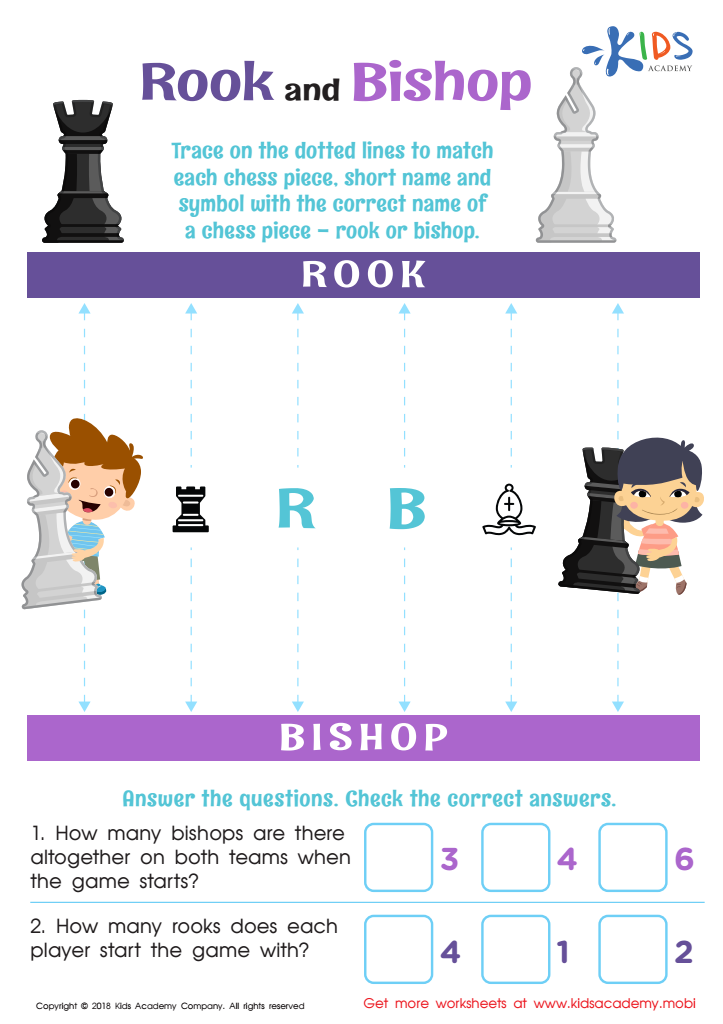
    This tracing sheet helps your child learn chess pieces by matching each piece, short name and symbol to the correct name. After tracing, have them answer the questions and check their answers. It's a great way for them to become familiarized with chess.
    Rook and Bishop Worksheet
    Worksheet
    Knight Quest Worksheet
    Knight Quest Worksheet

    Knight Quest Worksheet

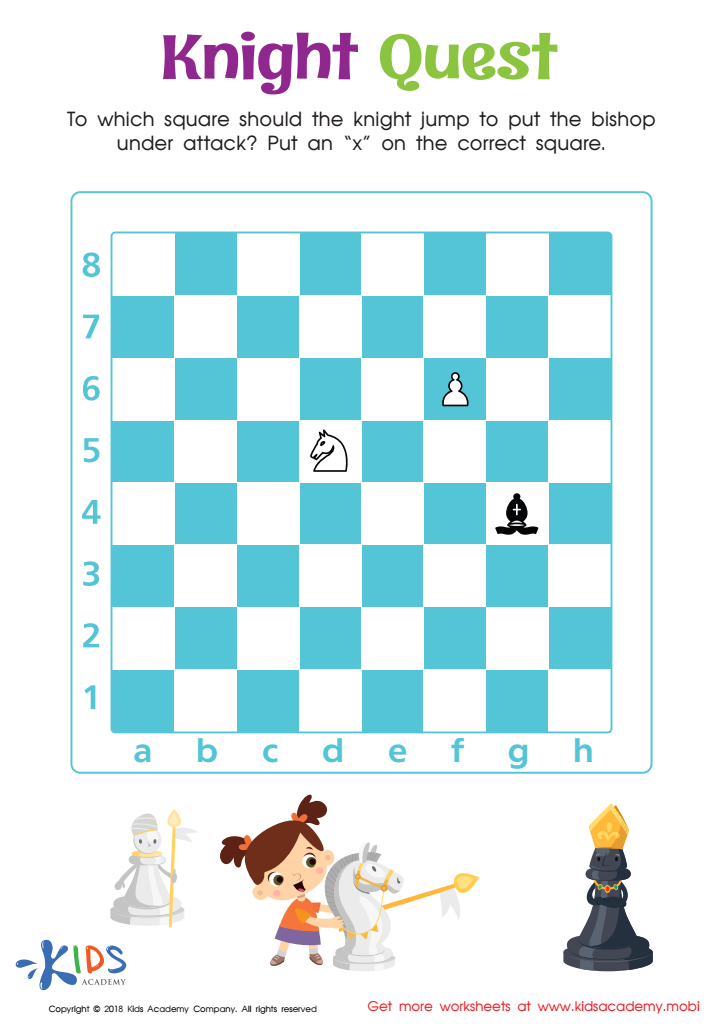
    Testing your child's strategic planning and chess skills? Give them this worksheet: Ask them to mark an 'x' on the square where the knight should jump to attack the enemy bishop. See how well they plan for a win! (80 words)
    Knight Quest Worksheet
    Worksheet
    Smart Capturing Worksheet
    Smart Capturing Worksheet

    Smart Capturing Worksheet

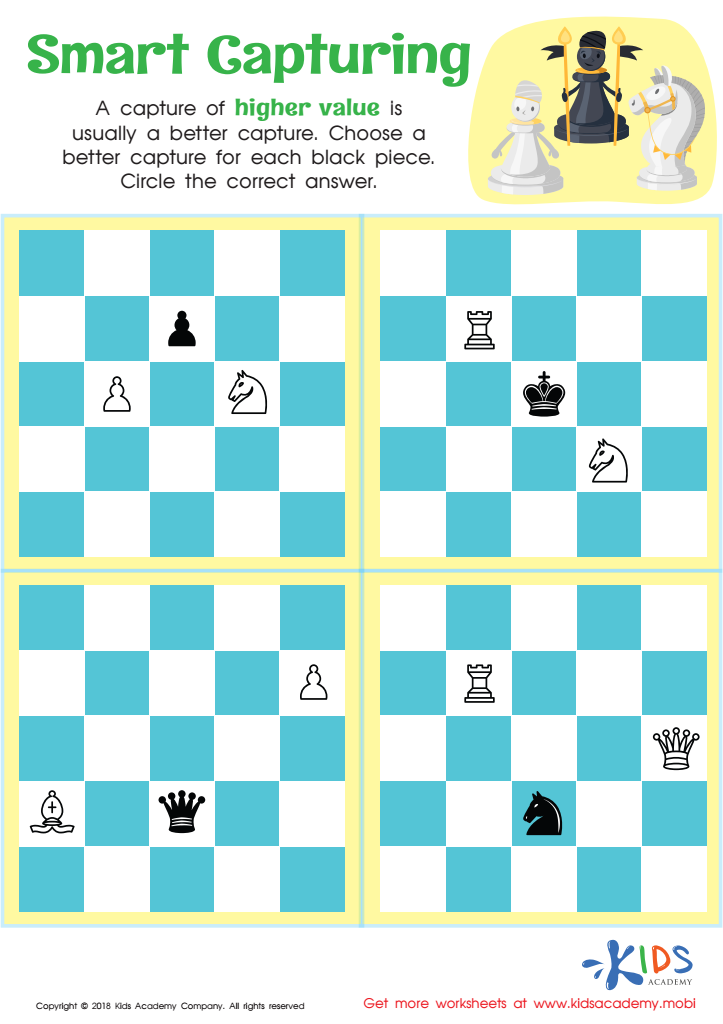
    Chess is a game of strategy and calculation. When presented with two captures, a player should always go for the one that yields the highest value. For example, taking a knight over a pawn. In this worksheet, your children will choose the best capture for each black piece. Ask them to circle the correct answers. (80 words)
    Smart Capturing Worksheet
    Worksheet
    Promotion Practice Worksheet
    Promotion Practice Worksheet

    Promotion Practice Worksheet

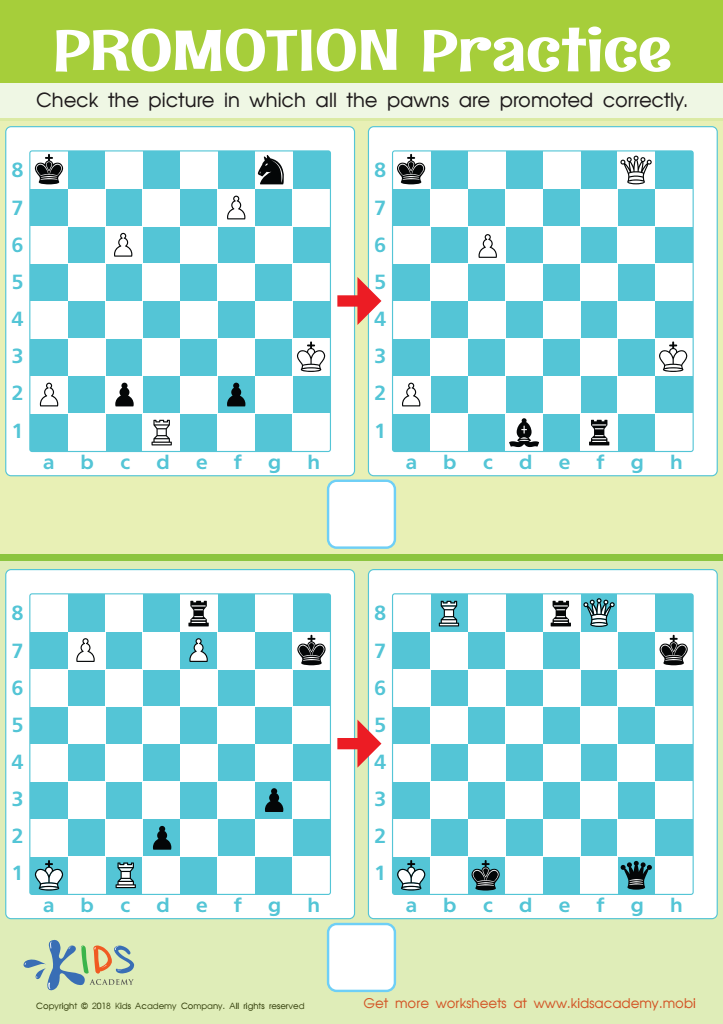
    Test your kids' promotions skills with this worksheet! Ask them to find the pictures in which the pawns are correctly promoted. Remember, when a pawn reaches the last rank it may be promoted to a queen, bishop, knight or rook. In addition, a pawn can be promoted when it captures a chess piece on the last rank.
    Promotion Practice Worksheet
    Worksheet
    Setting up the Chessboard: Part 1 Worksheet

    Setting up the Chessboard: Part 1 Worksheet

    Setting up the Chessboard: Part 1 Worksheet
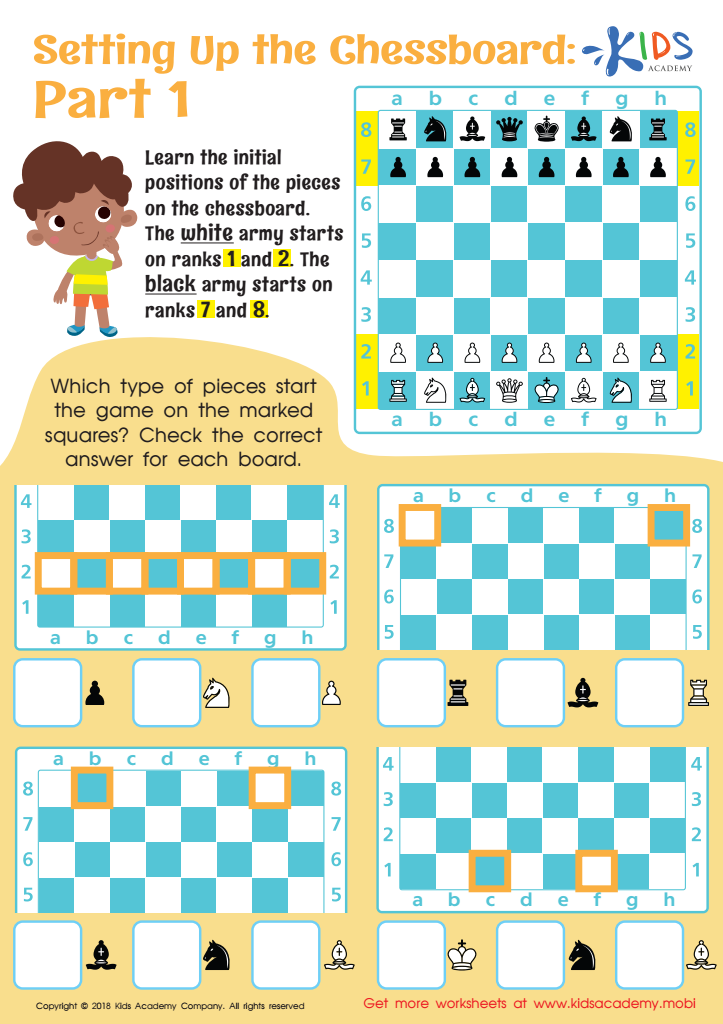
    Teach your child the starting positions of the black and white armies on the chessboard. Black pieces are placed on ranks 7 and 8, and white pieces on ranks 1 and 2. Have them check the highlighted boxes on the chessboard to make sure they know the correct pieces to start with.
    Setting up the Chessboard: Part 1 Worksheet

    Worksheet


    ... 2 3

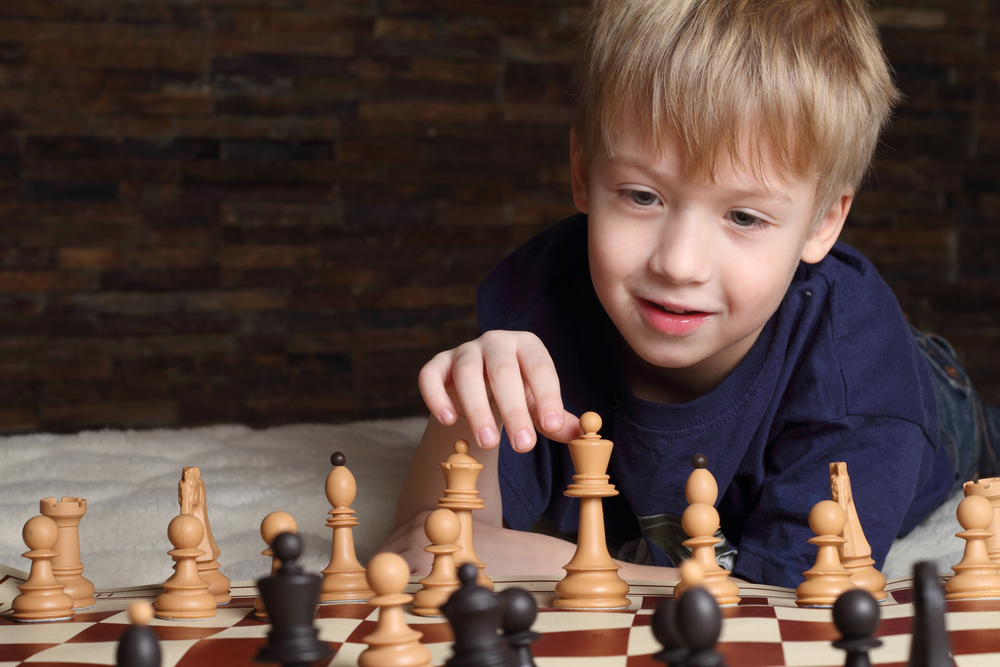
    Normal Chess for Ages 4-6 is a vital activity for young children as it fosters essential cognitive and social skills. First and foremost, chess enhances critical thinking and problem-solving abilities. As children learn to think several moves ahead, they develop planning skills and the foresight to anticipate outcomes—valuable skills for all areas of learning.

    Chess also supports emotional development. It teaches patience and discipline, as children must learn to wait for their turn and respond appropriately to setbacks. This encourages resilience and adaptability, helping children understand the importance of persistence in the face of challenges.

    Furthermore, chess introduces fundamental concepts of strategy and logic in a fun and engaging way. It ignites creativity, as children explore different tactics and formations, making the game both an educational and enjoyable experience.

    From a social perspective, chess promotes interaction and communication among peers. Playing in pairs or small groups encourages teamwork and respect for others, fostering a sense of community. Parents and teachers should embrace Normal Chess to cultivate happiness and growth, enriching the lives of children during a critical period of development. Antiquating chess in early education makes an impactful step toward nurturing well-rounded, thoughtful, and strategic thinkers for the future.