Comparing sizes Normal Worksheets for Ages 4-6
3 filtered results
-
From - To
Enhance your child’s understanding of size comparison with our carefully designed 'Comparing Sizes' worksheets for ages 4-6. Tailored to develop early learning skills, these printable activities use fun and engaging visuals to teach youngsters about the concepts of big, small, tall, and short. Through playful exercises, kids will sharpen their observational abilities and improve their mathematical thinking. Ideal for both classroom and home settings, these worksheets make learning about sizes interactive and enjoyable. Encourage your child’s growth and confidence with our expertly crafted resources at Kids Academy. Download and print today for limitless learning fun!
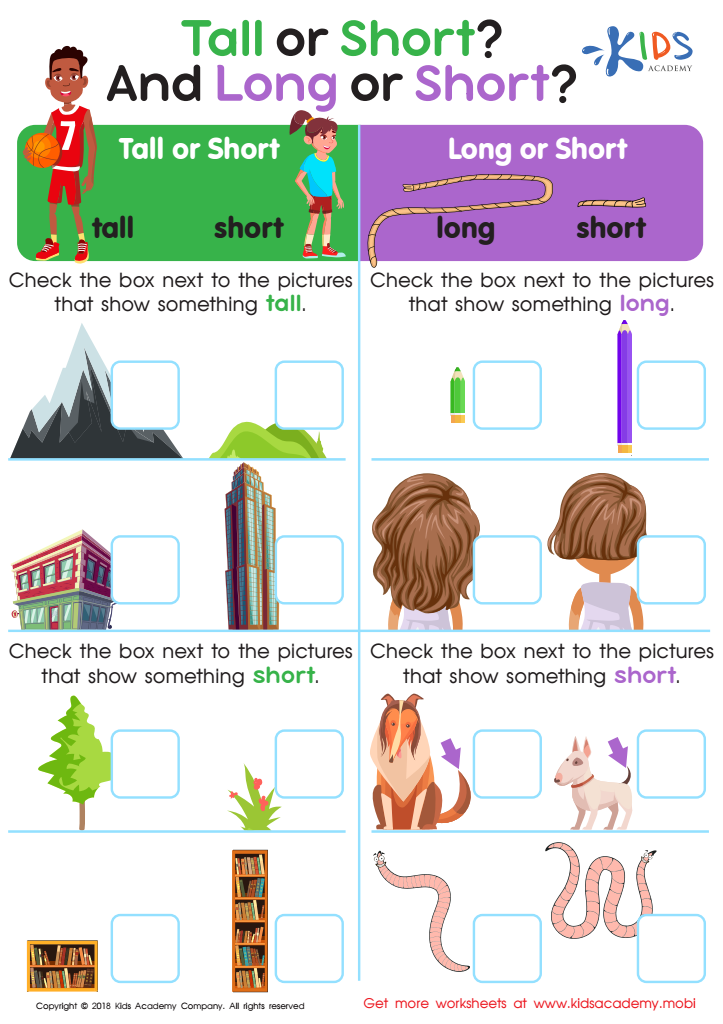
Tall or Short and Long or Short? Worksheet
 Assign to My Students
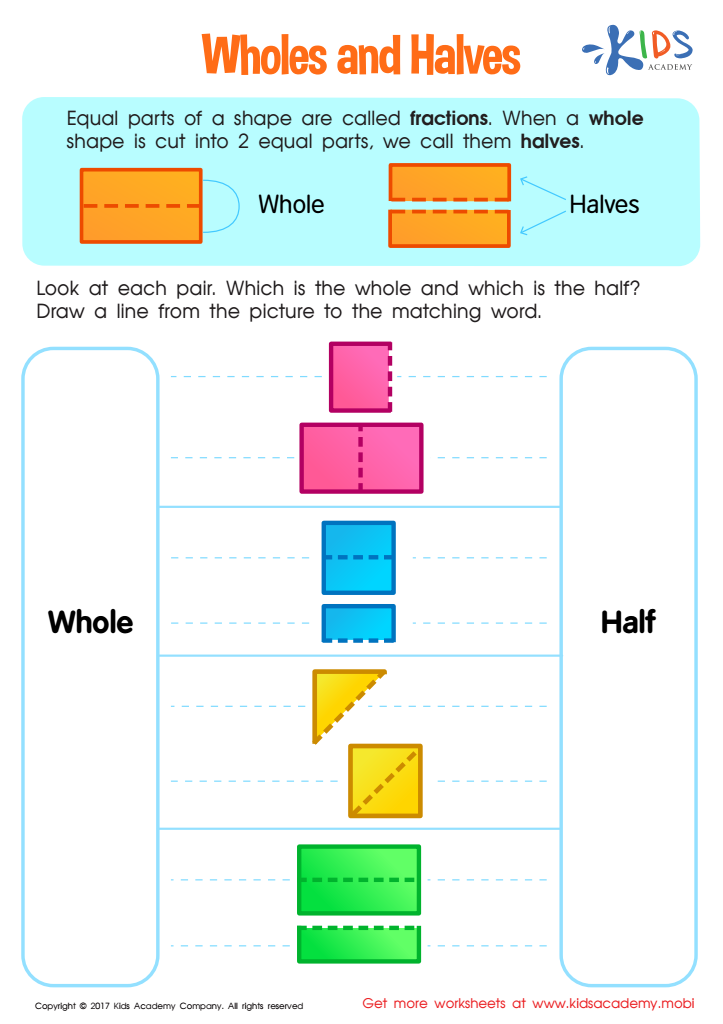
Wholes and Halves Worksheet
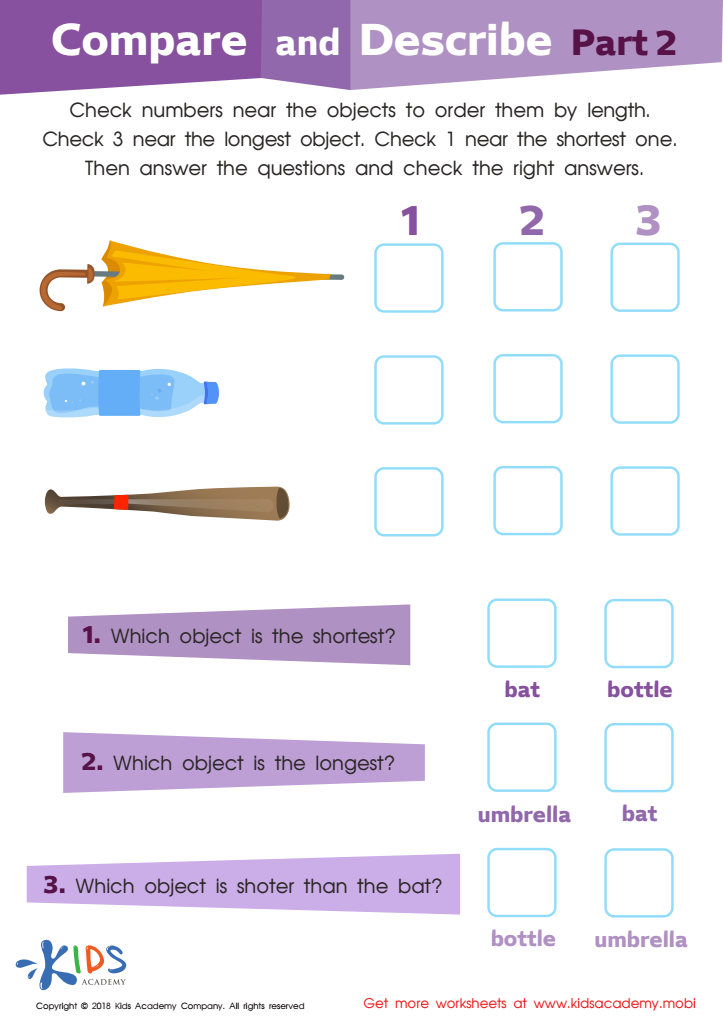
Compare and Describe: Part 2 Worksheet






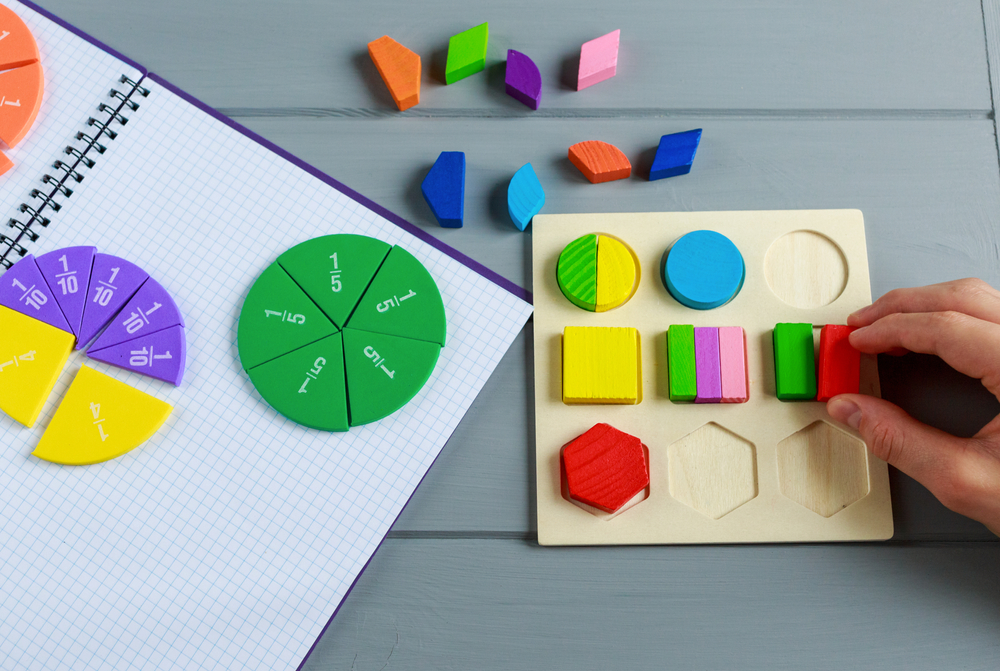
Comparing sizes is an essential skill for young children, especially those aged 4-6, as it lays the foundation for key cognitive and mathematical concepts. At this age, children are developing their ability to observe, describe, and understand the world around them. By comparing sizes—whether it's identifying which object is bigger or smaller, or understanding concepts like taller versus shorter—kids learn to make sense of their environment.
This skill aids in the development of critical thinking and problem-solving abilities. When children compare sizes, they not only enhance their vocabulary with terms like "big," "little," "long," and "short," but they also start grasping the early concepts of measurement and spatial awareness. These are crucial for later mathematical learning, including concepts like comparing quantities, understanding proportions, and eventually mastering more complex math skills such as geometry.
Parents and teachers can make this learning process fun and engaging through daily activities, like sorting toys, finding objects in nature, or through stories and games. As children practice comparing sizes, they become more confident in their observational skills and are better prepared for future academic challenges. Therefore, by fostering these early skills, parents and teachers help provide a strong foundation for lifelong learning and intellectual growth.








