Letter-sound recognition Normal Worksheets for Ages 4-6
4 filtered results
-
From - To
Discover our engaging Letter-sound Recognition Worksheets designed for children aged 4-6. These thoughtfully crafted activities help young learners identify letters and their corresponding sounds in an enjoyable and interactive way. Perfect for enhancing early literacy skills, each worksheet encourages phonetic awareness through vibrant illustrations and fun exercises. Kids will practice matching letters to images, tracing sounds, and completing traces—all tailored to keep their attention and make learning fun! Parents and teachers can easily integrate these worksheets into their teaching routines. Unlock the potential of your child's reading journey today with our inviting and educational worksheets. Get started for free!
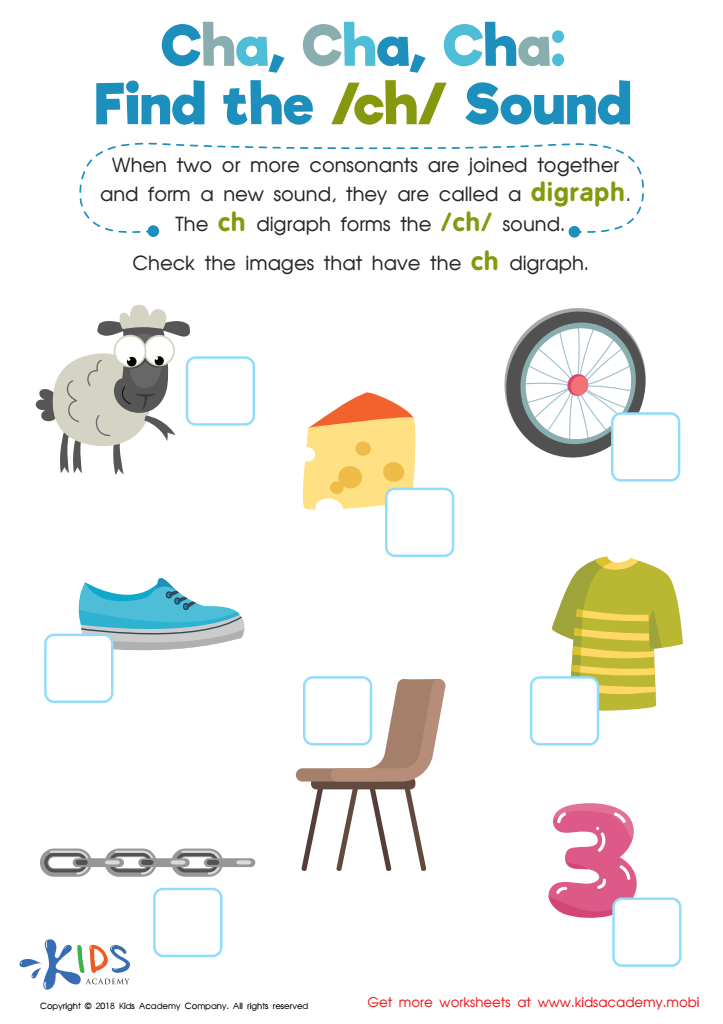
Cha, Cha, Cha: Find the /Ch/ Sound Worksheet
 Assign to My Students
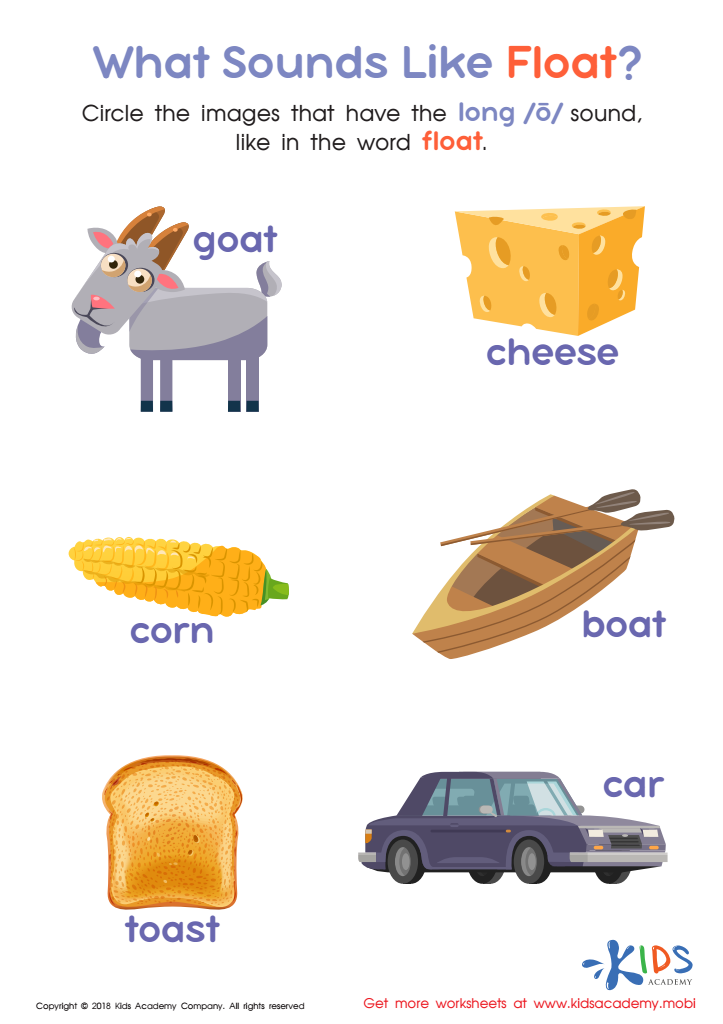
What Sounds Like Float? Worksheet
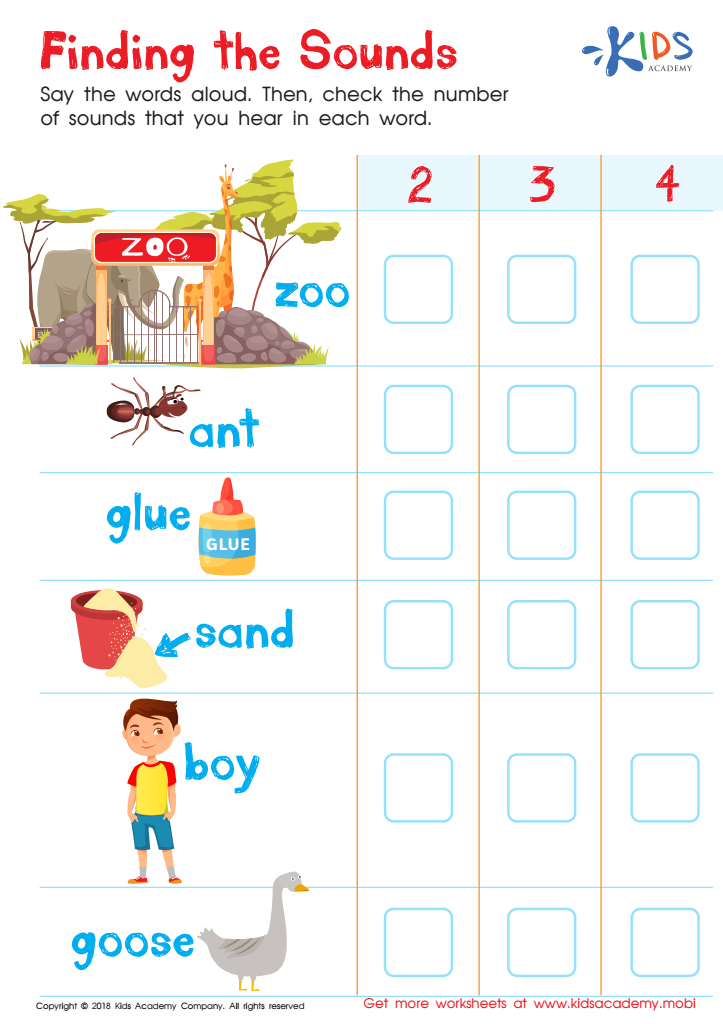
Finding the Sounds Worksheet
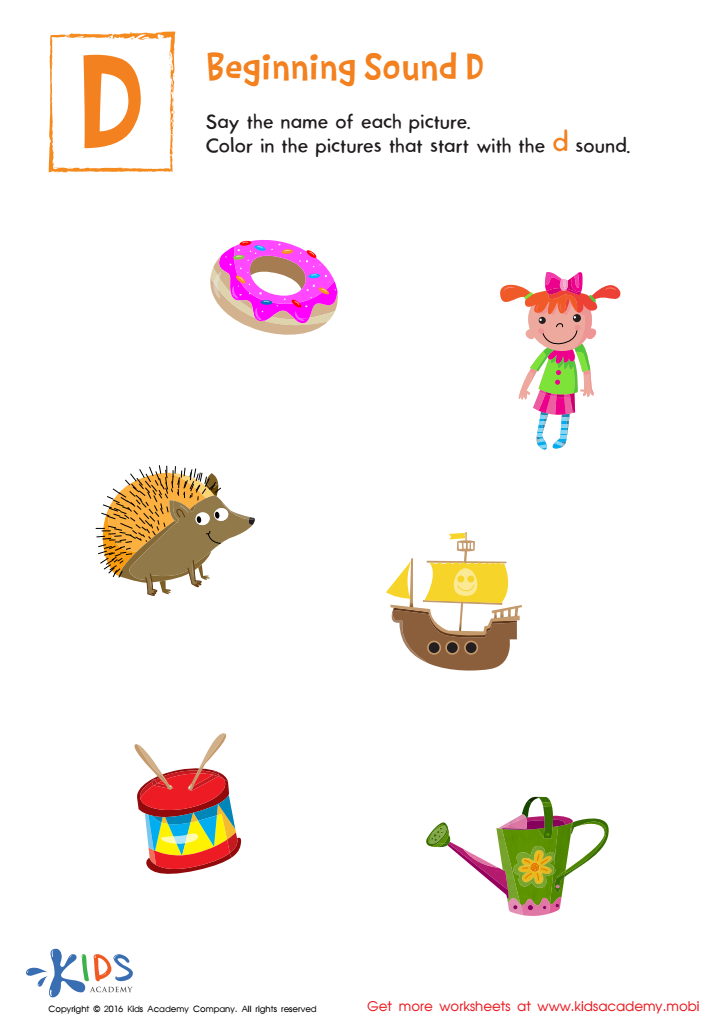
Beginning Sound D Worksheet







Letter-sound recognition is foundational for literacy development in young children aged 4-6. Understanding the relationship between letters and their corresponding sounds is a crucial skill that enables children to decode words, which is essential for reading fluency. When parents and teachers prioritize this skill, they lay the groundwork for successful reading habits that will benefit children throughout their academic journey.
At this age, children's brains are particularly receptive to auditory and visual connections, making it an ideal time to introduce letter-sound relationships. Engaging in activities that promote letter-sound recognition, such as phonics games, alphabet songs, and reading aloud, fosters not only reading skills but also encourages vocabulary development and comprehension. Moreover, early proficiency in these skills can enhance a child's confidence and motivation, setting a positive trajectory for future learning.
Additionally, children who struggle with letter-sound recognition can face significant challenges in later reading and writing tasks. By focusing on this aspect of early literacy, parents and teachers can help ensure that all children have the tools they need to succeed academically. Overall, supporting letter-sound recognition makes an enduring impact, equipping children for lifelong learning and communication.








