Noun identification Normal Worksheets for Ages 4-6
3 filtered results
-
From - To
Discover our engaging Noun Identification Normal Worksheets designed for children aged 4-6! These worksheets offer a fun and interactive way for young learners to explore and recognize nouns in everyday language. Each activity is tailored to enhance vocabulary and comprehension skills while ensuring that learning is enjoyable. Through colorful illustrations and clear instructions, students will practice identifying different types of nouns, including people, places, and things. Perfect for home or classroom use, these worksheets not only support early literacy development but also promote critical thinking. Help your child build a strong foundation in language skills with our carefully crafted resources!
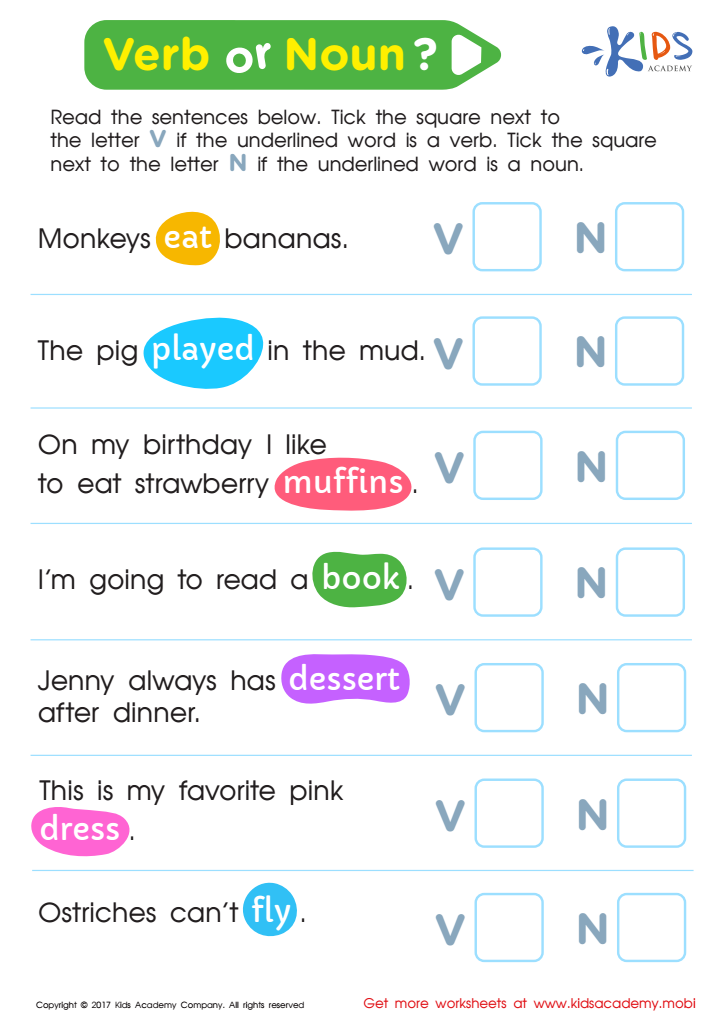
Verb or Noun Worksheet
 Assign to My Students
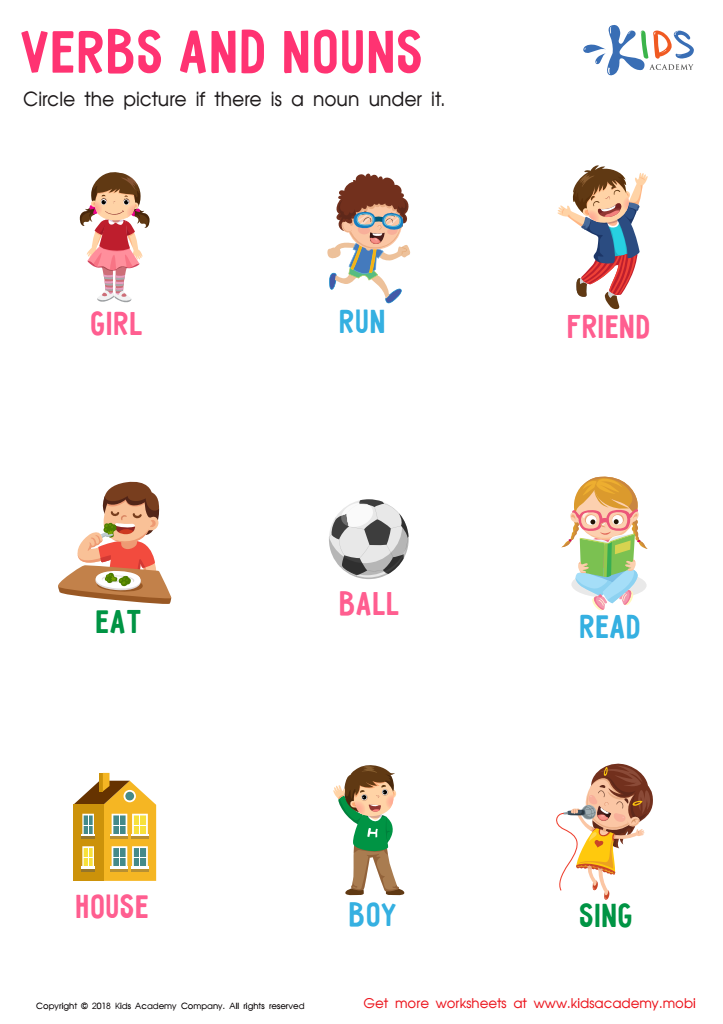
Verbs and Nouns Worksheet
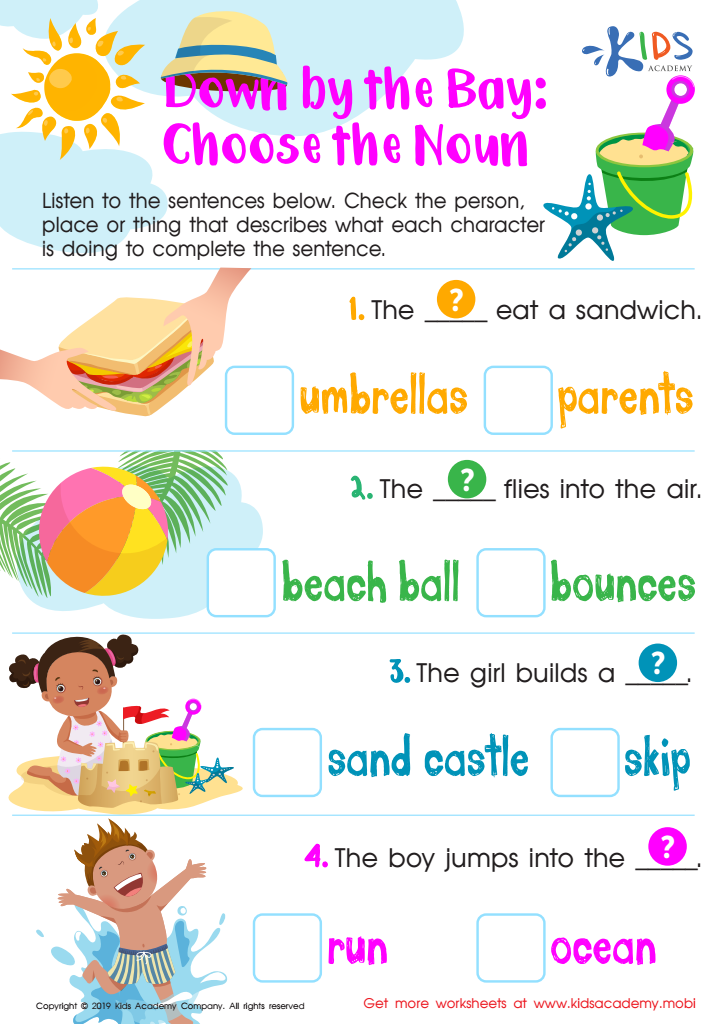
Down by the Bay: Choose the Noun Worksheet





.jpg)
Noun identification is a critical skill for children aged 4-6, as it lays the foundation for language development and effective communication. At this early stage, children are rapidly acquiring vocabulary and learning how to categorize the world around them. Nouns represent people, places, things, and ideas, making them essential for understanding and expressing concepts.
Parents and teachers should care about noun identification because it enhances reading and comprehension skills. By recognizing nouns, children can better grasp stories, identify characters and settings, and make connections within the text. This skill also fosters writing development; children learn to name objects and express their thoughts clearly, helping to build sentences and convey ideas.
Additionally, identifying nouns in spoken language supports verbal skills and social communication. As children engage with their peers, they learn to refer to objects and people accurately, enhancing interactions and building relationships.
Promoting noun identification not only supports literacy and language development but also boosts cognitive skills, encouraging children to think critically about their environment. Therefore, parents and teachers play a vital role in helping young children become proficient in recognizing nouns, setting them up for future academic success and effective communication.








