Enhance your child's reading skills with our Reading Improvement Normal Worksheets designed specifically for ages 4-6. These engaging worksheets focus on foundational literacy skills, helping young learners develop vocabulary, phonics, and comprehension in a fun, interactive way. Each activity is tailored to their developmental needs, ensuring a smooth learning curve as they familiarize themselves with letters, sounds, and basic text. With colorful illustrations and age-appropriate content, your child will remain motivated and excited about reading. Foster a love for literature early on and watch your little one's skills flourish with our versatile, easy-to-use worksheets—perfect for home or classroom use!

Check out this FREE "Reading Improvement" Trial Lesson for age 4-6!

Short and Long Vowel Sort

Favorites
With answer key
Interactive
  • 4-6
  • Reading Improvement
  • Normal
The /th/ Sound Worksheet

The /th/ Sound Worksheet

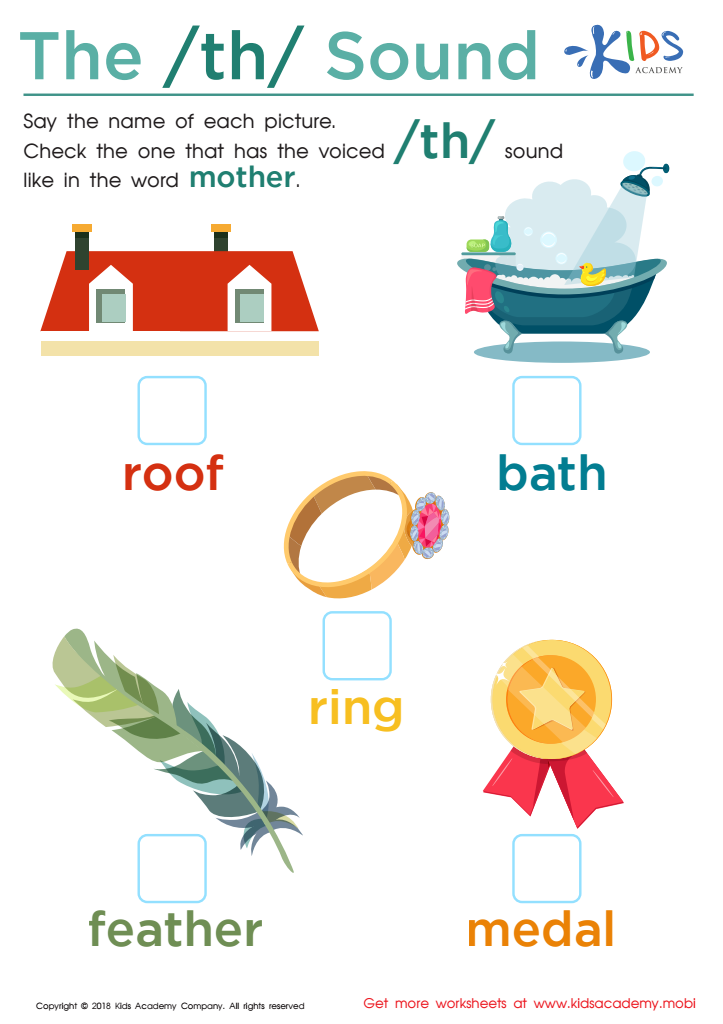
Confuse your students no more: have them use this worksheet to understand the /th/ sound and its two variants. With pictures, ask them to say the name of each one. Help them identify the voiced /th/ sound, like in 'mother', by having them say it aloud. Download the pdf to get started.
The /th/ Sound Worksheet
Worksheet
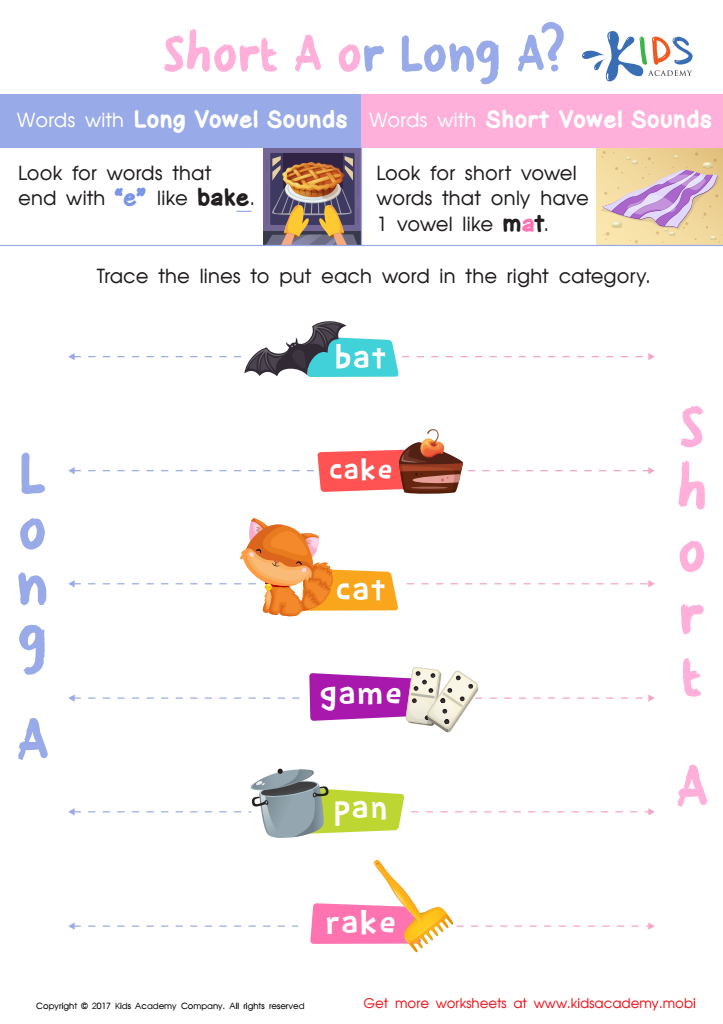
Short /a/ or Long /a/? Worksheet

Short /a/ or Long /a/? Worksheet

Phonetics and its sounds can be tricky for kids. They can read and spell, but long and short vowels might be difficult. Use this phonetic worksheet to teach them to identify words with the short /a/ or long /a/ sound. Kids have to find the words ending with 'e' (long sound) and words with one vowel (short sound, e.g. 'mat'). Colourful printout makes it fun and easy to learn!
Short /a/ or Long /a/? Worksheet
Worksheet
Worksheet: Learning Syllables

Learning Syllables Word Structure Worksheet
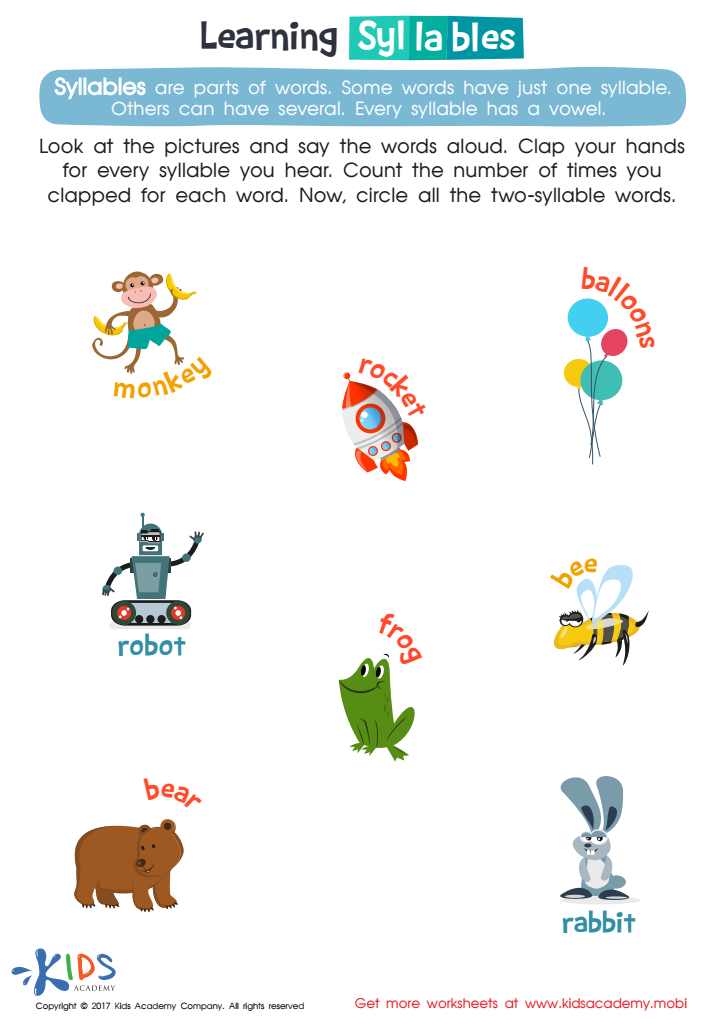
Teach kids to read and spell with our fun Learning Syllables worksheet. Kids will have a blast clapping and saying familiar words while counting syllables. Colorful and catchy, it's a great way to make learning enjoyable!
Learning Syllables Word Structure Worksheet
Worksheet
3 Sounds Worksheet
3 Sounds Worksheet

3 Sounds Worksheet

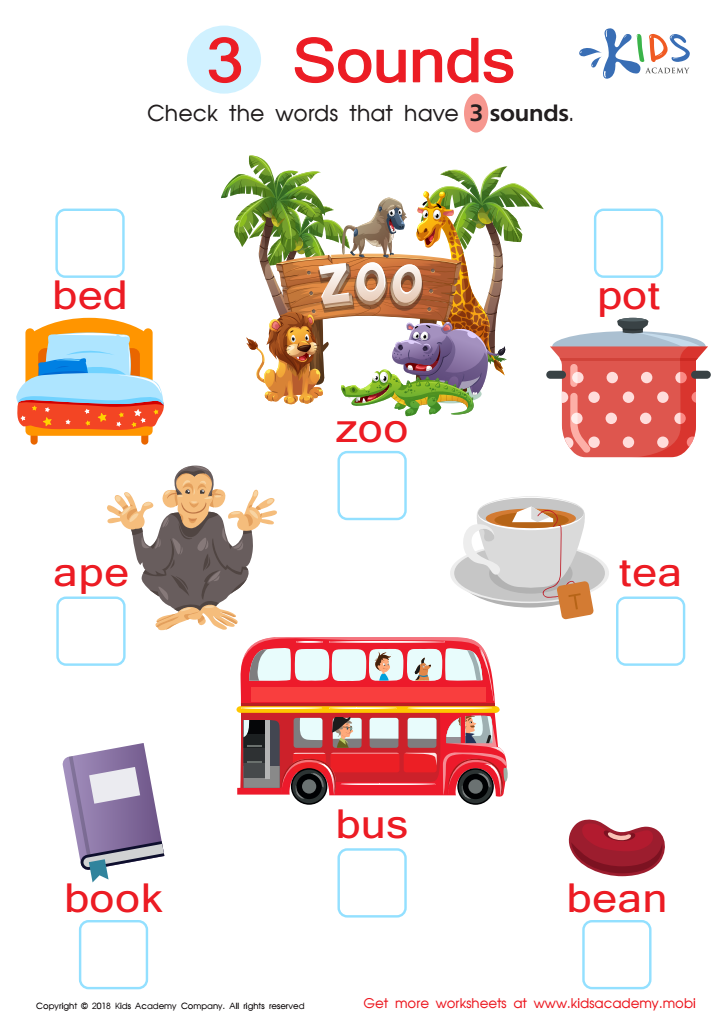
Kids will love learning with this free, colorful worksheet. It's full of familiar words they can name and sound out with three distinct sounds. This helps build decoding skills, plus they get to check off words they read. It's a fun way to teach children to identify and use sounds.
3 Sounds Worksheet
Worksheet
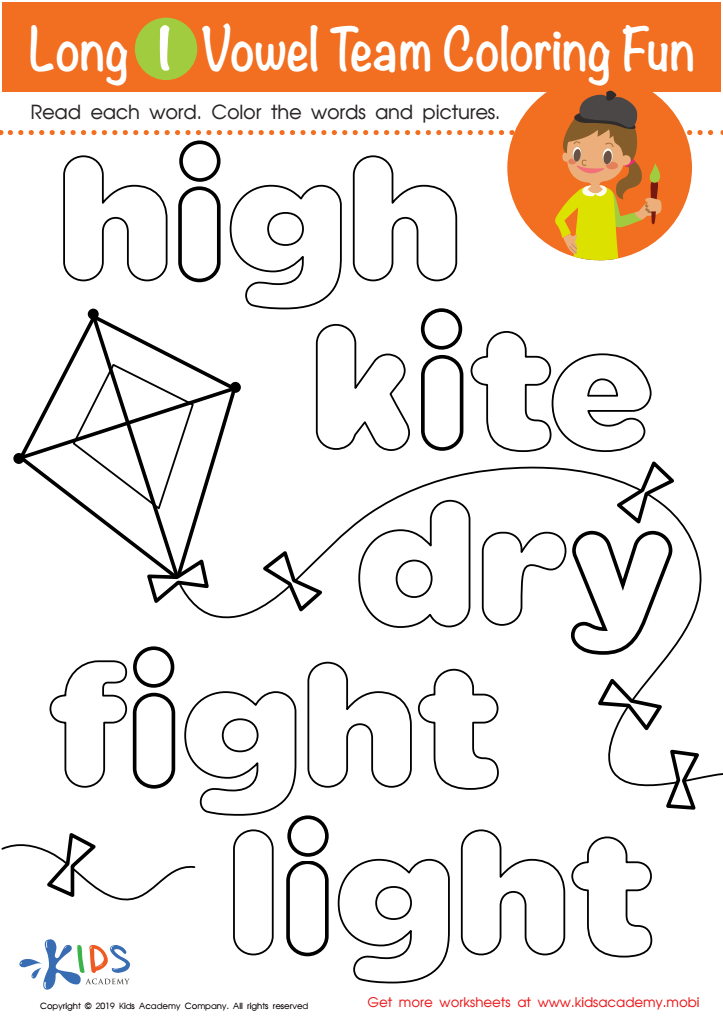
Long I Vowel Team Coloring Worksheet

Long I Vowel Team Coloring Worksheet

This worksheet provides practice with letter combinations that make the long "i" sound while enhancing creativity and motor skills with a fun coloring activity. Unknowingly, new readers learn key phonics skills while having fun!
Download (PDF)
Assign to My Students
Long I Vowel Team Coloring Worksheet
Worksheet
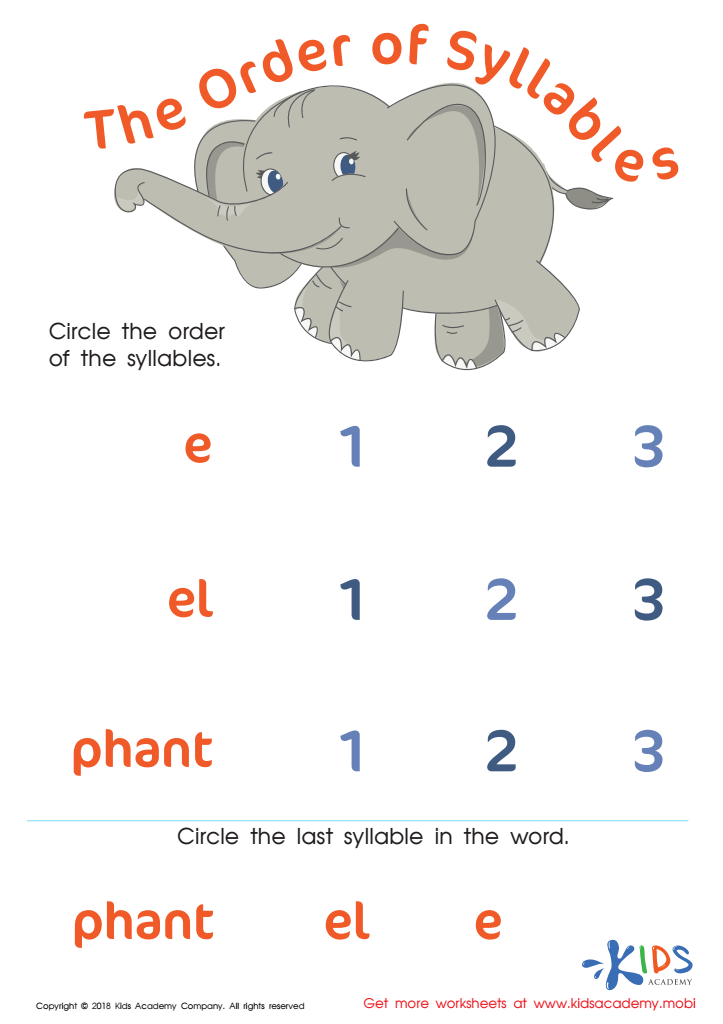
The Order of Syllables Worksheet

The Order of Syllables Worksheet

Syllabication is vital for prereading and decoding words. Download this fun, free worksheet to help your reader practice breaking words into syllables and arranging them for reading. It also strengthens fine motor skills as they trace the numbers for each syllable, guided by a cheerful elephant!
The Order of Syllables Worksheet
Worksheet
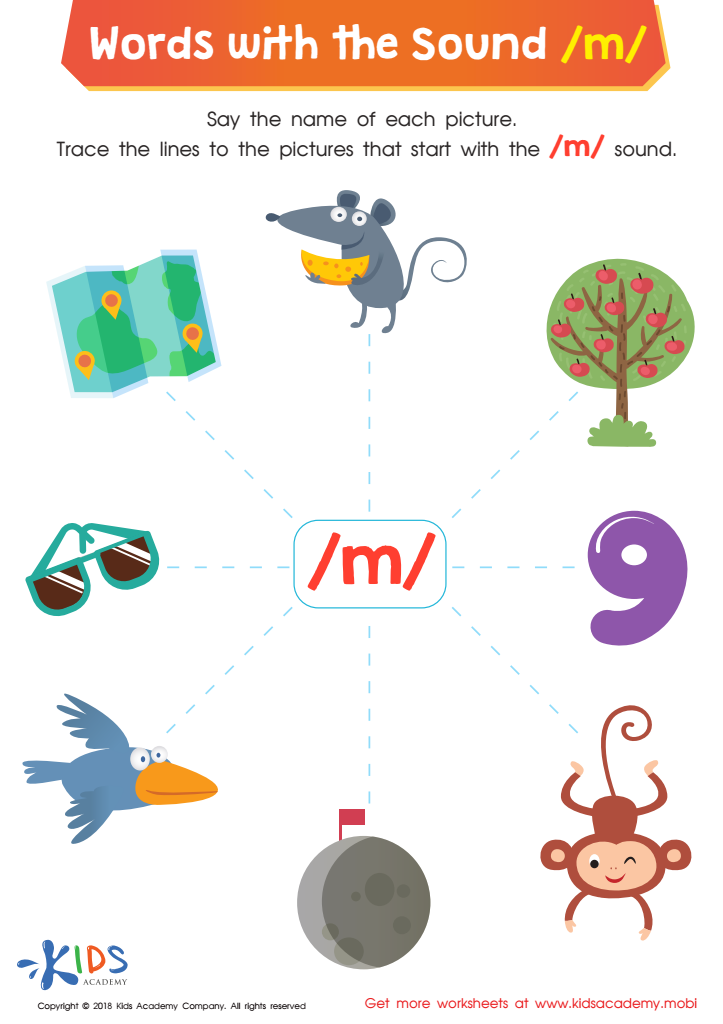
Words with Sound M Reading Worksheet


Words with Sound M Reading Worksheet

Emerging readers will use this traceable worksheet to name and trace pictures with the letter sound «m». Bright, engaging pictures make this fun and build confidence while strengthening fine motor skills. They won't even know they're also working on reading skills!
Words with Sound M Reading Worksheet

Worksheet


Parents and teachers should prioritize reading improvement for children aged 4-6 because early literacy skills are foundational to a child's overall development and future academic success. At this critical stage, children's brains are rapidly developing, making them more receptive to learning new skills. Enhancing their reading abilities can significantly impact their language skills, vocabulary development, and comprehension, setting the stage for their future academic journey.

Moreover, children who develop strong reading skills during these formative years are more likely to excel in school, have better communication skills, and gain confidence in their abilities. Early reading experiences foster a love for books, which can lead to a lifelong habit of reading and learning.

Additionally, when children engage in reading improvement activities, it encourages a bonding experience between parents and children, promoting positive interactions and shared stories that build emotional connections. Teachers, when equipped with strategies to support reading improvement, can create inclusive classrooms that cater to diverse learning needs, ensuring all children have the opportunity to thrive.

Ultimately, prioritizing reading improvement for younger children establishes a solid literacy foundation that empowers them academically and socially, driving their curiosity and love for knowledge.