
Sentence formation Normal Worksheets for Ages 4-6
3 filtered results
Difficulty Level
Grade
Age
-
From - To
Subject
Activity
Standards
Enhance your child's literacy skills with our "Sentence Formation Normal Worksheets" designed specifically for ages 4-6. These engaging worksheets introduce the basics of sentence construction through fun exercises and interactive activities. Perfect for early learners, they promote vocabulary development, comprehension, and creative expression. Children will enjoy identifying nouns, verbs, and adjectives while crafting their own sentences in a playful manner. Easy-to-follow instructions ensure a smooth learning experience for both parents and educators. Build a strong foundation in language skills and inspire a love for writing. Access these worksheets today and watch your child thrive in their journey to effective communication!
Favorites
With answer key
Interactive
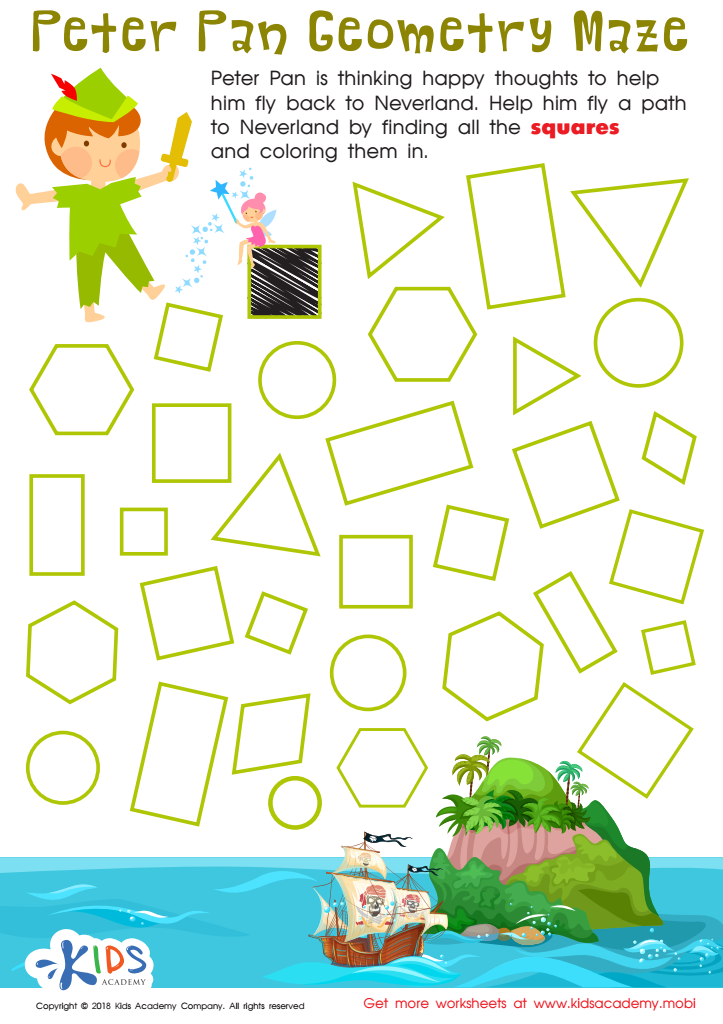
Peter Pan Worksheet
Kindergarteners can join Peter Pan on an adventure to Neverland! They can help him by coloring squares to create a path, strengthening their shape identification skills in a fun maze. Let the journey begin!
 Assign to My Students
Peter Pan Worksheet
Worksheet
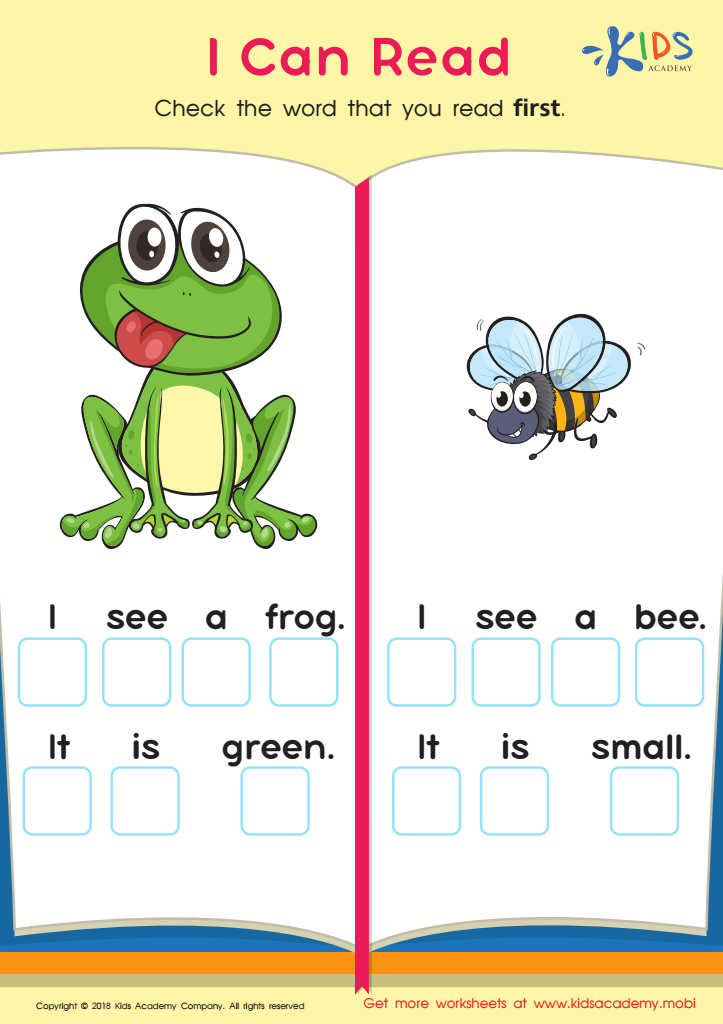
I Can Read Worksheet
Test your child's reading skills with this fun worksheet. See how well they know one-letter, two-letter, and five-letter words. Ask your little one to read the sentences and tick the word they identify first. It's a great way to track their progress and help them become more confident readers.
I Can Read Worksheet
Worksheet
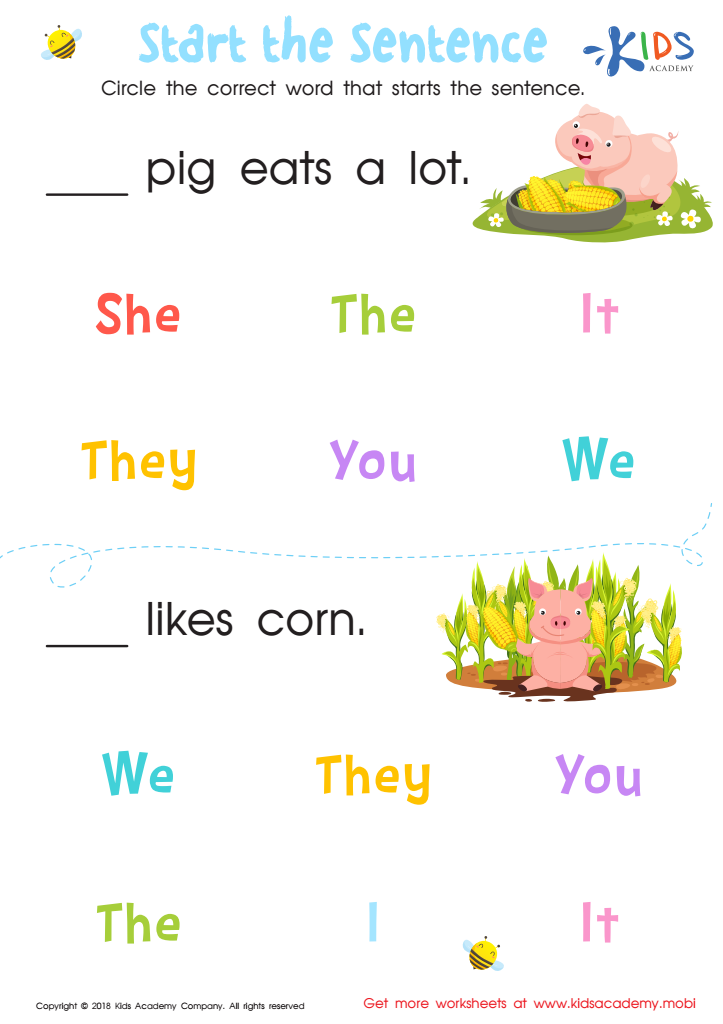
Start the Sentence Worksheet
Test your students' understanding of sentences with this easy worksheet. Ask them to read the sentences and circle the correct word that starts each. This will show how well their lessons have paid off and if they can construct short simple sentences.
Start the Sentence Worksheet
Worksheet
Join Kids Academy for Free
Who is primarily going to use this learning content?








Sentence formation is crucial for children aged 4-6 as it lays the foundation for effective communication and literacy development. At this stage, children begin to express their thoughts and ideas more clearly, and grasping sentence structure significantly helps them articulate their emotions, preferences, and inquiries. When parents and teachers focus on sentence formation, they empower children to transition from simple words to coherent sentences, fostering self-confidence and better interaction with peers and adults.
Moreover, strong sentence-building skills enhance a child's reading and writing competence, which are critical for academic success. By encouraging sentence formation, caregivers can nurture a child's vocabulary, improve their understanding of grammar, and promote advanced literacy skills early on.
Engaging in activities that promote sentence creation, such as storytelling or dialogue exchanges, stimulates cognitive development and nurtures imaginative play. These interactions are not just fun; they're instrumental in solidifying language comprehension.
Ultimately, investing time in sentence formation ensures that children are well-prepared for future learning challenges while developing essential social skills, contributing to their overall emotional and intellectual growth. Hence, parents and teachers should prioritize this area of development to support their child's holistic educational journey.








