Vowel Recognition Normal Worksheets for Ages 4-6
9 filtered results
-
From - To
Discover our engaging Vowel Recognition Normal Worksheets designed for children aged 4-6! These worksheets offer a fun way for young learners to identify and practice vowel sounds through colorful and interactive activities. Each worksheet features vibrant illustrations and simple exercises that encourage kids to recognize vowels in words, enhancing their reading and phonics skills. Perfect for both classroom and at-home learning, our resources cater to early learners, ensuring they build a strong foundation in language arts. Parents and educators can easily download and print these worksheets to support children's educational journeys while making learning enjoyable. Start nurturing vowel recognition today!
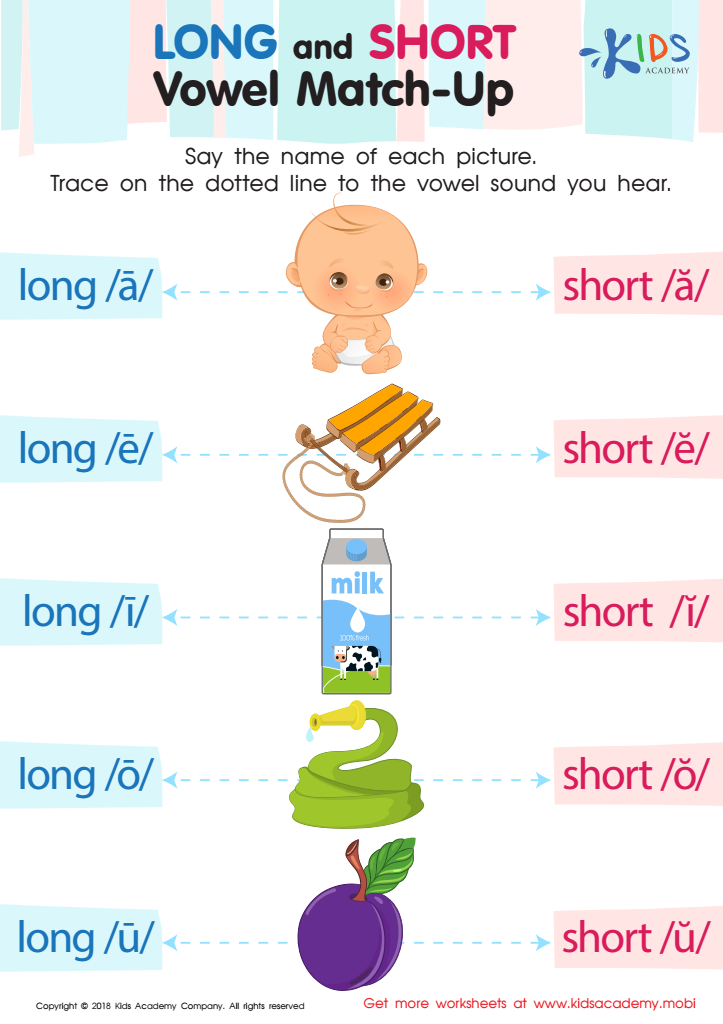
Long and Short Vowel Match up Reading Worksheet
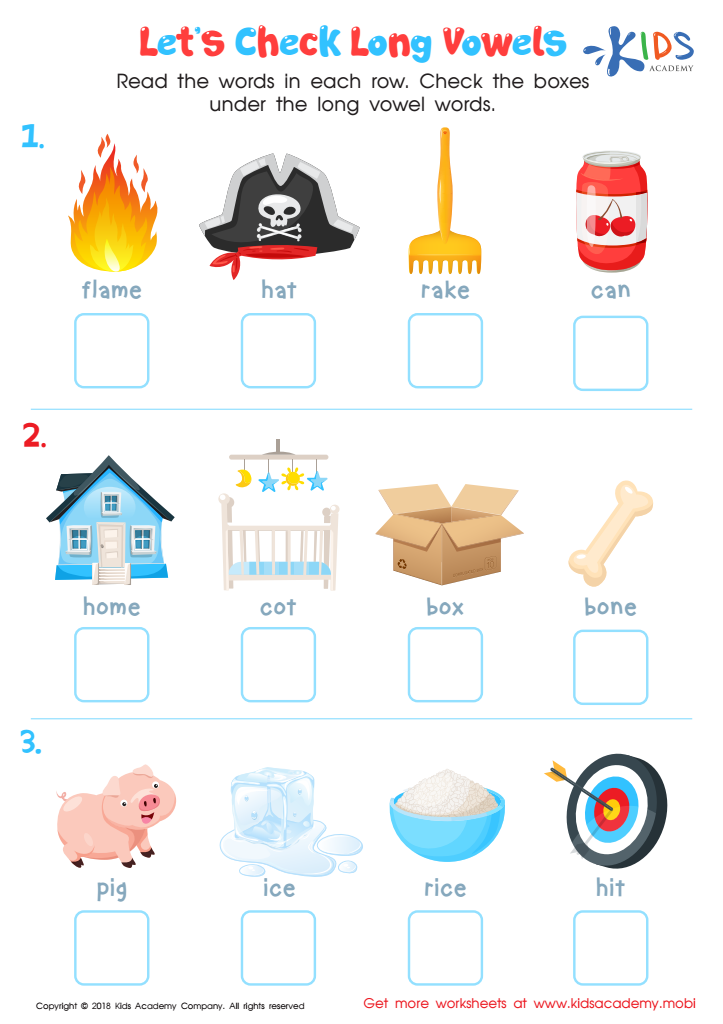
Let's Check Long Vowels: Assessment Worksheet
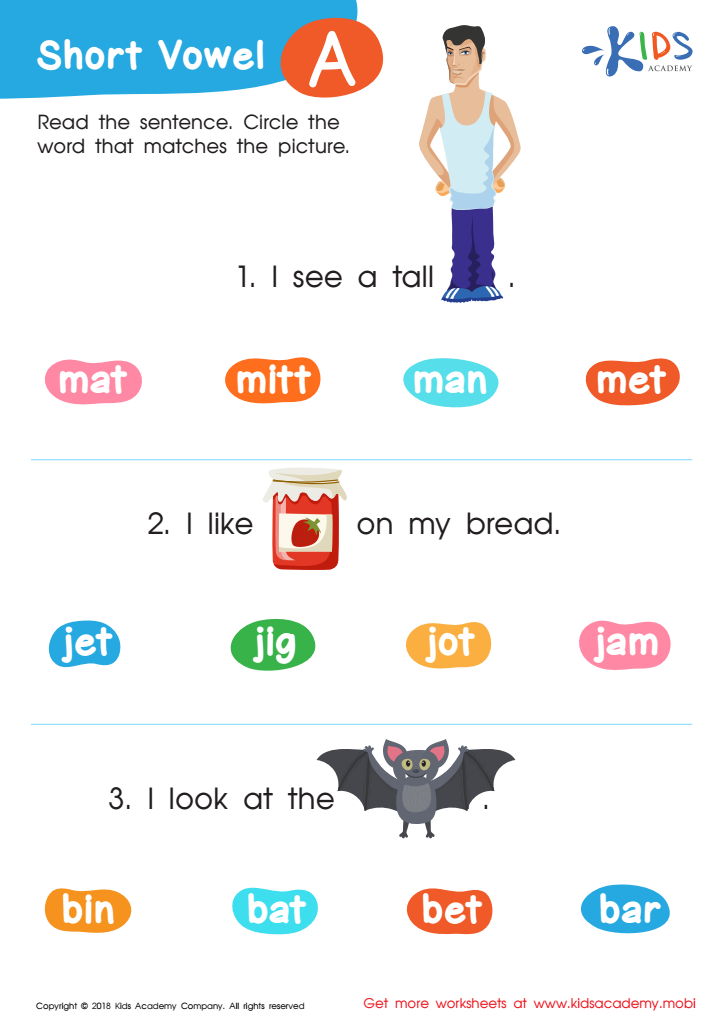
Short Vowel /a/ Worksheet
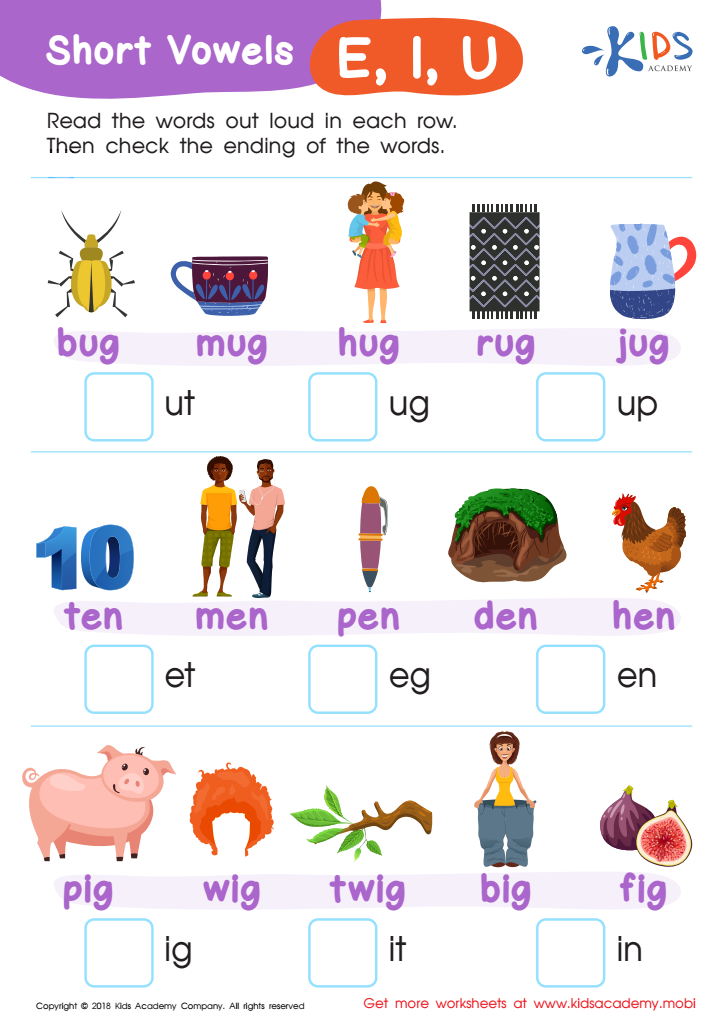
Short Vowels /e/, /i/, and /u/ Worksheet
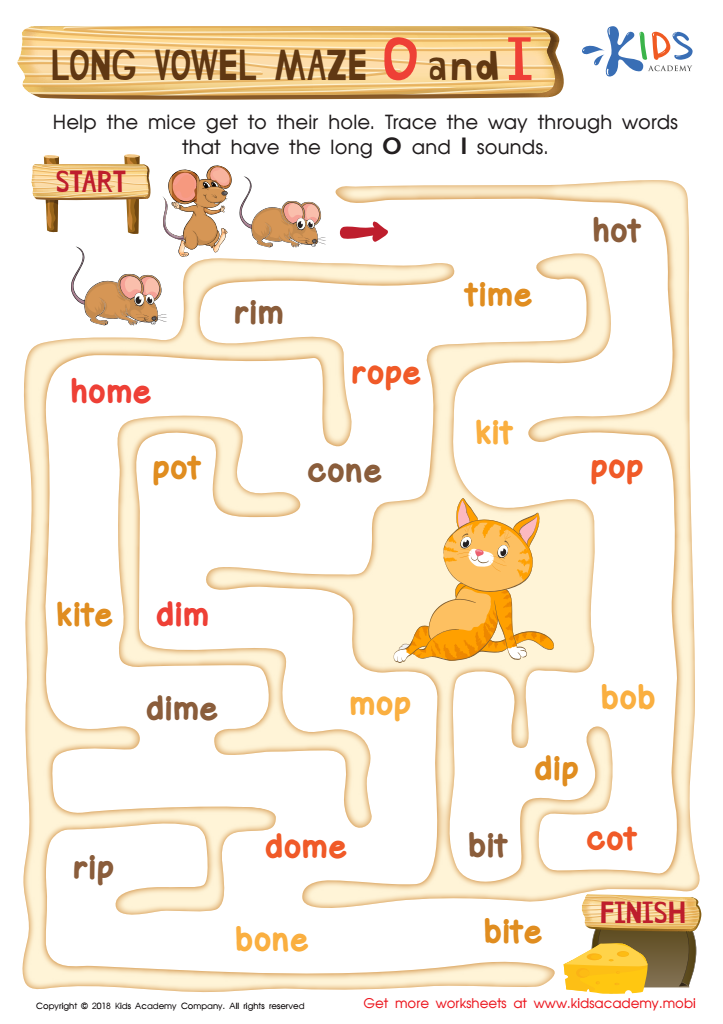
Long Vowel Maze /o/ and /i/ Worksheet
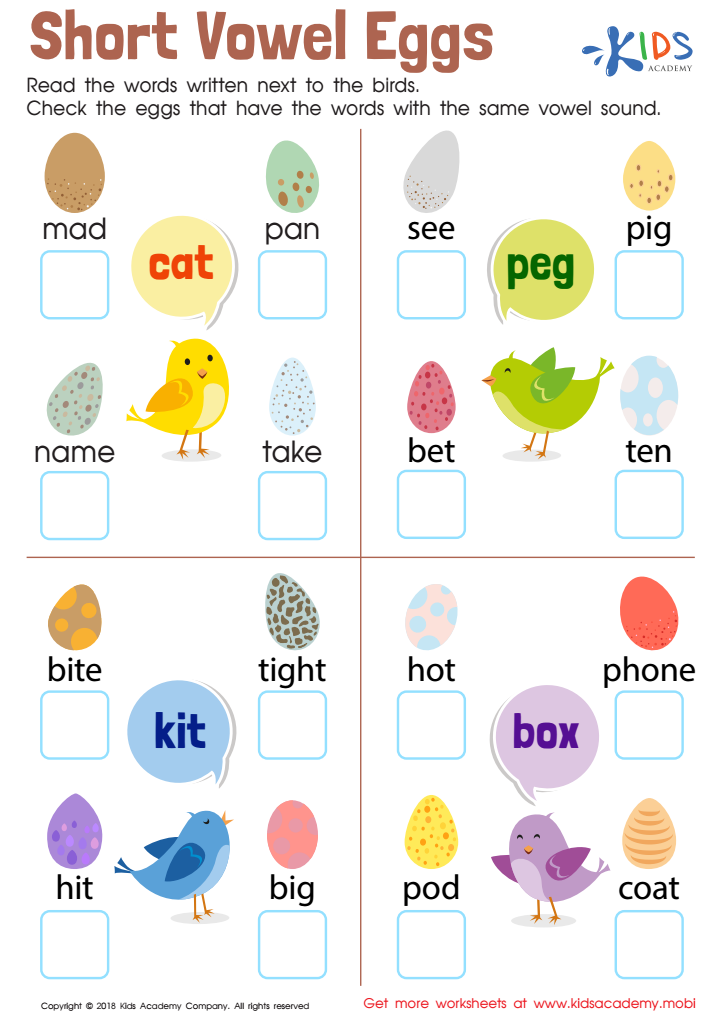
Short Vowel Eggs Worksheet
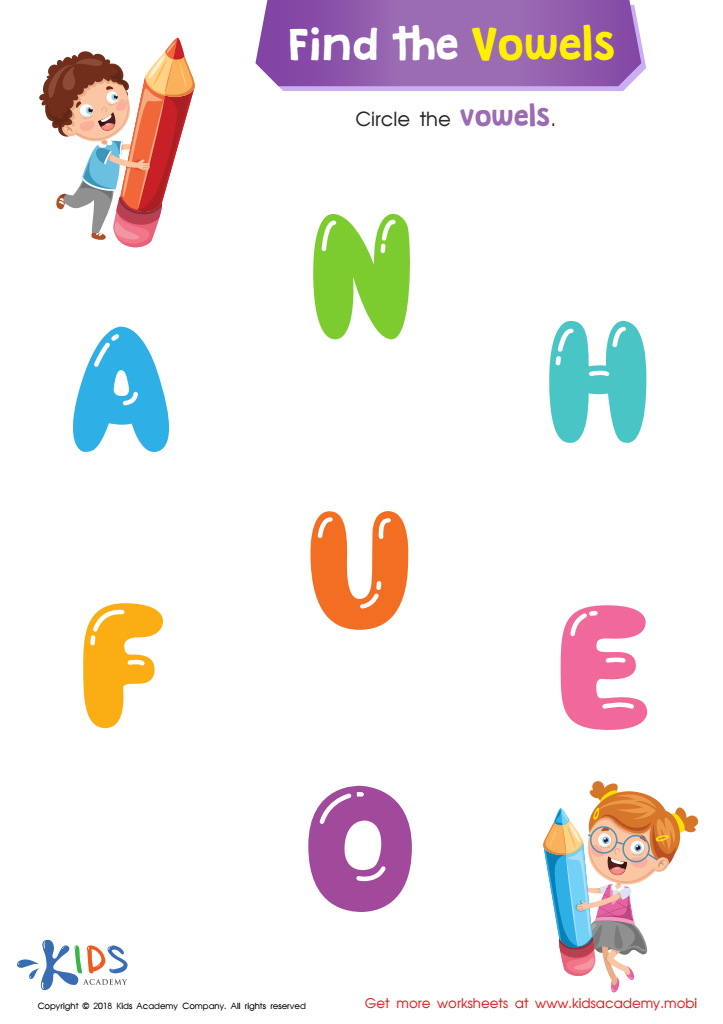
Find the Vowels Reading Worksheet
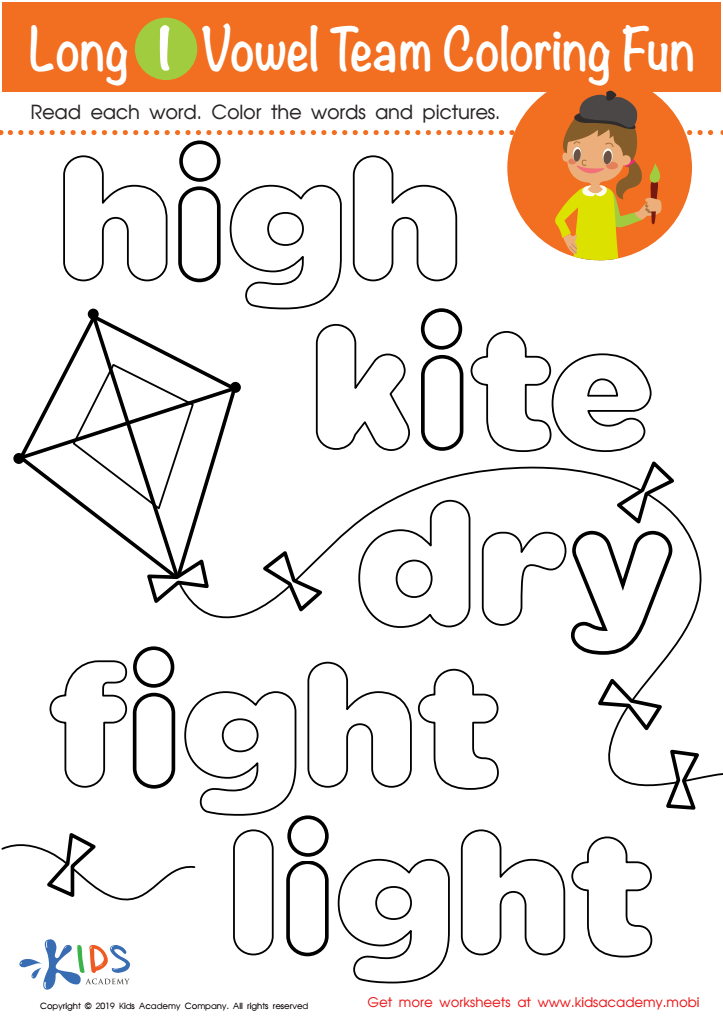
Long I Vowel Team Coloring Worksheet
 Assign to My Students
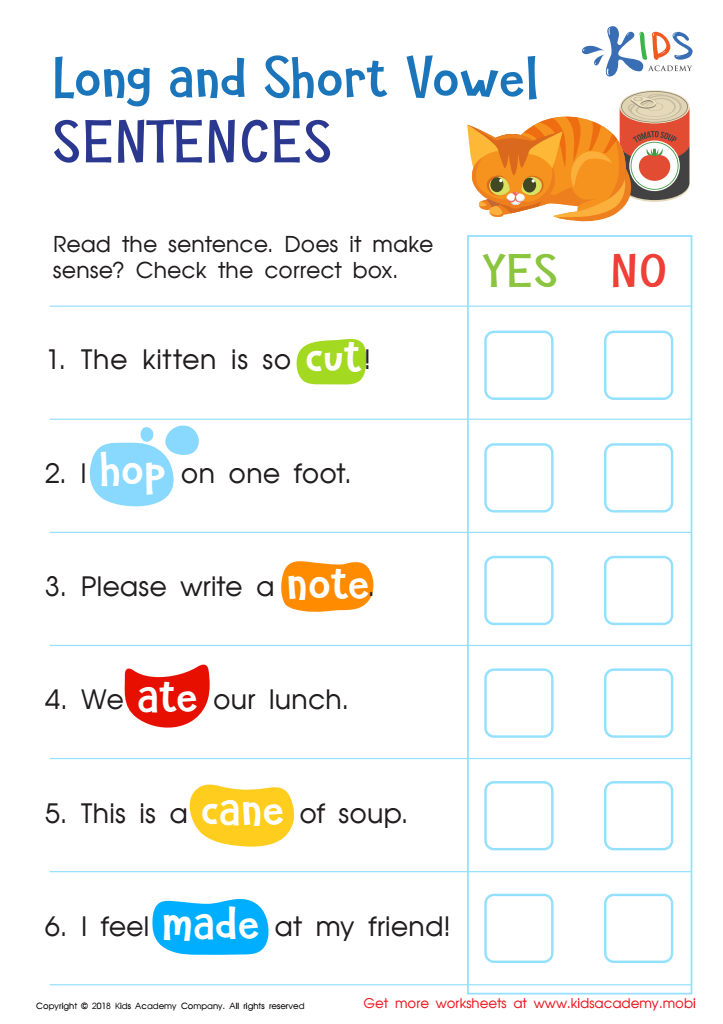
Long and Short Vowel Sentences: Assessment Worksheet







Vowel recognition is a critical component of early literacy development for children aged 4-6. During these formative years, children are introduced to language and literacy concepts, which lay the foundation for their reading and writing skills. Recognizing vowels is essential because these letters, consisting of 'a,' 'e,' 'i,' 'o,' and 'u,' form the building blocks of syllables and words.
Teachers and parents should care about vowel recognition because it helps children decode words, allowing them to read more fluently. Mastering vowels enables young learners to understand the structure of words better, promotes phonemic awareness, and supports spelling skills. Additionally, recognizing vowels contributes to vocabulary expansion and comprehension, as understanding how words are constructed aids in contextual understanding.
Supporting vowel recognition also fosters confidence and motivation in young learners. When children can identify vowels, they can more easily engage with reading materials and participate in learning activities, setting the stage for a positive attitude toward learning. By emphasizing vowel recognition, parents and teachers can enhance children’s overall literacy skills, encouraging a lifelong love for reading and learning. Thus, prioritizing this skill can have lasting effects on a child’s educational journey.








