
Counting skills Normal Addition Facts Worksheets for Ages 4-6
5 filtered results
Difficulty Level
Grade
Age
-
From - To
Subject
Activity
Standards
Introduce young learners to the fun of addition with our "Counting Skills: Normal Addition Facts Worksheets for Ages 4-6." Designed to build a solid foundation in early math, these worksheets enhance counting skills and basic addition proficiency. Perfect for preschoolers and kindergarteners, each activity provides clear, engaging exercises to help children effortlessly transition from counting objects to mastering simple sums. Pictorial representations and progressive challenges ensure a rewarding learning experience at a comfortable pace. Browse our selection today to equip your child with essential math skills, foster confidence, and spark a lifelong love of learning.
Favorites
With answer key
Interactive
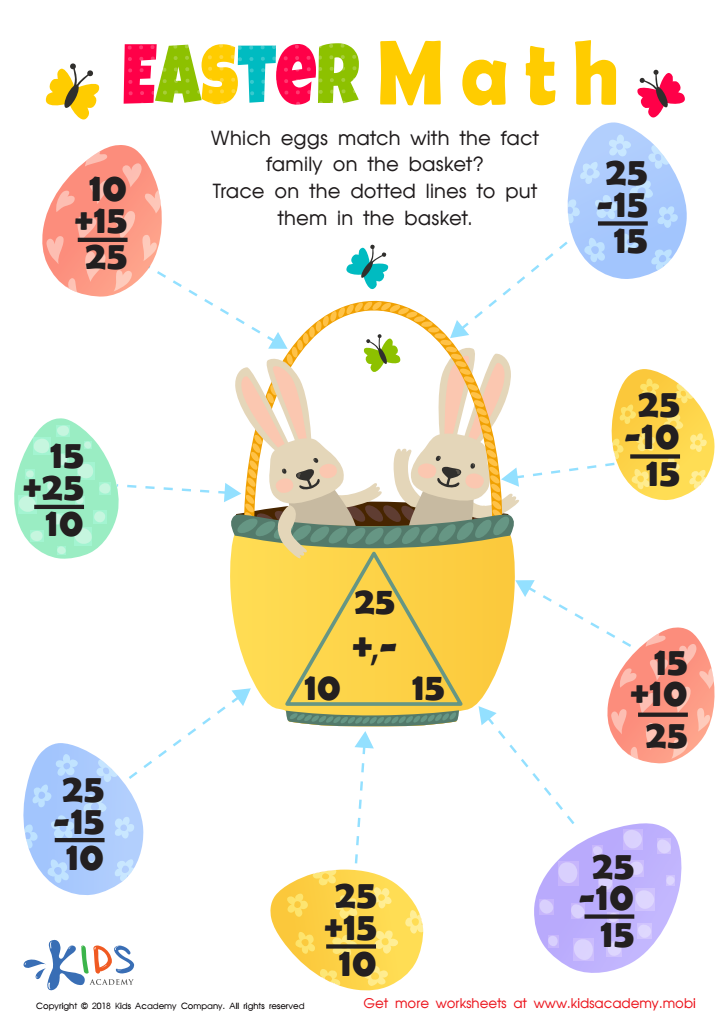
Fact Families: Easter Math Worksheet
Kids will love this vibrant PDF packed with Easter math fun! Match facts with the colorful eggs, add and subtract multiples of five to boost automaticity, and have a blast with the bunny friends!
 Assign to My Students
Fact Families: Easter Math Worksheet
Worksheet
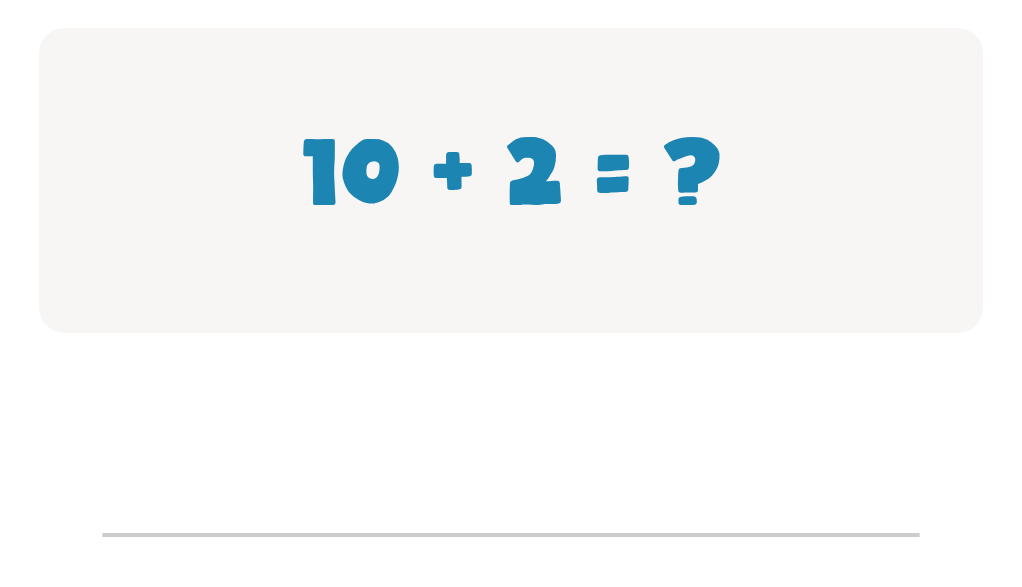

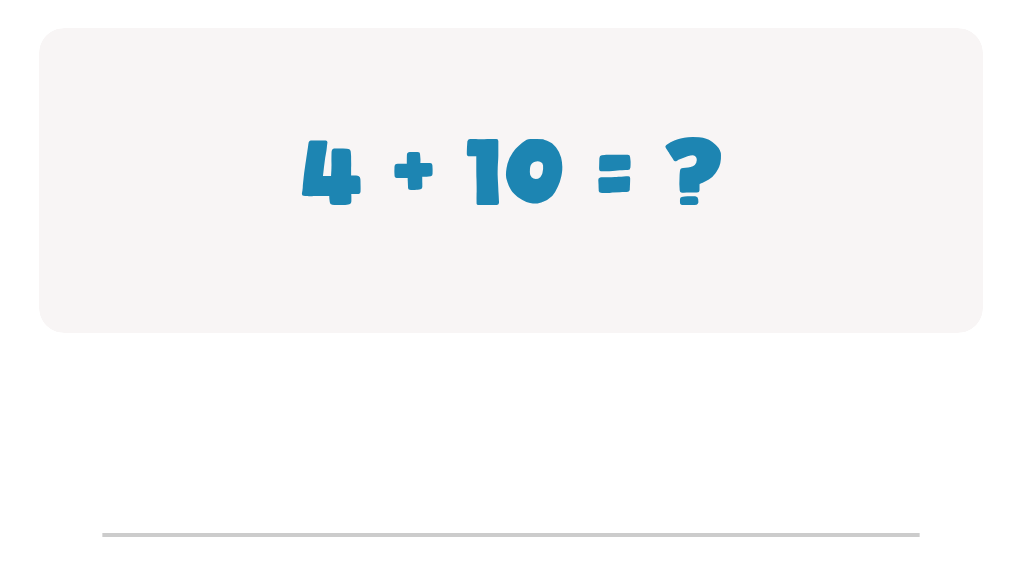
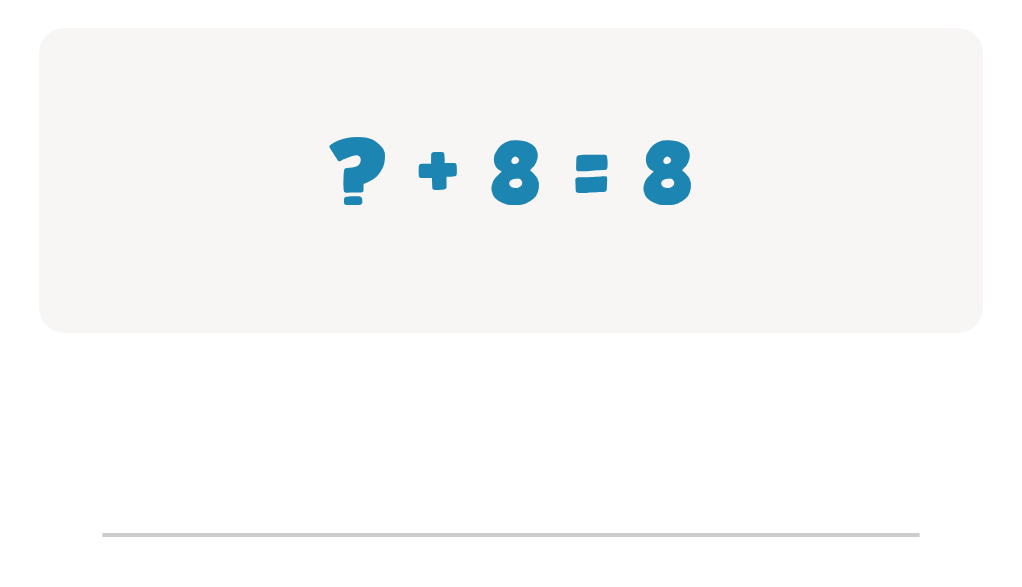

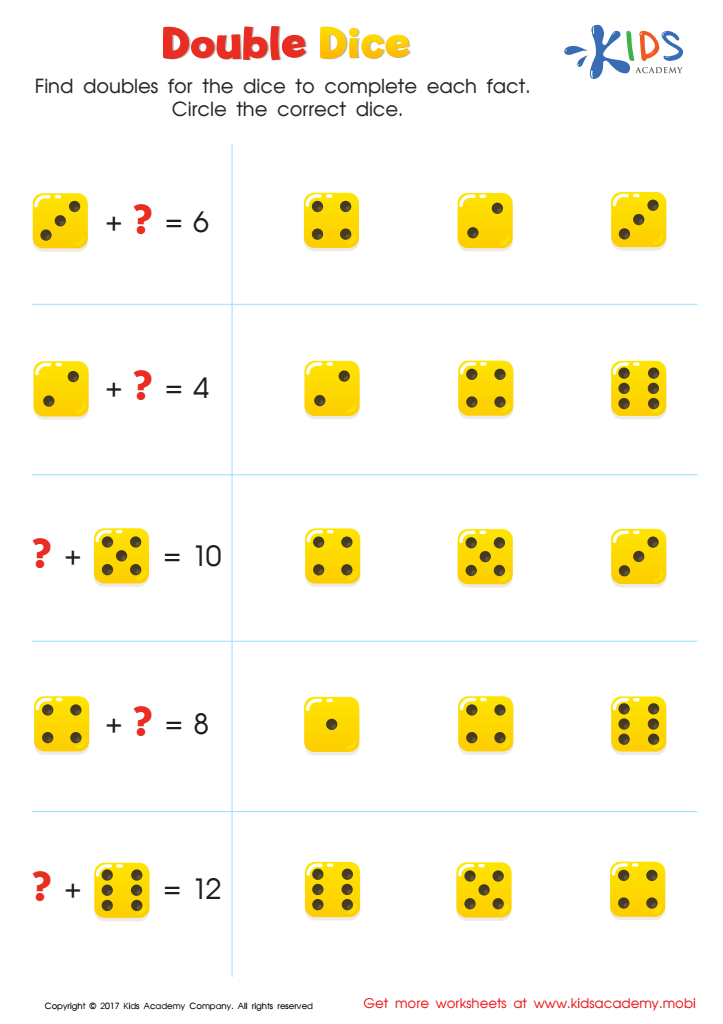
Addition Facts: Double Dice Worksheet
Are you looking for ways to make maths more engaging for kids? Maths can be a bore, but by teaching kids from an early age that it can be fun, they won't struggle with it. This worksheet is a great way to start: your child needs to identify the number on the left dice and find its double on the right. The sum of the two dice is also given.
Addition Facts: Double Dice Worksheet
Worksheet
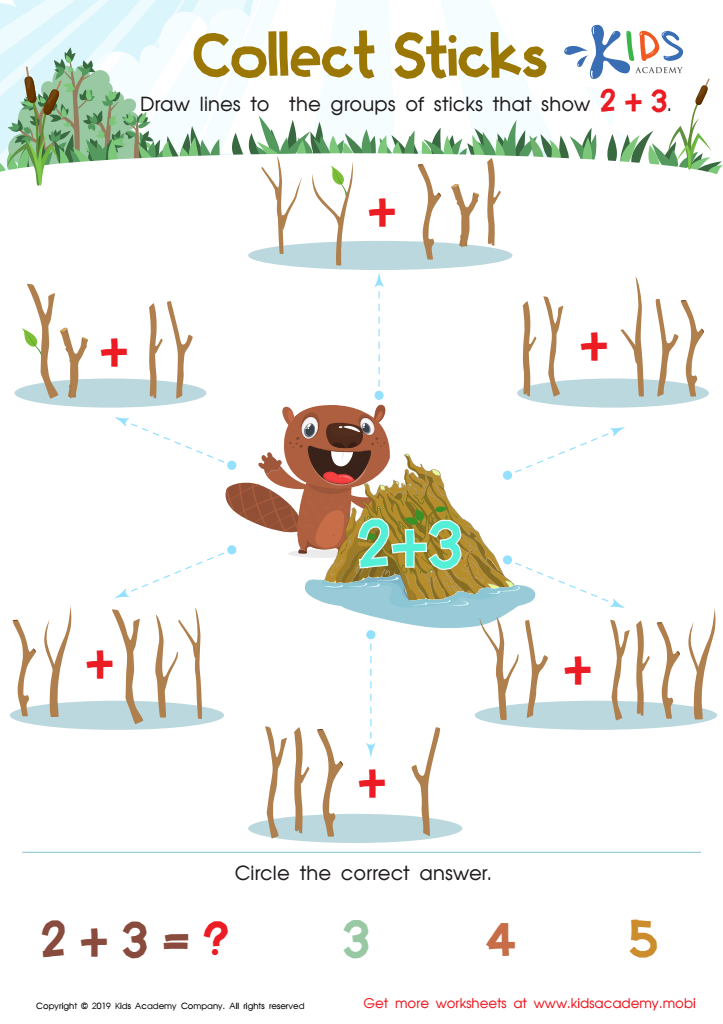
Collect Sticks Worksheet
Let math be fun for your kids with a simple and colorful worksheet exercise. Addition and subtraction can be daunting, but you can make it enjoyable with exercises like this one. Get them to draw lines to the groups of sticks that show 2+3 and watch them light up.
Collect Sticks Worksheet
Worksheet
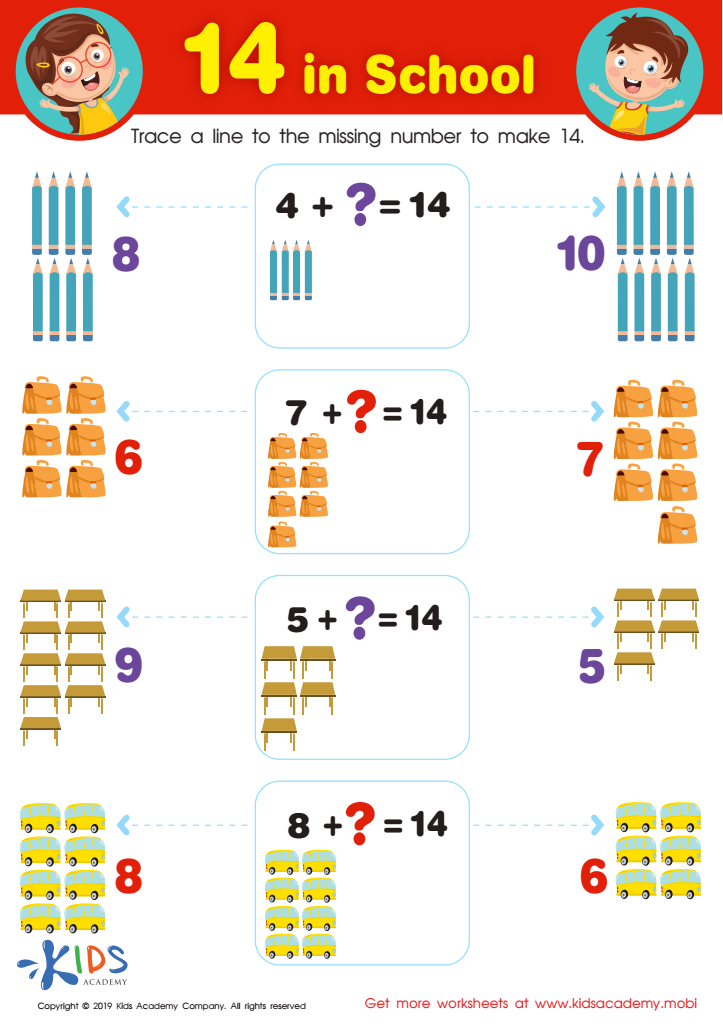
14 in School Worksheet
Remind your kids that adding different sets of numbers can give the same total (e.g. 2+3=5, 4+1=5). Ask them for more examples. Afterwards, work through the exercise. Help them count the objects and trace a line to the missing number that makes the total 14.
14 in School Worksheet
Worksheet
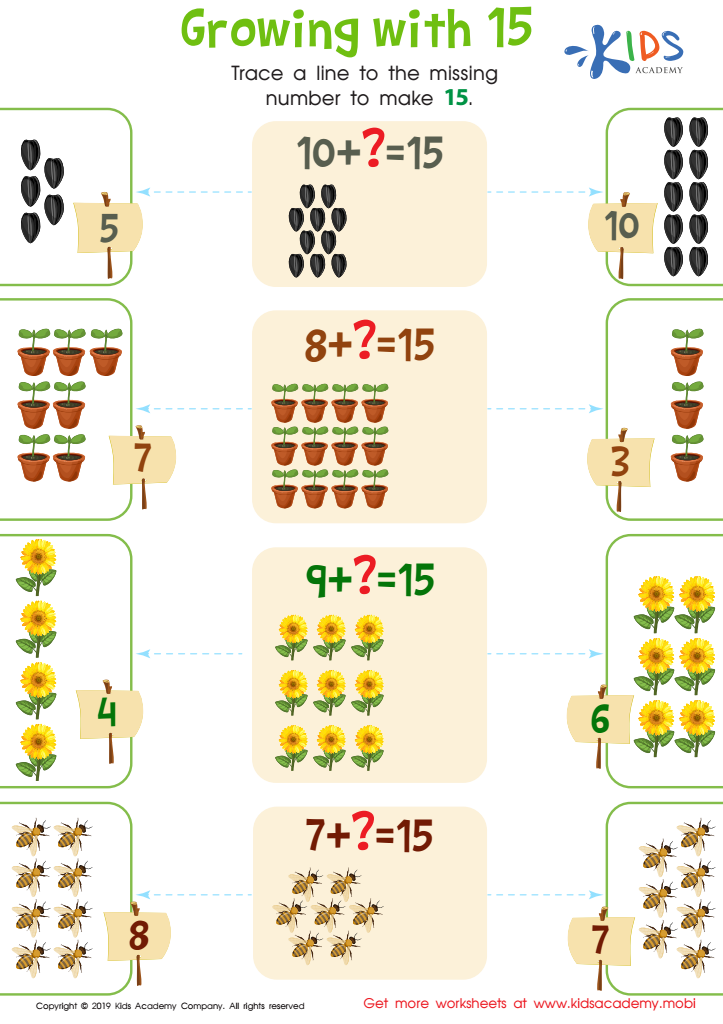
Growing with 15 Worksheet
Remind your kids that adding different sets of numbers can give the same total (e.g. 2+3=5, 4+1=5). Test their understanding by asking them for more examples. Move onto the worksheet: count objects, then trace the line to the number making a total of 15.
Growing with 15 Worksheet
Worksheet
Join Kids Academy for Free
Who is primarily going to use this learning content?


.jpg)





Counting skills and proficiency in normal addition facts are critical developmental milestones for children aged 4-6, serving as foundational building blocks for their future mathematical understanding and overall cognitive development. Parents and teachers should prioritize these skills because they underpin more complex math concepts that children will encounter later on. Early competency in counting and addition fosters a positive attitude towards math, increasing a child's confidence and reducing math anxiety.
Counting skills help children understand the concept of numbers, leading them to grasp more abstract ideas such as quantity, order, and value. Being familiar with normal addition facts teaches children how numbers are interrelated, enhancing their problem-solving abilities and logical thinking. This foundational knowledge prepares them for advanced arithmetic operations like subtraction, multiplication, and division.
Moreover, acquiring these skills early helps in everyday life, such as telling time, measuring ingredients, and understanding money, which are indispensable skills for practical daily activities. A solid grasp of early math concepts has also been linked to better performance in other academic subjects, as it develops critical thinking and reasoning.
In summary, building strong counting skills and knowledge of normal addition facts in early childhood sets the stage for academic success, empowers children with essential life skills, and nurtures a lifelong positive relationship with learning and mathematics.








