Color recognition Normal Numbers Worksheets for Ages 4-6
4 filtered results
Difficulty Level
Grade
Age
-
From - To
Subject
Activity
Standards
Introduce your little learners to the vibrant world of numbers with our Color Recognition Normal Numbers Worksheets for Ages 4-6! Designed to make learning engaging and fun, these printable worksheets enhance both number recognition and color identification skills. Through interactive activities, children will explore various colors while mastering essential counting and number concepts. Perfect for preschool and kindergarten classrooms or home learning, our worksheets encourage creativity and boost cognitive development. Each page provides a delightful blend of education and play, ensuring that young minds remain captivated as they progress in their mathematical journey. Start fostering a love for numbers today!
Favorites
With answer key
Interactive
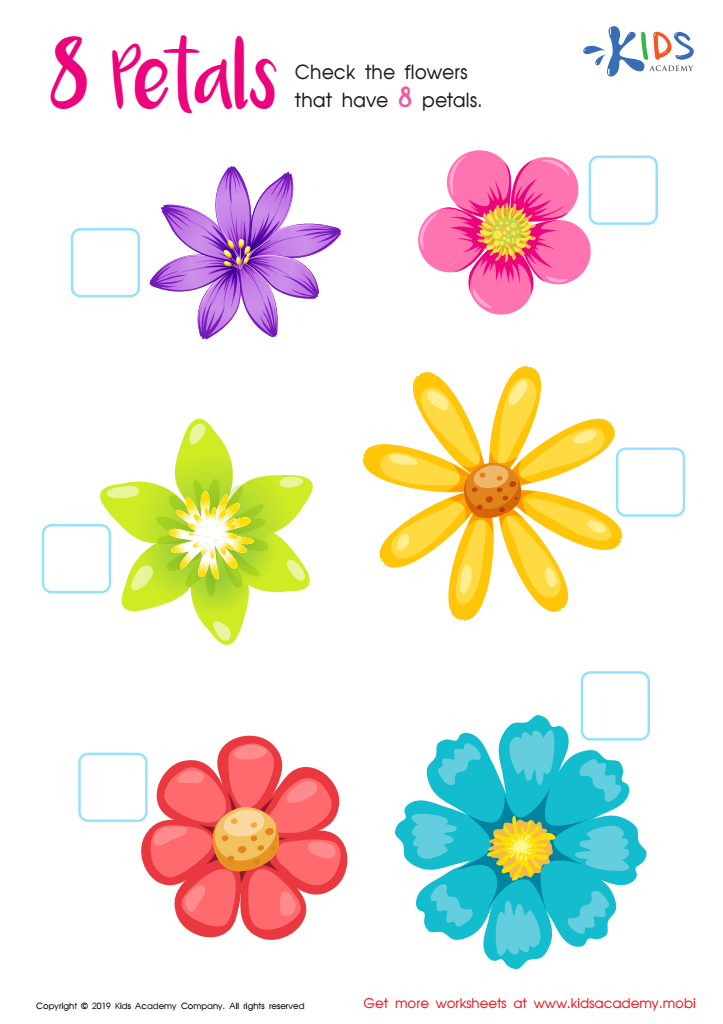
8 Petals Worksheet
Help your children master counting with this fun worksheet. It's filled with colorful flowers and they must count the petals and check the flowers with 8 petals. It's a great way to practice their counting skills and have some fun too!
 Assign to My Students
8 Petals Worksheet
Worksheet
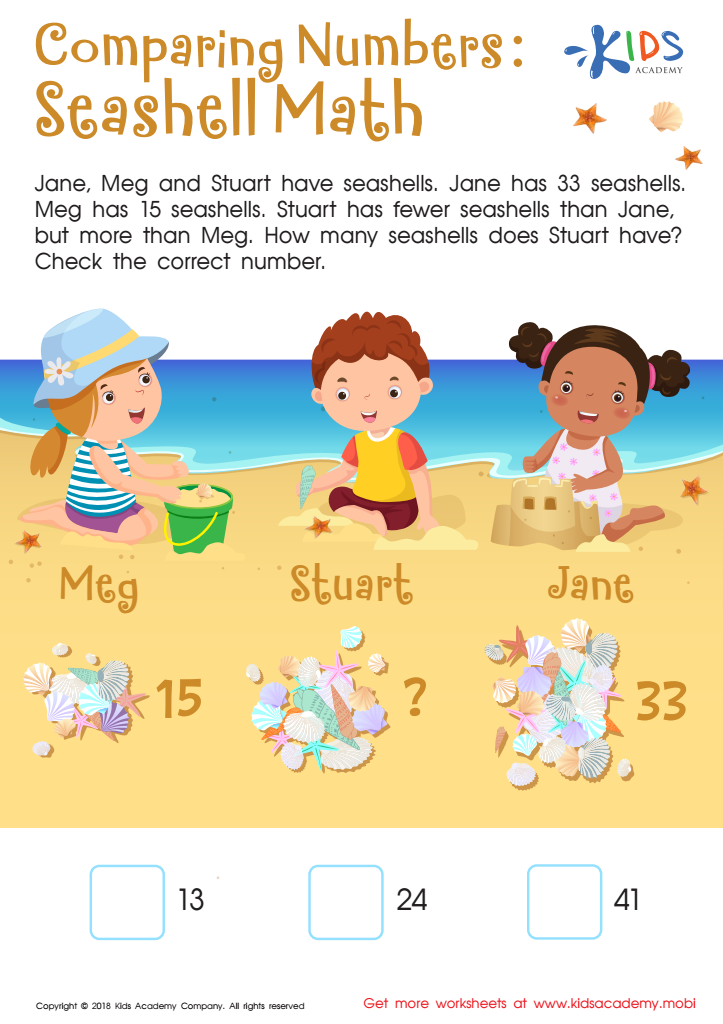
Seashell Collectors Worksheet
Bring beach fun into math with this printable worksheet! Carefully read the text with your child and figure out how many seashells Stuart has - more than Meg's, less than Jane's. Forget boring indoor math; your child won't want to miss out on this fun activity!
Seashell Collectors Worksheet
Worksheet
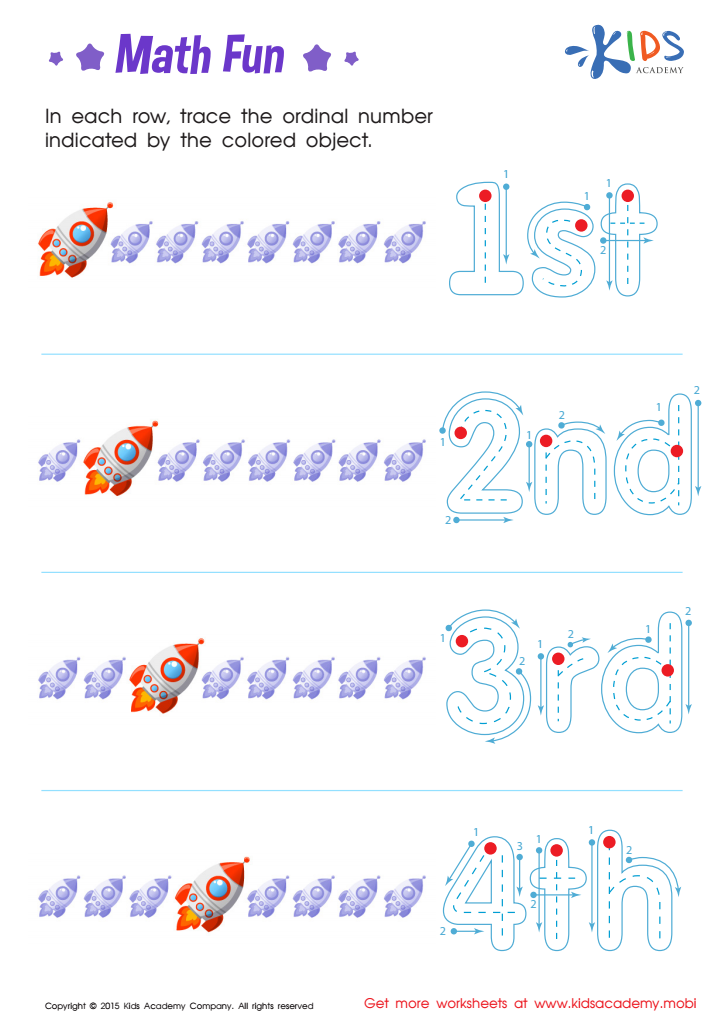
Ordinal Numbers: Math Fun Worksheet
Have fun learning ordinal numbers with our spaceship worksheet! Kids learn best while having fun and with repetition. Featuring vibrant spaceships, your child will understand placement, recognize and write ordinal numbers, and make connections. Understanding ordinal numbers leads to more advanced math concepts. Get your math whiz ready for preschool with our addition/subtraction worksheets! Have fun learning ordinal numbers and master them in no time!
Ordinal Numbers: Math Fun Worksheet
Worksheet
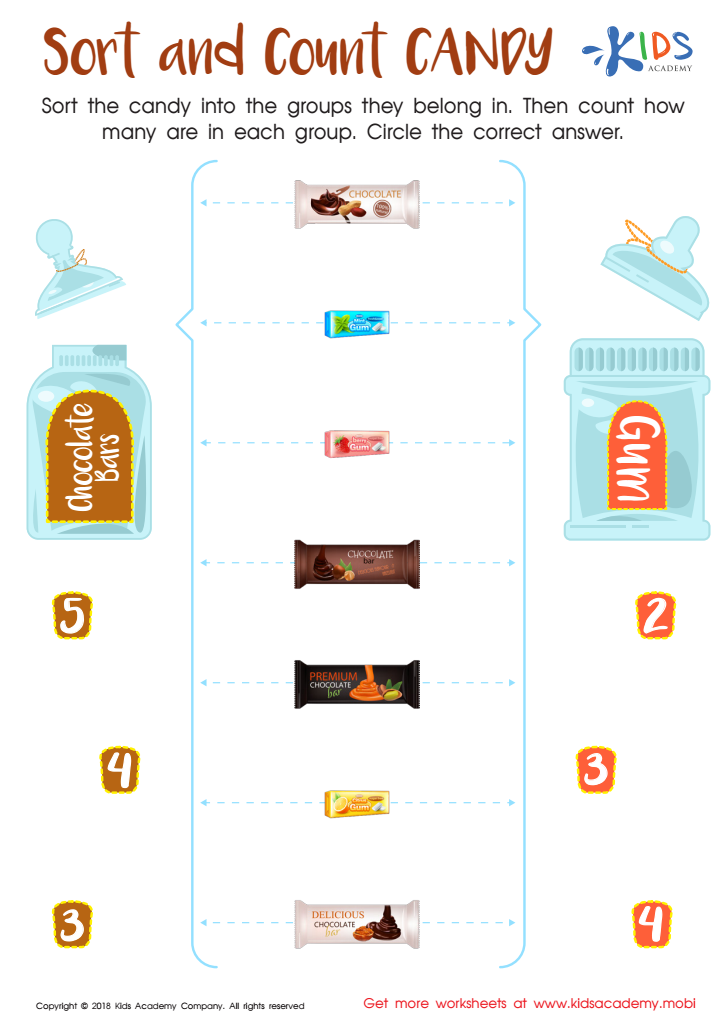
Sort and Count Candy Worksheet
Sort chocolate and candy with your kids! Help them use recognizable items and pictures to sort, practice counting with one-to-one representation, and develop their fine motor skills with the traceable lines. Download this free worksheet to get started. Yum!
Sort and Count Candy Worksheet
Worksheet
Join Kids Academy for Free
Who is primarily going to use this learning content?


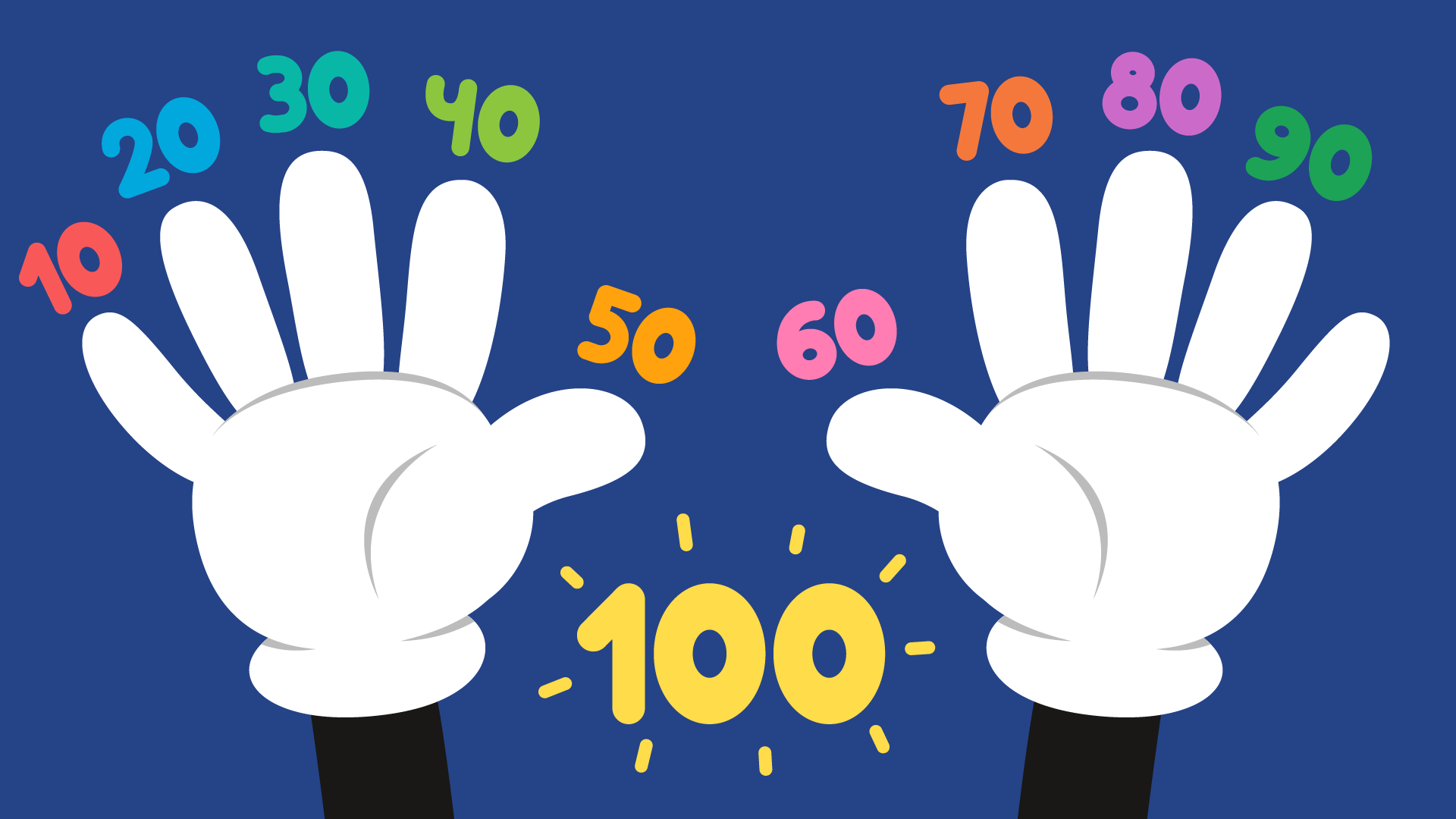





Color recognition and an understanding of normal numbers are fundamental skills for children aged 4 to 6, making them crucial for parents and teachers to prioritize. Firstly, color recognition enhances cognitive development and boosts children’s ability to categorize and differentiate between objects, fostering critical thinking. This foundational skill also aids in the development of language, as children learn to describe and discuss their surroundings.
In tandem, understanding normal numbers lays the groundwork for early math skills. Recognizing numbers helps children make connections through counting, measuring, and understanding quantities, which are vital for later mathematics proficiency. This skill set is not just academically beneficial; it also enhances problem-solving abilities and can improve early literacy through number-related concepts in books and storytelling.
Furthermore, these skills promote confidence and independence as children engage more fully with their environments, whether in a classroom or at home. By cultivating color recognition and number understanding early on, parents and teachers help children build essential cognitive and social-emotional skills, preparing them for future learning and fostering a lifelong love for learning. Prioritizing these learning objectives empowers children, ensuring a strong educational foundation as they progress through their developmental stages.