Animal Classification Normal Math Worksheets for Ages 4-6
3 filtered results
-
From - To
Discover our engaging "Animal Classification Normal Math Worksheets" designed for children aged 4-6! These interactive worksheets provide young learners with the opportunity to explore the fascinating world of animals while sharpening their foundational math skills. Through fun activities, kids will classify animals based on various attributes, enhancing their understanding of categories, counting, and sorting. Our kid-friendly designs make learning enjoyable, encouraging exploration and creativity. Ideal for home or classroom use, these worksheets promote both critical thinking and essential math concepts aligned with early learning standards. Foster a love for animals and math by downloading these enriching resources today!
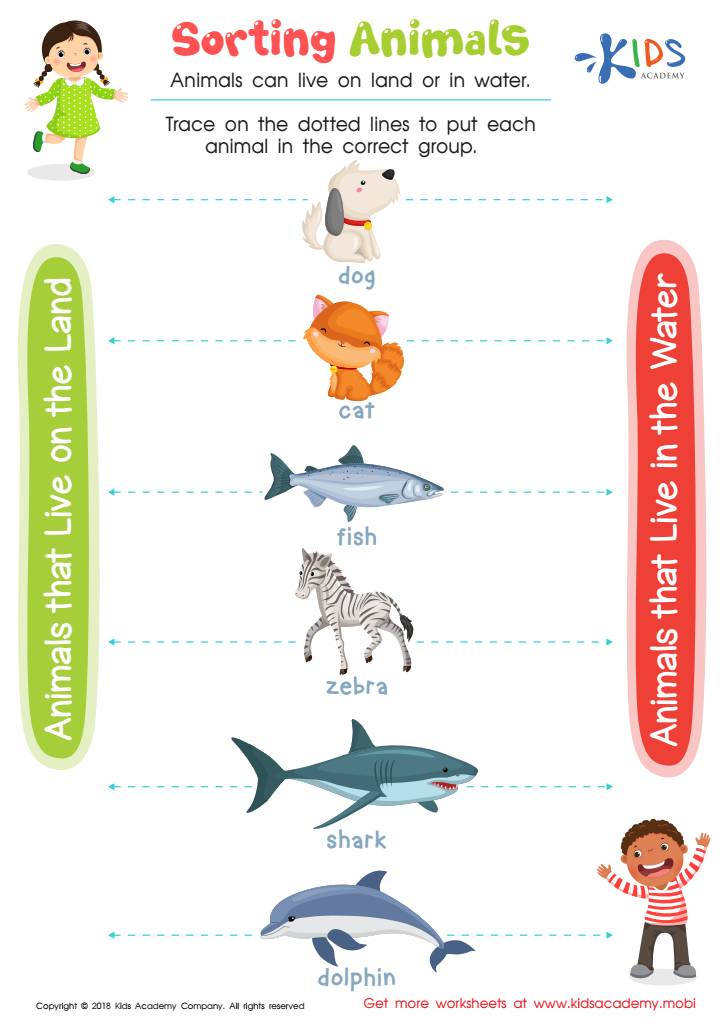
Sorting Animals Worksheet
 Assign to My Students
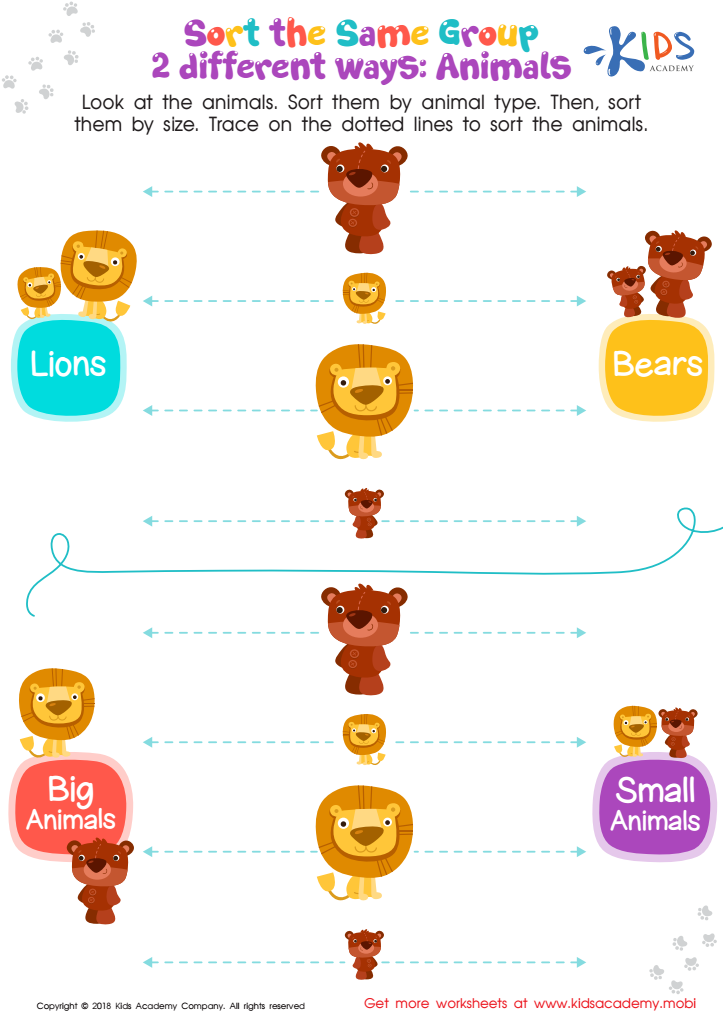
Sort the Same Group 2 Different Ways: Animals Worksheet
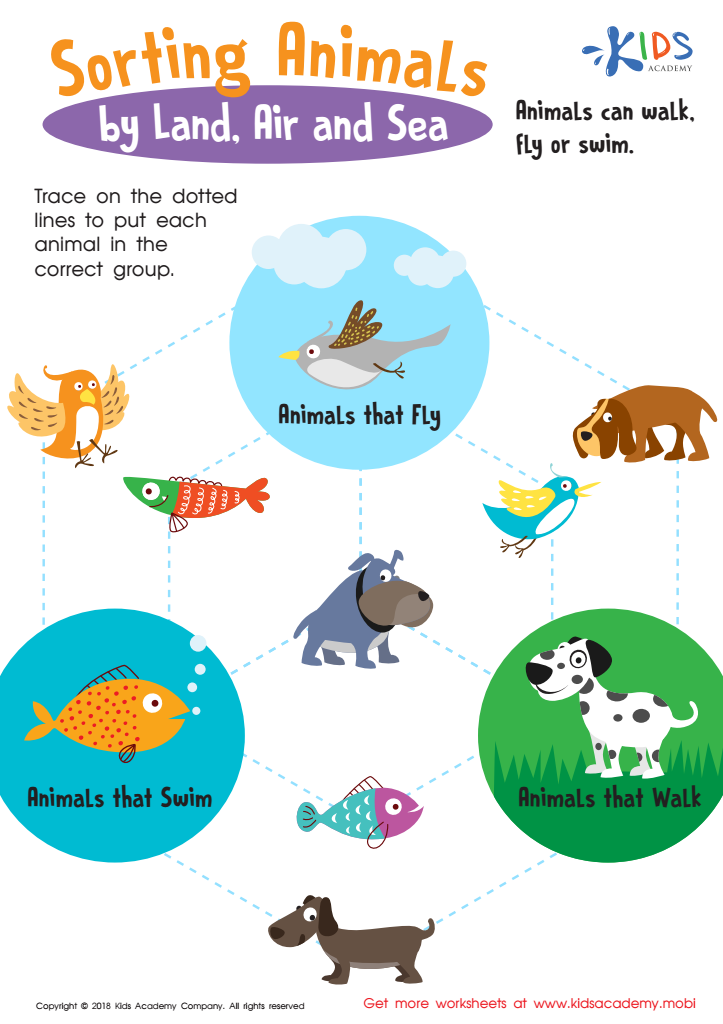
Sorting Animals by Land, Air and Sea Worksheet




.jpg)



Animal classification is a foundational concept that not only enriches children's understanding of the natural world but also integrates seamlessly with early math skills. For parents and teachers, embracing animal classification can foster curiosity and improve critical thinking. When children learn to categorize animals based on traits like size, color, habitat, or diet, they develop important skills in observation and reasoning. These skills are vital in early math, as children often classify objects, similarities, and differences.
Moreover, engaging in activities that combine animal classification and math can enhance cognitive development. Sorting animals into groups provides a tangible way to understand numbers, patterns, and basic operations like addition and subtraction. For example, children can count how many animals belong to a particular category, creating connections between abstract math concepts and concrete experiences.
Additionally, animal classification nurtures empathy and environmental awareness by highlighting the diversity of life forms and their roles in ecosystems. Educators and parents can use this integrated approach to spark discussions about conservation and respect for all living beings. In this way, early exposure to animal classification not only builds foundational knowledge but also enriches children's emotional and intellectual growth.








