Improving math skills Normal Math Worksheets for Ages 4-6
4 filtered results
-
From - To
Boost your child's math skills with our engaging "Normal Math Worksheets for Ages 4-6". Designed to develop foundational abilities in counting, addition, and subtraction, these worksheets offer fun and interactive activities for young learners. Perfect for home or classroom use, our printable worksheets provide a solid grounding in early math concepts, enhancing logical thinking, problem-solving, and numerical fluency. Tailored to keep children motivated and confident, each worksheet encourages hands-on practice with colorful visuals and age-appropriate challenges. Equip your little ones with the tools they need for math success and watch their skills flourish!
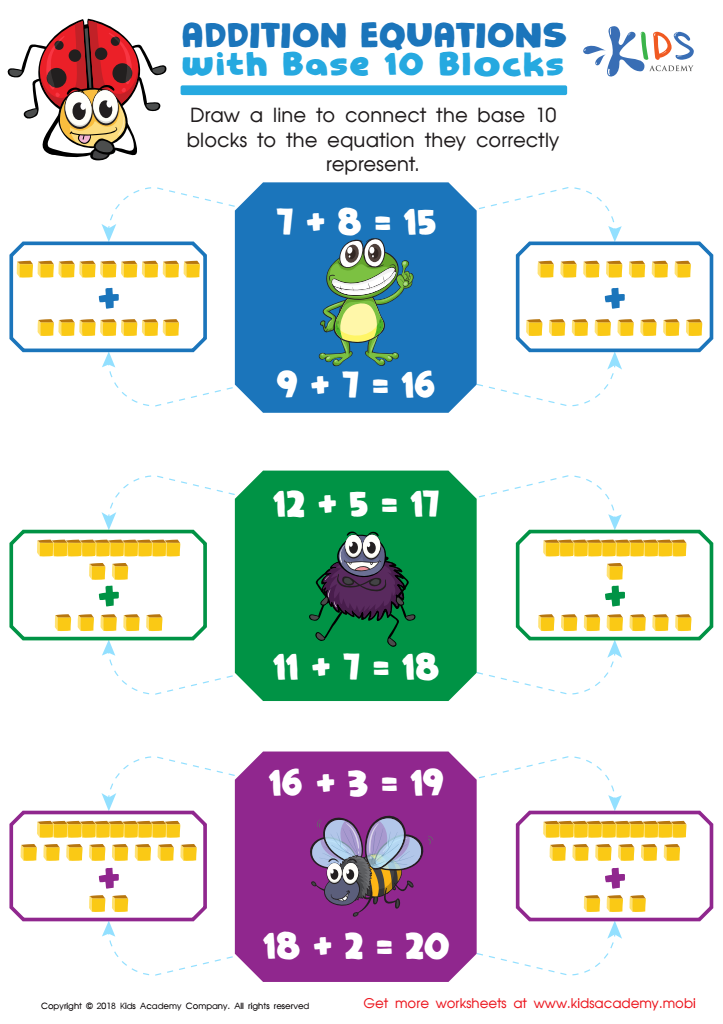
Addition Equations With Base 10 Blocks Worksheet
 Assign to My Students
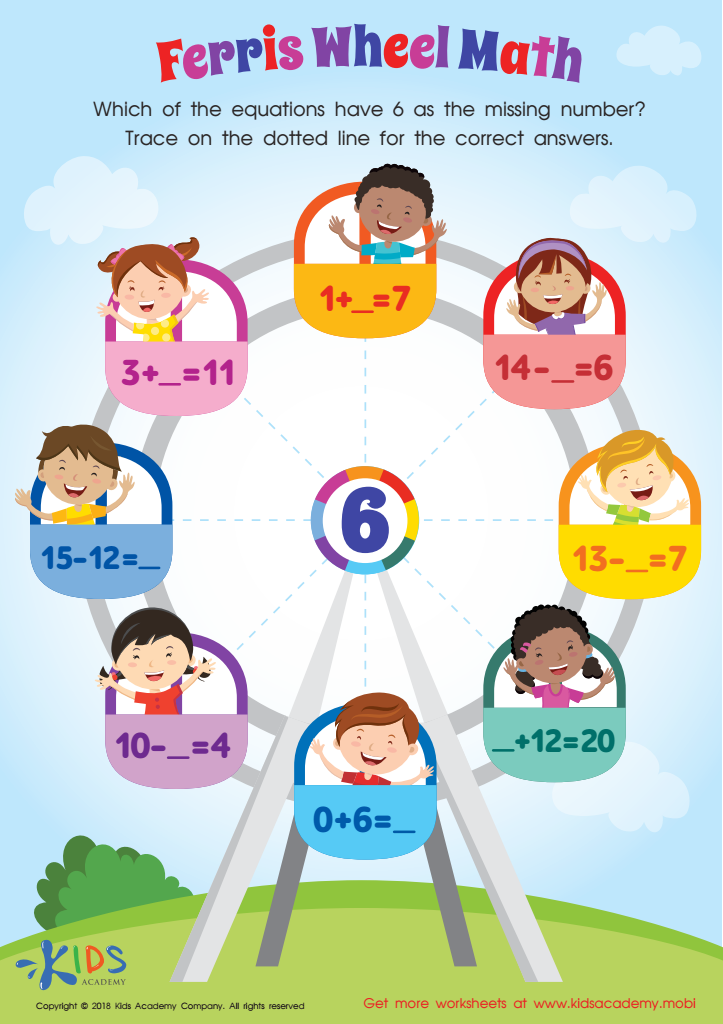
Missing Number: Ferris Wheel Math Worksheet
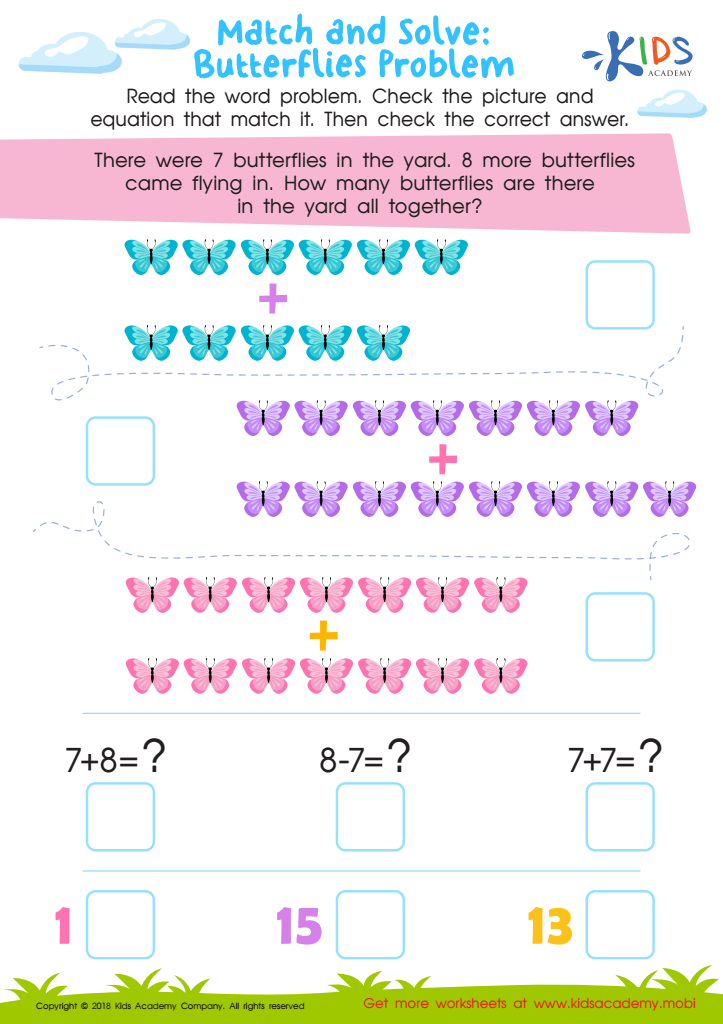
Match and Solve: Butterfly Problem Worksheet
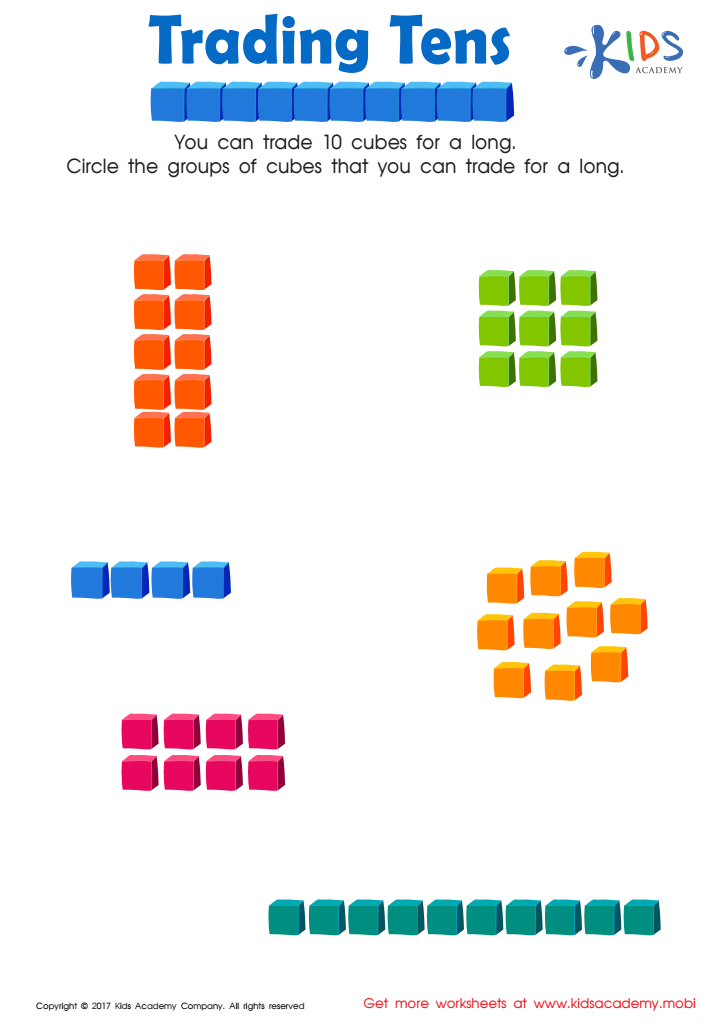
Trading Tens Worksheet








Improving math skills in children aged 4-6 is crucial because these foundational years set the stage for future academic success and cognitive development. At this age, children are highly receptive and can easily grasp basic mathematical concepts, such as counting, recognizing numbers, and simple addition or subtraction. Developing a strong mathematical foundation enhances their problem-solving abilities and critical thinking, fundamental skills that extend beyond mathematics and into everyday life.
By prioritizing math skills early on, parents and teachers help children build confidence in their abilities to tackle challenges. This confidence is essential, as it encourages a positive attitude towards learning and reduces the likelihood of math anxiety in later years. Additionally, early mathematical competence is often linked to better performance in other academic subjects, including science and reading, due to the analytical skills acquired.
Moreover, many aspects of daily life, such as time management, handling money, and following recipes, require basic math understanding. Starting early allows children to develop these practical skills in a comfortable, supported environment. Ultimately, caring about improving math skills in young children prepares them for a bright academic future and equips them with essential life skills. Teachers and parents play pivotal roles by providing the encouragement and opportunities to explore and practice math in enjoyable and meaningful ways.








