
Visual Perception Skills Normal Math Worksheets for Ages 4-6
3 filtered results
Difficulty Level
Grade
Age
-
From - To
Subject
Activity
Standards
Discover our "Visual Perception Skills Normal Math Worksheets for Ages 4-6" at Kids Academy. Specifically designed for young learners, these worksheets enhance essential visual perception skills vital for early math proficiency. Activities focus on number recognition, pattern identification, matching, and sequencing in a fun and engaging way. Developed by educational experts, our printable worksheets ensure your child builds a strong math foundation while enjoying the learning process. Perfect for both classroom and home use, these resources support visual learning styles and cultivate a love for math from an early age. Unlock your child's potential with Kids Academy today!
Favorites
With answer key
Interactive
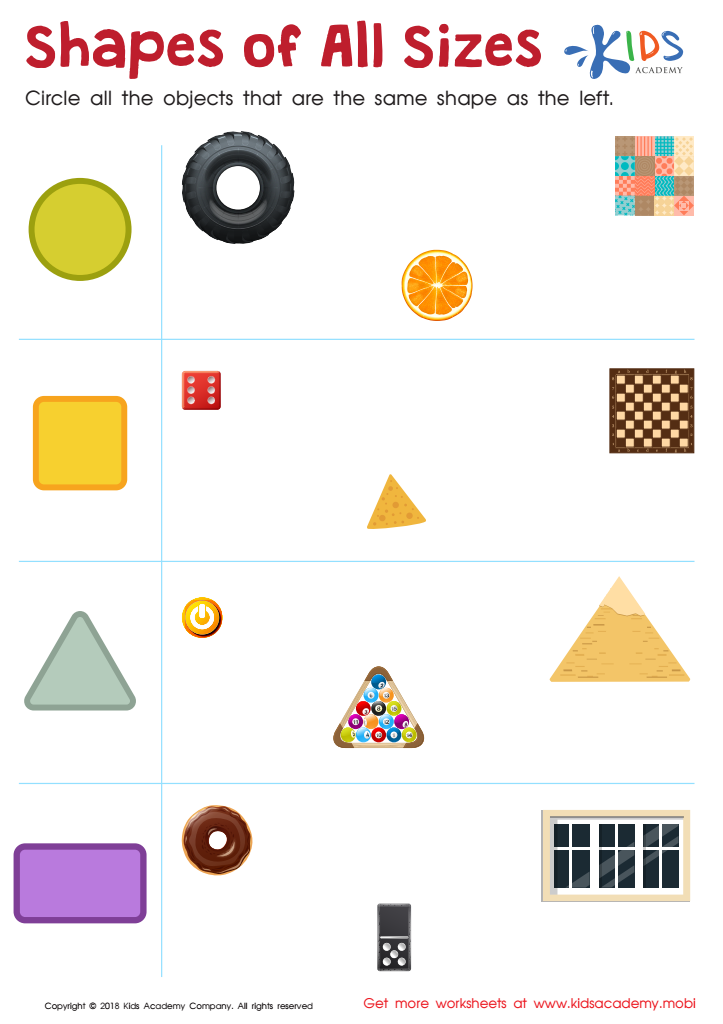
Shapes of All Sizes Worksheet
Students will have fun comparing basic shapes to familiar objects with this worksheet. It's an excellent way to help them recognize similarities in geometric shapes, building strong foundations for understanding congruence and similarity.
 Assign to My Students
Shapes of All Sizes Worksheet
Worksheet
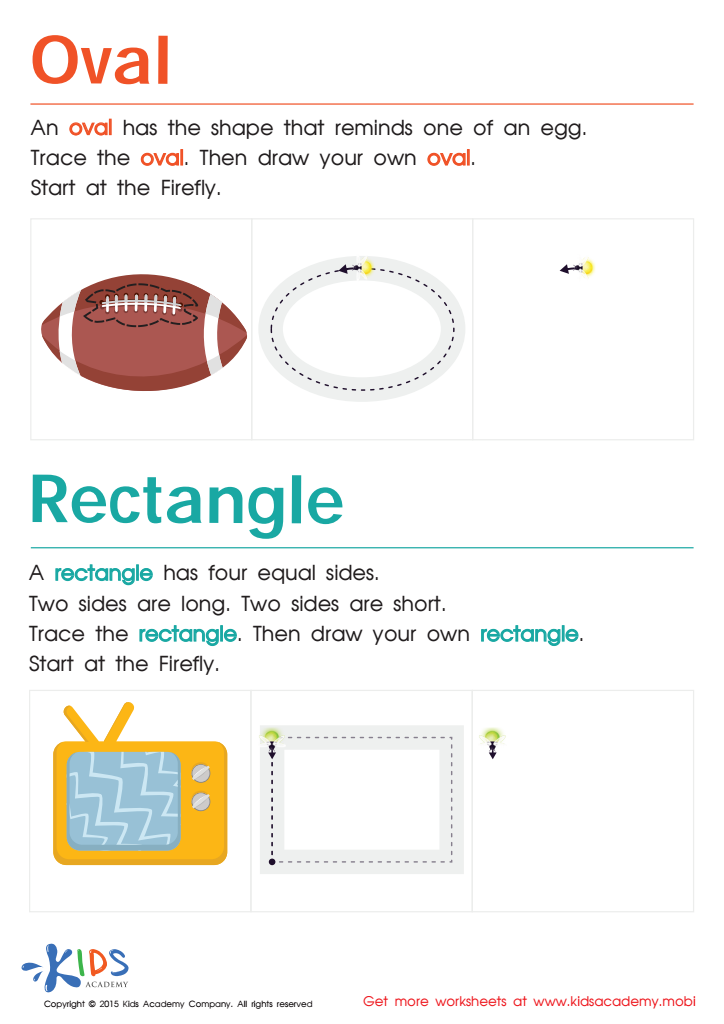
Easy Drawing of Ovals And Rectangles Worksheet
Kids Academy offers free geometry worksheets to make learning more fun and interesting. Trace an oval, rectangle, and many other shapes!
Easy Drawing of Ovals And Rectangles Worksheet
Worksheet
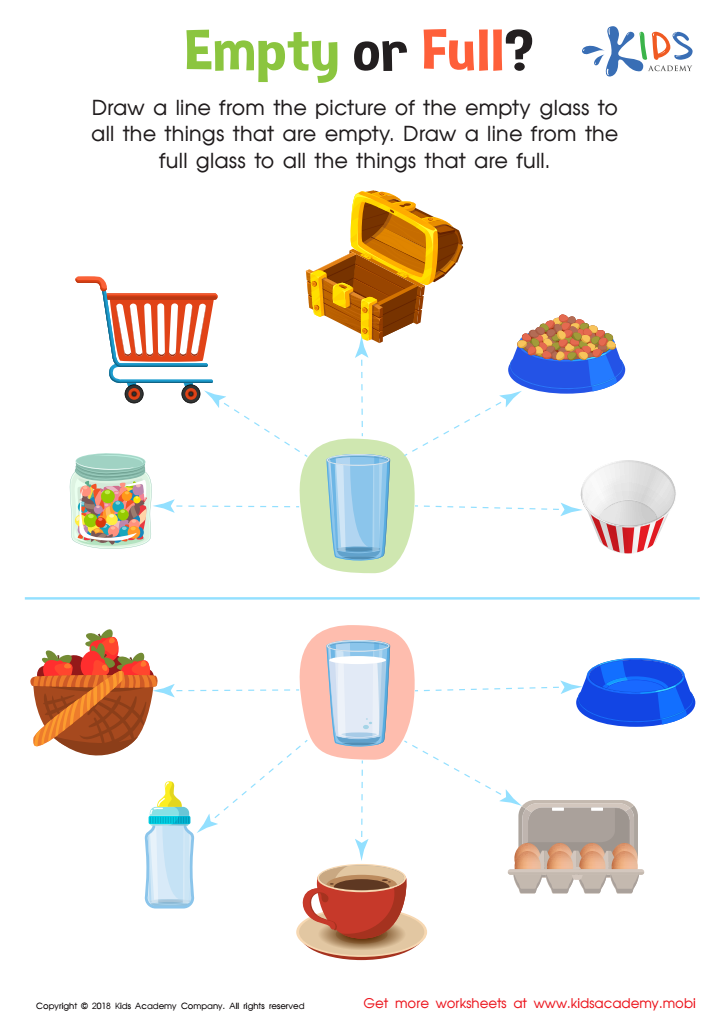
Empty or Full? Worksheet
Let students get to grips with the concepts of empty and full with this PDF worksheet. It uses fun, bright pictures to help them comprehend the difference and also helps develop fine-motor skills with tracing lines. Kids will be proud of themselves as they get answers right!
Empty or Full? Worksheet
Worksheet
Join Kids Academy for Free
Who is primarily going to use this learning content?








Visual perception skills are crucial for young children, particularly those in the 4-6 age range, as these skills are foundational for later academic success. Visual perception refers to the brain's ability to interpret and make sense of what the eyes see. Normal math activities for young children often involve recognizing numbers, shapes, patterns, and quantities, all of which require strong visual perception.
For parents and teachers, nurturing these skills can lead to a smoother learning journey for children. Kids with well-developed visual perception can better understand and complete tasks such as counting objects, identifying numbers, and sorting shapes. These activities are not simply about learning numbers, but also about understanding spatial relationships, differences in size, and other math-related concepts.
When children struggle with visual perception, they may find it challenging to follow along in classroom activities, resulting in frustration and decreased confidence. Early identification and support can help mitigate these issues, enabling children to keep pace with their peers and develop a love for learning. Engaging children in games, puzzles, and age-appropriate visual-math activities not only enhance visual perception skills but also set a solid groundwork for more complex math concepts they'll encounter later in their education.








