
Story sequencing Normal Reading Worksheets for Ages 4-6
12 filtered results
Difficulty Level
Grade
Age
-
From - To
Subject
Activity
Standards
Boost your child's reading skills with our "Story Sequencing Normal Reading Worksheets for Ages 4-6". Designed by experts at Kids Academy, these worksheets engage young learners with captivating stories and illustrations. Perfect for preschool and kindergarten, they help kids understand narrative structure and order of events. By arranging pictures or sentences, children enhance their comprehension, critical thinking, and sequencing abilities. Fun and educational, our worksheets turn reading into an exciting adventure. Set your child on the path to reading success with these foundational resources. Download now and watch their love for storytelling blossom!
Favorites
With answer key
Interactive
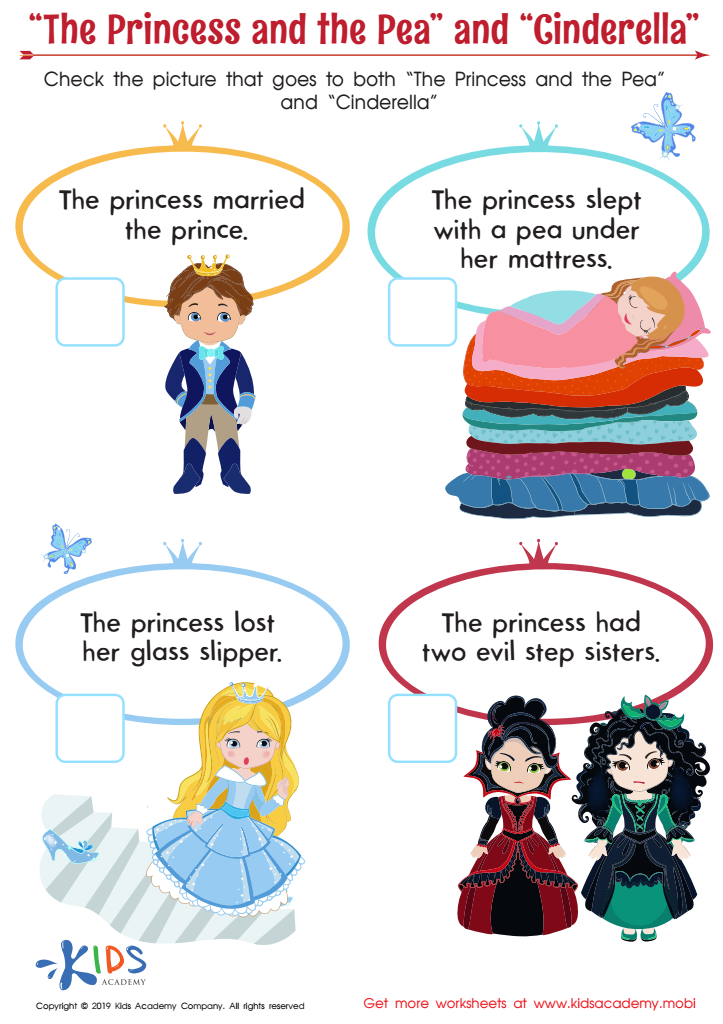
“The Princess and the Pea” and “Cinderella” Worksheet
Read "Cinderella" and "The Princess and the Pea" to your little ones. Ask them what their favorite parts were and what similarities they found in the princesses. This worksheet has four pictures of scenes from the stories. Ask your kids which picture goes with both tales.
 Assign to My Students
“The Princess and the Pea” and “Cinderella” Worksheet
Worksheet
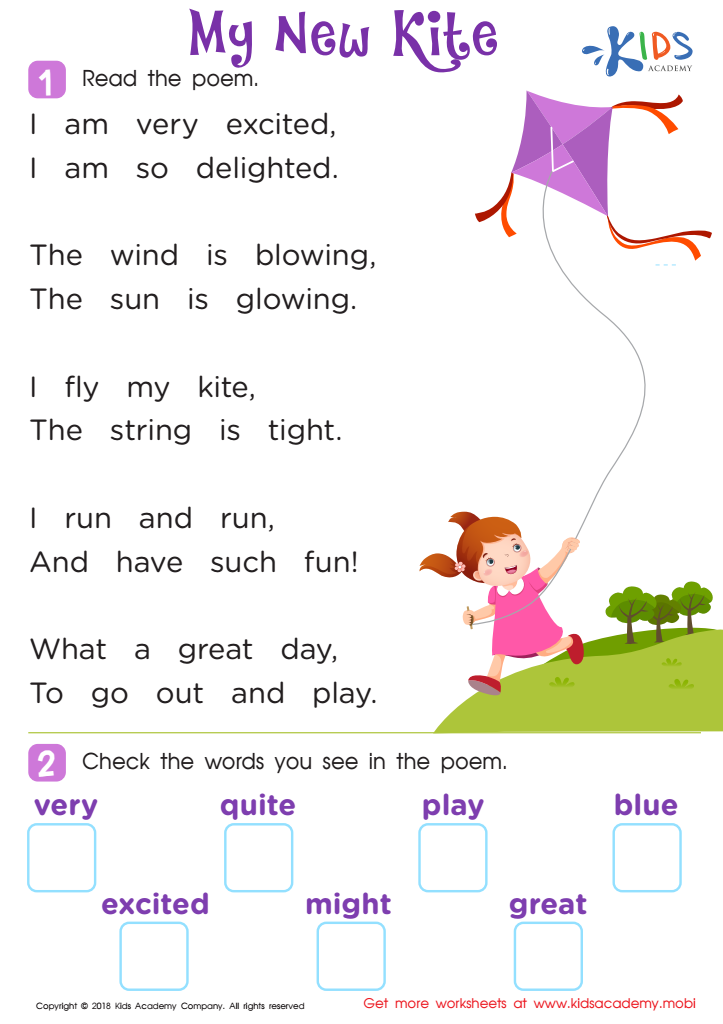
Poem: My New Kite Worksheet
Read a cheerful poem with your child and have them check the boxes next to the words that appear. Then, ask them to identify rhyming words, noting that these won't appear at the bottom of the page. This is a delightful reading activity to help your child remember what they read.
Poem: My New Kite Worksheet
Worksheet
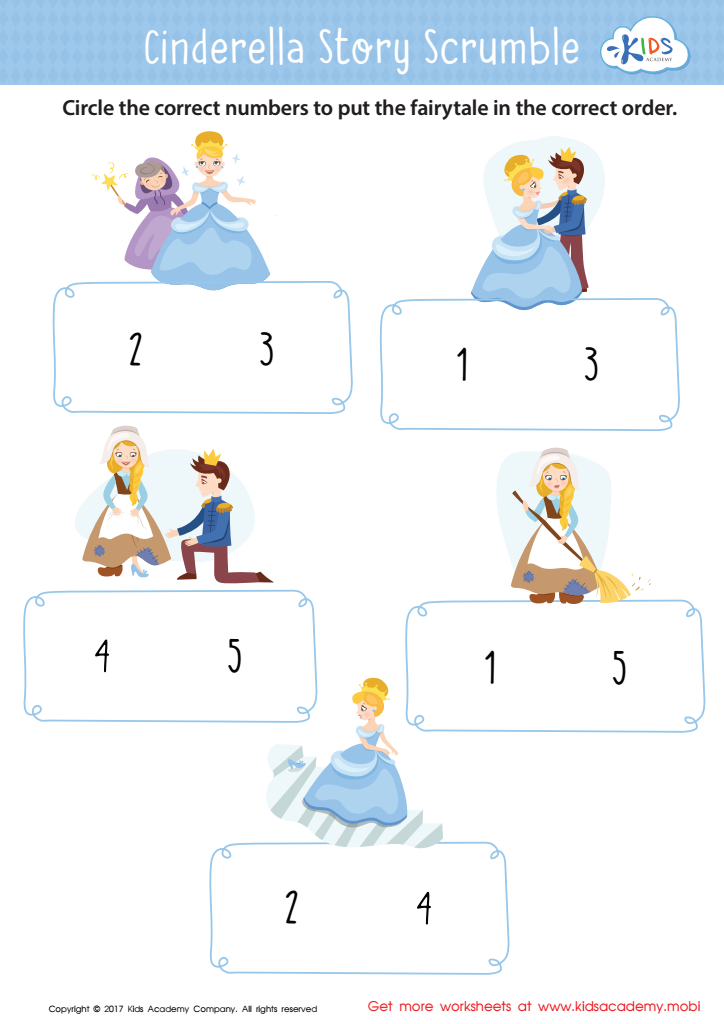
Cinderella Story Sequencing Worksheet
This worksheet helps strengthen reading comprehension skills by getting your child to remember key moments from the Cinderella story. They'll be asked to place pictures in the right order to tell the story.
Cinderella Story Sequencing Worksheet
Worksheet
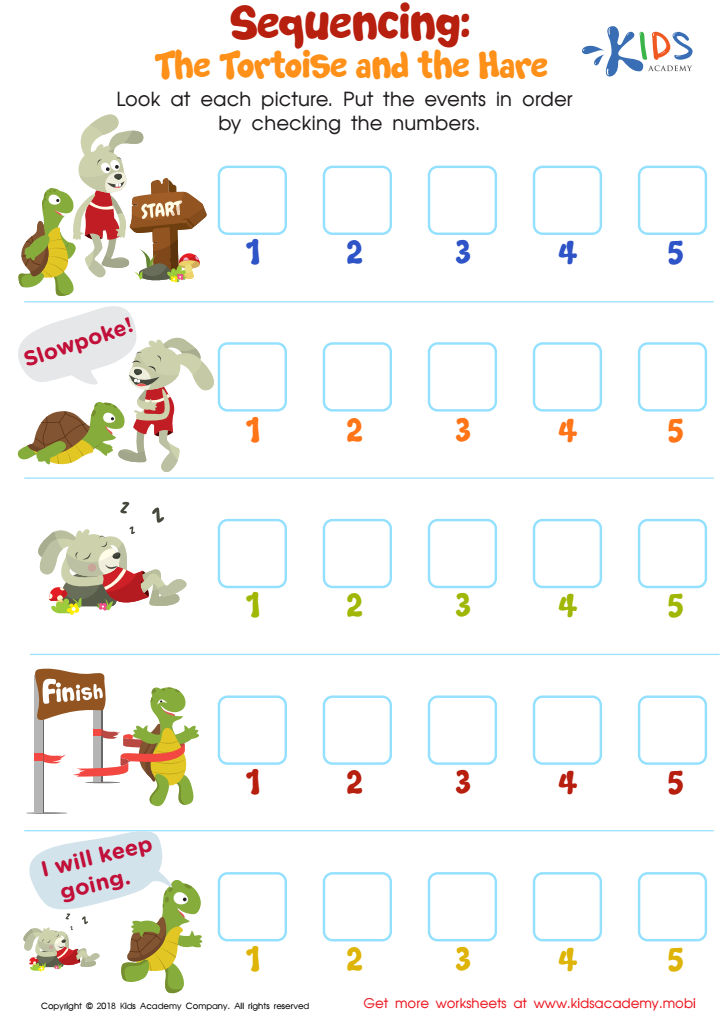
Sequencing: The Tortoise and the Hare Worksheet
Help your child become an independent reader and critical thinker with a sequencing worksheet from Kids Academy! Have them read the classic tale of the tortoise and the hare and use the accompanying worksheet to check their understanding of the story's sequence of events. Have kids identify the correct order of events by selecting the box next to the correct number for each image!
Sequencing: The Tortoise and the Hare Worksheet
Worksheet
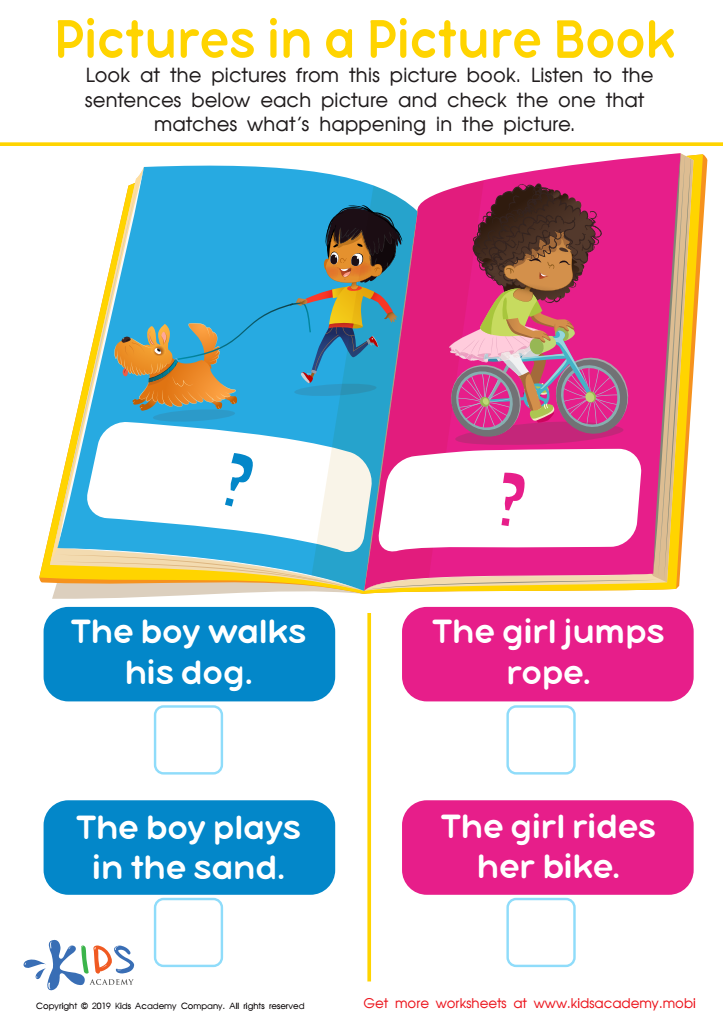
Picture in Books Worksheet
Picture books are popular with students - they're easier to read and understand because of the captions and illustrations. With preschoolers, look at the pictures in the book and read the sentences in the worksheet. Help them choose the one that matches the scene.
Picture in Books Worksheet
Worksheet
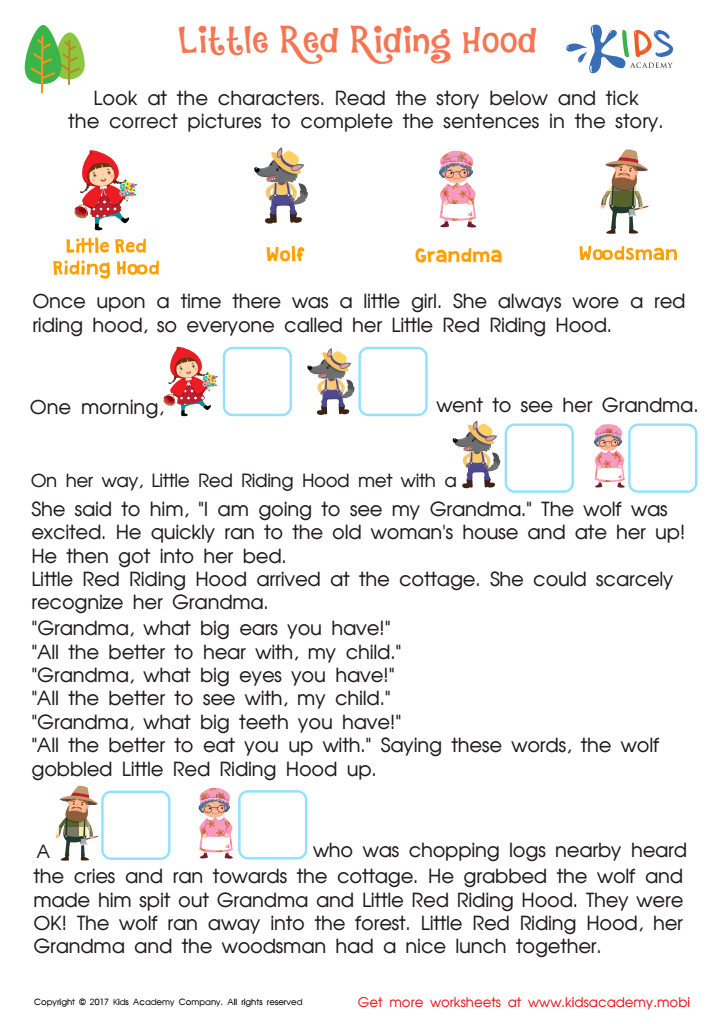
Little Red Riding Hood Printable
Give them this worksheet to practice.
Help your child strengthen their reading skills with this worksheet. It asks them to read Little Red Riding Hood and fill in the missing words using context clues from the text. Encourage your child to look at the surrounding words to determine the answer and get the best results!
Little Red Riding Hood Printable
Worksheet
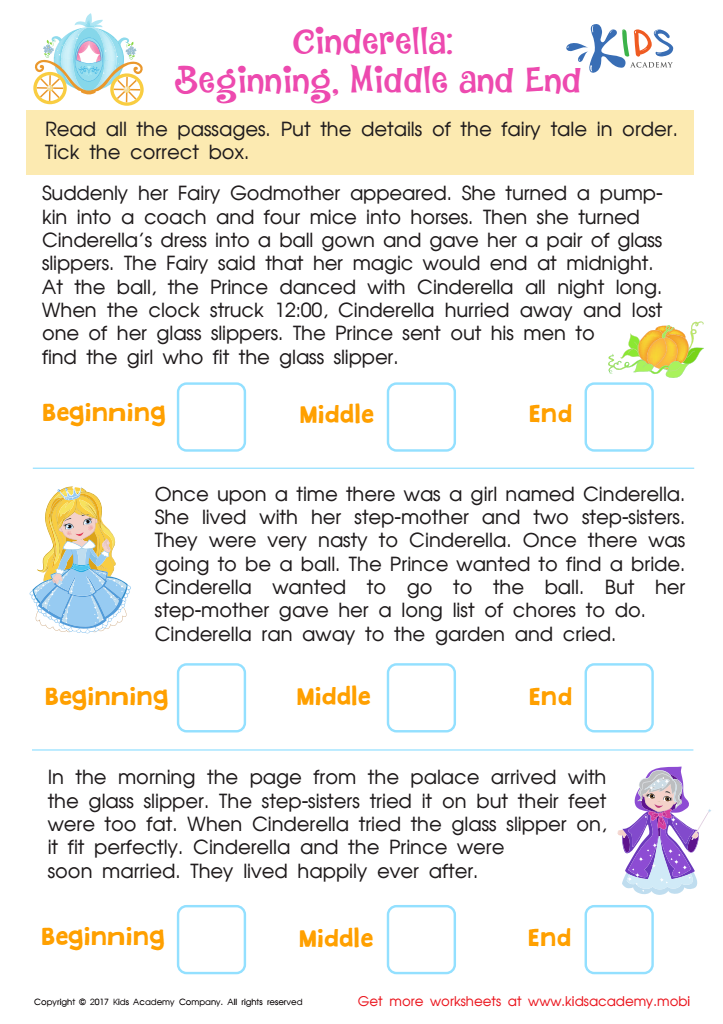
Cinderella: Beginning, Middle and End Worksheet
This Cinderella-themed worksheet provides an excellent opportunity for your child to practice reading comprehension and understanding the basics of story structure.
Help your child learn a key story concept with this Cinderella-themed reading comprehension worksheet. It's an excellent way for them to practice understanding the different parts of a story, from the beginning to the end. Kids will love getting to know the beloved fairy tale of Cinderella!
Cinderella: Beginning, Middle and End Worksheet
Worksheet
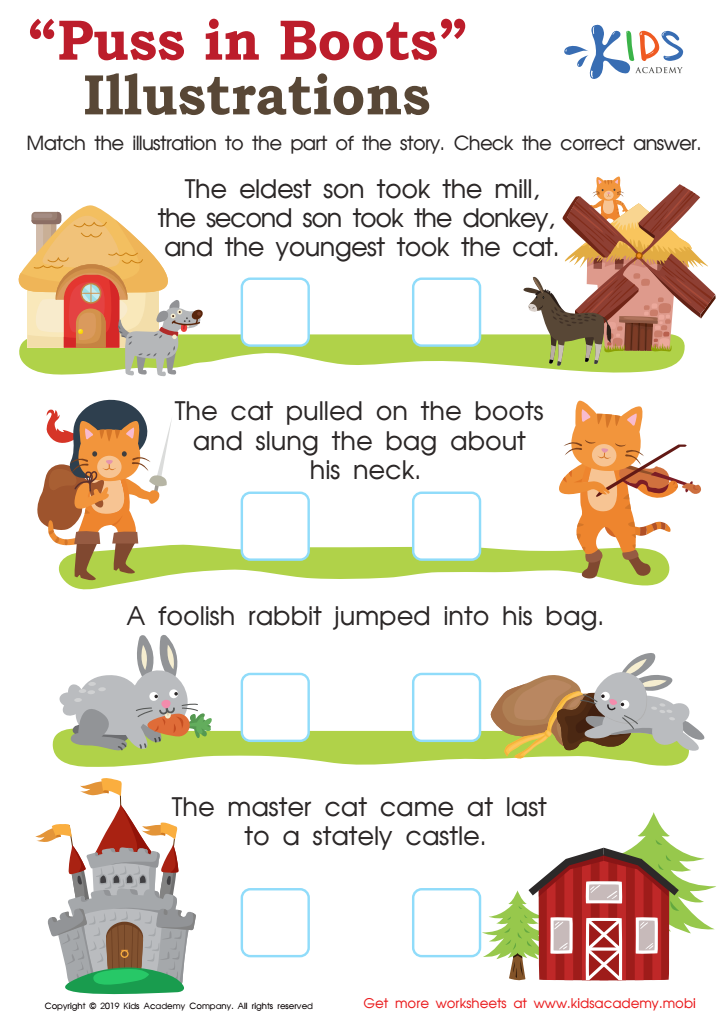
Puss in Boots Illustrations Worksheet
This Puss In Boots Illustrations worksheet is a great way to help kids learn about retelling stories. They'll match images to different parts of the story and check off the correct answer. As they recall events and put them in sequence they'll enjoy this fun and creative activity.
Puss in Boots Illustrations Worksheet
Worksheet
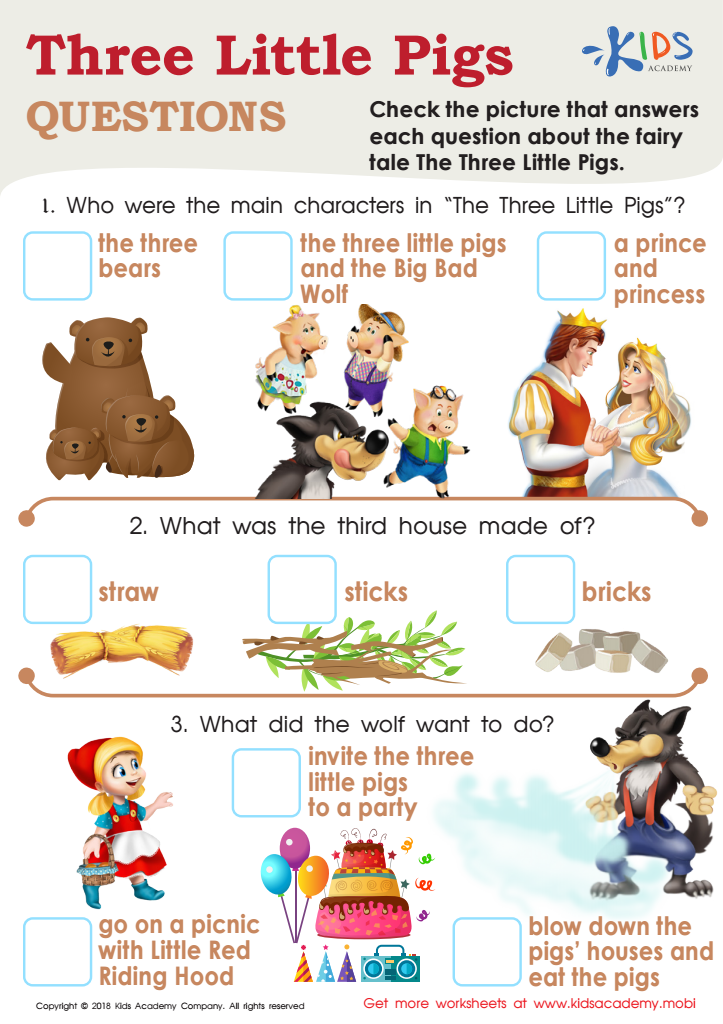
Three Little Pigs Questions Worksheet
Does your kid love bedtime stories? Test their classic fairytale knowledge with this worksheet! If they mention The Three Little Pigs, they're in luck - this pdf has them answering questions based off the classic fairytale. They'll check the picture that answers each question about the story. Is their fairytale knowledge up to scratch?
Three Little Pigs Questions Worksheet
Worksheet
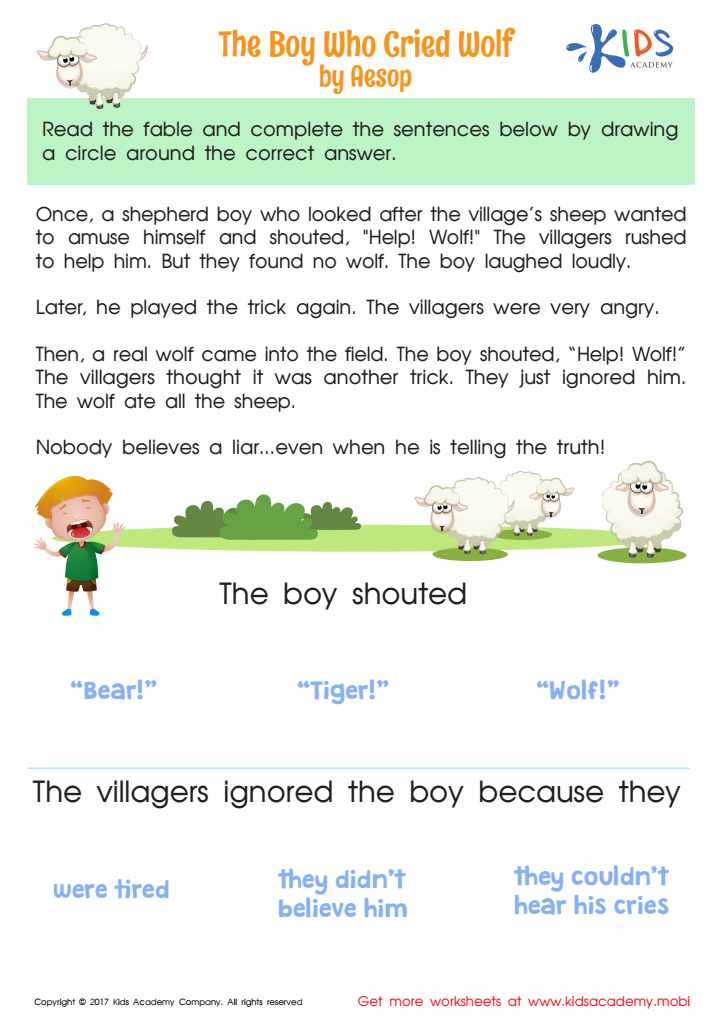
The Boy Who Cried Wolf Worksheet
Test your child's reading comprehension with The Boy Who Cried Wolf worksheet. Read the fable, then answer the questions. Use the text to help your child check their answers are correct. Boost reading skills in a fun, interactive way!
The Boy Who Cried Wolf Worksheet
Worksheet
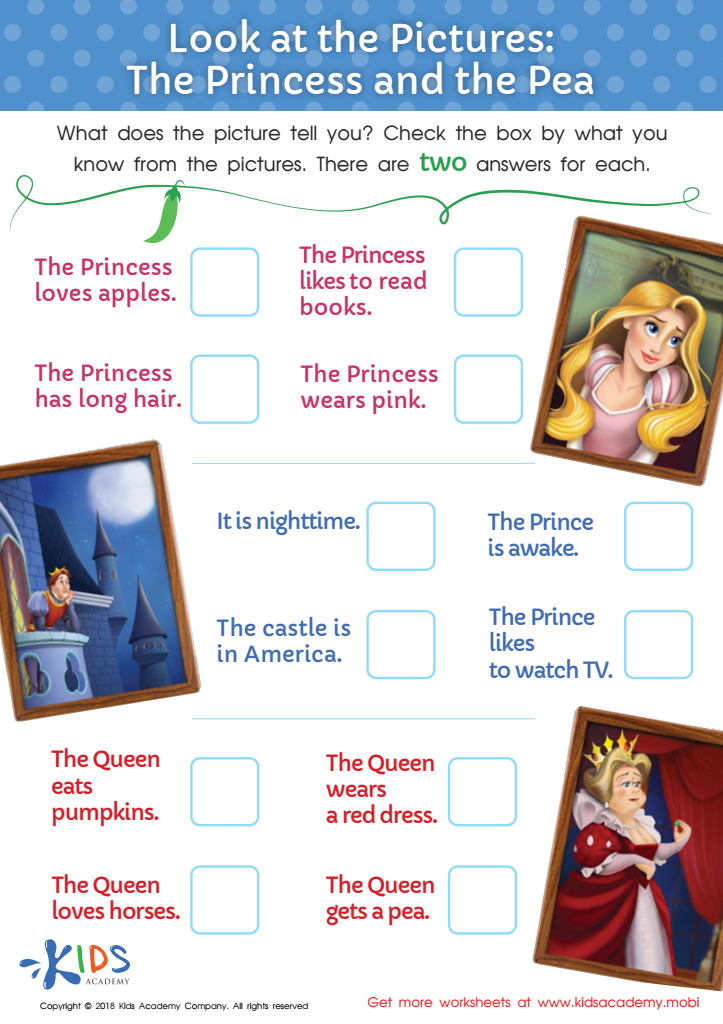
Look at the Pictures: The Princess and the Pea Worksheet
Early readers can benefit from picture clues to understand stories and text. Looking at images helps them learn the meaning of words and comprehend events. Use this worksheet on The Princess and the Pea to let students observe and learn from the pictures. It's a great way to help them comprehend early reading materials.
Look at the Pictures: The Princess and the Pea Worksheet
Worksheet
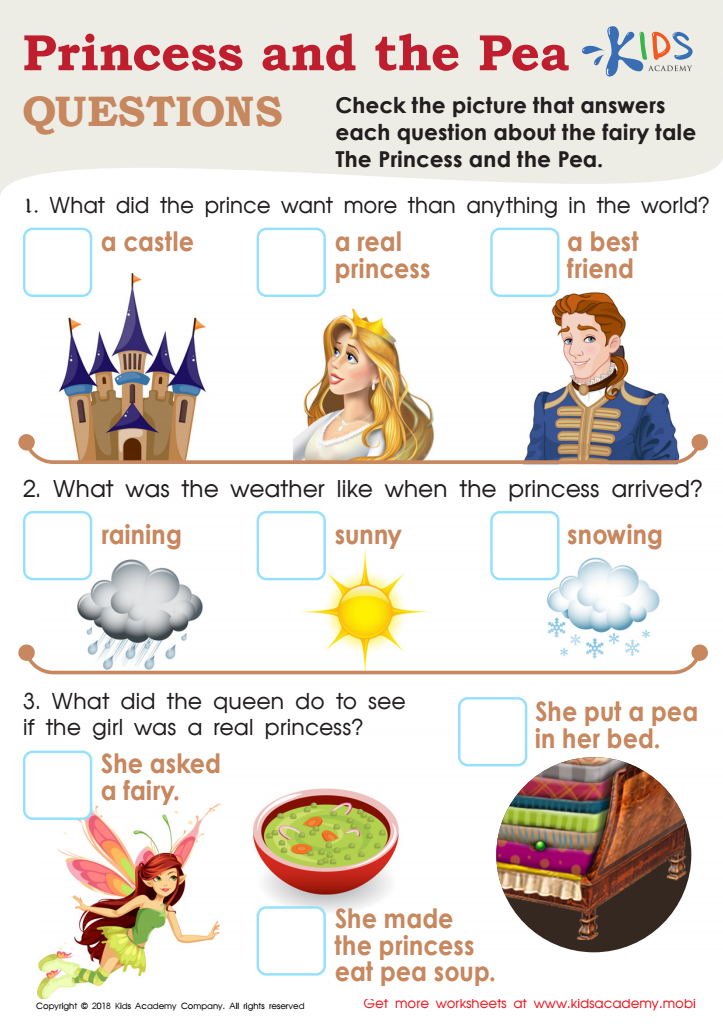
Princess and the Pea Questions Worksheet
Your kid knows The Princess and the Pea inside-out? Test their knowledge with this worksheet. Ask your little one to read the questions and match each one to the picture. It's a fun way to see just how much attention they've paid to their bedtime story.
Princess and the Pea Questions Worksheet
Worksheet
Join Kids Academy for Free
Who is primarily going to use this learning content?






Story sequencing in normal reading for ages 4-6 is crucial because it lays the foundation for essential literacy and cognitive skills. At this age, children are beginning to understand the structure of stories, which typically include a beginning, middle, and end. By learning to sequence stories, they gain a sense of order, cause and effect, and the ability to predict what happens next. These skills are vital for comprehension and critical thinking.
When parents and teachers prioritize story sequencing, they help children improve their memory and attention to detail. Sequencing tasks often require kids to recall specific details and arrange them logically, enhancing their ability to retain and organize information. Additionally, understanding story structure supports vocabulary development, as children learn new words in context and begin to grasp the narrative's ebb and flow.
Moreover, reading and sequencing stories together fosters a love for reading. It turns abstract ideas into concrete, manageable chunks, making the process of learning to read less daunting and more enjoyable for young children. It also provides an excellent opportunity for bonding and interactive learning.
Ultimately, focusing on story sequencing equips children with tools necessary for academic success and promotes a lifelong appreciation for reading. It integrates literacy with fundamental cognitive development, forming a critical aspect of early education that parents and teachers should strongly emphasize.








