
Reading comprehension Normal Animals Worksheets for Ages 4-6
7 filtered results
Difficulty Level
Grade
Age
-
From - To
Subject
Activity
Standards
Welcome to our Reading Comprehension Normal Animals Worksheets designed specifically for children ages 4-6! These engaging worksheets are perfect for young learners to enhance their reading skills while exploring the exciting world of animals. Each worksheet features informative texts about various normal animals, accompanied by fun illustrations to captivate young minds. Students will answer questions that promote critical thinking and comprehension as they build their vocabulary and understanding of nature. Ideal for classrooms or home use, our worksheets provide a solid foundation for early literacy and a love for learning. Dive into the animal kingdom and boost your child's reading confidence today!
Favorites
With answer key
Interactive
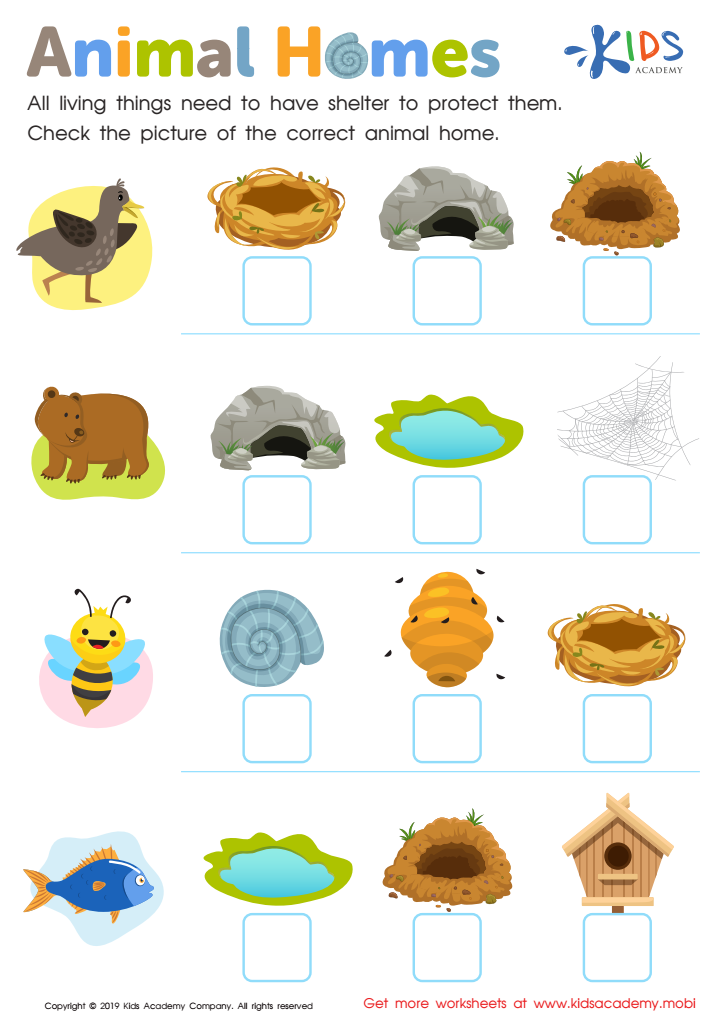
Animal Homes Worksheet
Students have homes where they can do things they love, sleep and stay safe from bad weather. Check the worksheet for animals and their shelters. Ask your kids to identify each and match the animal home to the picture. (80 words)
 Assign to My Students
Animal Homes Worksheet
Worksheet
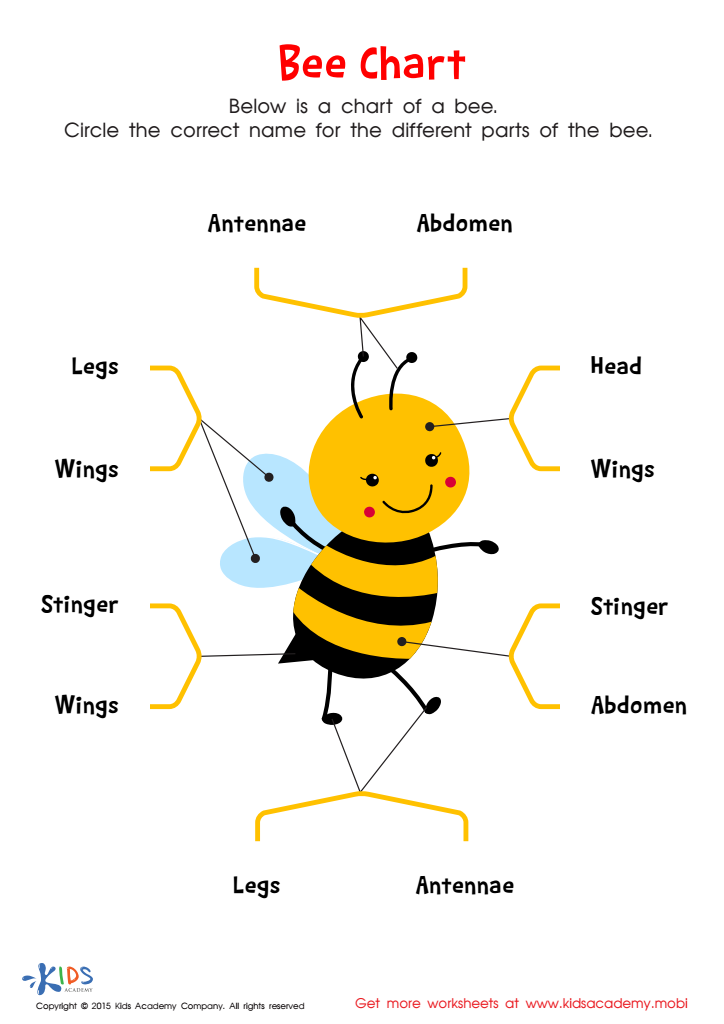
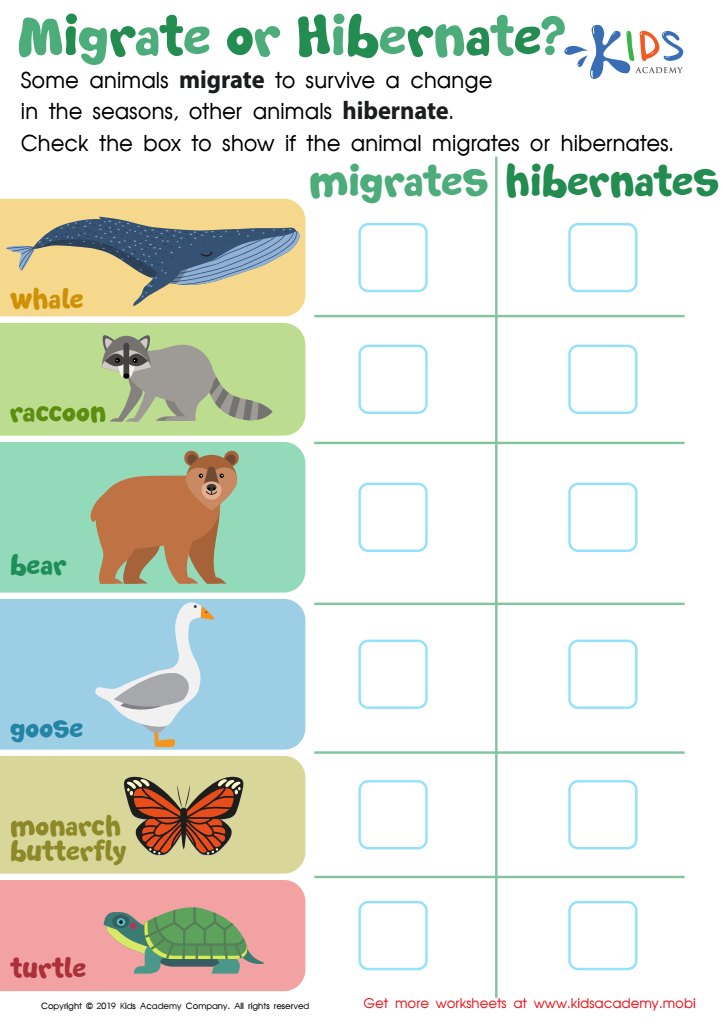
Migrate or Hibernate? Worksheet
Many animals survive by either migrating or hibernating when the weather changes. Migration involves traveling in flocks or herds to a more temperate climate, while hibernation is when animals stay in their homes and eat and sleep for a long period of time. Show your kids this worksheet and help them decide which strategy animals use to cope with the changing weather.
Migrate or Hibernate? Worksheet
Worksheet
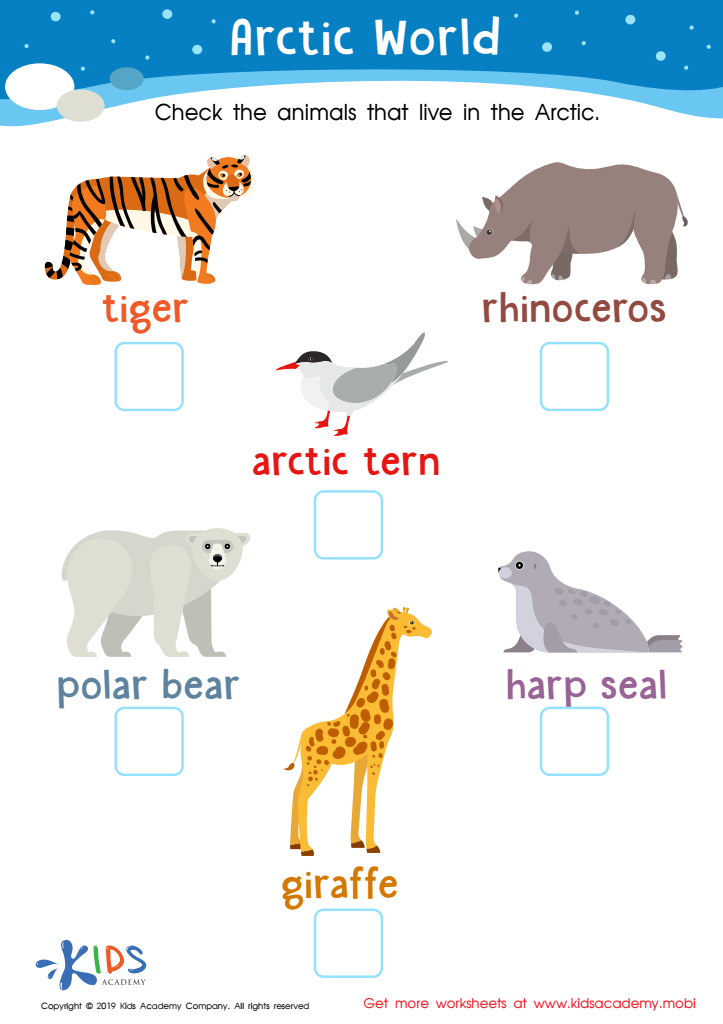
Arctic World Worksheet
Ask your students if they know where the Arctic is located and what lives there. If not, use a world atlas to show them. The Arctic is very cold and snow-covered; native animals have adapted to survive the harsh conditions. Look at the animals in the worksheet and help your students decide which ones live in the Arctic.
Arctic World Worksheet
Worksheet
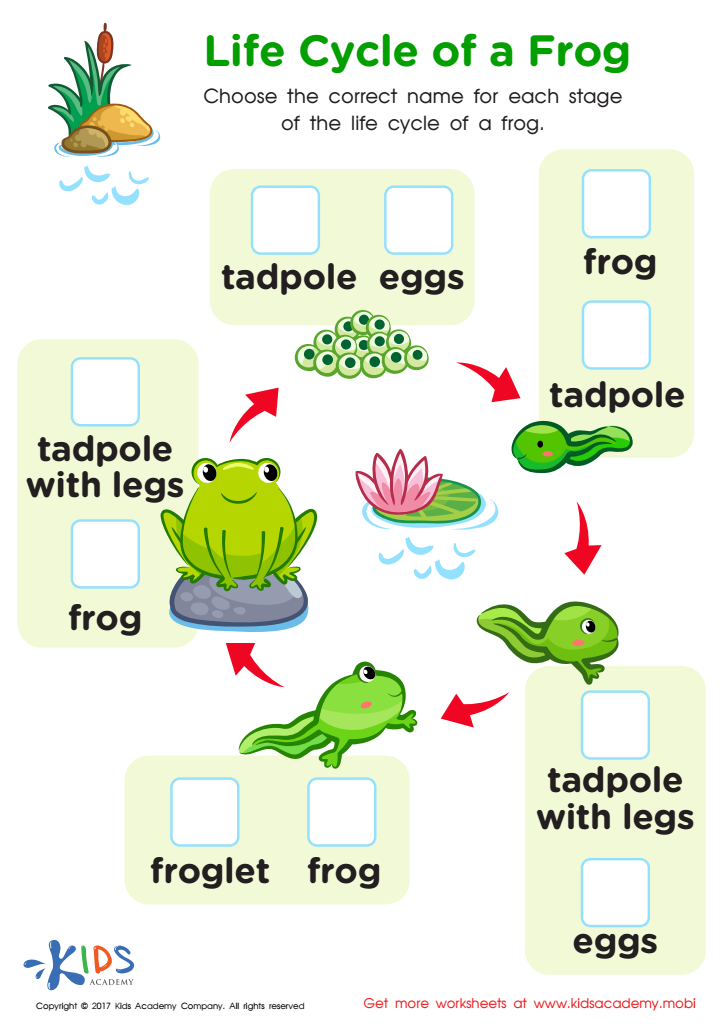
Life Cycle Frog Printable
Kids can explore the life cycle of frog with this fun worksheet! Draw lines from one stage to the next to follow the transformation from tadpole to frog and learn about the cycle of life.
Life Cycle Frog Printable
Worksheet
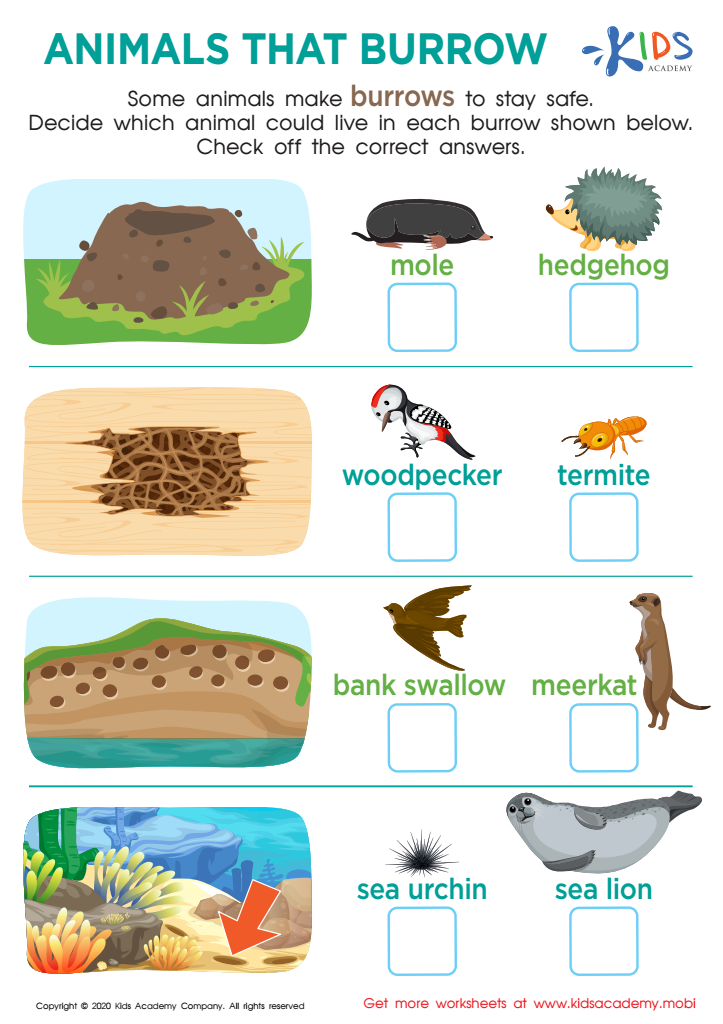
Animals That Burrow Worksheet
Teach your little one about animal protection with this Kids Academy PDF worksheet! Help them read the description of burrowing animals, then check off the pictures to discover which ones hide in holes. It's an exciting way to learn about the fascinating ways animals keep themselves safe from predators.
Animals That Burrow Worksheet
Worksheet
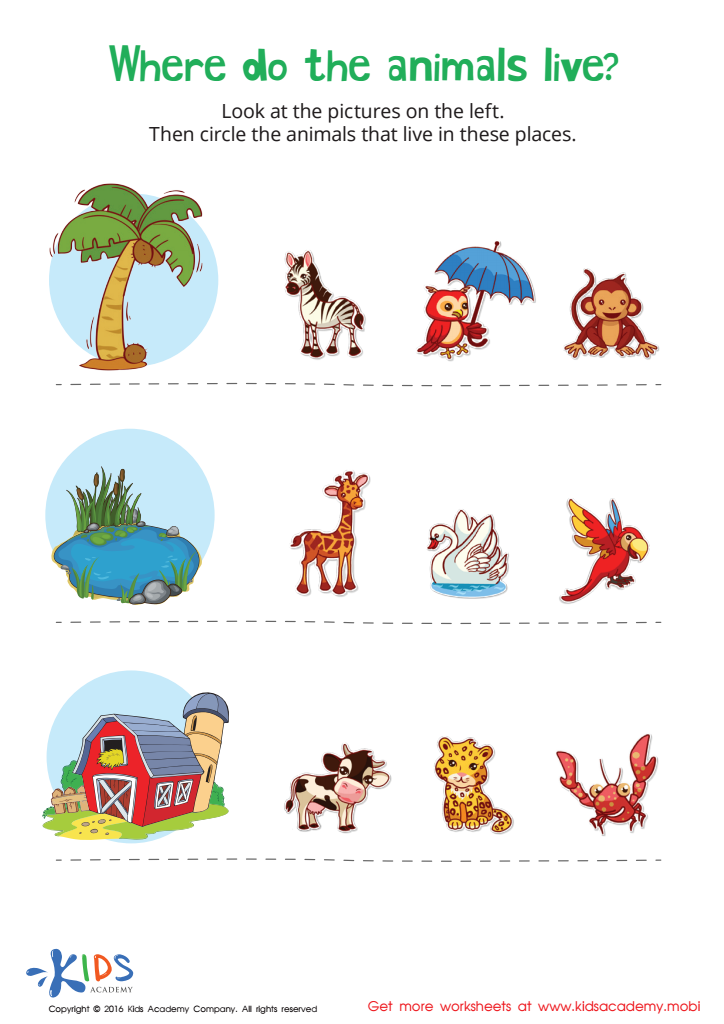
Where Animals Live Worksheet
Teaching early reading and math skills is important, but don't forget about science. With the Where Animals Live PDF worksheet, kids can identify their favorite animals and the environments they live in. Ask them what type of environment the animals like and introduce them to geography. It's great for logical reasoning and classification skills. Your kid will practice with their favorite animals and love the trip to the zoo afterwards!
Where Animals Live Worksheet
Worksheet
Join Kids Academy for Free
Who is primarily going to use this learning content?








Reading comprehension in early childhood, especially regarding themes like "Normal Animals," is vital for children's cognitive, social, and emotional growth. For parents and teachers, fostering comprehension helps cultivate curious and confident readers. At ages 4-6, children are like sponges, eagerly absorbing information. Introducing them to relatable themes such as animals connects learning to their everyday experiences and sparks enthusiasm for reading.
Understanding stories involving normal animals aids in developing critical thinking skills as children learn to infer, predict, and connect situations or emotions with their own lives. This thematic approach not only enhances vocabulary—introducing terms related to animals, behavior, and environment—but also strengthens narrative skills, helping children comprehend structure and sequence in reading.
Comprehension fosters empathy as kids become immersed in the lives of various animals, learning values such as friendship, responsibility, and kindness. Additionally, when engaging with stories about normal animals, children discuss what they've read, which boosts their communication skills and enhances social interactions.
By emphasizing reading comprehension early on, parents and teachers lay a foundation for lifelong learning, preparing children not just academically but also socially and emotionally for the world around them. This holistic growth is crucial, securing a brighter future for our young readers.








