Normal Long Vowels Worksheets for Ages 4-7 - Page 2
30 filtered results
-
From - To
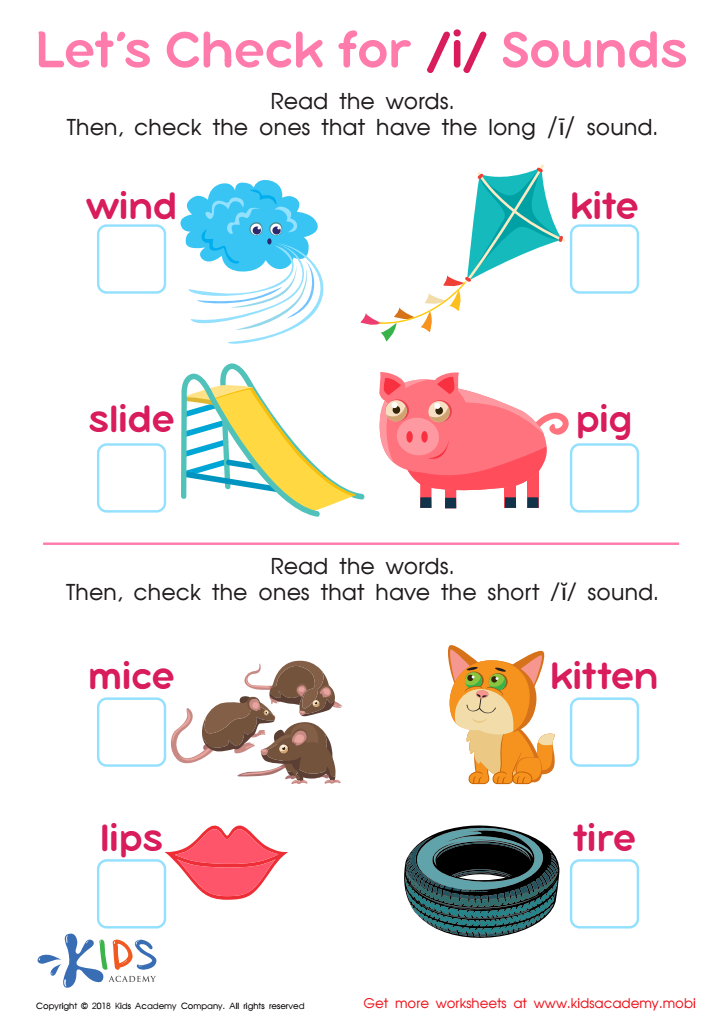
Let's Check for «i» Sounds Worksheet

Long and Short E Worksheet
 Assign to My Students
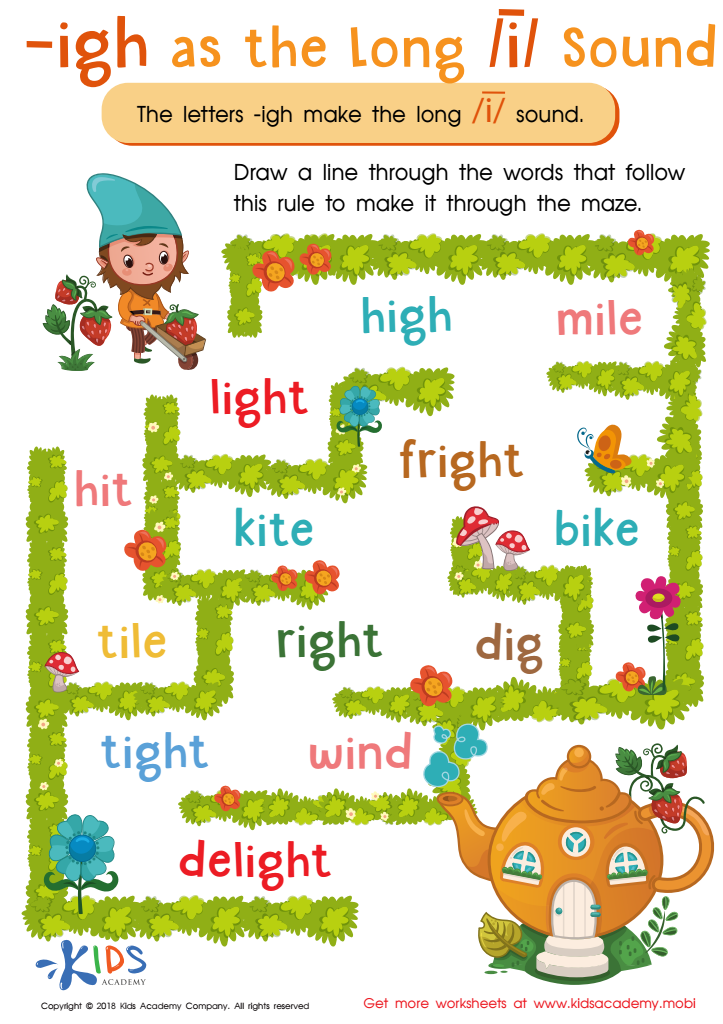
Reading: IGH as Long I Worksheet
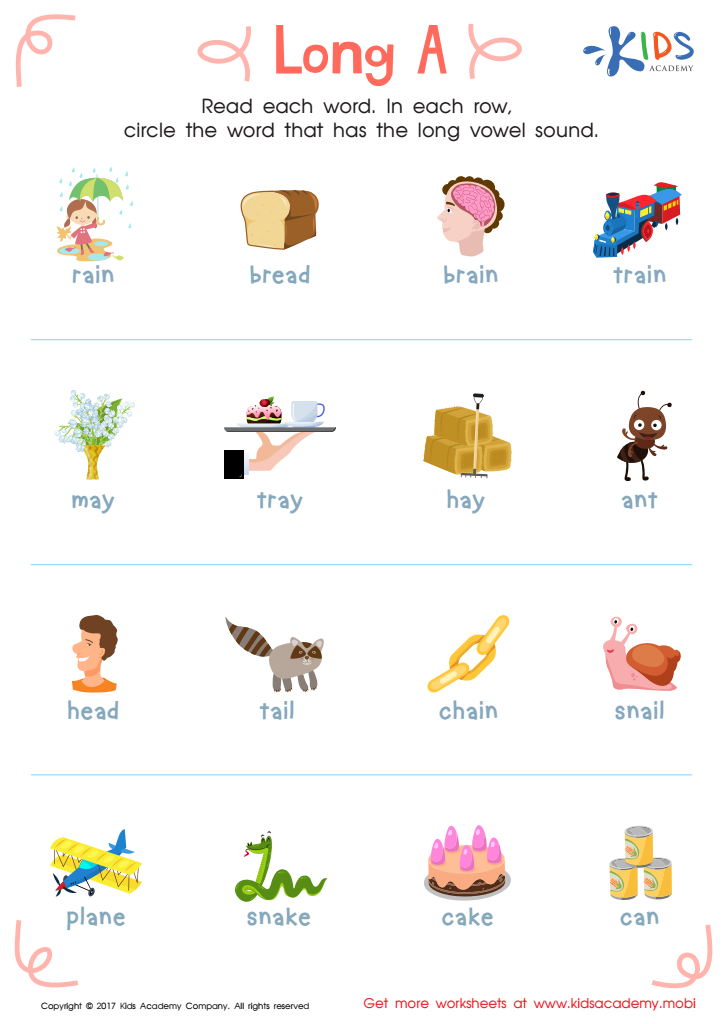
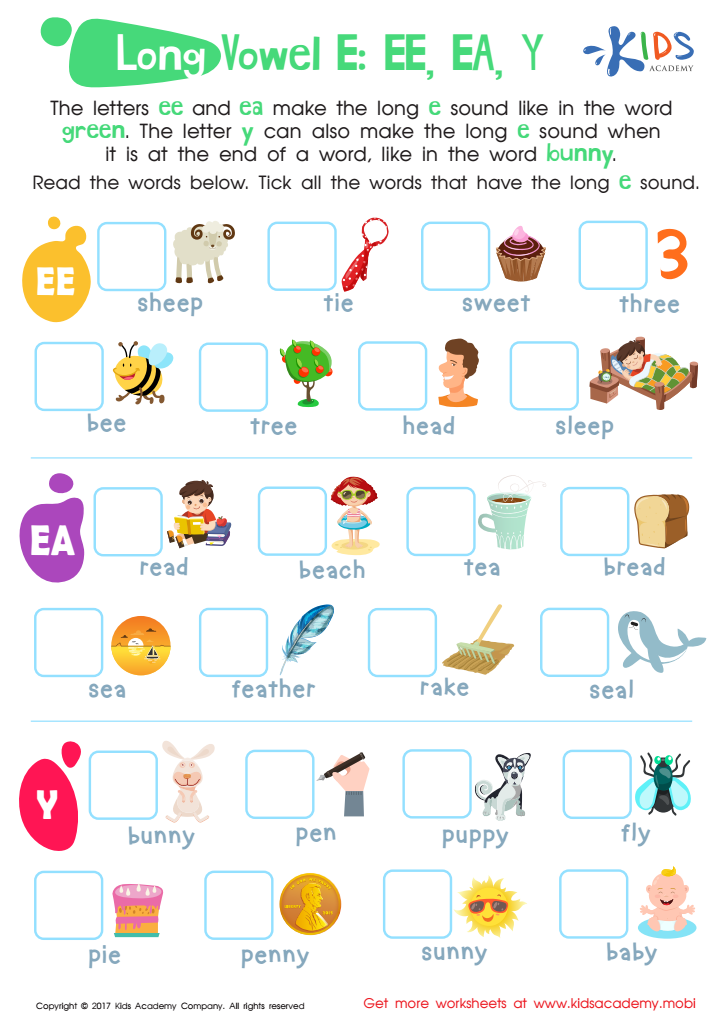
Long Vowel E Printable
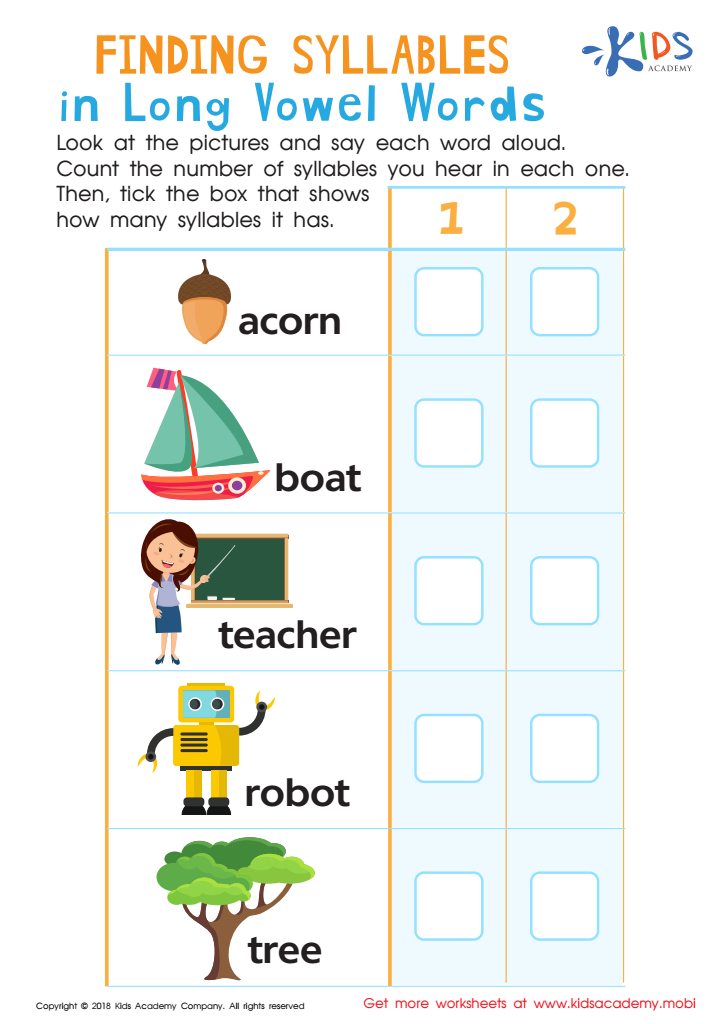
Finding Syllables in Long Vowel Words Worksheet



Understanding and recognizing normal long vowels is a foundational skill in literacy development for children ages 4-7. Long vowels are vowel sounds that are pronounced the same as their letter names, such as the "a" in "cake," the "e" in "tree," and the "i" in "kite." Mastery of these sounds is crucial because it helps young readers decode and pronounce a wide range of words accurately.
For parents and teachers, paying attention to normal long vowels can significantly impact a child's reading fluency and confidence. When children grasp these sounds, they become more adept at recognizing patterns and rules in English spelling and pronunciation. This early skill boosts their ability to tackle more complex words as they progress in their reading journey.
Moreover, recognizing long vowels aids in spelling. Children who understand that "bike" and "rake" include long vowel sounds rather than short ones will spell these words correctly more often. This reinforces correct spelling habits early on, making writing exercises less frustrating and more productive.
Importantly, focusing on long vowels can enhance listening skills. Phonemic awareness, the ability to hear and manipulate the sounds in words, is a critical predictor of reading success. Activities like letter-sound games or reading books that emphasize long vowels make learning enjoyable and effective. Overall, spending time on long vowels sets a strong literacy foundation critical for future academic success.