Fine motor development Normal Worksheets for Ages 4-7
4 filtered results
-
From - To
Our "Fine Motor Development Normal Worksheets for Ages 4-7" are expertly designed to nurture your child's hand-eye coordination, precision, and dexterity. Suitable for kids in their formative years, these worksheets incorporate a wide range of engaging activities such as tracing, cutting, and coloring to make learning both fun and effective. Developed by educational professionals, our resources focus on enhancing essential skills that lay the foundation for writing, drawing, and everyday tasks. Perfect for home or classroom use, these worksheets provide a hands-on approach to fostering fine motor development in young learners, ensuring they grow with confidence and capability.

Uppercase Letters J, K, and L Worksheet
 Assign to My Students
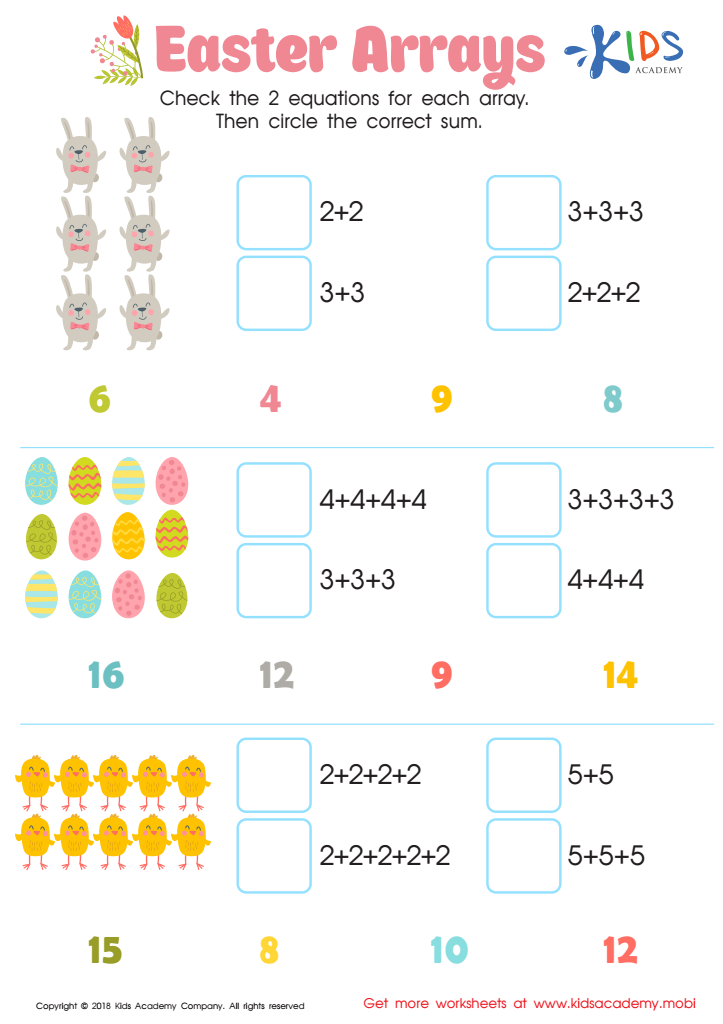
Easter Arrays Worksheet

Check Bingo Worksheet

Kindergarten Number Tracing: Medow Flowers Worksheet








Fine motor development is essential for children aged 4-7, as it plays a critical role in their overall growth and learning. This type of development involves the coordination of small muscles, particularly in the hands and fingers, which is crucial for performing everyday tasks such as writing, buttoning clothes, and cutting with scissors. For young learners, these skills are fundamental in the classroom setting, where activities often involve drawing, coloring, and manipulating small objects. A child who struggles with fine motor skills may experience frustration, leading to potential challenges in academic performance and self-esteem.
Parents and teachers should care about fine motor development because it directly affects a child's ability to become self-sufficient and confident. As children develop these skills, they also enhance their hand-eye coordination, cognitive abilities, and dexterity. Encouraging fine motor activities—such as puzzles, bead stringing, and using tweezers to pick up small objects—can foster stronger neural connections in the brain, ultimately aiding in more complex learning processes such as reading and mathematics.
Therefore, by focusing on fine motor development, parents and teachers are not only aiding in their child’s academic success but also ensuring they build the necessary skills for everyday independence, setting a strong foundation for future growth and competency.








