Identifying story elements Normal Worksheets for Ages 4-7
3 filtered results
-
From - To
Discover engaging worksheets designed to help young learners ages 4-7 identify essential story elements. Our printable resources focus on characters, settings, and plot development, enhancing comprehension skills in a fun and interactive way. Each worksheet encourages creativity, critical thinking, and joy in learning. Featuring age-appropriate illustrations and simple instructions, our worksheets make story element identification accessible and enjoyable for early grade students. Perfect for classroom or home use, they support foundational reading skills and foster a love for storytelling. Join us in nurturing young minds with these captivating educational tools!
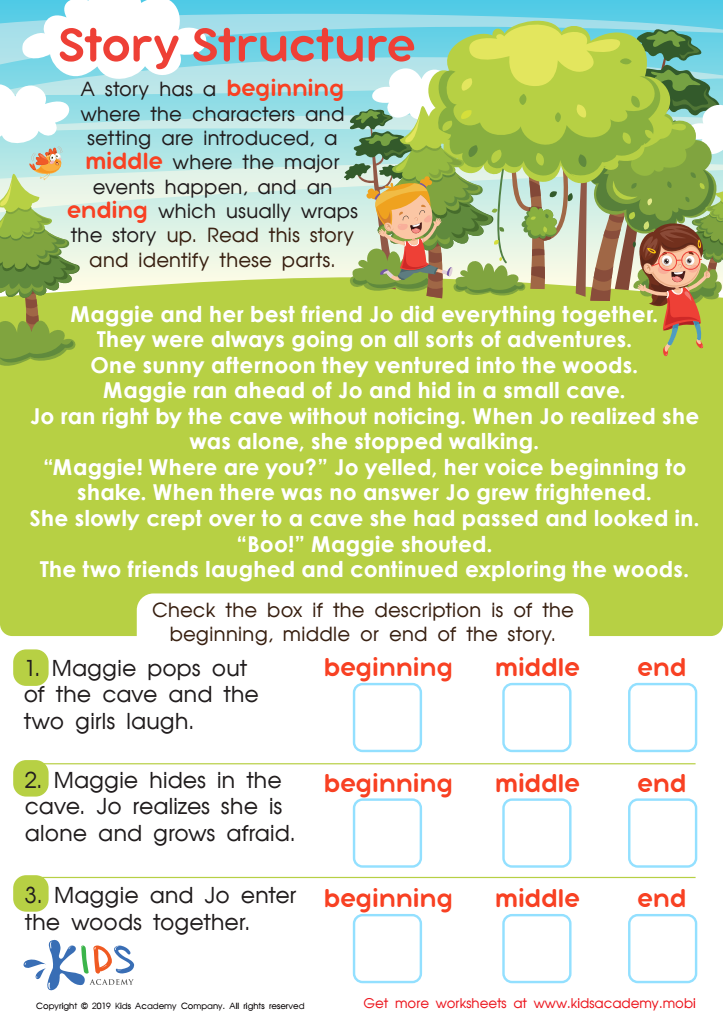
Story Structure Worksheet
 Assign to My Students
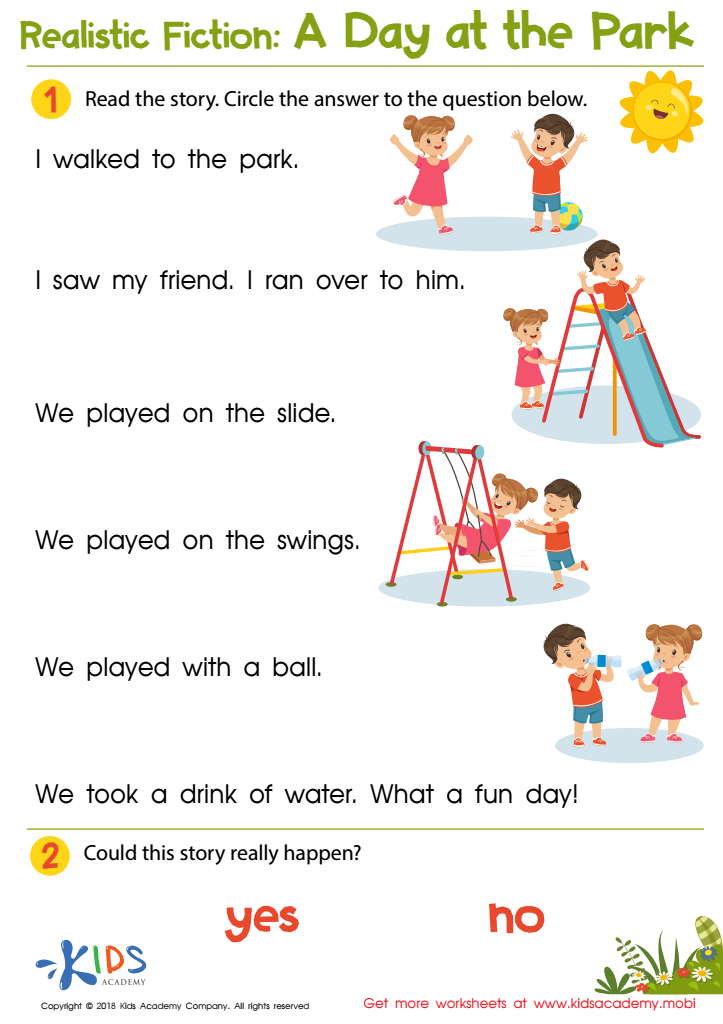
A Day at the Park Worksheet
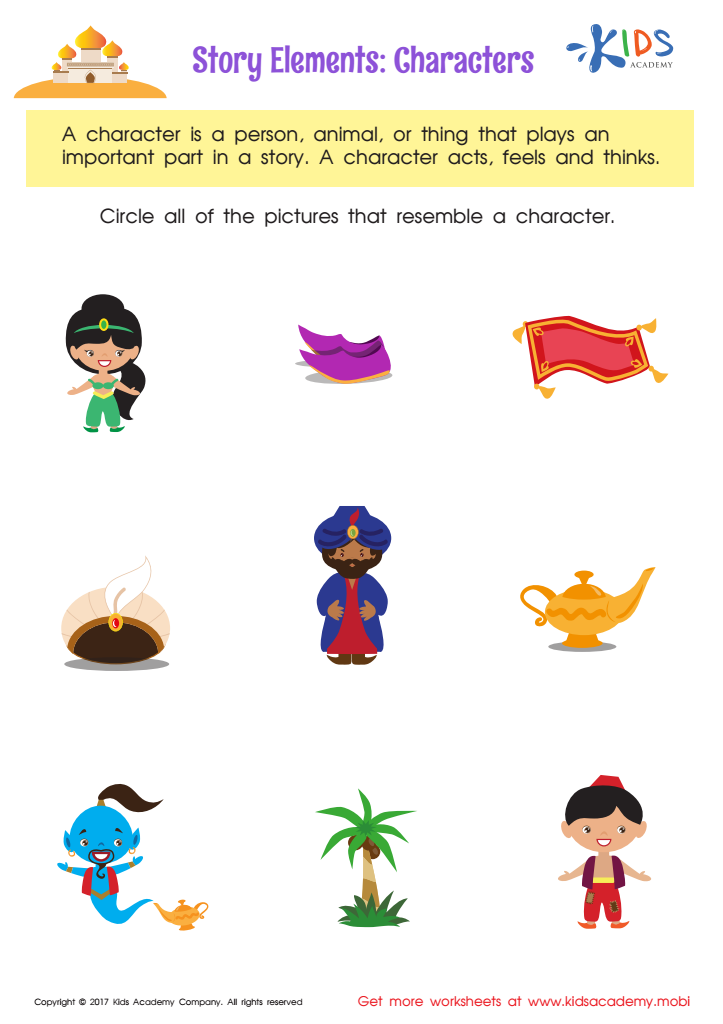
Story Elements Printable







Identifying story elements such as characters, settings, plots, and conflicts is fundamental for children aged 4-7 as it forms the bedrock of their literacy and cognitive development. When children recognize and comprehend these elements, they develop critical reading skills that are essential for understanding more complex texts later. For instance, understanding characters’ motives and the sequence of events in a story helps in building inference skills, enabling children to predict outcomes and draw conclusions.
Moreover, knowledge of story elements enhances children’s creativity and imaginative play. By identifying and discussing settings and characters, children can expand their vocabulary and express feelings or situations through language. This fosters better communication skills and emotional intelligence, enabling them to articulate their experiences and understand others more effectively.
Parents and teachers who focus on these elements can more accurately gauge a child's comprehension level and address any learning gaps early on. This proactive approach ensures a more personalized learning experience, catering specifically to a child's needs. Additionally, discussing stories and their components provides opportunities for family bonding and cognitive engagement, establishing a lifelong love for reading and learning.
In summary, identifying story elements is not just an academic skill; it's a cornerstone for comprehensive cognitive, emotional, and linguistic growth in early childhood.








