Lowercase identification Normal Worksheets for Ages 4-7
4 filtered results
-
From - To
Enhance your child's literacy skills with our engaging Lowercase Identification Normal Worksheets designed for ages 4-7. These worksheets provide a fun and interactive way for young learners to recognize and identify lowercase letters. Featuring colorful illustrations and various activities, children will enjoy tracing, coloring, and matching letters, reinforcing their understanding of the alphabet. Ideal for both classroom use and homeschooling, our worksheets cater to diverse learning styles, making letter recognition an enjoyable experience. Encourage your little ones to build a strong foundation in reading and writing with these effective, age-appropriate resources that promote active learning and boost confidence in their skills!
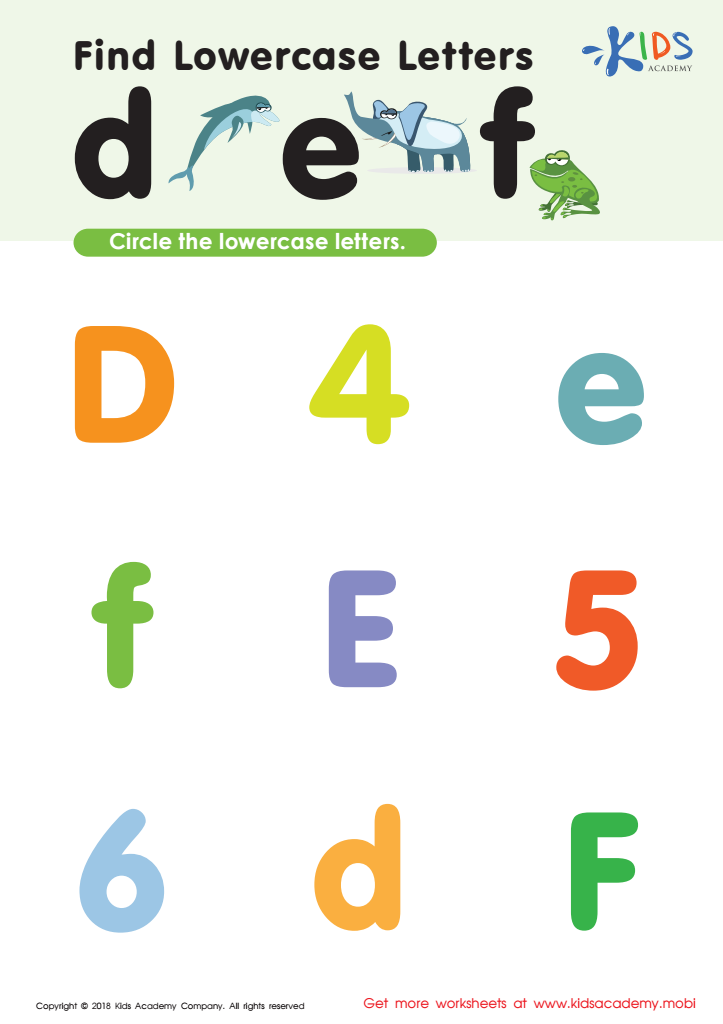
Find Lowercase Letters d e f Worksheet
 Assign to My Students
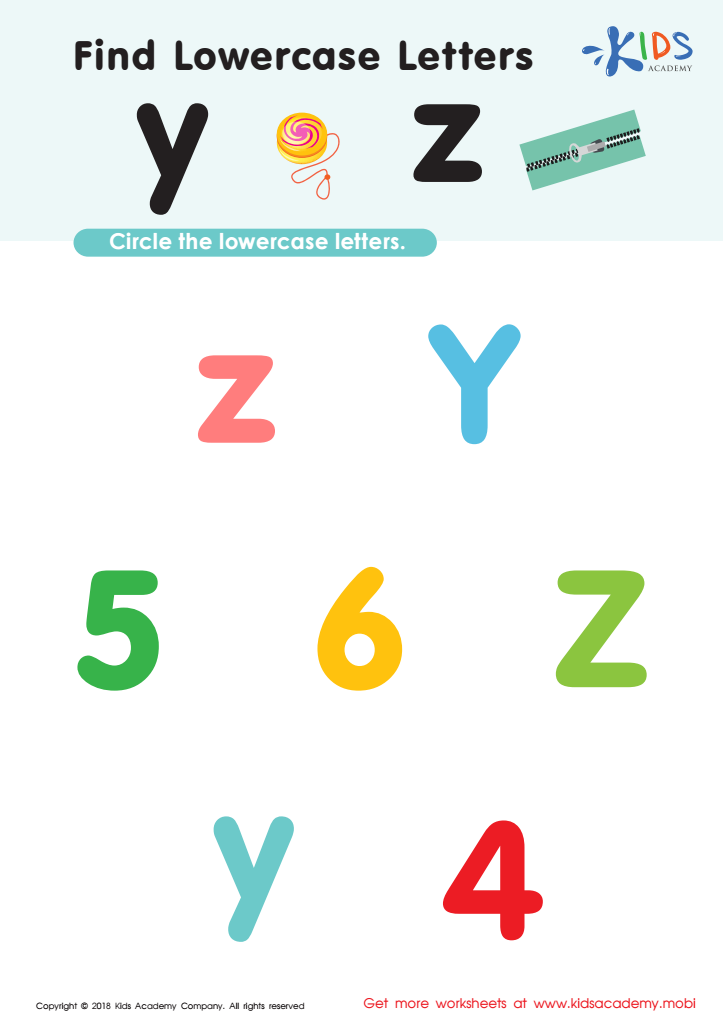
Find Lowercase Letters y z Worksheet
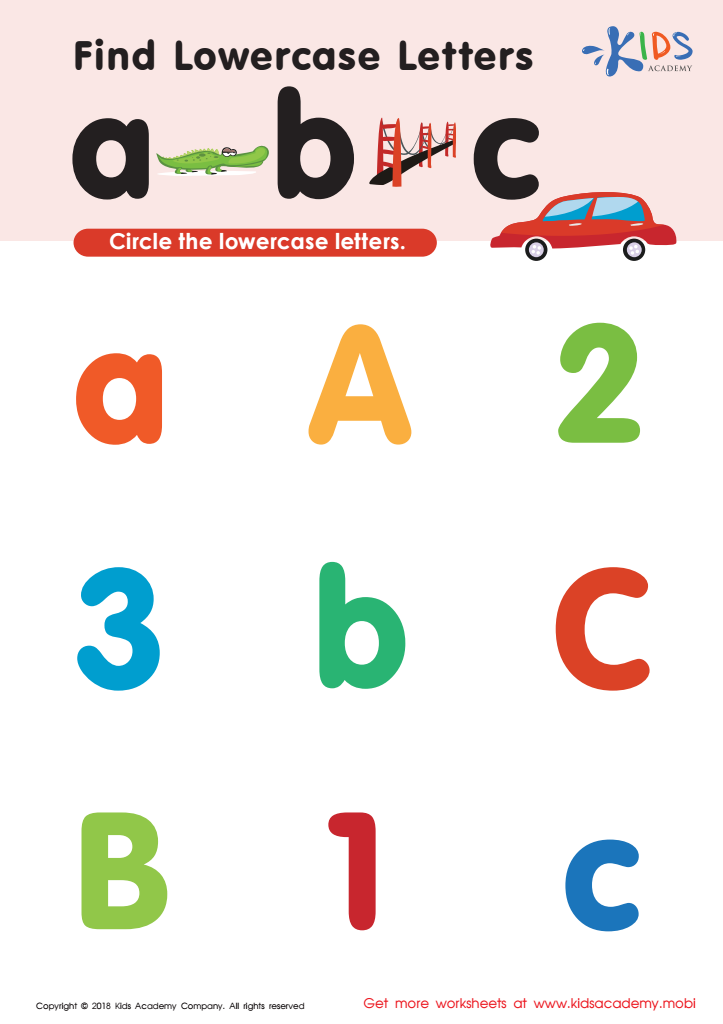
Find lowercase letters a b c Worksheet
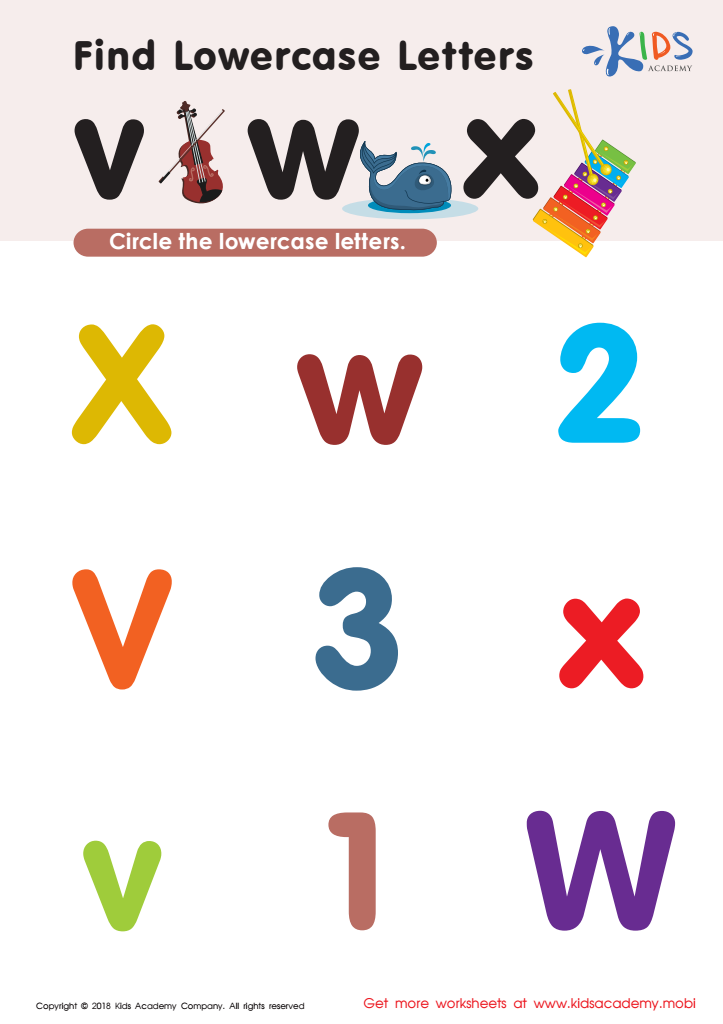
Find Lowercase Letters v w x Worksheet








Lowercase letter identification is crucial for children aged 4-7 as it lays the foundation for their literacy development. During these early years, children are transitioning from pre-writing and pre-reading skills to more advanced literacy capabilities. Recognizing lowercase letters is essential because the majority of text in books, signs, and various print materials is written in lowercase.
By becoming proficient in lowercase identification, children can improve their overall reading fluency and comprehension. This recognition aids in sounding out words, understanding sentence structure, and fluently connecting sounds to letters, which is critical for developing strong decoding skills. Furthermore, knowing lowercase letters fosters confidence during writing exercises, enabling children to communicate their thoughts more effectively.
Additionally, early familiarity with lowercase letters helps prevent future reading challenges, as it prepares students for more complex literacy tasks. Engaging in activities that promote lowercase letter recognition is not only beneficial within academic contexts but also enriches a child’s interaction with their environment.
Consequently, parents and teachers should actively prioritize lowercase identification in early education, as it forms a vital stepping stone toward successful reading and writing, ultimately fostering a lifelong love for learning in their children.








