Understanding fractions Normal Worksheets for Ages 4-7
6 filtered results
-
From - To
Welcome to our collection of "Understanding Fractions Normal Worksheets" designed specifically for children ages 4-7! Our engaging and interactive worksheets introduce young learners to the fundamental concepts of fractions through enjoyable activities. Perfect for early education, these worksheets feature colorful visuals and hands-on exercises that make learning about parts of a whole fun and accessible. Children will explore fraction terminology, identify fractions in everyday scenarios, and develop essential skills in a supportive environment. Whether in the classroom or at home, our resources are tailored to enhance your child's understanding of fractions while fostering a love for math. Explore our worksheets today!
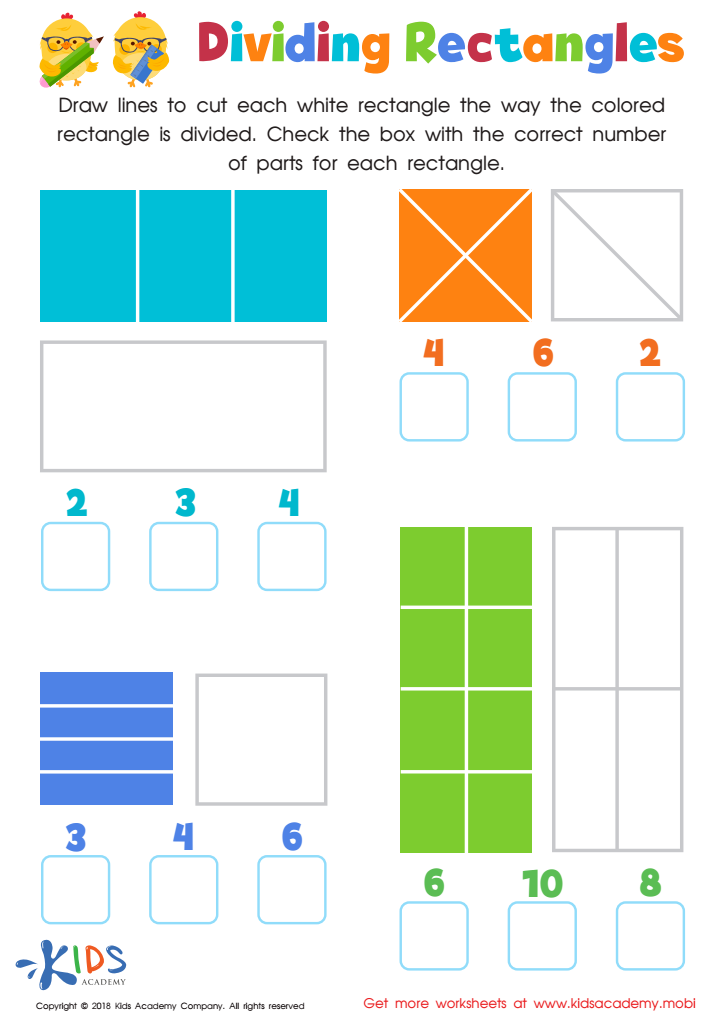
Dividing Rectangles Worksheet
 Assign to My Students
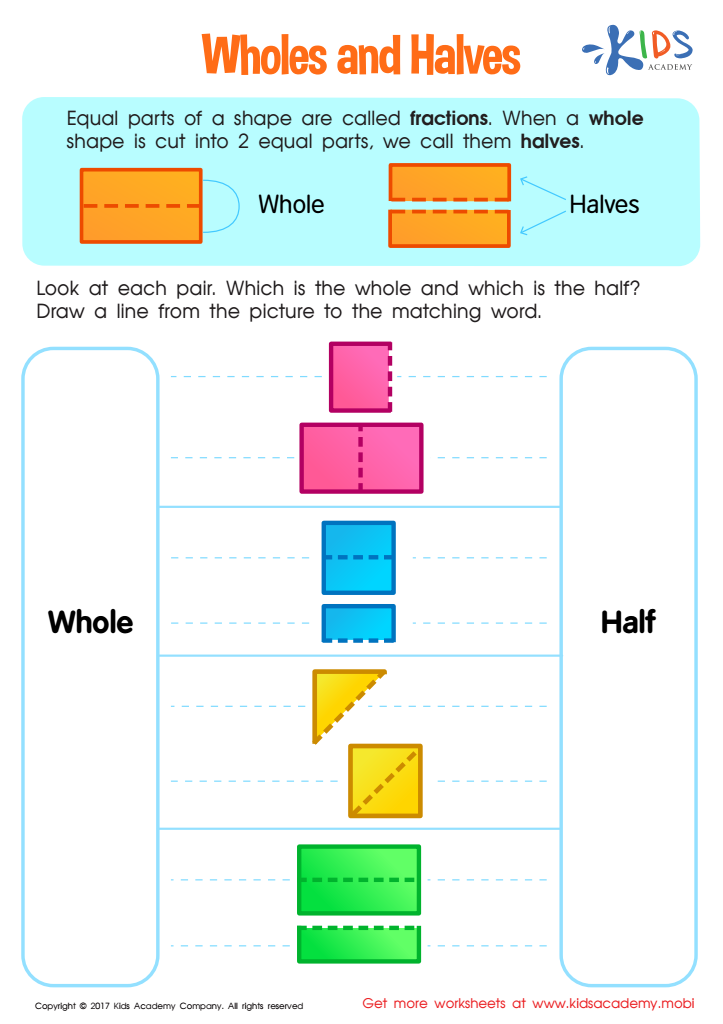
Wholes and Halves Worksheet
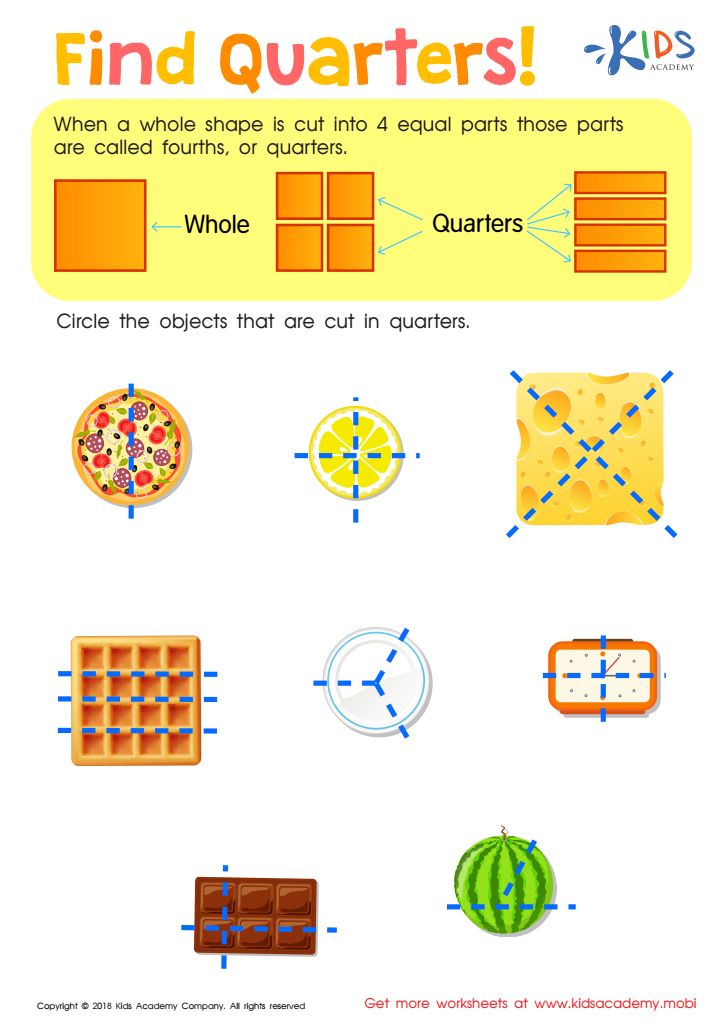
Find Quarters Worksheet
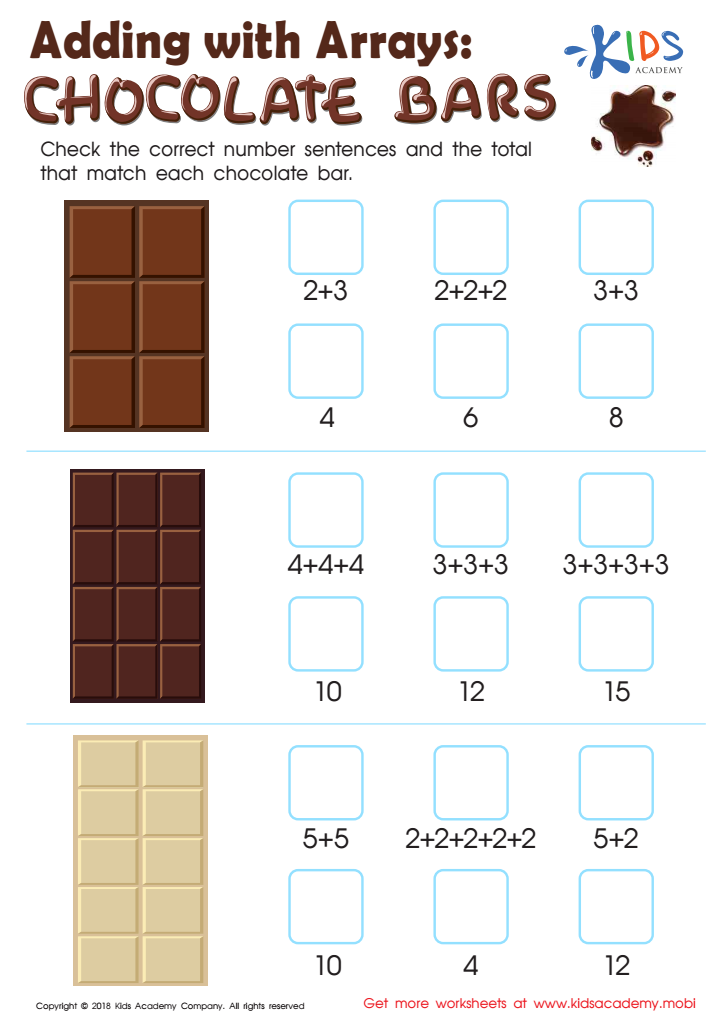
Adding with Arrays: Chocolate Bars Worksheet
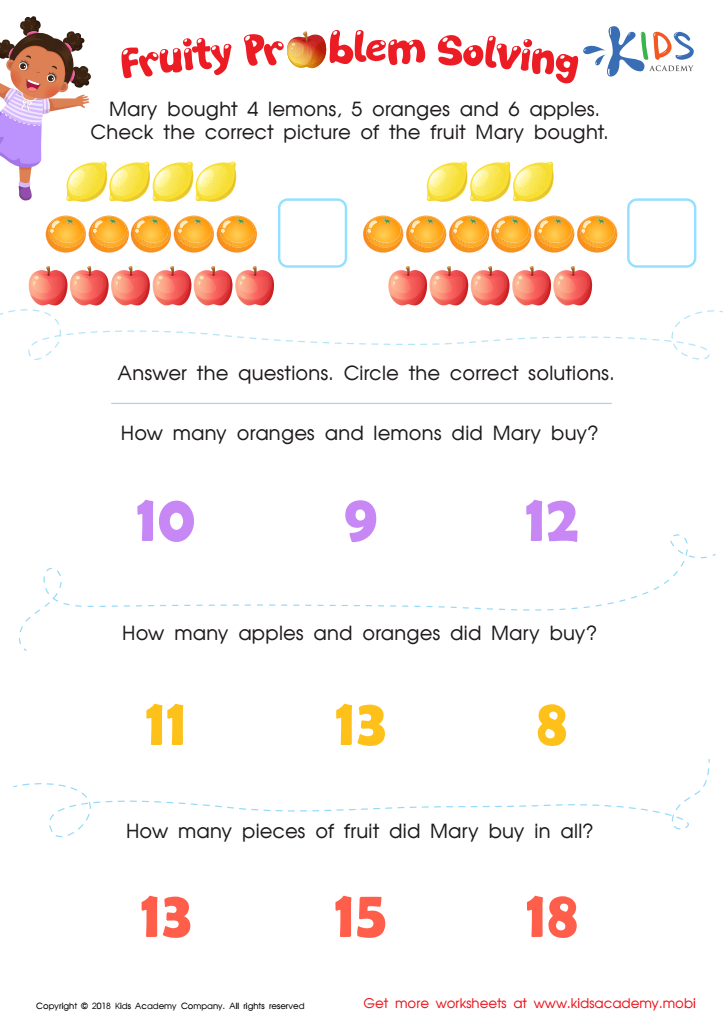
Fruity Problem Solving Worksheet
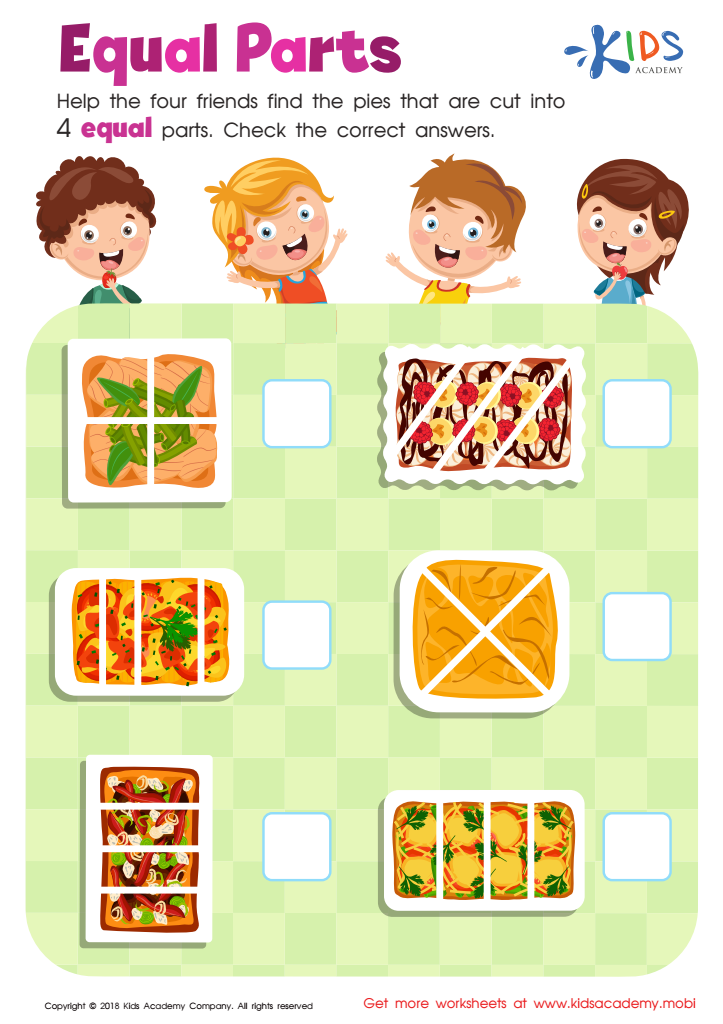
Equal Parts: Food Worksheet







Understanding fractions is a crucial aspect of early math education for children ages 4 to 7. At this age, children are like sponges, eager to absorb new concepts. By introducing fractions, parents and teachers can lay a solid foundation for mathematical thinking.
Fractions help children grasp the essential idea of parts of a whole, enhancing their problem-solving and critical-thinking skills. For example, sharing a pizza among friends illustrates practical applications of fractions, making lessons relatable and engaging. This hands-on approach not only supports comprehension but also promotes social skills.
Moreover, mastering fractions builds confidence in math. Children who understand these concepts are better equipped to tackle more advanced math topics in later grades. The ability to recognize fractions in everyday contexts—like cooking, measuring, or dividing objects—instills a sense of practicality that relates mathematics to the real world.
Lastly, early math skills are indicators of future academic success. A solid grasp of fractions can prepare young learners for complex subjects and ensure a smoother educational journey. Therefore, parents and teachers should prioritize teaching fractions as part of comprehensive cognitive development during these critical years.








