Visual discrimination skills Normal Worksheets for Ages 4-7
5 filtered results
-
From - To
Enhance your child's visual discrimination skills with our engaging worksheets designed for ages 4-7. These resources foster essential skills such as pattern recognition, object comparison, and visual identification through fun activities. Each worksheet encourages critical thinking and attention to detail, helping young learners distinguish between similar shapes, colors, and symbols. Our carefully crafted exercises ensure that children will stay entertained while developing foundational cognitive abilities necessary for academic success. Perfect for parents, educators, or as a supplement to homeschooling, these worksheets are easily accessible and printable. Unlock your child's potential in visual learning today with our tailored resources!
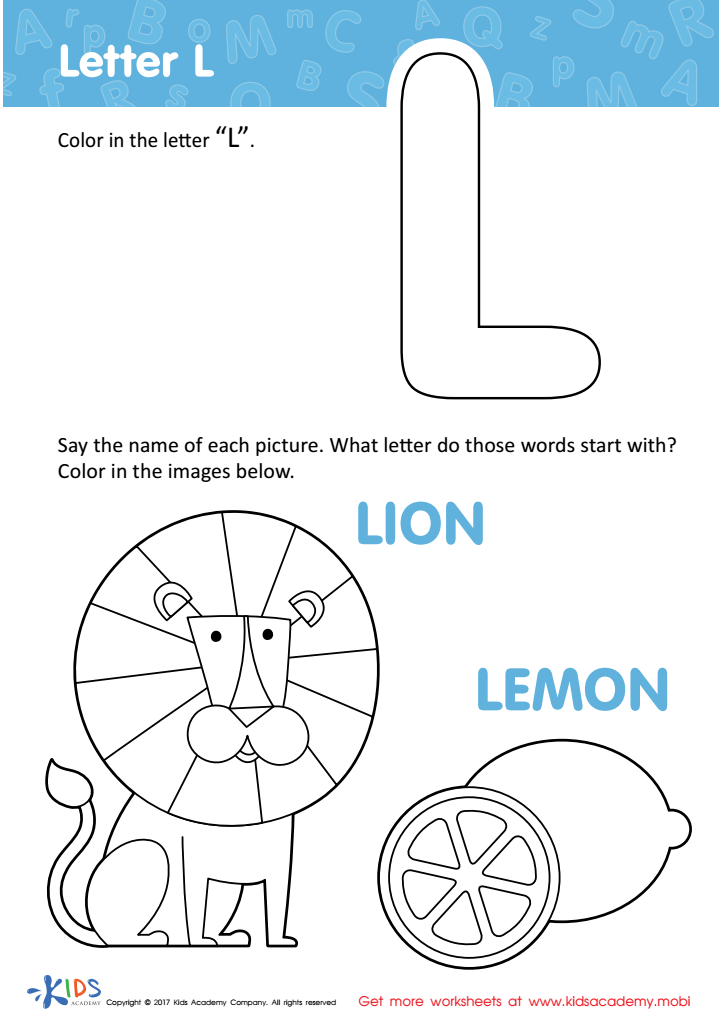
Letter L Coloring Sheet
 Assign to My Students
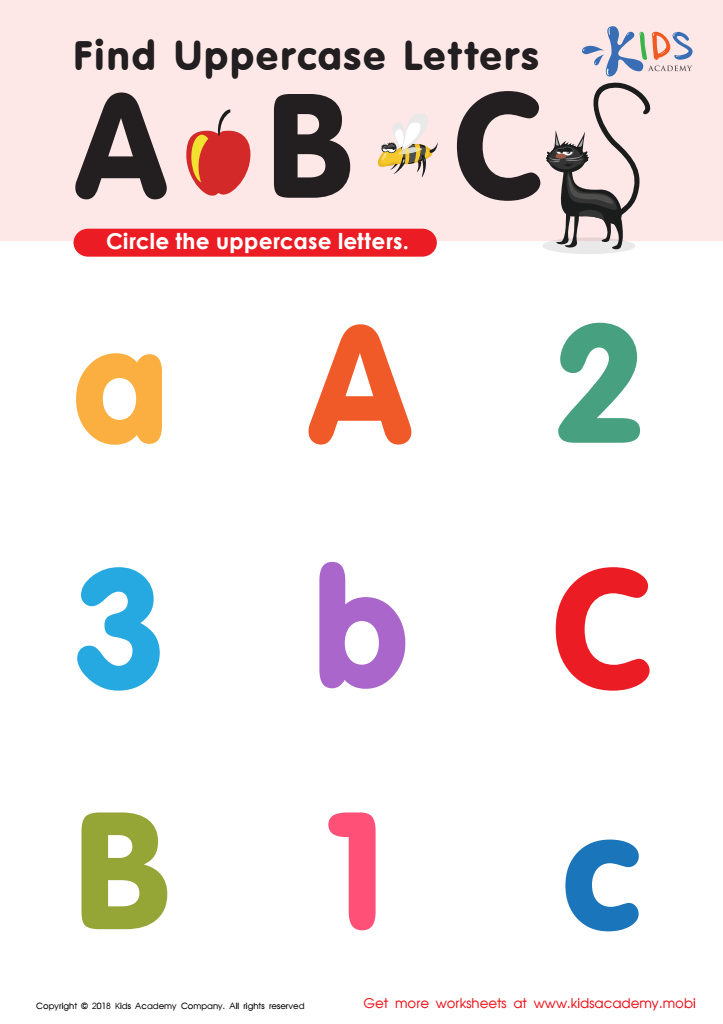
Find Uppercase Letters A, B, and C Worksheet
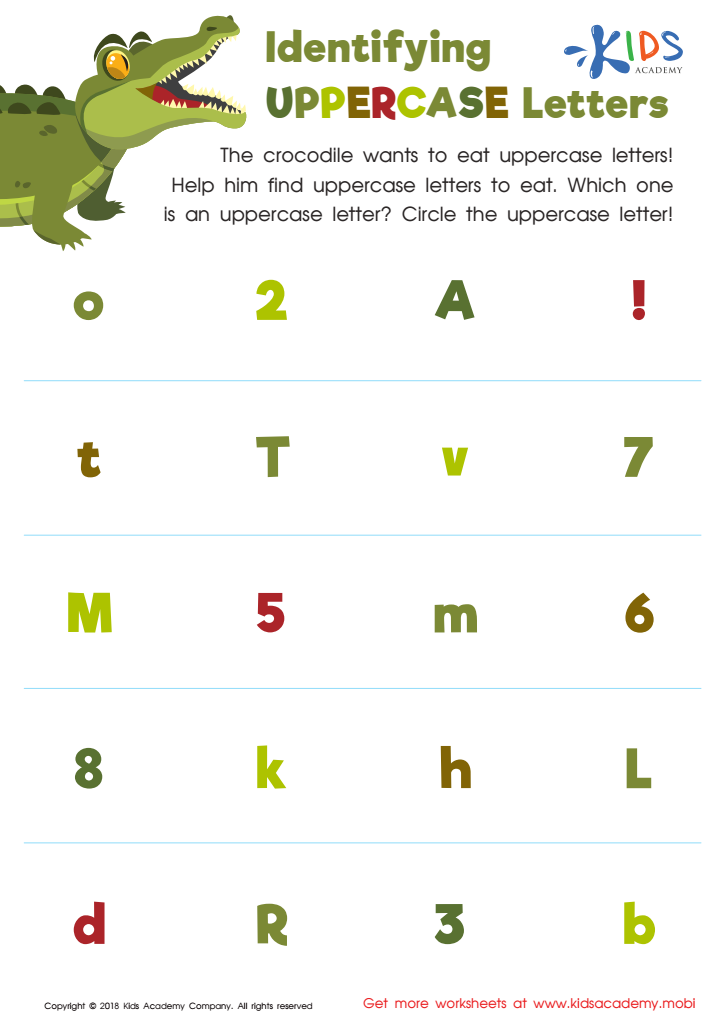
Identifying Uppercase Letters Worksheet

Find lowercase letters a b c Worksheet
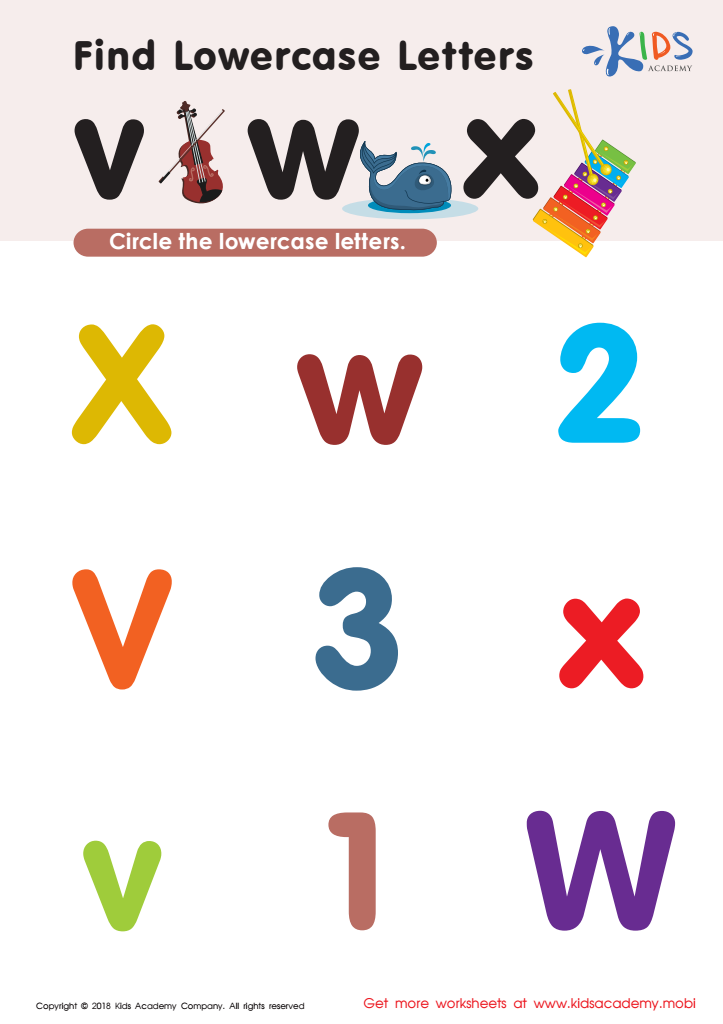
Find Lowercase Letters v w x Worksheet








Visual discrimination skills are critical for children ages 4-7 as they serve as the foundation for effective learning and development. These skills enable children to differentiate between various shapes, sizes, colors, and patterns, facilitating their ability to recognize letters, numbers, and even words—essential for successful reading and writing. When children can visually discriminate effectively, they become more adept at understanding and interpreting their environment, which boosts their observation skills, attention span, and overall cognitive abilities.
For educators and parents, nurturing these skills can lead to improved academic performance and increased confidence in young learners. Children who excel in visual discrimination are likely to experience fewer challenges in foundational skills, thus helping them transition to more complex tasks in later grades. Additionally, strong visual discrimination abilities can contribute to better problem-solving skills, spatial awareness, and fine motor coordination.
Incorporating visual discrimination activities, such as puzzles, matching games, and sorting tasks, can make learning enjoyable while promoting essential skills. By prioritizing visual discrimination, parents and teachers can ensure that children are well-prepared for an ongoing academic journey, fostering a love for learning and setting the stage for future success.








