Vocabulary improvement Normal Worksheets for Ages 4-7
4 filtered results
-
From - To
Our Vocabulary Improvement Normal Worksheets for Ages 4-7 are designed to enhance children's language skills through engaging and fun activities. Tailored to suit young learners, these printable worksheets cover a variety of topics and themes to help kids expand their vocabulary. Each worksheet integrates colorful illustrations and interactive exercises, making learning enjoyable and effective. Developed by education experts, our resources encourage reading, spelling, and comprehension, nurturing a love for language in early learners. Perfect for both classroom and at-home use, these worksheets are an ideal tool to support your child's language development journey. Visit us and start enhancing your child’s vocabulary today!

Hansel and Gretel Geometry Maze Worksheet
 Assign to My Students
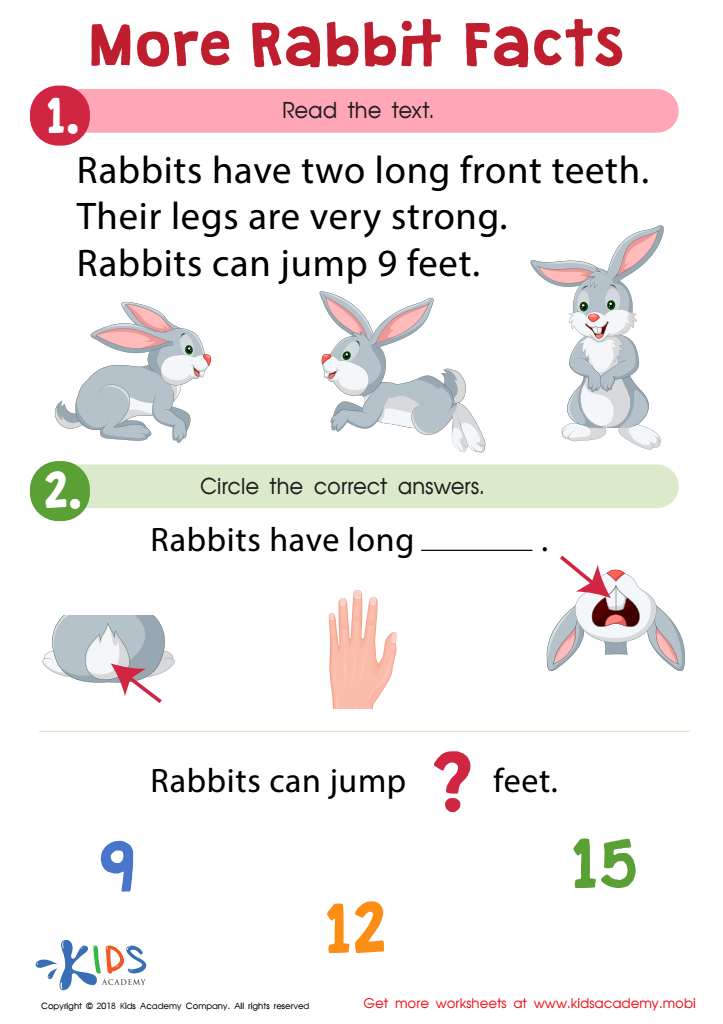
More Rabbit Facts Worksheet
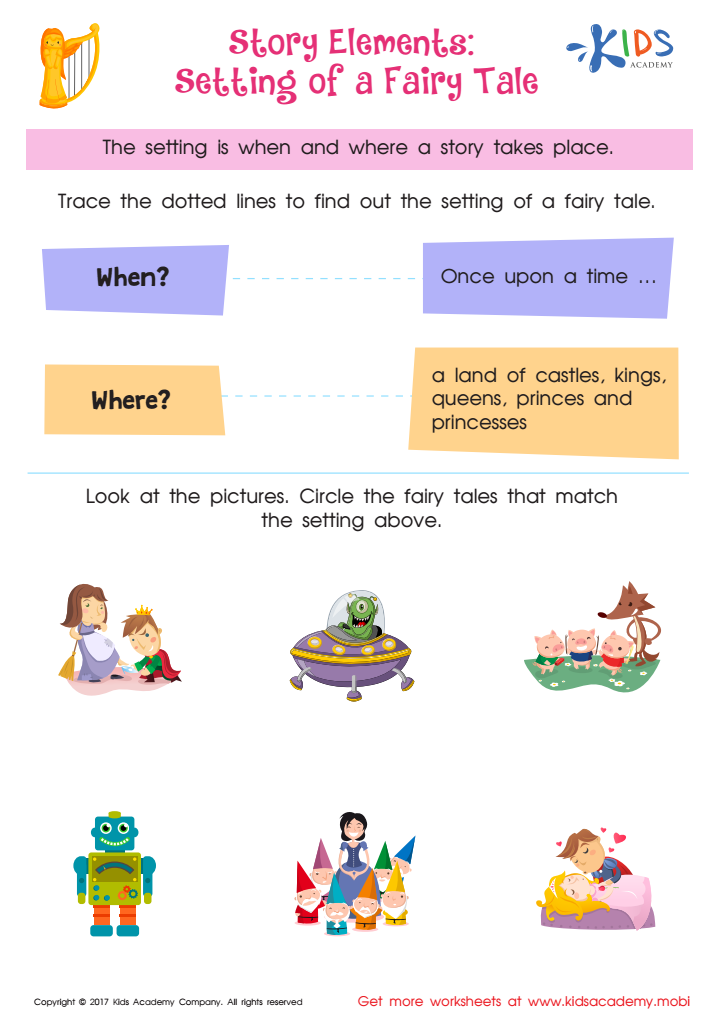
Story Elements: Setting of a Fairy Tale Printable
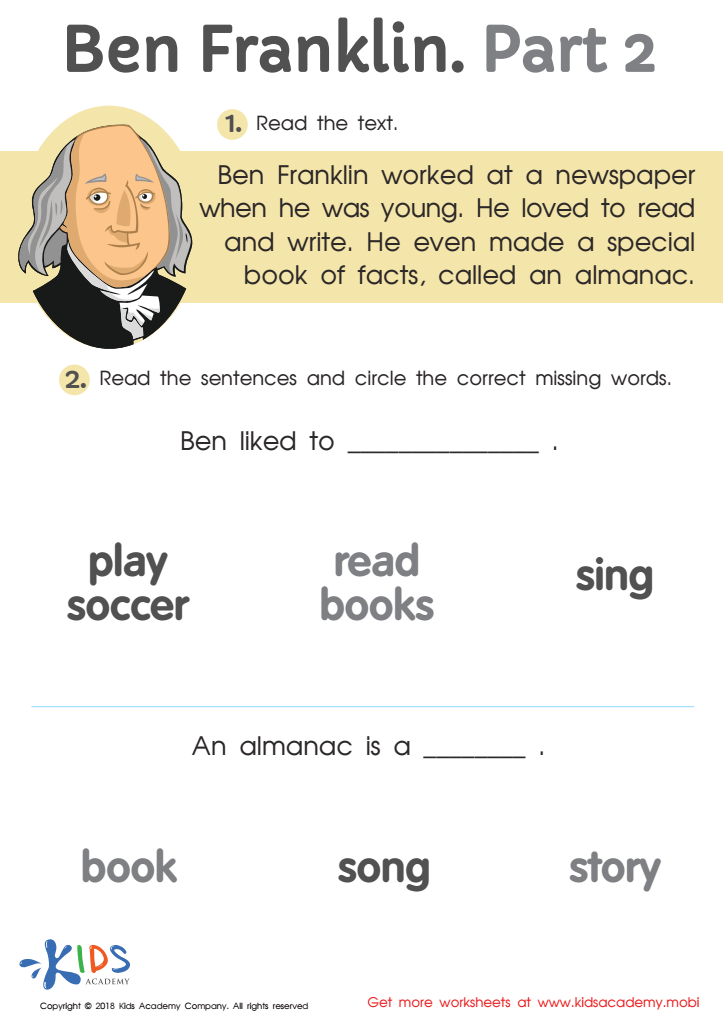
Ben Franklin Part 2 Worksheet





Vocabulary improvement for children aged 4-7 is crucial because it lays the foundation for all forms of communication and learning. During these formative years, a child's brain is exceptionally receptive to language acquisition, and a robust vocabulary is essential for effective communication, cognitive development, and academic success.
Firstly, vocabulary is the building block of communication. Children with a richer vocabulary can express their thoughts, emotions, and ideas more clearly. This ability not only enhances their interactions with peers and adults but also helps in managing their emotions and forming healthy relationships.
Secondly, a strong vocabulary is linked to academic success. Reading comprehension, writing skills, and overall literacy are heavily dependent on a child's ability to understand and use words effectively. Early vocabulary acquisition predicts later reading abilities; children who start school with a strong vocabulary generally find it easier to learn new concepts and excel academically.
Moreover, cognitive development is supported by a broad vocabulary. Learning new words boosts memory, attention, and problem-solving skills. It stimulates curiosity and encourages a love for learning, as children become more capable of exploring and understanding the world around them.
Lastly, early vocabulary development aligns with social-emotional growth. When children can articulate their feelings and understand others, they navigate social situations with greater ease and develop empathy.
In summary, fostering vocabulary improvement in children aged 4-7 is essential for their overall development, setting a solid foundation for future learning and social interactions.








