Critical Thinking Normal 2D Shapes Worksheets for Ages 4-7
5 filtered results
-
From - To
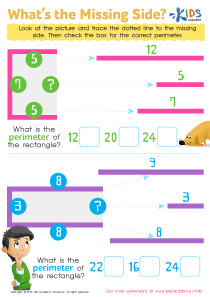
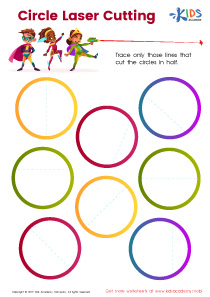
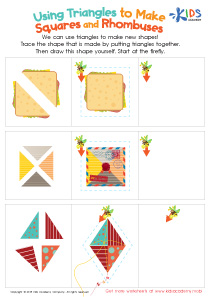
Enhance your child's critical thinking skills with our engaging 2D shapes worksheets designed for ages 4-7. These thoughtfully crafted activities encourage young learners to explore and understand normal 2D shapes while promoting analytical thinking. Children will enjoy colorful illustrations and fun exercises that challenge them to identify, categorize, and manipulate shapes in various contexts. Each printable worksheet aligns with early educational standards, helping to build a strong foundation in geometry and problem-solving. Perfect for classroom use or at-home learning, these worksheets make mastering shapes enjoyable and rewarding! Inspire a love for math and critical thinking today!
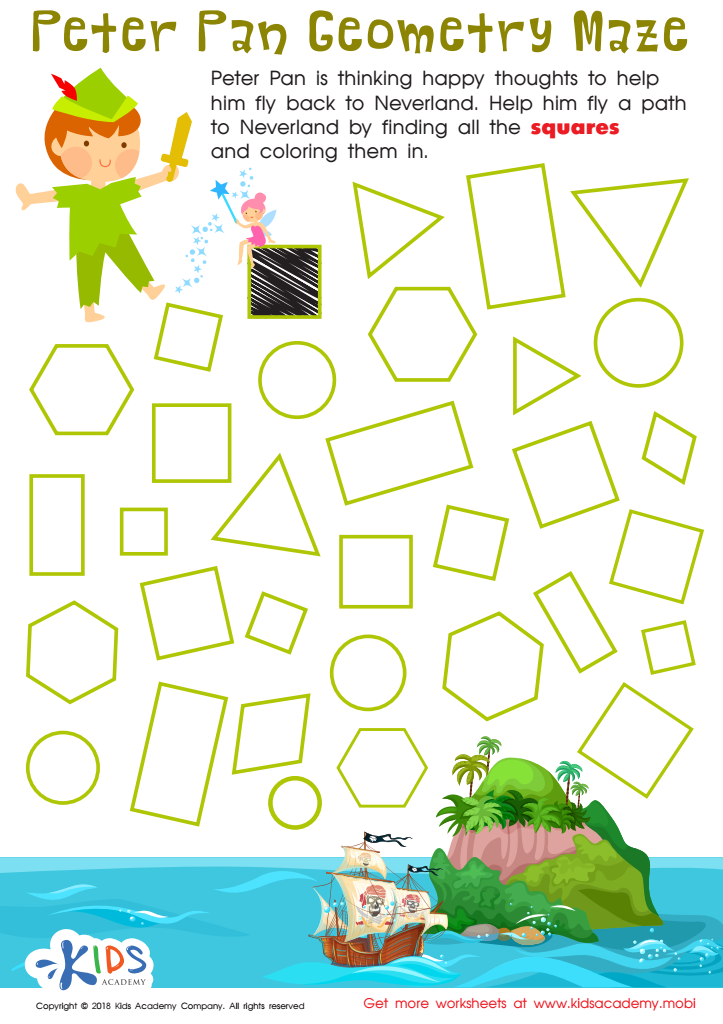
Peter Pan Worksheet
 Assign to My Students











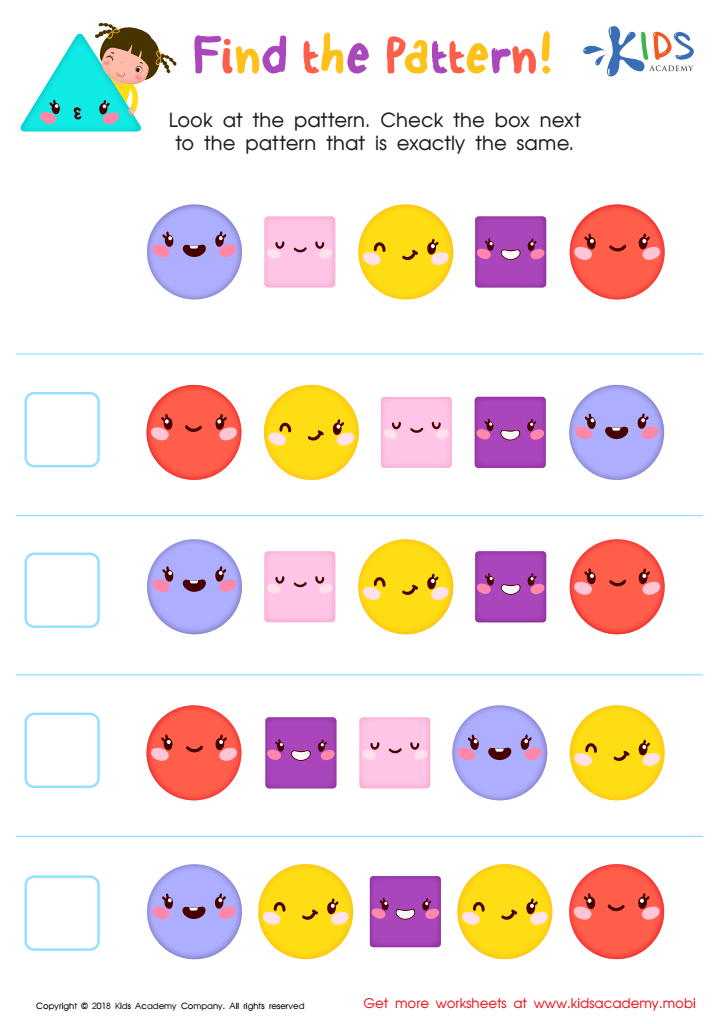
Find the Pattern Worksheet
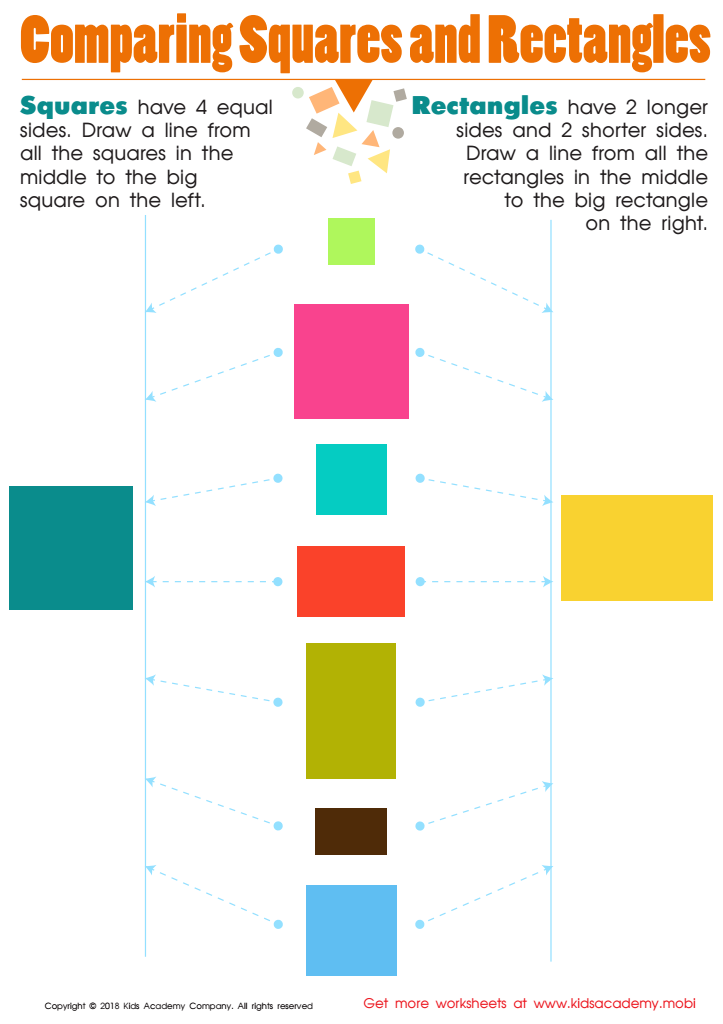
Comparing Squares Rectangles Worksheet
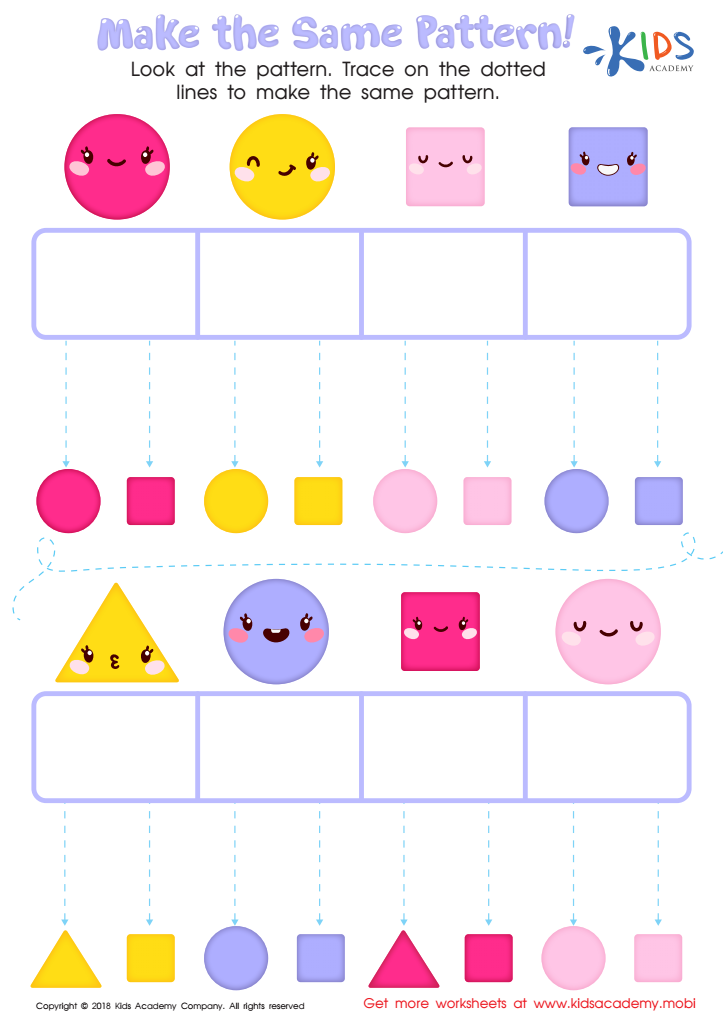
Make the Same Pattern Worksheet
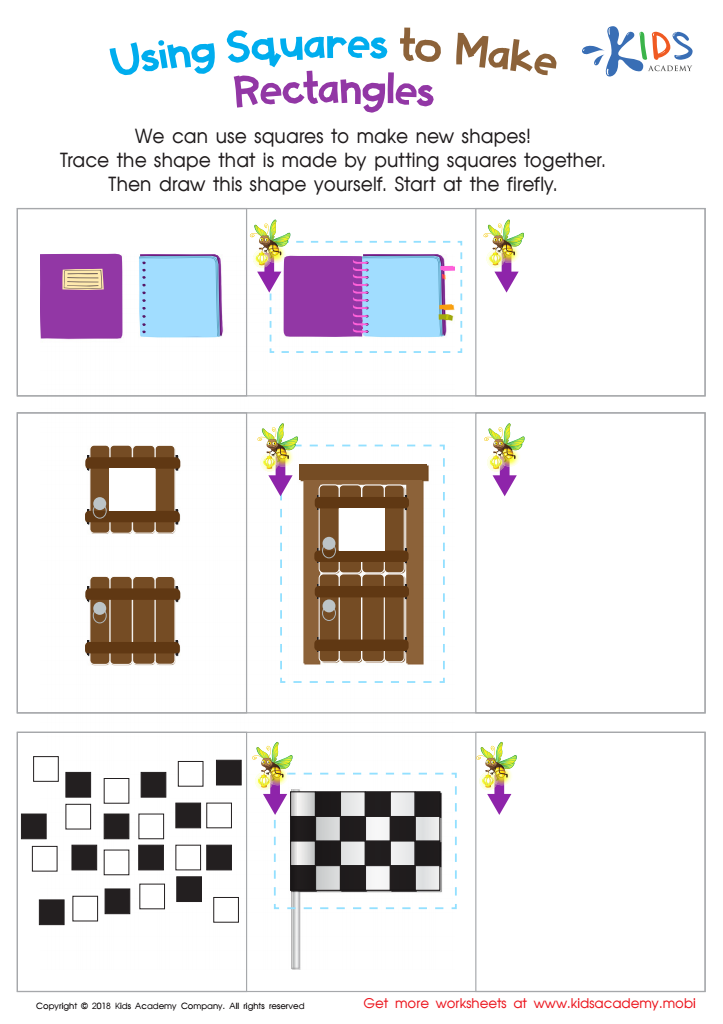
Using Squares to Make Rectangles Worksheet








Parents and teachers play a vital role in developing critical thinking skills in children, and engaging with normal 2D shapes is an excellent starting point for ages 4-7. At this developmental stage, children are naturally curious and eager to explore their environment, making it an ideal time for them to learn through hands-on experiences.
Understanding normal 2D shapes such as squares, triangles, circles, and rectangles lays a strong foundation for later math and literacy skills. When children engage with these shapes, they not only build spatial awareness but also learn to categorize, compare, and analyze—key components of critical thinking. These activities sharpen their problem-solving abilities, encouraging them to evaluate options and make decisions.
Additionally, recognizing shapes in the world around them helps children express their observations in a logical manner. Engaging in discussions about shapes and their attributes encourages creativity and language development. By emphasizing the significance of shape recognition and reasoning, parents and teachers foster an environment where children learn to ask questions, make connections, and articulate their ideas confidently. Ultimately, nurturing critical thinking through the exploration of normal 2D shapes equips children with essential skills for lifelong learning.