Discover fun and engaging Basic Addition and Subtraction Worksheets designed for kids aged 4-7! Our thoughtfully crafted resources help young learners master essential math skills through normal addition and subtraction exercises. Each worksheet encourages practice with visual aids and interactive activities that make learning enjoyable. From counting objects to solving simple equations, our worksheets cater to various learning styles, ensuring your child builds confidence and fluency in math. Perfect for classroom use or home schooling, these materials support early numeracy development in a playful manner. Download today and watch your child's math skills thrive with our exciting worksheets!

Check out this FREE Trial Lesson on Addition & Subtraction for age 4-7!

Basic Facts Doubles & Turn Around Facts

Favorites
With answer key
Interactive
  • 4-7
  • Basic Addition Skills
  • Addition & Subtraction
  • Normal
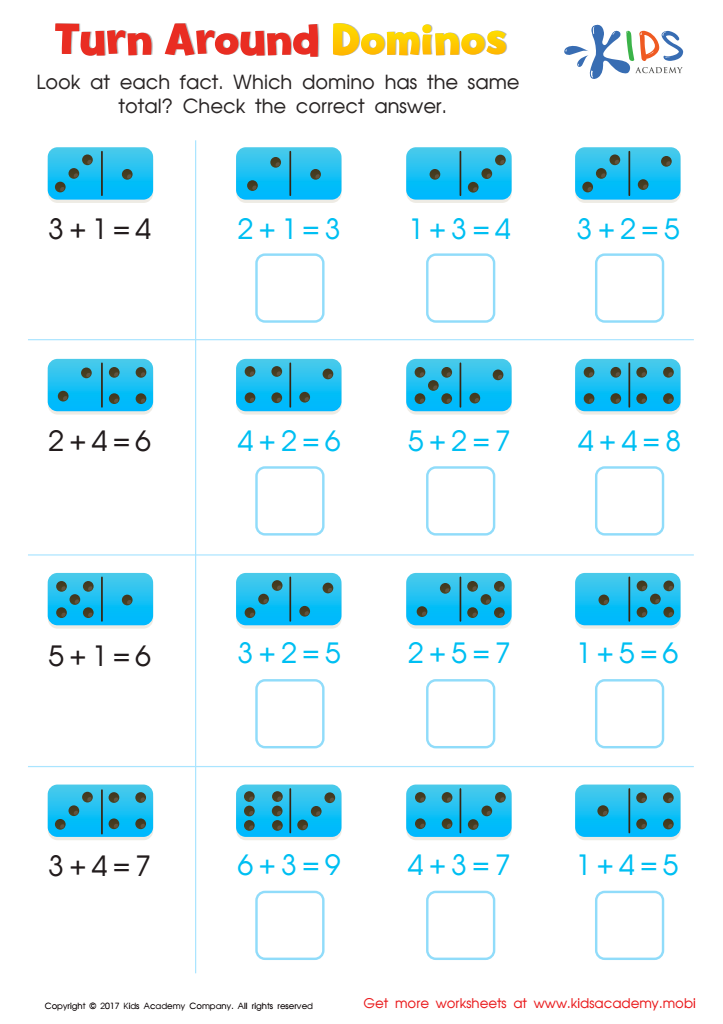
Turn Around Dominos Worksheet

Turn Around Dominos Worksheet

Encourage your child to flex their mental muscles with this math worksheet. Look through the left side's dominos and their values and then check the three boxes on the right. Ask your child if any of the right box's dominos are similar. This requires focus and careful observation.
Turn Around Dominos Worksheet
Worksheet
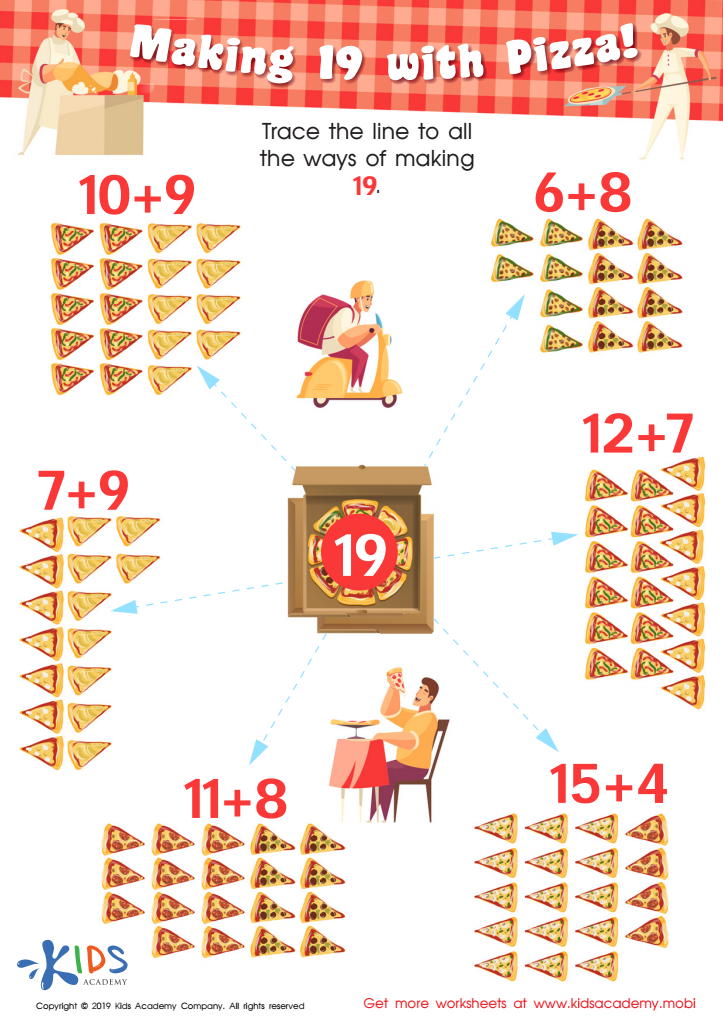
Making 19 with Pizza! Worksheet

Making 19 with Pizza! Worksheet

Who loves pizza? Your kids do! Next time you need to teach them math, make it fun by combining it with something they enjoy. This worksheet uses a pizza-themed problem to help them practice solving equations. Have them trace the line to figure out how to make 19. It's a great way to make learning math fun!
Making 19 with Pizza! Worksheet
Worksheet
Simple Addition PDF Worksheet

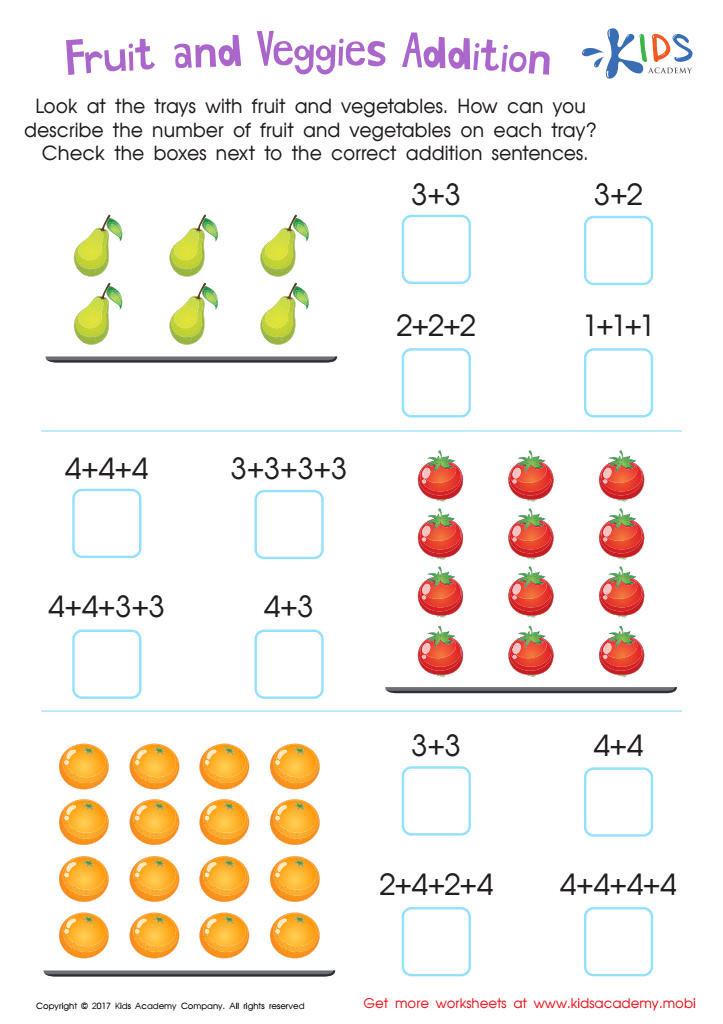
Fruit and Veggies Worksheet
It promotes problem-solving and analytical skills as kids match pictures to correct addition sentences. Help your child go beyond simple addition with this PDF worksheet!
Fruit and Veggies Worksheet
Worksheet
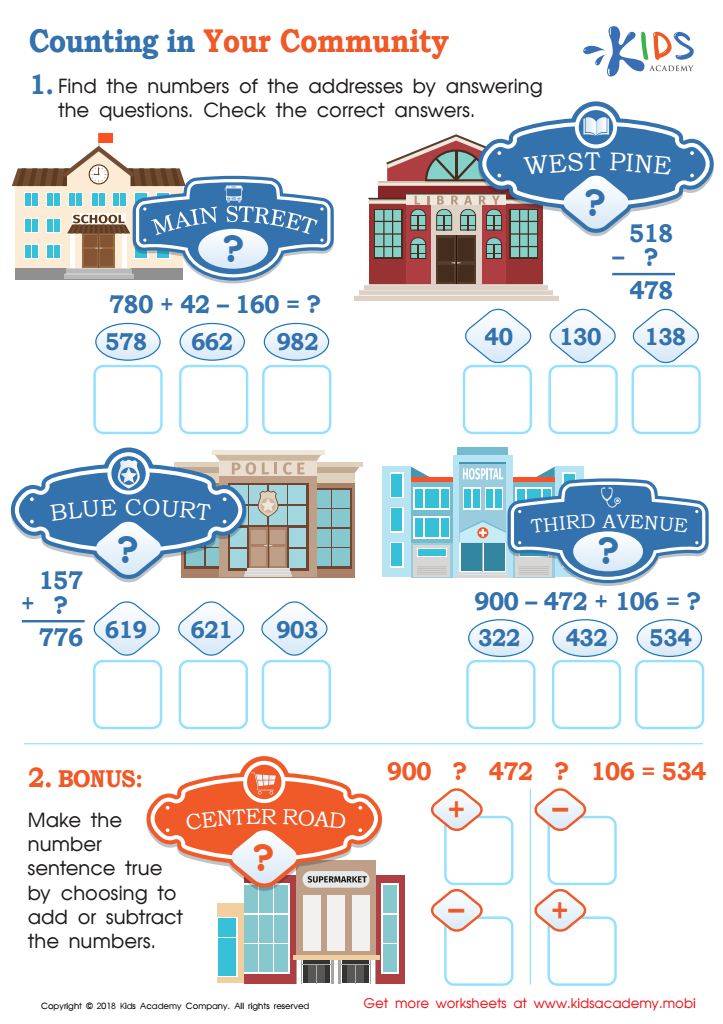
Counting in Your Community Worksheet

Counting in Your Community Worksheet

Introduce your kids to the idea of a community, where different people and buildings co-exist, each playing their part for the community's progress. Ask them to name the buildings they see in their community. Then work through this worksheet to find the numbers of the addresses by answering the questions. Check the answers once they've solved the equations.
Counting in Your Community Worksheet
Worksheet
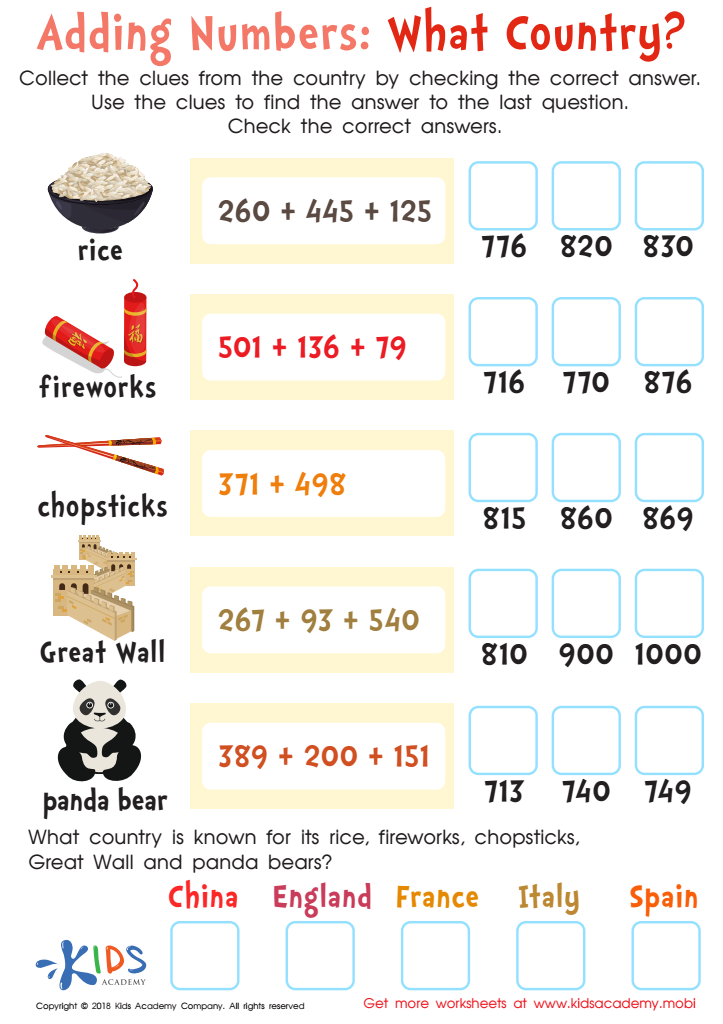
Adding Numbers: What Country Worksheet

Adding Numbers: What Country Worksheet

Students can use this worksheet to learn more about different countries. Have them collect clues from the worksheet to answer the last question. Help them check the correct answer, and they'll gain knowledge about each country's food, animals, celebrations, and landmarks.
Adding Numbers: What Country Worksheet
Worksheet
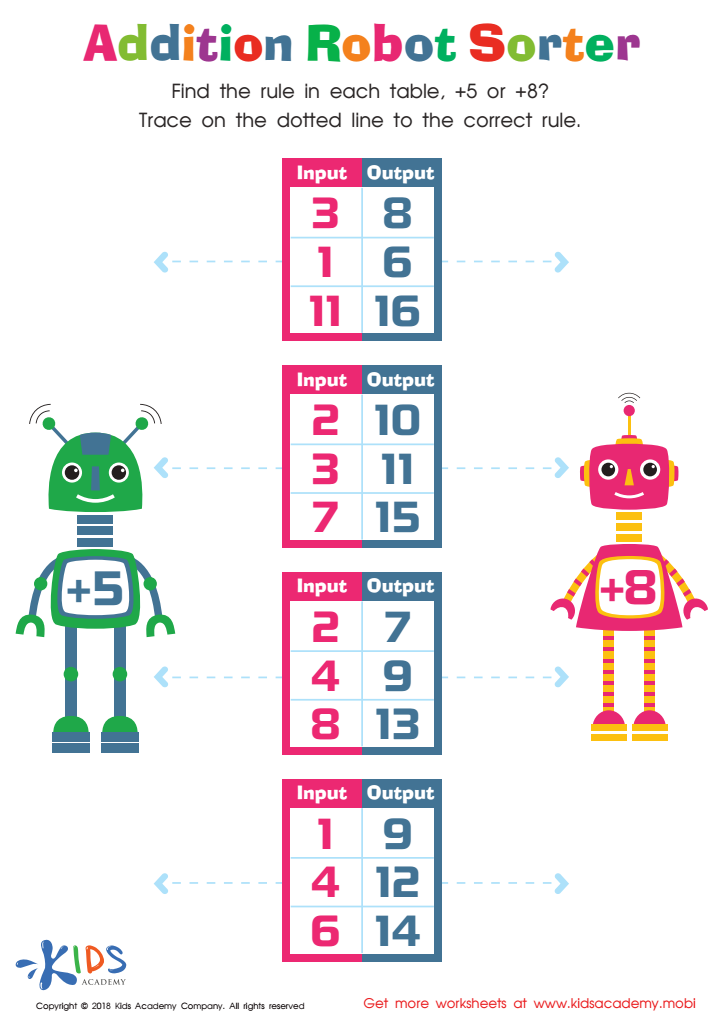
Addition Robot Sorter Worksheet

Addition Robot Sorter Worksheet

This worksheet helps your child understand addition. Have them trace the dotted lines to the correct equations: +8 and +5. It's a great way to aid their mathematical comprehension and get them comfortable with adding equations.
Addition Robot Sorter Worksheet
Worksheet
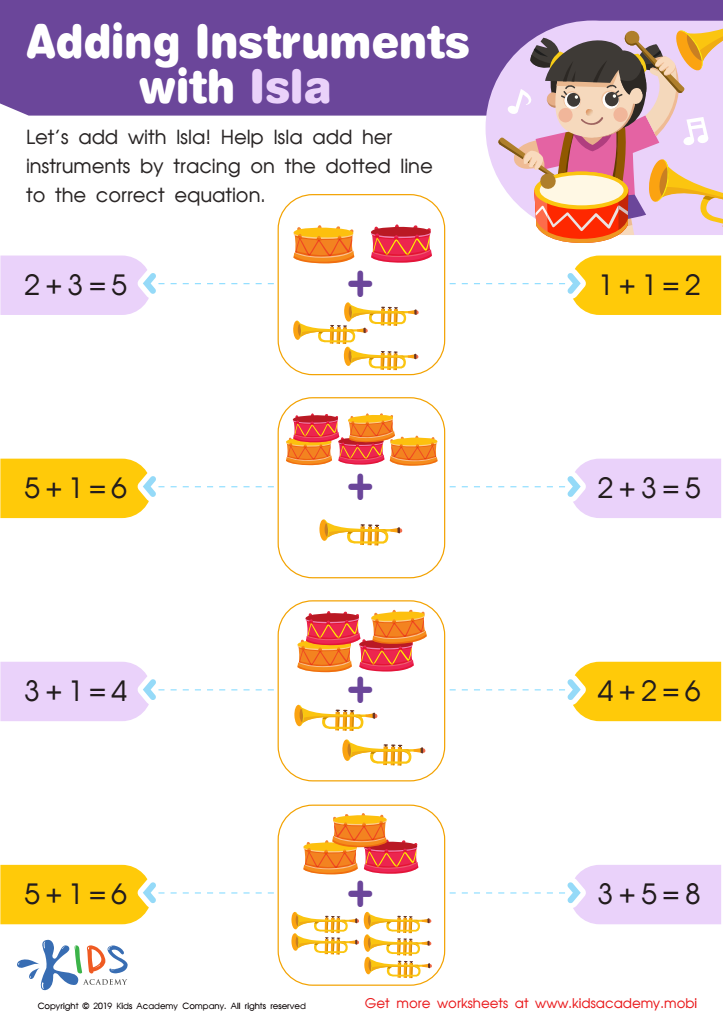
Adding Instruments with Isla Worksheet


Adding Instruments with Isla Worksheet

Your kids can have fun helping Isla add her musical instruments. With colorful pics and one-to-one representation, they can pick the correct addition sentence. They can connect each pic with traceable lines and get to the right sum up to 10.
Adding Instruments with Isla Worksheet

Worksheet


Basic addition and subtraction skills are foundational for children ages 4-7, laying the groundwork for their entire mathematical development. During these early years, children are not just learning numbers; they are developing critical thinking and problem-solving abilities that extend into daily life and future academic pursuits.

Parents and teachers should prioritize these skills for several reasons. Firstly, mastering basic math concepts builds confidence, allowing children to tackle more complex ideas later on. This foundational knowledge also enhances cognitive development, as young learners practice grouping, counting, and recognizing patterns.

Furthermore, strong addition and subtraction skills improve a child’s ability to navigate real-world situations, like measuring ingredients for a recipe or managing money. These foundational skills are also tied to literacy, as math vocabulary and concepts often overlap with language development.

Additionally, fostering a positive attitude toward math at an early age can debunk negative stereotypes, helping to combat math anxiety and fostering lifelong learning. By emphasizing basic addition and subtraction, parents and teachers can equip children with essential skills that promote both academic success and holistic development, ultimately shaping their attitudes towards learning and problem-solving as they grow.