Filters

53 filtered results

Clear all filters
Favorites
With answer key
Interactive

53 filtered results

Difficulty Level

Grade


Subject

    Check out this FREE Trial Lesson on Addition for age 4-7!

    Properties of Addition - Part 2

    Favorites
    With answer key
    Interactive
    • 4-7
    • Addition
    • Normal
    Different Ways to Add Worksheet
    Different Ways to Add Worksheet

    Different Ways to Add Worksheet

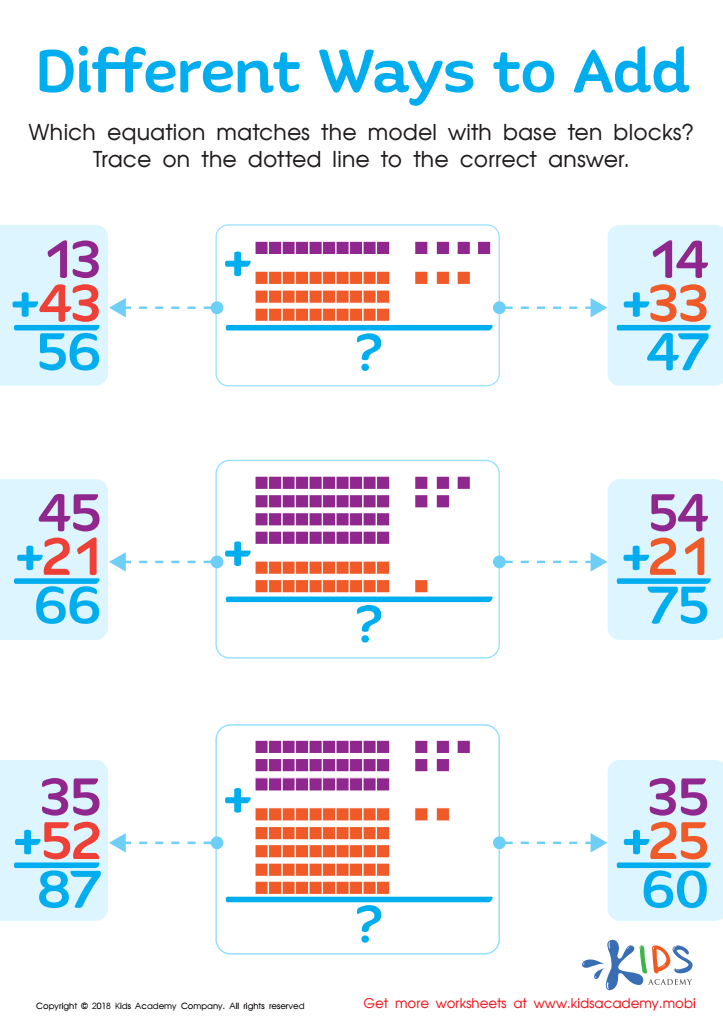
    This worksheet enhances math skills by having students match equations to base ten pictures and tracing lines. It not only helps with fine motor skills, but also encourages number sense, with various ways to add and build upon existing math knowledge.
    Different Ways to Add Worksheet
    Worksheet
    Bee Addition: Associative Property Practice Worksheet
    Bee Addition: Associative Property Practice Worksheet

    Bee Addition: Associative Property Practice Worksheet

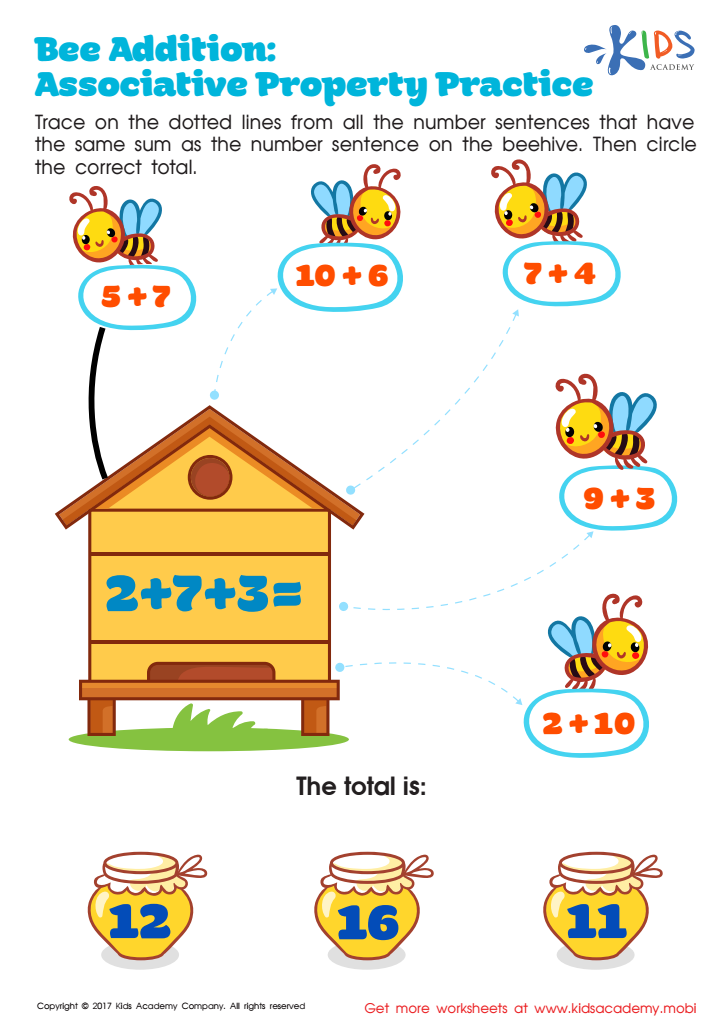
    Come to the beehive to practice the associative property of addition! This worksheet will help your child better understand addition facts. Compare equations to the 3-digit problem in the hive, solve each to find the correct answers, and trace the dotted line to show the worker bees home. Complete the sheet to find all the matching equations!
    Bee Addition: Associative Property Practice Worksheet
    Worksheet
    Recycling - More or Less Worksheet
    Recycling - More or Less Worksheet

    Recycling - More or Less Worksheet

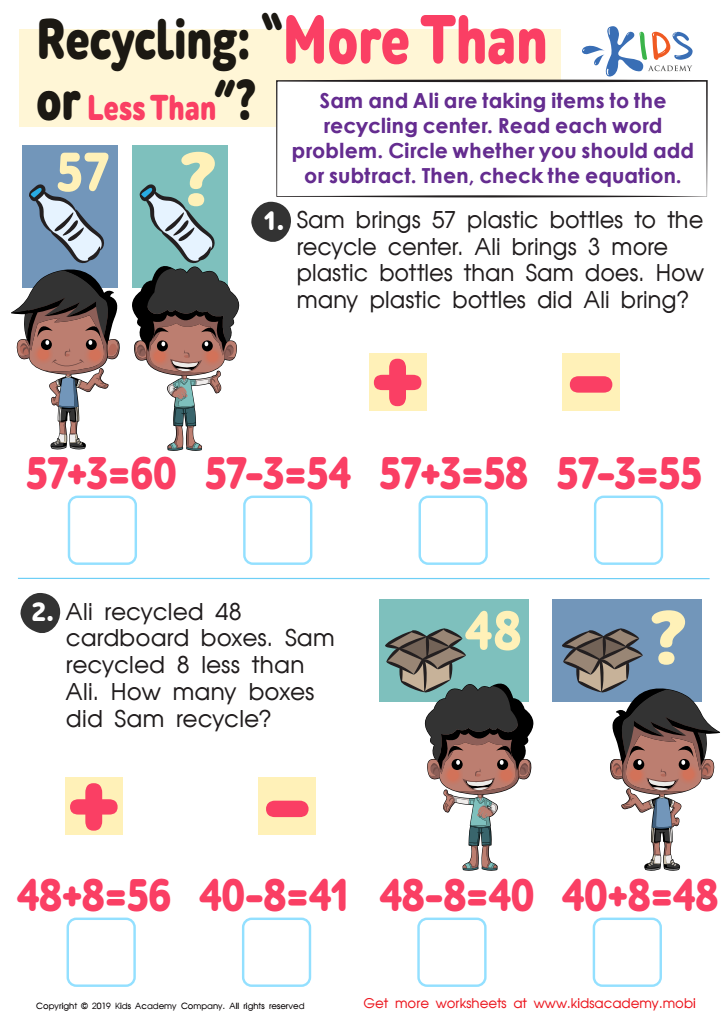
    Your child can compare numbers and solve word problems with this free worksheet. Help them understand what's being asked as Sam and Ali take items to the recycling center. They can choose the correct equation to match the word problem and apply their skills in reading and pulling out the appropriate information.
    Recycling - More or Less Worksheet
    Worksheet
    Growing with 15 Worksheet
    Growing with 15 Worksheet

    Growing with 15 Worksheet

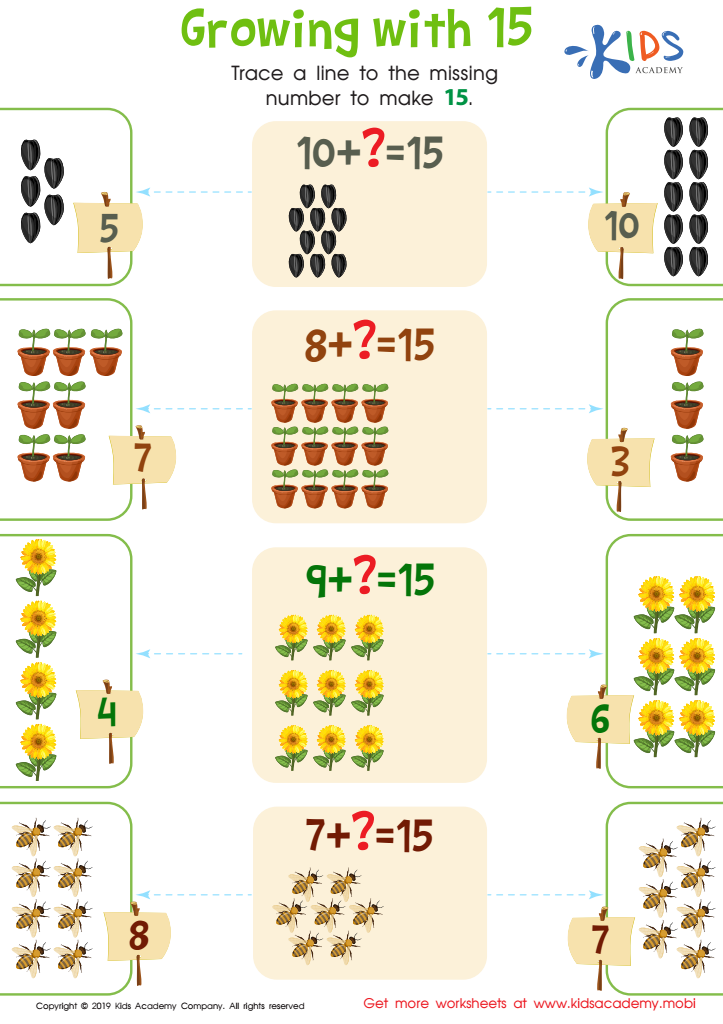
    Remind your kids that adding different sets of numbers can give the same total (e.g. 2+3=5, 4+1=5). Test their understanding by asking them for more examples. Move onto the worksheet: count objects, then trace the line to the number making a total of 15.
    Growing with 15 Worksheet
    Worksheet
    Double Facts: Total Matching Worksheet: Part 1

    Double Facts: Total Matching Worksheet: Part 1

    Double Facts: Total Matching Worksheet: Part 1

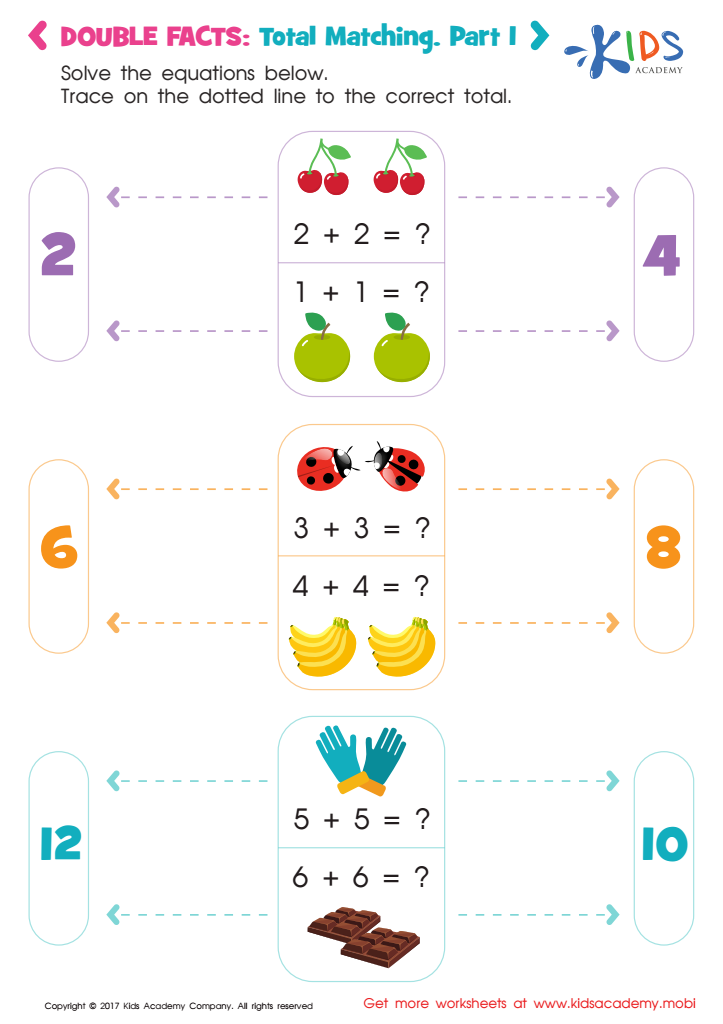
    Help your students take their numbers knowledge further with this fun math worksheet! Solving equations has never been more fun; simply trace the dotted lines with a pencil to the correct answer. As your child gets the hang of it, watch them be amazed as math problems become playtime.
    Double Facts: Total Matching Worksheet: Part 1

    Worksheet


    ... 2 3

    Normal Addition, a foundational arithmetic concept for children aged 4-7, is crucial for several reasons. Firstly, it introduces young learners to basic numeracy skills, allowing them to grasp the concept of quantity, understand number relationships, and build confidence in math. Mastery of addition serves as a stepping stone for future mathematical understanding, including subtraction, multiplication, and division.

    Secondly, Normal Addition fosters cognitive development. It enhances critical thinking, problem-solving, and analytical skills as children learn to manipulate numbers and explore different ways to add them. Moreover, this process promotes the development of fine motor skills through the use of manipulatives, like counting beads or blocks.

    Additionally, a solid understanding of Normal Addition aligns with national educational standards, ensuring children are prepared for advanced learning environments. It supports their mathematical literacy, enabling them to navigate everyday situations that involve math, from simple shopping decisions to basic budgeting.

    Lastly, mastering Normal Addition cultivates a positive attitude toward math. By instilling confidence and competence early, parents and teachers can help children view math as an enjoyable and rewarding challenge rather than a daunting subject, paving the way for lifelong learning and success in mathematics.