Normal Fractions of Shapes Worksheets for Ages 4-7
5 filtered results
-
From - To
Explore our engaging Normal Fractions of Shapes worksheets designed for young learners aged 4-7! These fun and interactive worksheets introduce children to the fundamental concepts of fractions through colorful shapes and relatable visuals. Ideal for home or classroom learning, each activity encourages kids to identify, color, and understand fractions such as halves, thirds, and quarters. Promote mathematical confidence as children develop their skills while having fun! Our comprehensive resources support early mathematics education, making abstract concepts tangible and enjoyable for young minds. Dive into a world of fractions with our carefully crafted worksheets today and watch your child's love for math grow!
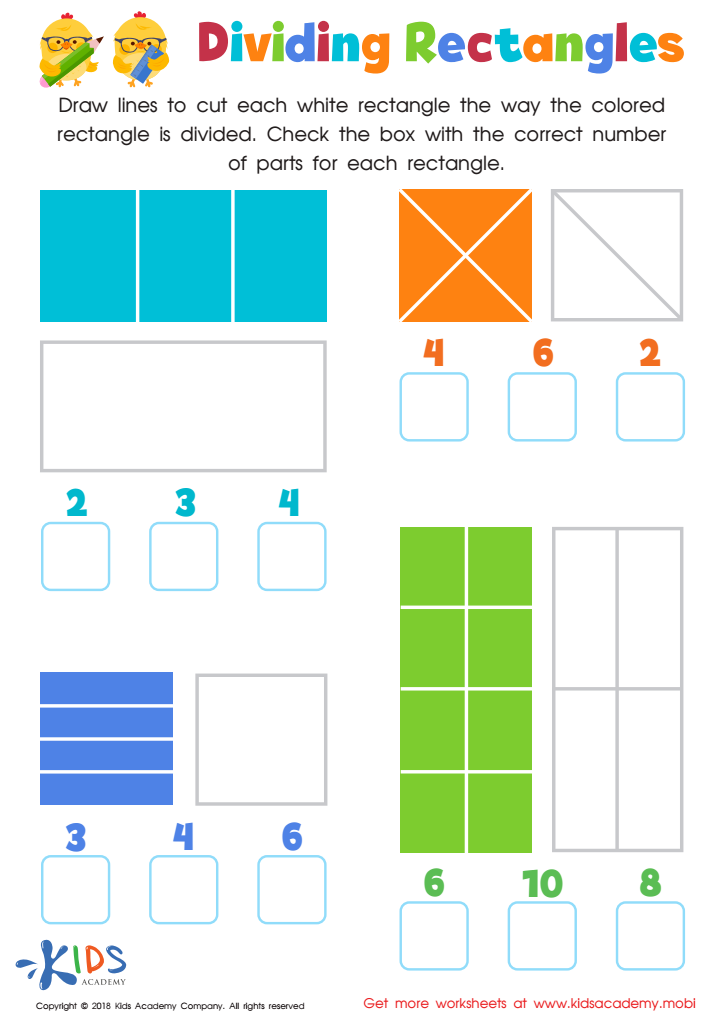
Dividing Rectangles Worksheet
 Assign to My Students
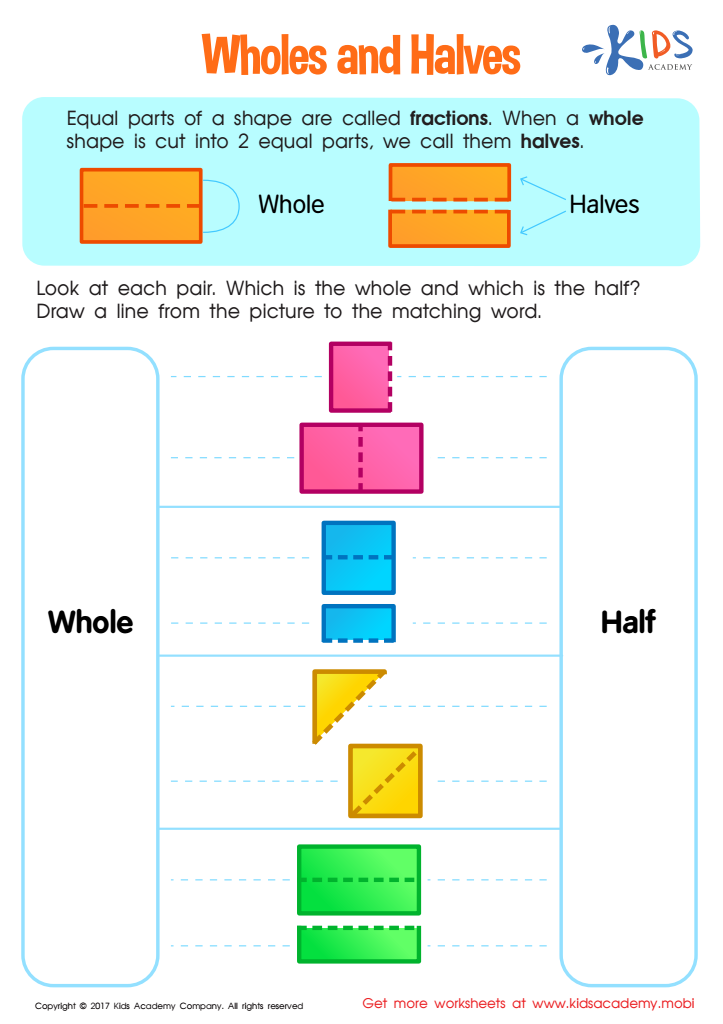
Wholes and Halves Worksheet
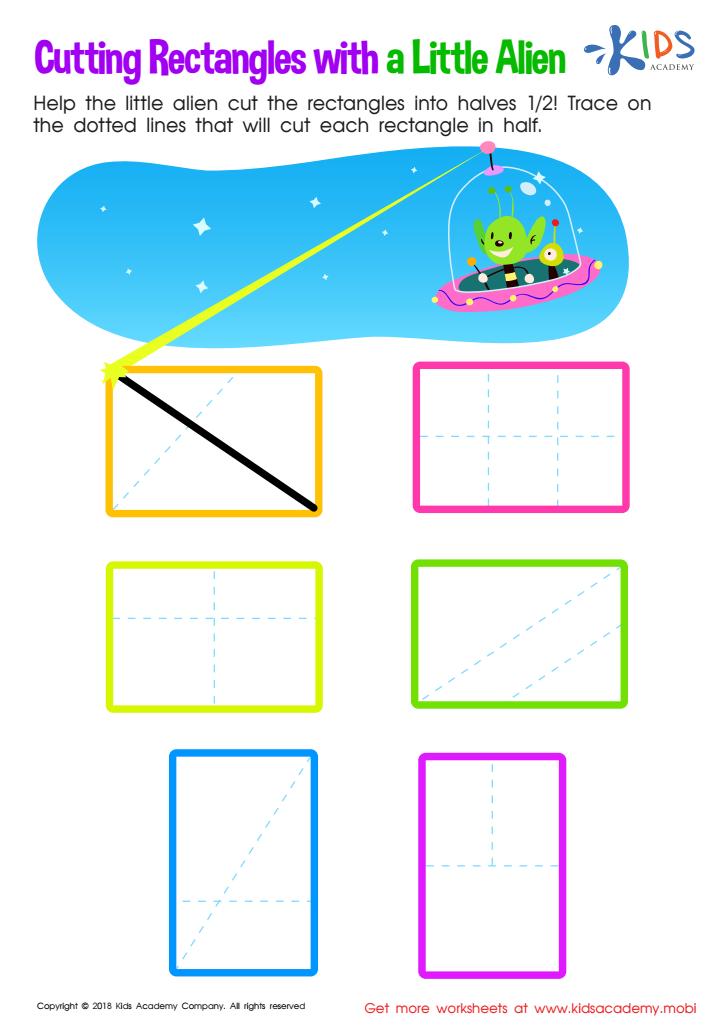
Cutting Rectangles with Alien Worksheet
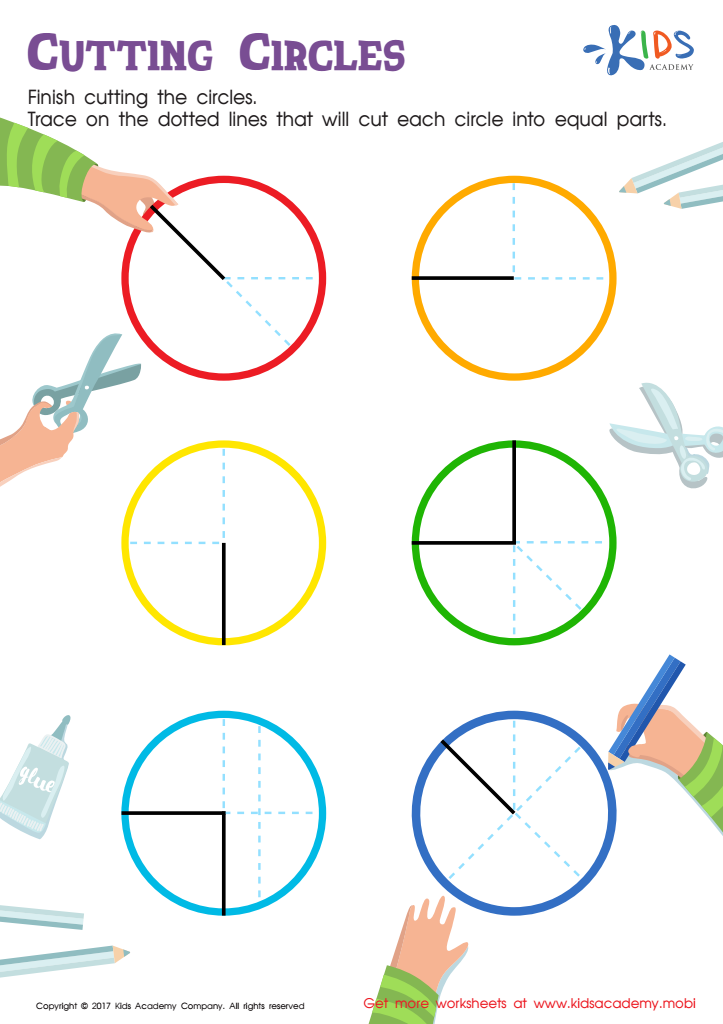
Cutting Circles Worksheet
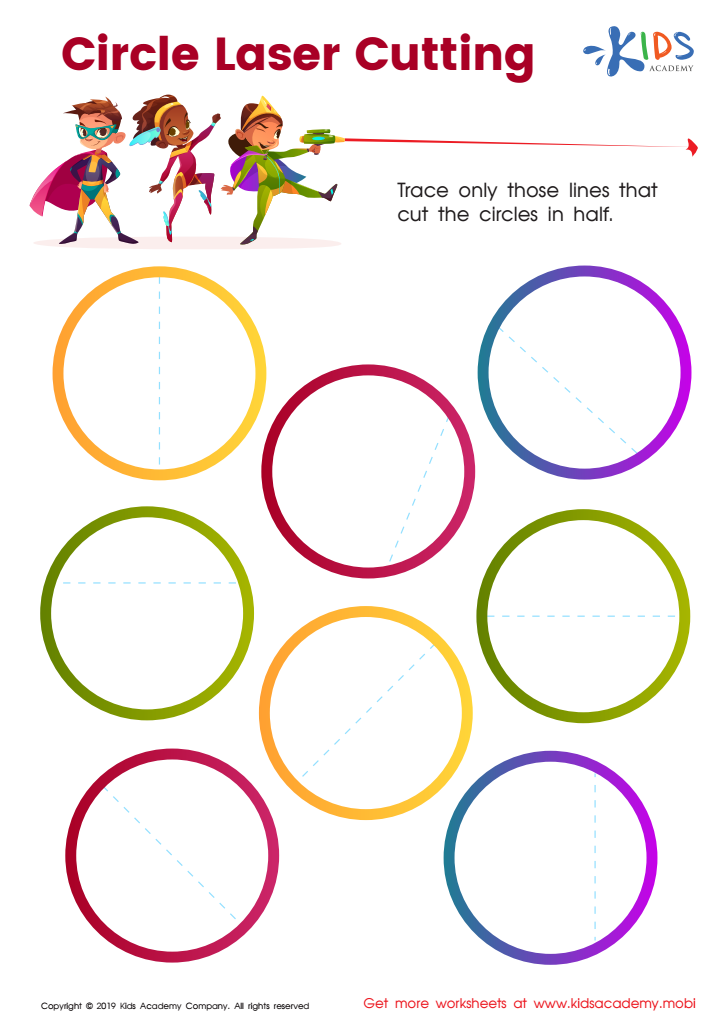
Circle Laser Cutting Worksheet








Understanding normal fractions of shapes is crucial for children aged 4-7 as it lays the foundation for their mathematical comprehension. At this early stage, children are naturally curious, and learning about fractions through shapes engages them in practical, visual ways that capture their attention. By recognizing how parts relate to the whole, they develop essential skills in critical thinking and problem-solving.
Parents and teachers should care about this foundational concept because it promotes early numeracy skills. Children begin to understand concepts like half, quarter, and whole, which directly influence their ability to approach more advanced mathematical ideas later on. These skills enhance pattern recognition and spatial reasoning, both of which are crucial for overall cognitive development.
Moreover, fostering a positive attitude towards math from a young age can reduce future anxieties associated with the subject. Engaging children with fun, hands-on activities involving shapes and fractions makes learning enjoyable, thus improving retention and building confidence. Ultimately, incorporating normal fractions of shapes into early education sets the stage for a lifelong proficiency in math, empowering children to navigate an increasingly numerate world with ease. By laying this groundwork, parents and teachers together can cultivate both the skills and the love for learning in the next generation.