Critical Thinking Normal Geometry Worksheets for Ages 4-7
5 filtered results
-
From - To
Unlock your child’s potential with our "Critical Thinking Normal Geometry Worksheets for Ages 4-7". These engaging and educational worksheets are designed to develop critical thinking and geometric understanding in young learners. Through fun, interactive exercises, children will explore shapes, spatial awareness, and problem-solving skills. Ideal for both home and classroom use, our worksheets promote cognitive development and creativity, laying a strong foundation for future math skills. Foster your child’s logical reasoning and analytical abilities with our expertly crafted geometry worksheets that make learning an exciting adventure. Perfect for ages 4-7, these resources inspire a lifelong love for math.
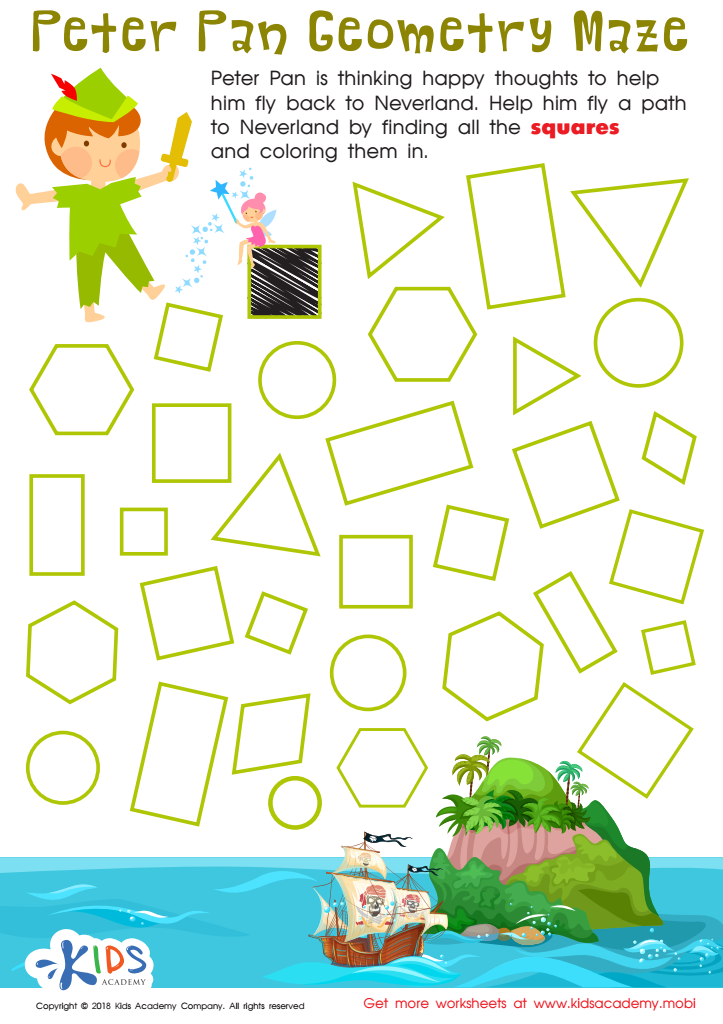
Peter Pan Worksheet
 Assign to My Students











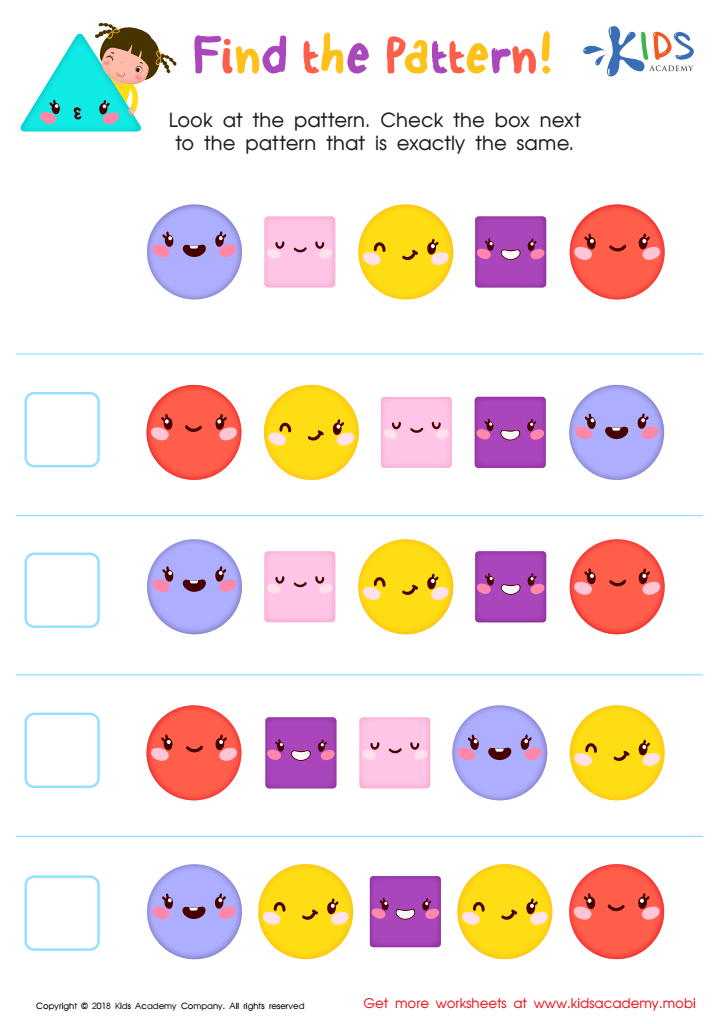
Find the Pattern Worksheet
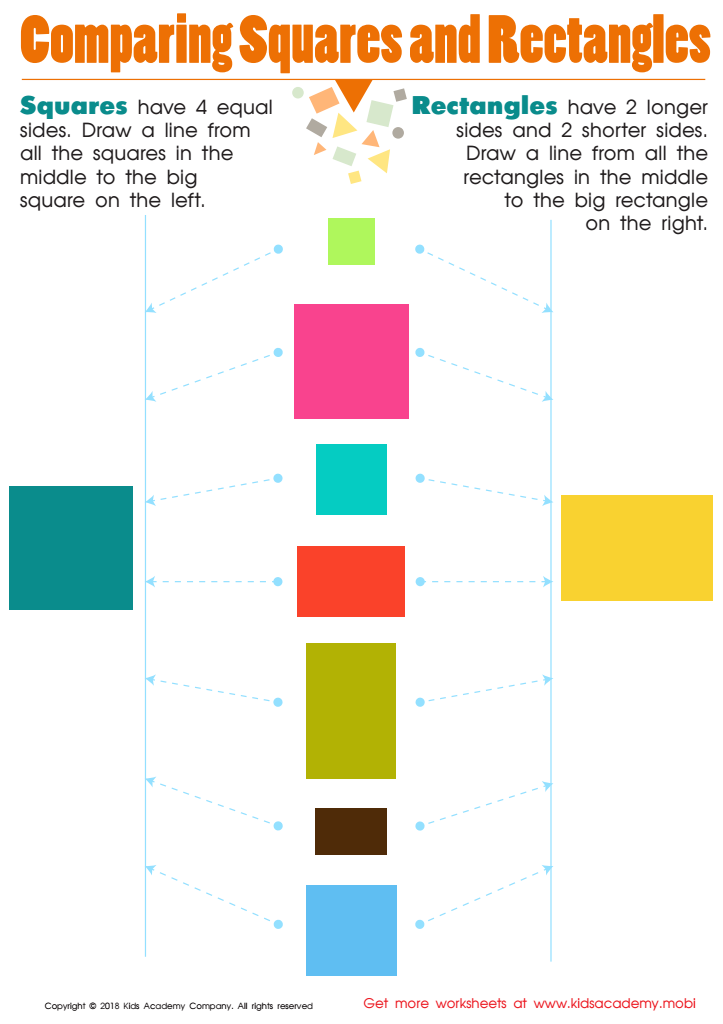
Comparing Squares Rectangles Worksheet
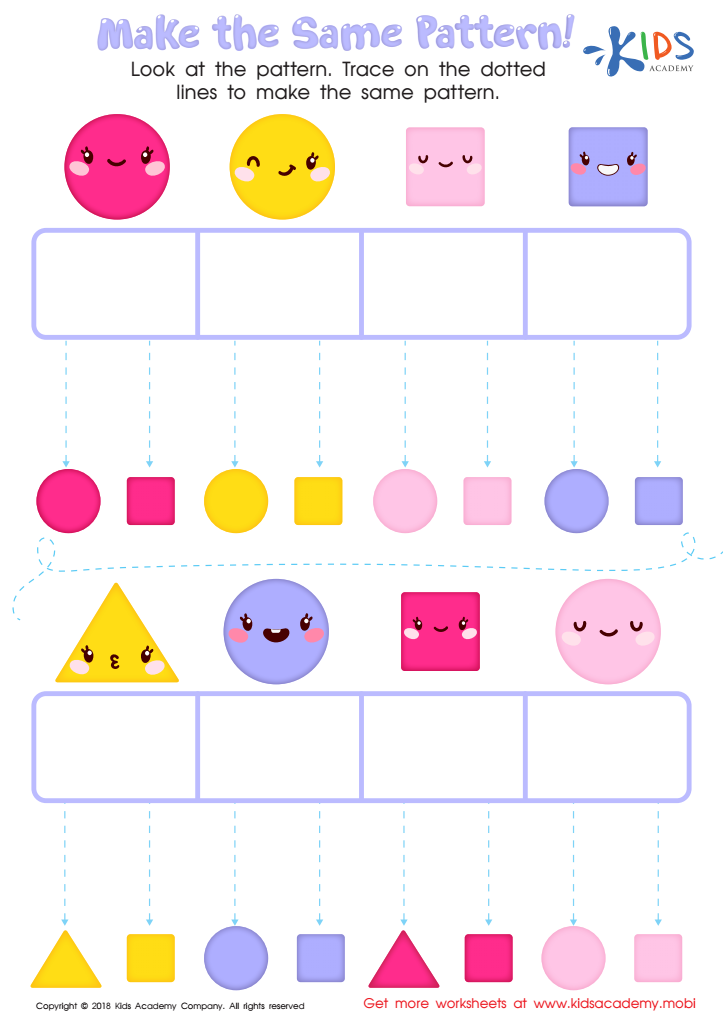
Make the Same Pattern Worksheet
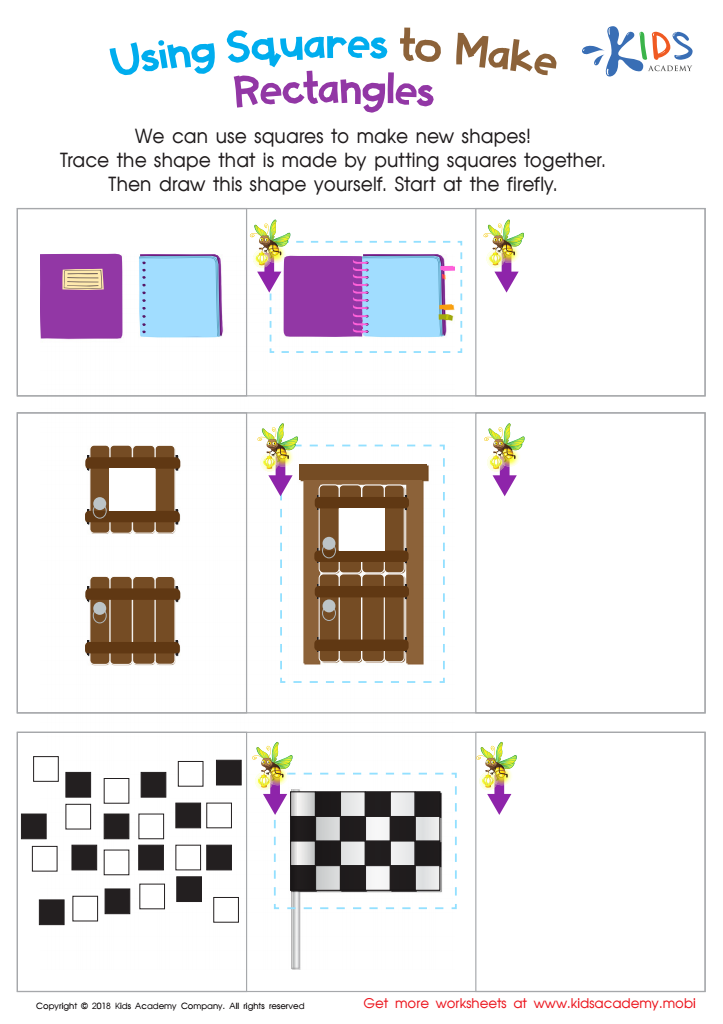
Using Squares to Make Rectangles Worksheet








Parents and teachers should prioritize fostering critical thinking in early geometry education for children aged 4-7 because it lays a foundational brick for future academic success and everyday problem-solving skills. Critical thinking in geometry aids young children in developing spatial awareness, pattern recognition, and logical reasoning. These skills are vital not only in mathematics but in understanding the physical world around them.
At this tender age, engaging with geometric concepts like shapes, sizes, and spatial relationships can significantly enhance cognitive development. Children begin to observe, compare, and analyze the properties of objects, which nurtures an analytic mindset. This analytical ability is a transferable skill that boosts performance across subjects including science, reading, and even art. Activities like sorting shapes, building structures, and navigating puzzles cultivate persistence and creativity, fostering a love for learning and intellectual curiosity.
Moreover, by integrating critical thinking into play, parents and teachers cultivate an enriched learning environment. Encouraging children to ask questions, make predictions, and explore various solutions nurtures independent thinkers who are prepared to tackle complex problems later in life. Introducing critical thinking through geometry at an early age sets children on a path of continuous intellectual engagement, better preparing them for both academic challenges and everyday decisions.








