Differentiating shapes Normal Geometry Worksheets for Ages 4-7
3 filtered results
-
From - To
Explore our "Differentiating Shapes Normal Geometry Worksheets" designed for young learners aged 4-7. These engaging worksheets help children identify and differentiate between various shapes, enhancing their understanding of geometry concepts. Each activity fosters critical thinking and promotes shape recognition through fun exercises tailored to different learning styles. With vibrant visuals and age-appropriate challenges, these resources support early math skills while keeping learning enjoyable. Perfect for teachers and parents alike, our worksheets offer a seamless way to integrate geometry into your child’s education. Download and watch as your little ones cultivate confidence in shape recognition with our expertly crafted materials!
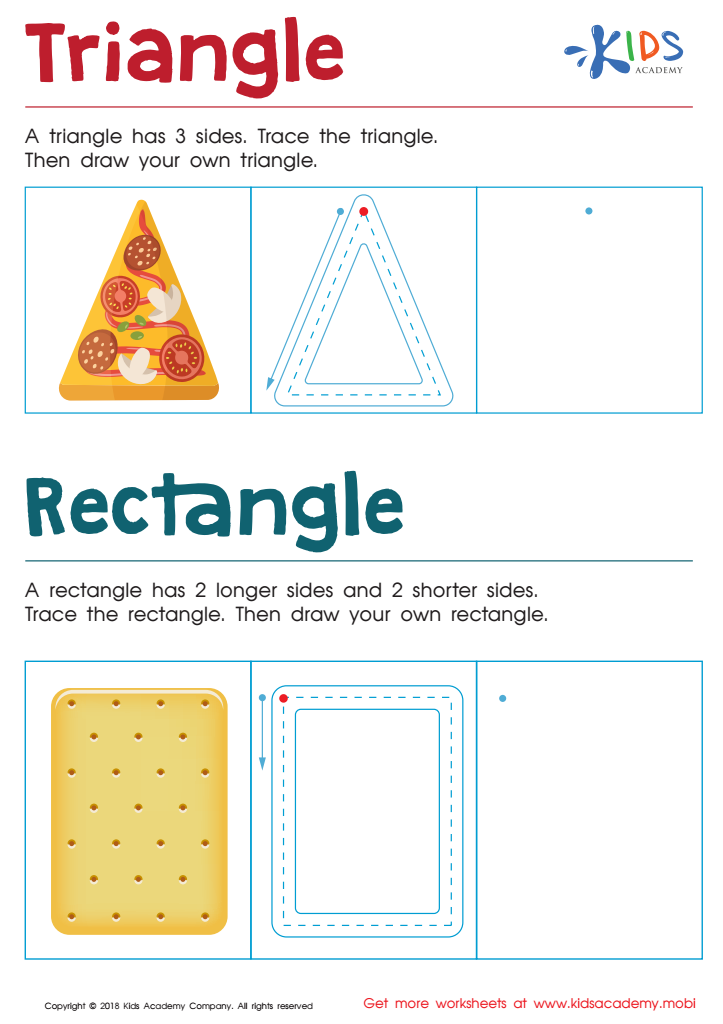
Triangle Rectangle Worksheet
 Assign to My Students











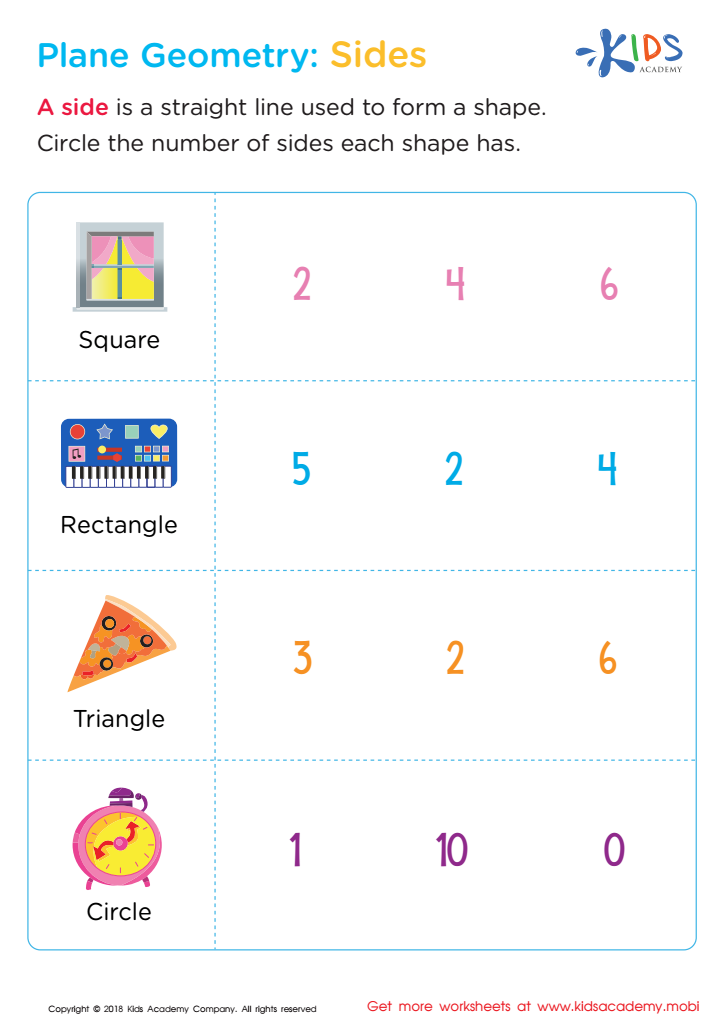
Plane Geometry: Sides Worksheet
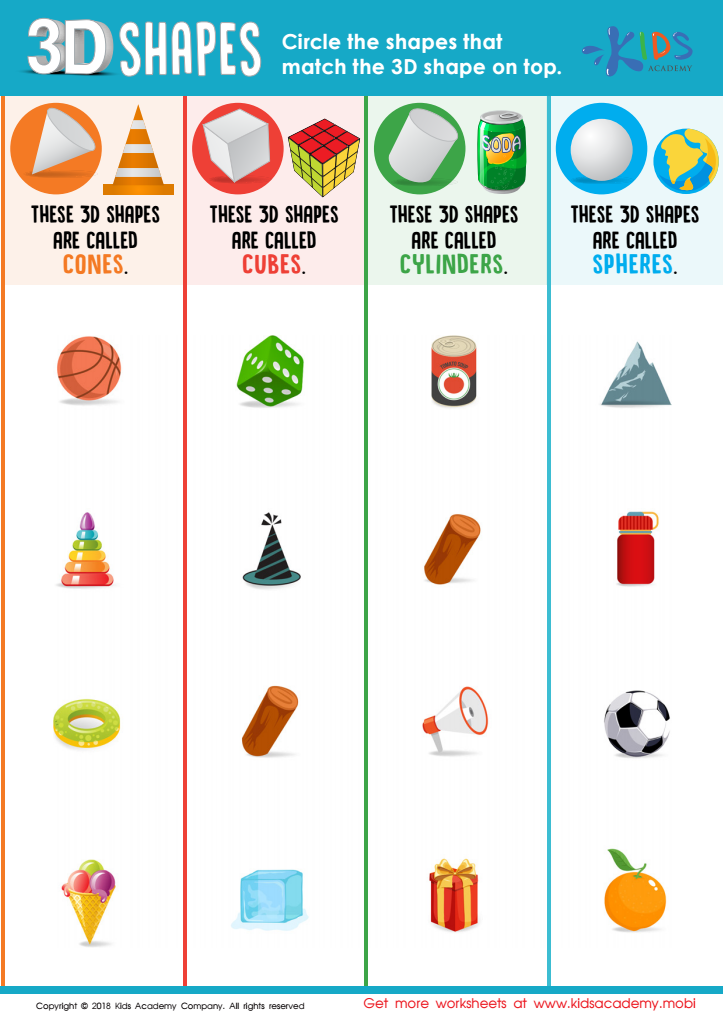
3D Shapes Worksheet








Differentiating shapes within the foundation of Normal Geometry for children aged 4-7 is crucial in early education, as it directly influences their cognitive development and mathematical understanding. At this age, children are naturally curious and eager to explore their environment, making it the perfect time to introduce diverse shapes and their properties.
Caring about differentiated shapes encourages cognitive engagement and critical thinking skills. Understanding various shapes—like triangles, rectangles, circles, and polygons—helps children recognize patterns and relationships, which are fundamental concepts in math. Additionally, this differentiation fosters spatial awareness, allowing children to visualize and manipulate objects, critical skills in problem-solving and geometry later in their academic journey.
Furthermore, recognizing shapes aids in language development, as children learn new vocabulary associated with dimensions, corners, edges, and symmetry. It promotes inclusive learning environments where educators and parents can tailor activities based on individual learning needs, ensuring that each child encounters success at their own pace.
By caring about the teaching of differentiated shapes, parents and teachers help lay a strong foundation for lifelong mathematical comprehension, critical thinking, and confidence in problem-solving, setting the stage for future academic achievements.








