Reading comprehension Normal Geometry Worksheets for Ages 4-7
4 filtered results
-
From - To
Enhance your child's learning experience with our Reading Comprehension Normal Geometry Worksheets, designed specifically for ages 4-7. These engaging worksheets combine geometry concepts with reading skills, helping young learners understand shapes, sizes, and spatial relationships while improving their comprehension abilities. Each worksheet provides age-appropriate exercises that capture children's attention and promote critical thinking. Fun illustrations and interactive activities make learning enjoyable and effective. Our resources are perfect for home or classroom use, ensuring a solid foundation in both math and reading. Explore the world of geometry through reading, and watch your child excel in their academic journey!
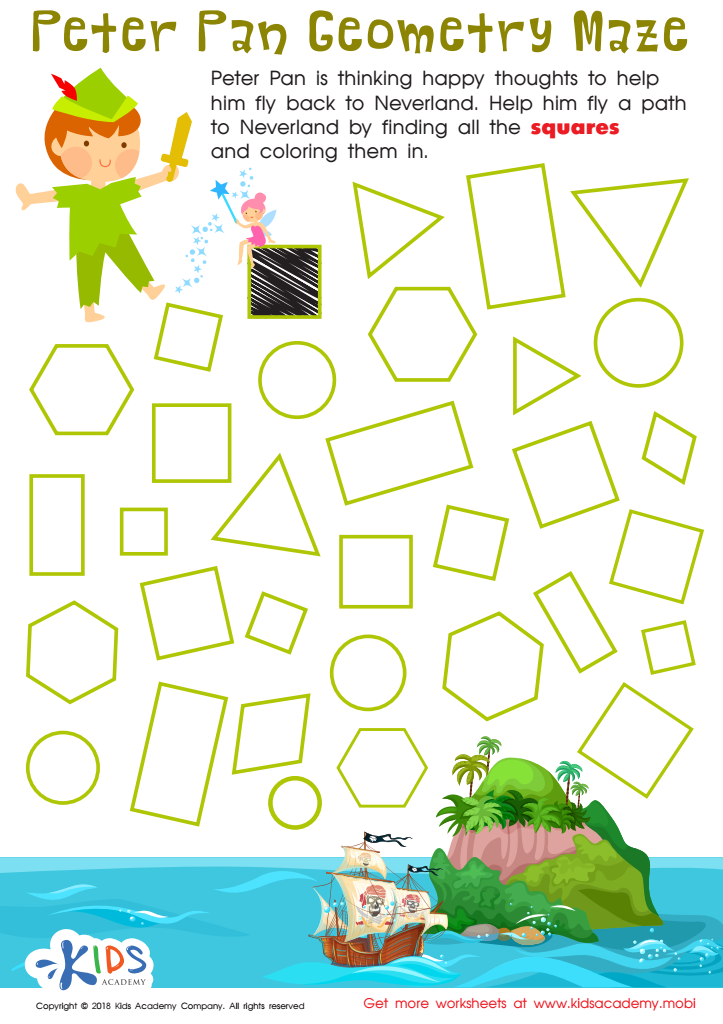
Peter Pan Worksheet
 Assign to My Students











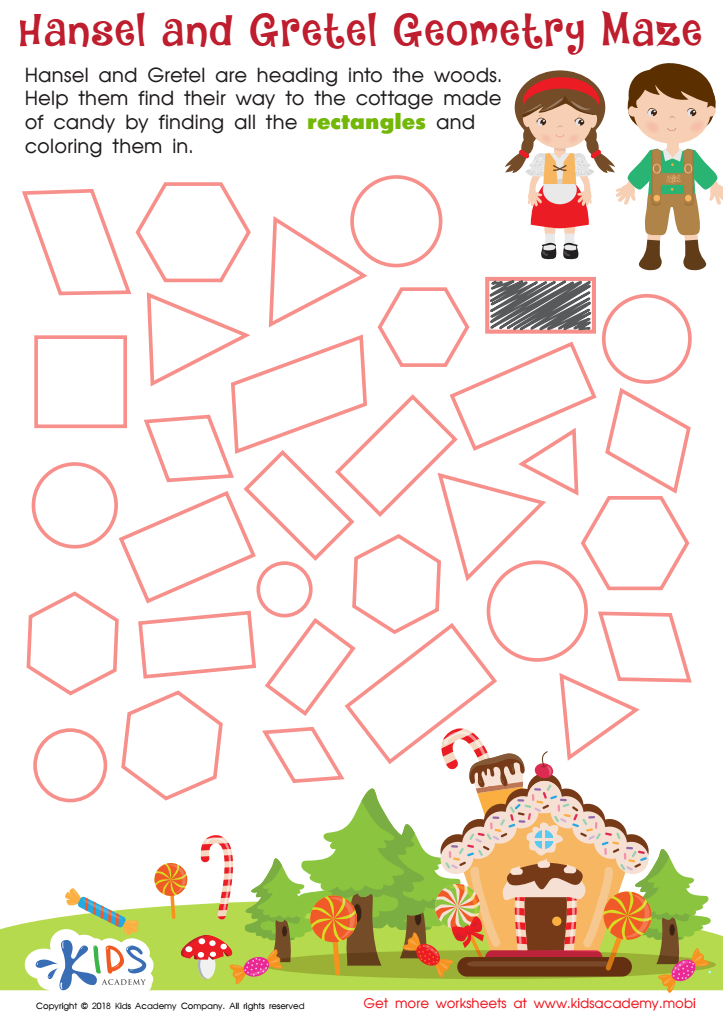
Hansel and Gretel Geometry Maze Worksheet
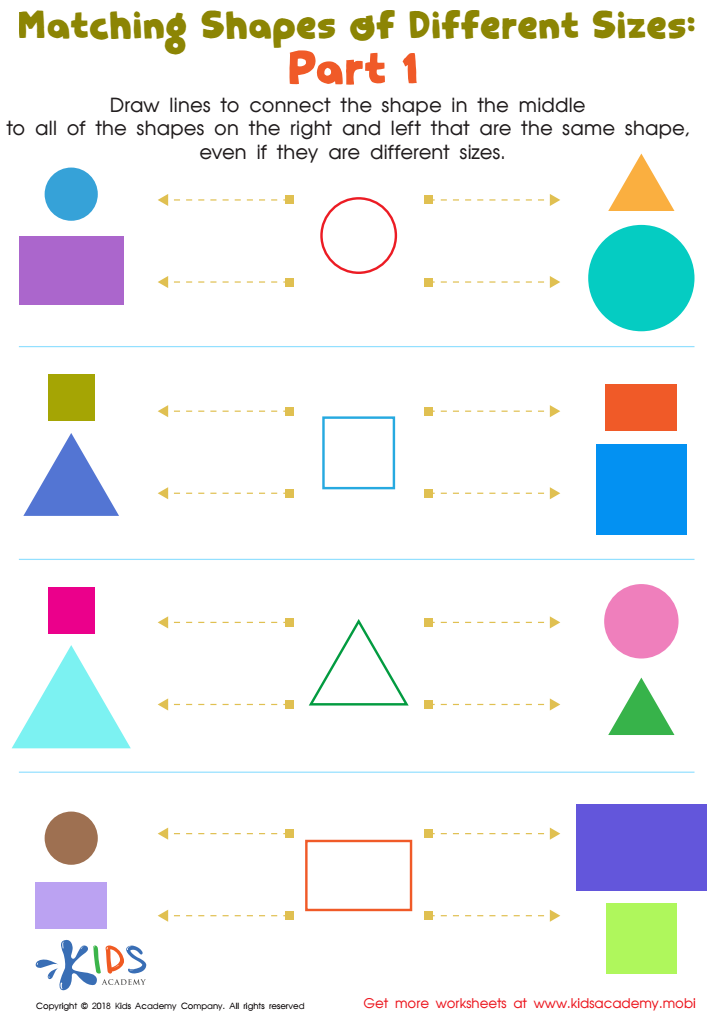
Geometry: part 1 Worksheet
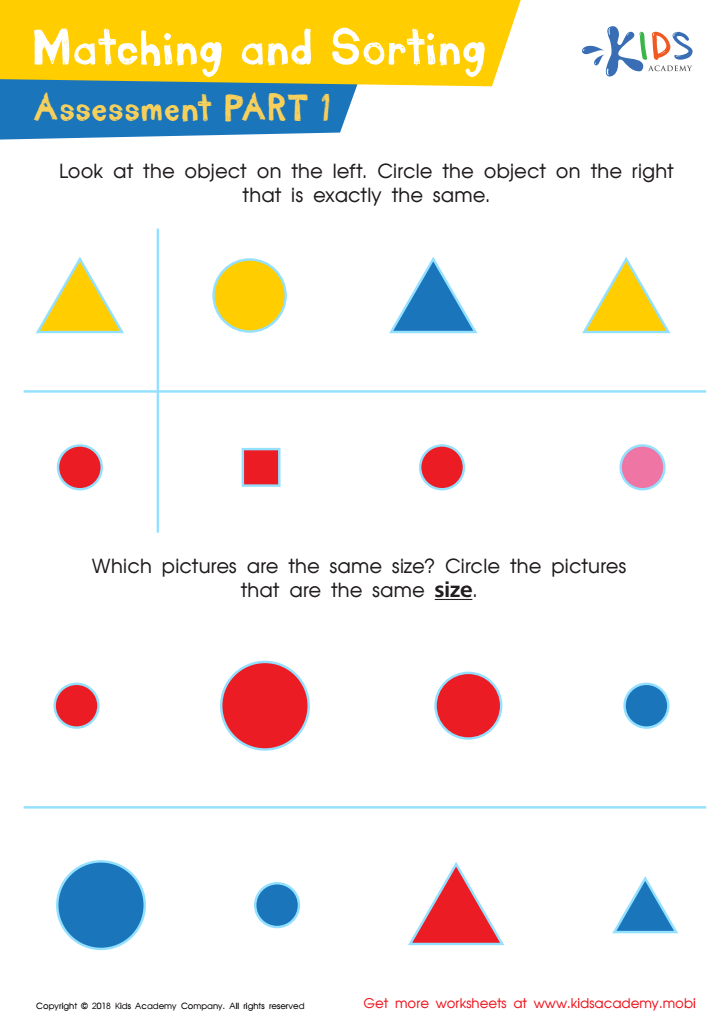
Matching and Sorting for Kindergarten: Assessment 1 Worksheet








Reading comprehension is a foundational skill that plays a critical role in a child’s academic success, particularly for ages 4-7, when cognitive and linguistic abilities are rapidly developing. Parents and teachers should prioritize developing this skill because it enhances a child's ability to understand and integrate information across various subjects.
At this stage, children are exposed to a myriad of texts, and improved reading comprehension fosters their capacity to decipher meaning, make inferences, and draw connections to their own lives or prior knowledge. When children master comprehension, they feel more confident and motivated to read, laying the groundwork for lifelong learning and engagement.
Moreover, aligning reading comprehension with early geometry concepts promotes critical thinking. By presenting stories that involve shapes, spatial reasoning, or problem-solving, educators and parents can help children visualize geometric ideas in practical contexts. This interdisciplinary approach gives young learners a unique perspective, as they relate literary content to real-world applications.
Ultimately, fostering reading comprehension, coupled with geometry understanding, is essential not only for a child's academic journey but also for nurturing essential life skills, such as analytical thinking and effective communication, making it imperative for caregivers and educators to invest time and resources in these areas.








