
Visual perception Normal Geometry Worksheets for Ages 4-7
3 filtered results
Difficulty Level
Grade
Age
-
From - To
Subject
Activity
Standards
Discover exciting Visual Perception Normal Geometry Worksheets designed specifically for children aged 4-7! Our engaging activities help young learners develop essential skills in visual perception, spatial awareness, and geometric understanding. These worksheets make learning fun as kids explore shapes, sizes, and patterns through colorful illustrations and interactive exercises. Perfect for parents and educators, these resources support early math development and encourage critical thinking and problem-solving. Foster your child’s love for learning and strengthen their geometry skills with our printable worksheets, ideal for at-home practice or classroom use. Start building a solid foundation in math today!
Favorites
With answer key
Interactive
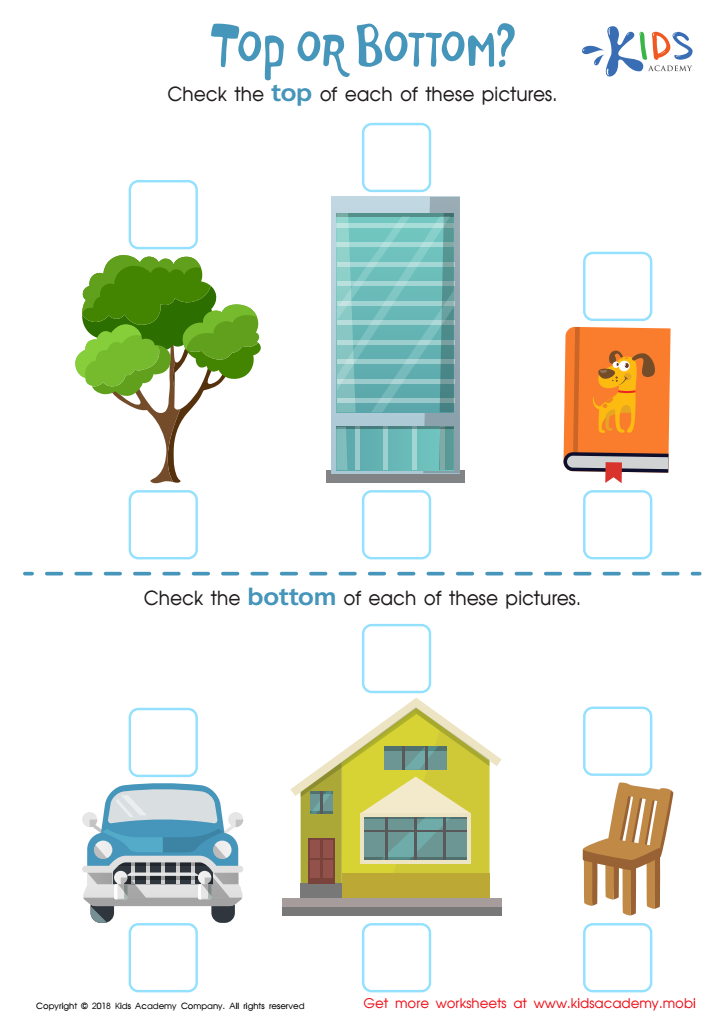
Top or Bottom Worksheet
Help your toddler master orientation and early geometry skills with this free printable worksheet. It tasks children with identifying the top and bottom of familiar images, like cars, to help build their mental map of objects. It may be simple for adults and older kids, but toddlers must learn the words to describe objects and their physical orientation.
 Assign to My Students
Top or Bottom Worksheet
Worksheet











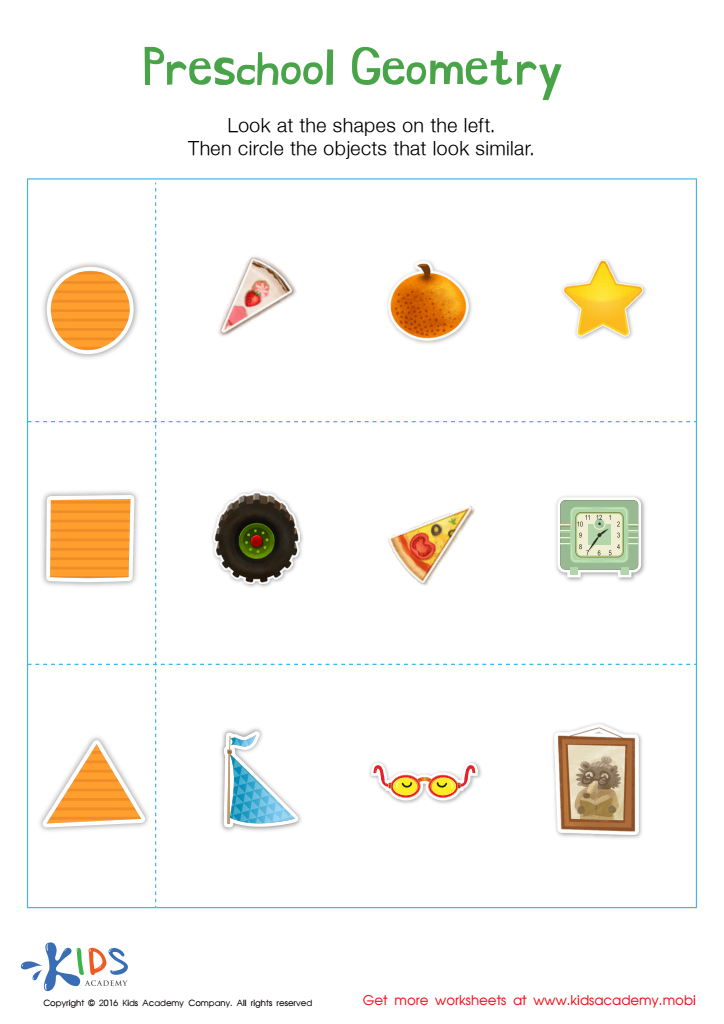
Preschool Geometry Match Up Worksheet
Teach your preschooler geometry using everyday objects. This printable worksheet helps them recognize, match, and follow directions like left and right. Start a conversation to extend their learning and they'll see how shapes appear in the world around them.
Preschool Geometry Match Up Worksheet
Worksheet
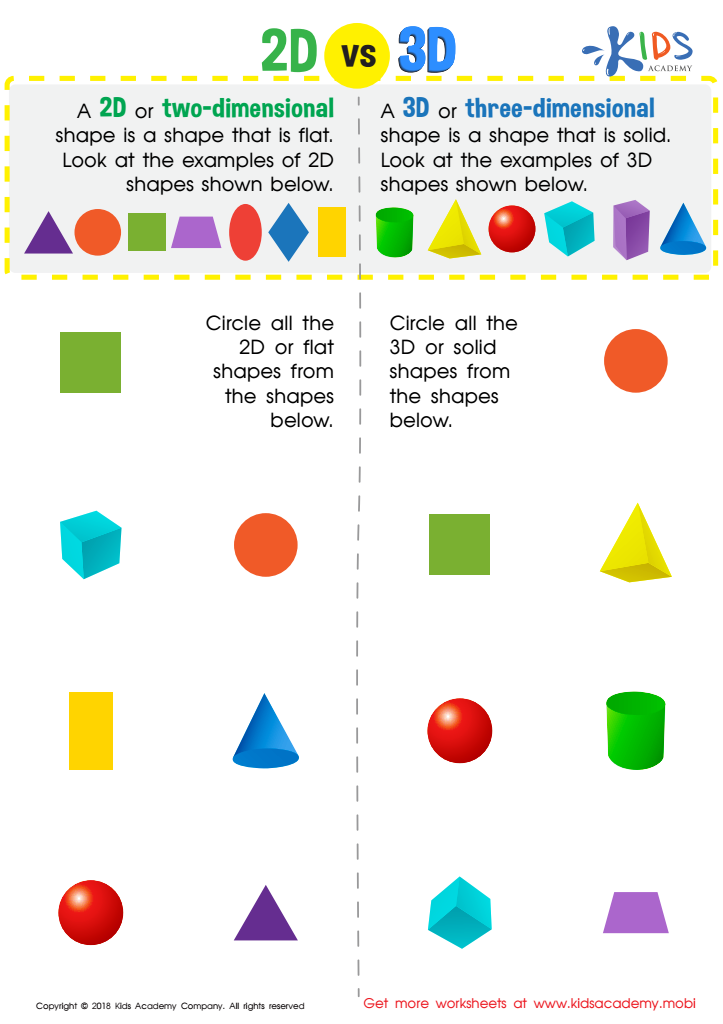
2D vs 3D Shapes Worksheet
Help your child understand 3D shapes using this engaging worksheet! Read the descriptions at the top and search for 2D and 3D shapes. An ideal activity for toddlers learning shapes. A fun way to understand the tricky concept of 3D shapes!
2D vs 3D Shapes Worksheet
Worksheet
Join Kids Academy for Free
Who is primarily going to use this learning content?








Visual perception, particularly in the context of normal geometry, is crucial for children aged 4-7 as it forms the foundation for their spatial awareness, problem-solving skills, and overall cognitive development. Children at this age are naturally curious and engaged in hands-on learning experiences, making it the ideal time to cultivate their understanding of shapes and spatial relationships. By helping children develop strong visual perception skills, parents and teachers can enhance their abilities in recognizing shapes, patterns, and spatial arrangements, which are essential in everyday life and academic success.
Moreover, mastery of geometric concepts lays the groundwork for more advanced topics in mathematics and science later in their educational journey. Engaging children through interactive activities like building blocks, puzzles, and drawing shapes empowers them to explore geometry in a tangible way, fostering creativity and critical thinking skills. Additionally, strong visual perception can support reading readiness, as children learn to identify letters and words based on their shapes. With supportive guidance from parents and teachers, children will not only gain effective visual-perceptual skills but also build confidence and curiosity in learning, enabling them to navigate their world and future challenges more adeptly.








