Addition Practice Normal Math Worksheets for Ages 4-7 - Page 2
36 filtered results
-
From - To
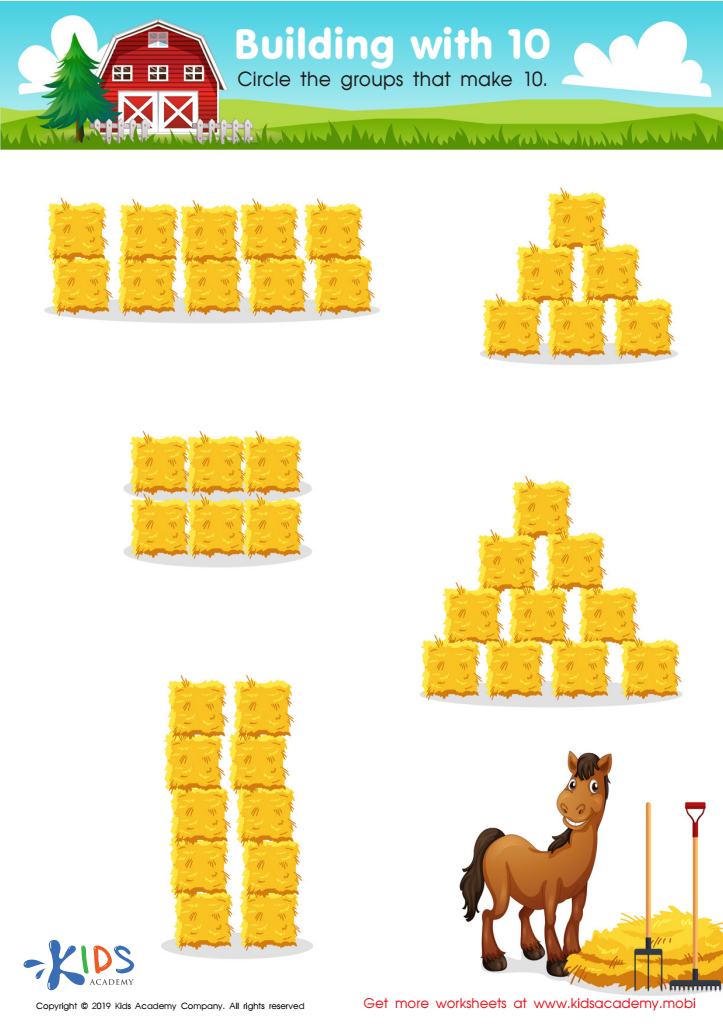
Building with 10 Worksheet
 Assign to My Students
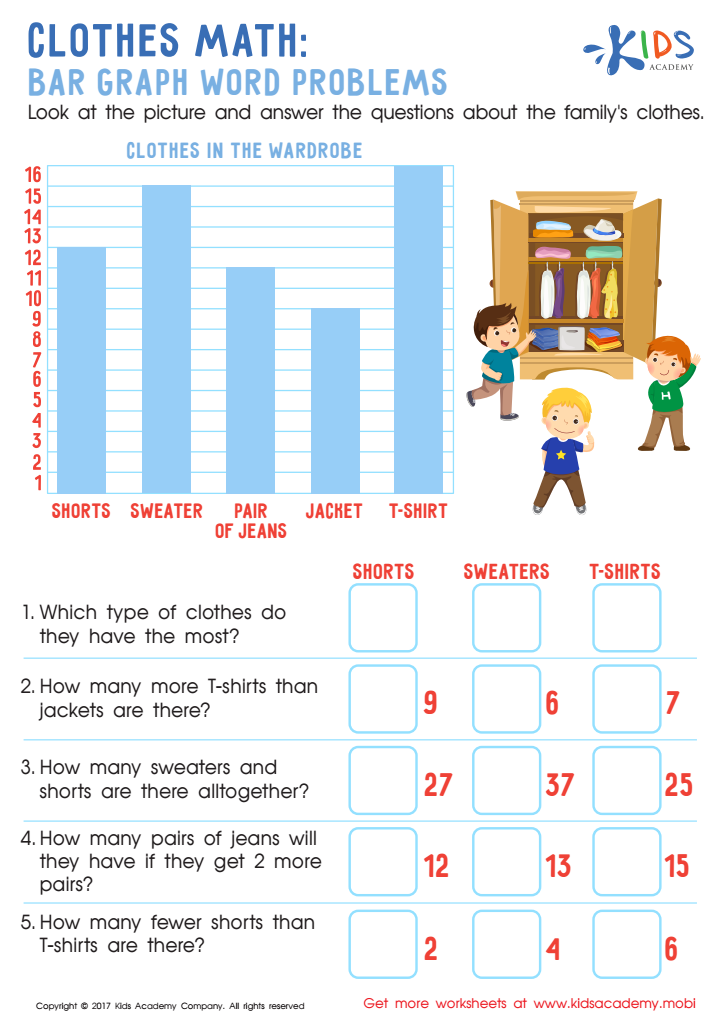
Clothes Math: Bar Graph Word Problems Worksheet
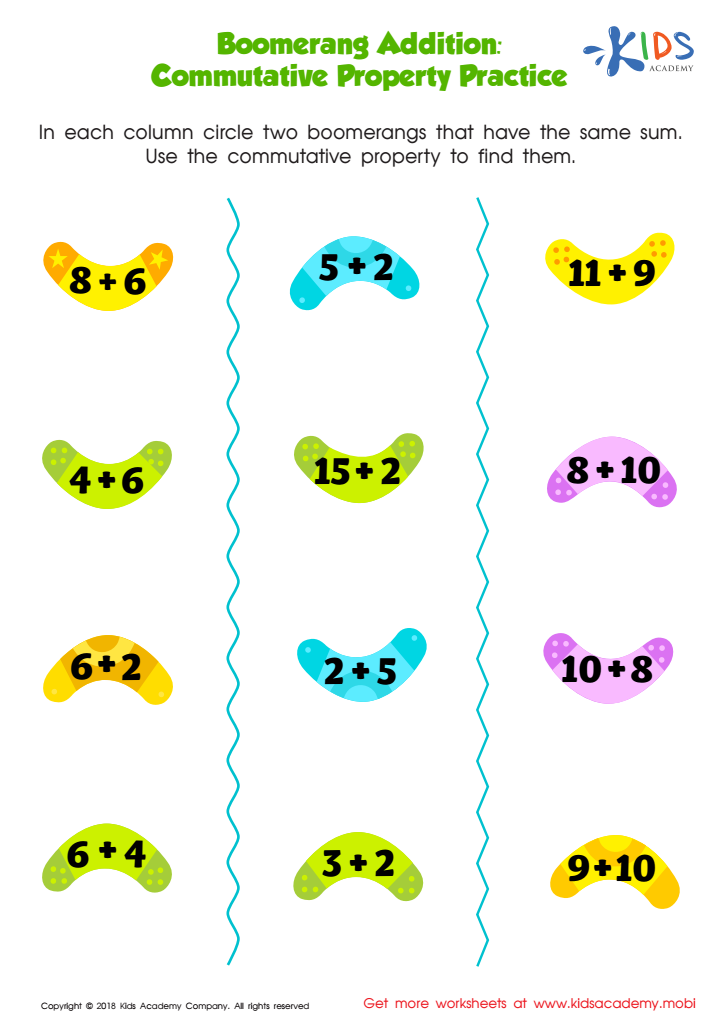
Boomerang Addition Worksheet
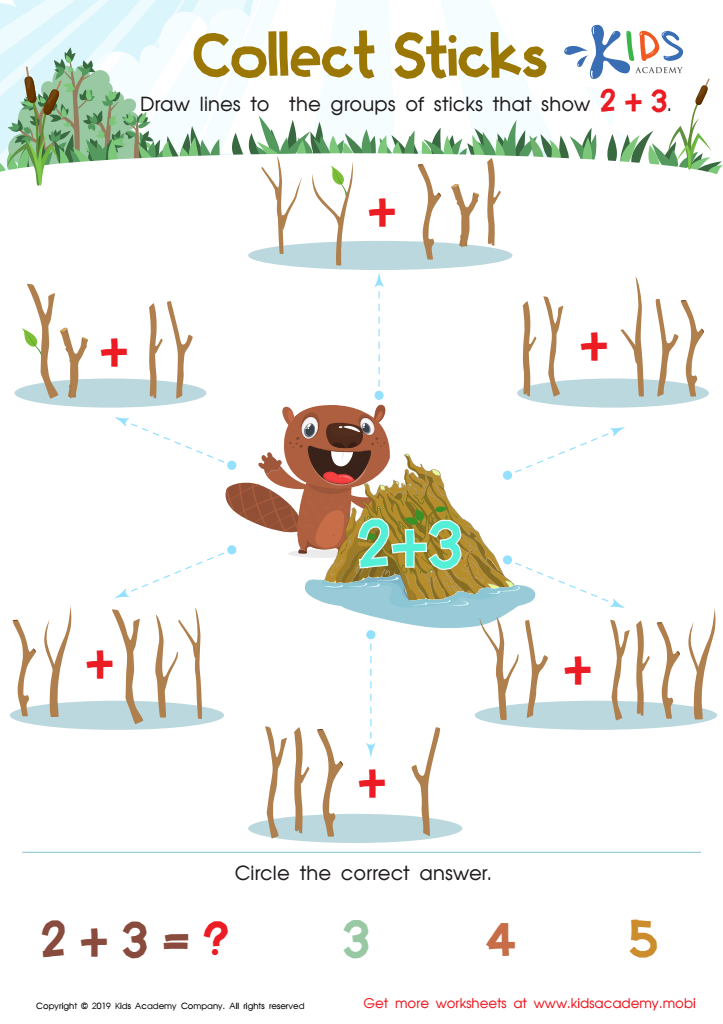
Collect Sticks Worksheet
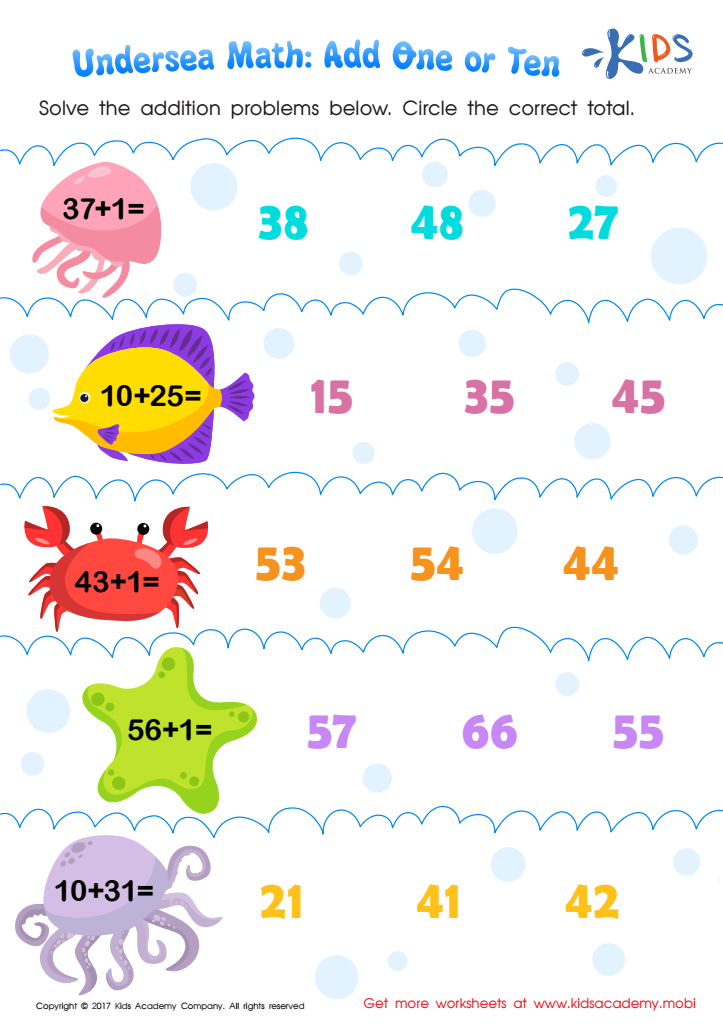
Undersea Math Worksheet
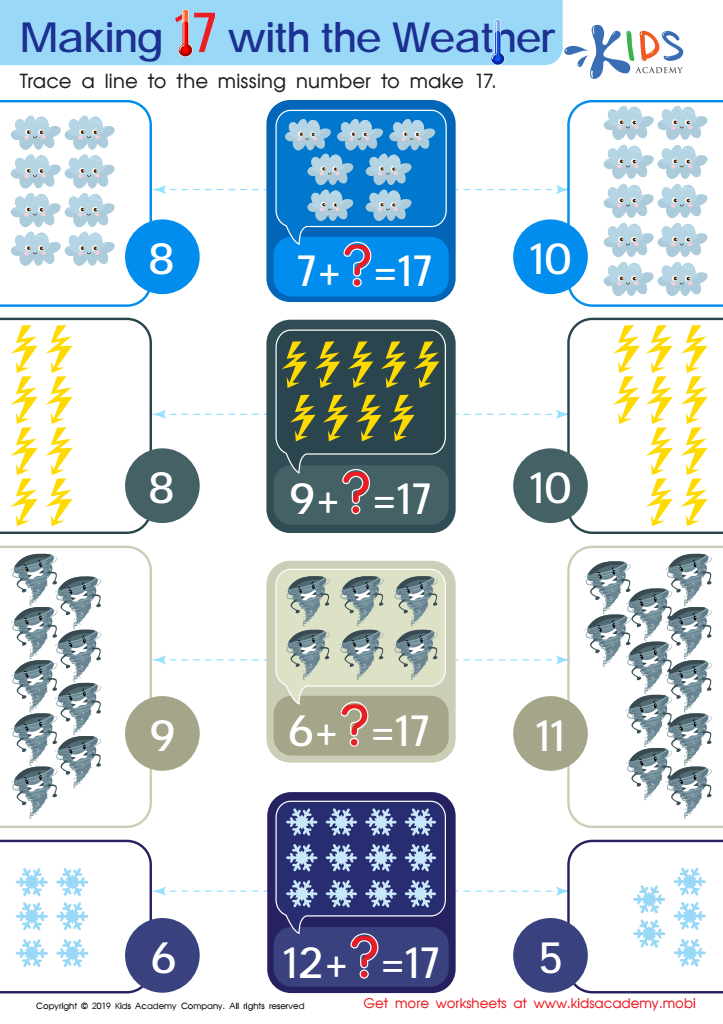
Making 17 with the Weather Worksheet
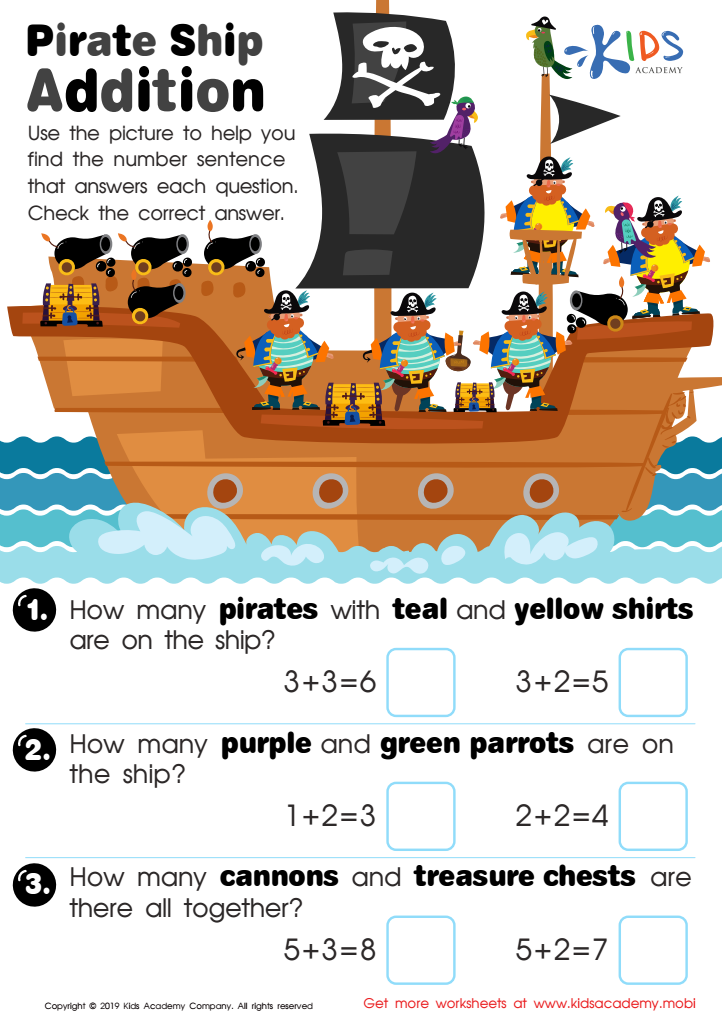
Pirate Ship Addition Worksheet
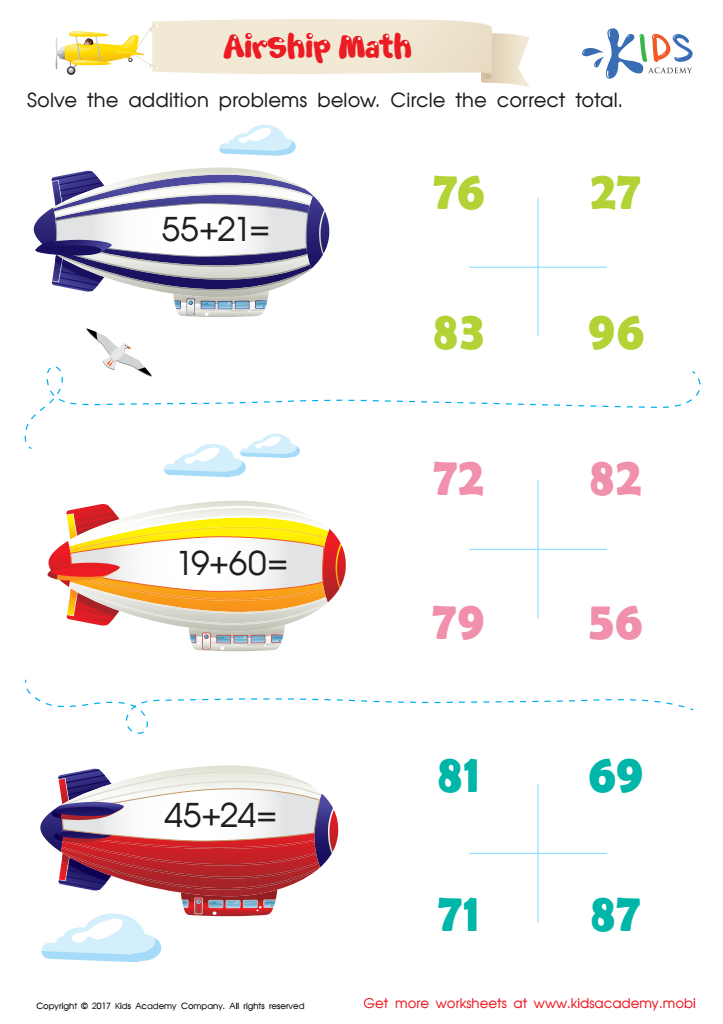
Airship Math Addition Printable
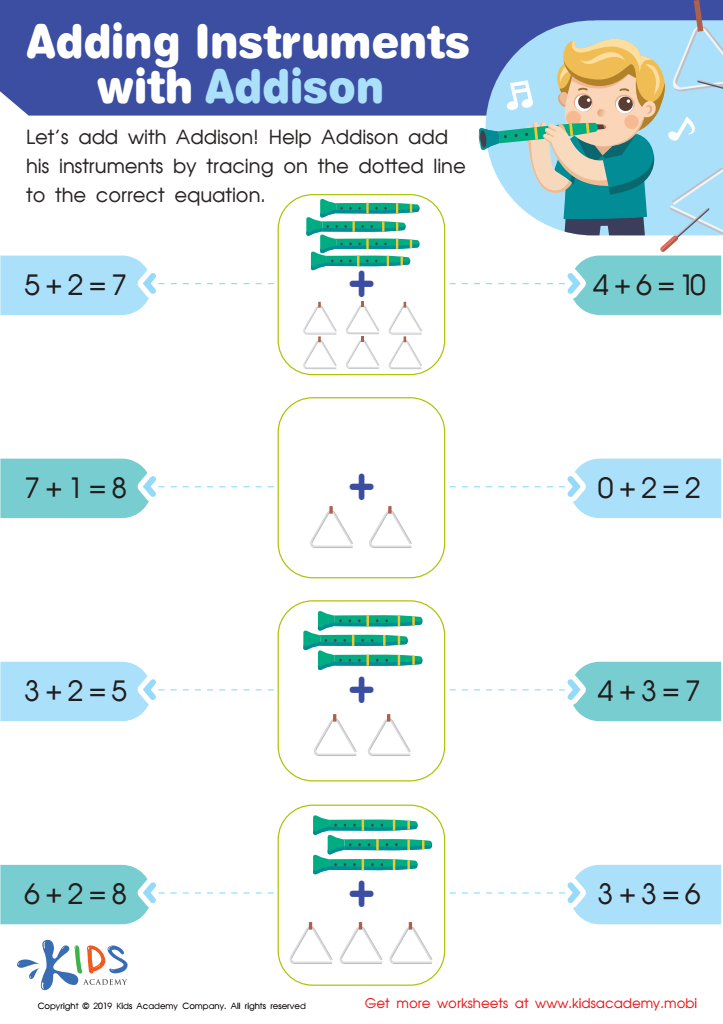
Adding Instruments with Addison Worksheet
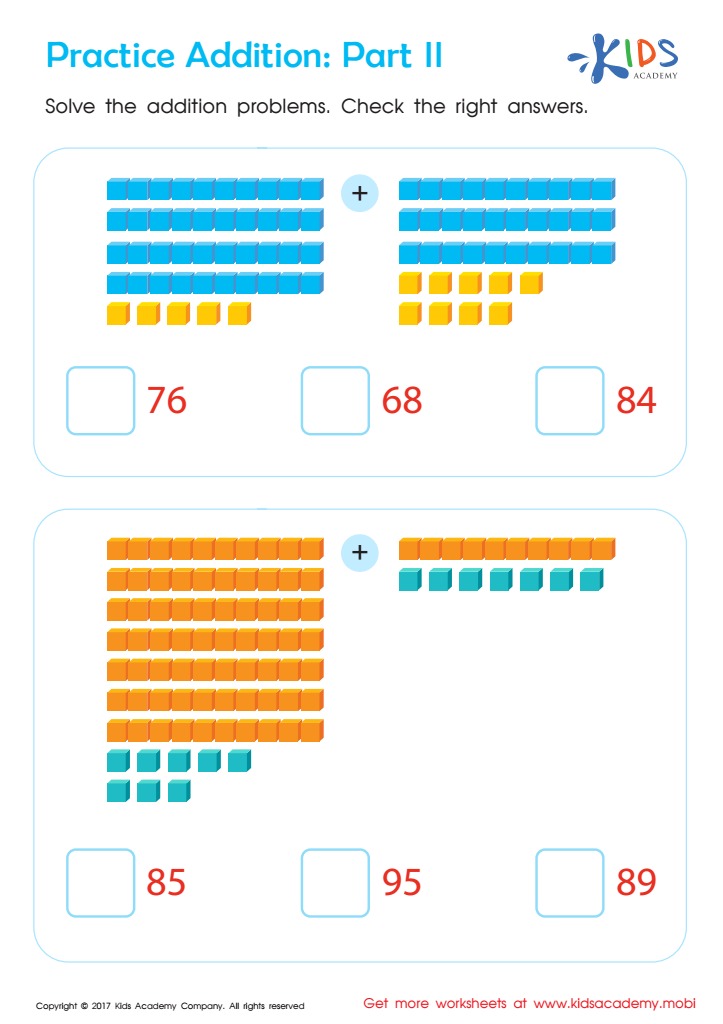
Practice Addition: Part 2 Worksheet
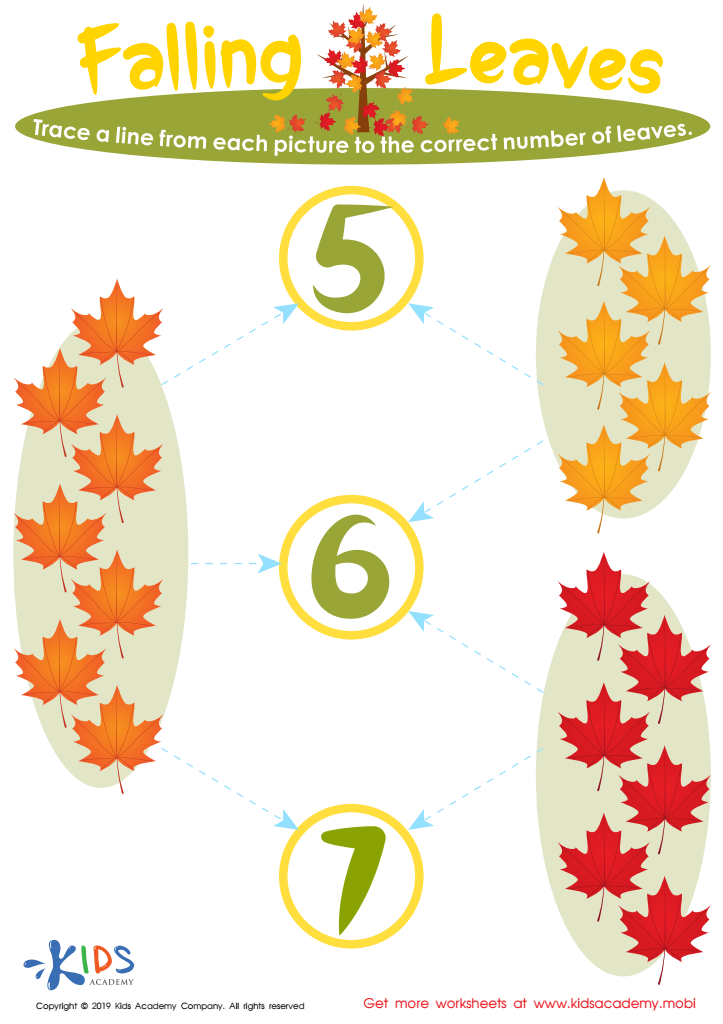
Falling Leaves Worksheet
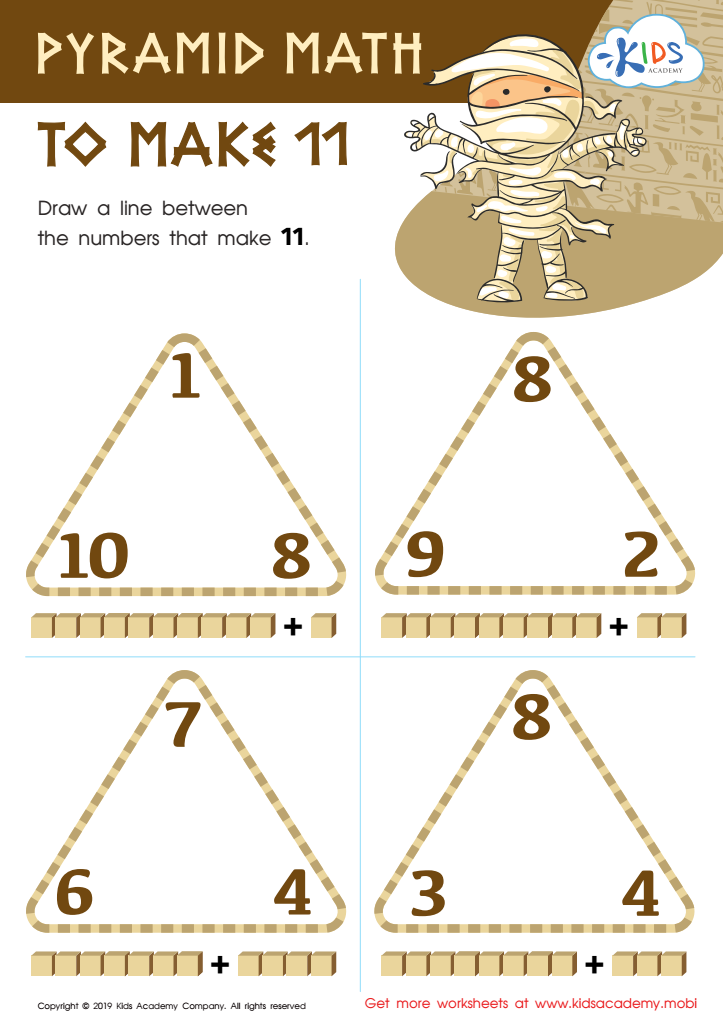
Pyramid Math to Make 11 Worksheet








Parents and teachers should prioritize addition practice for children aged 4-7 because it forms a foundational skill essential for future learning and everyday life. Early math skills, particularly addition, are critical in developing arithmetic fluency, logical thinking, and problem-solving capabilities. Mastery of basic addition encourages confidence in young learners, fostering a positive attitude towards math that can influence their academic trajectory.
Moreover, addition practice promotes cognitive development, helping children understand quantity and relationships between numbers. For example, as children add, they learn to group objects, recognize patterns, and engage in critical thinking, which enhances their overall learning experience.
In addition, fostering early math skills can bridge connections to other subject areas including science, reading, and geography, as many concepts rely on mathematical understanding. Establishing these skills early also reduces anxiety surrounding math in future grades.
Engaging parents in this practice through fun activities or games can strengthen the home-school connection and support a positive learning environment. Therefore, prioritizing addition practice not only equips children for academic success but also lays down the groundwork for lifelong learning and analytical reasoning skills.








