Animal Classification Normal Math Worksheets for Ages 4-7
4 filtered results
-
From - To
Discover our engaging Animal Classification Normal Math Worksheets designed specifically for children ages 4-7. These worksheets help young learners enhance their math skills while exploring the fascinating world of animals. Kids will enjoy classifying animals based on traits such as habitat, size, and diet, all while practicing essential early math concepts like counting, sorting, and pattern recognition. Each worksheet features colorful illustrations and easy-to-understand instructions, making learning fun and interactive. Perfect for both homeschool and classroom settings, our worksheets cater to diverse learning styles and help develop critical thinking. Start your child’s educational journey with our captivating animal-themed activities today!
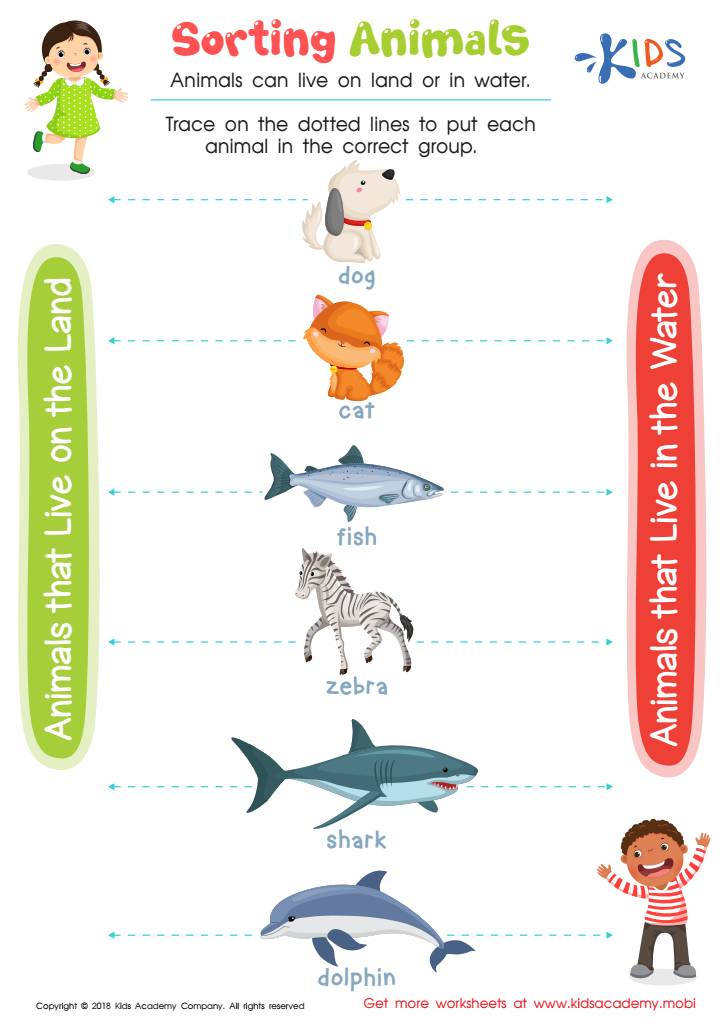
Sorting Animals Worksheet
 Assign to My Students
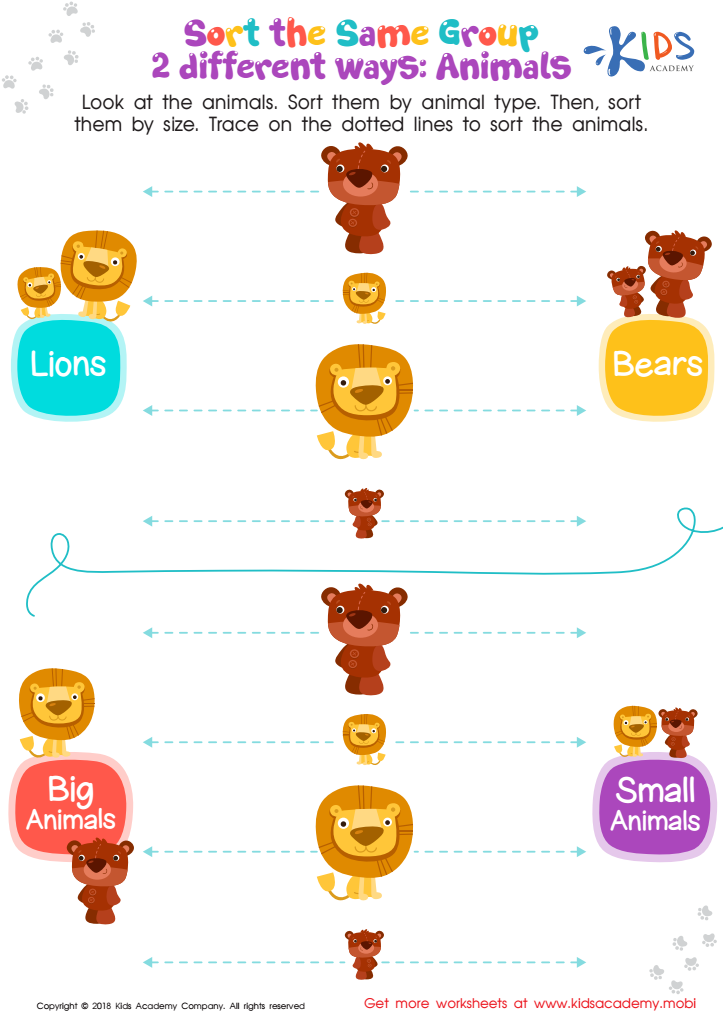
Sort the Same Group 2 Different Ways: Animals Worksheet
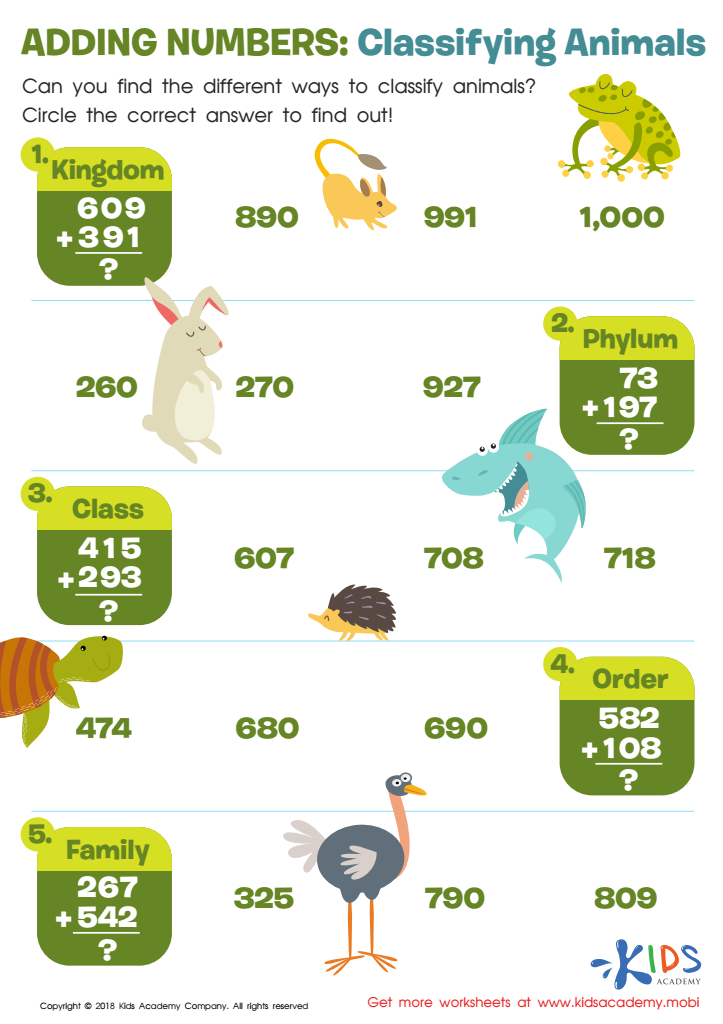
Adding Numbers: Classifying Animals Worksheet
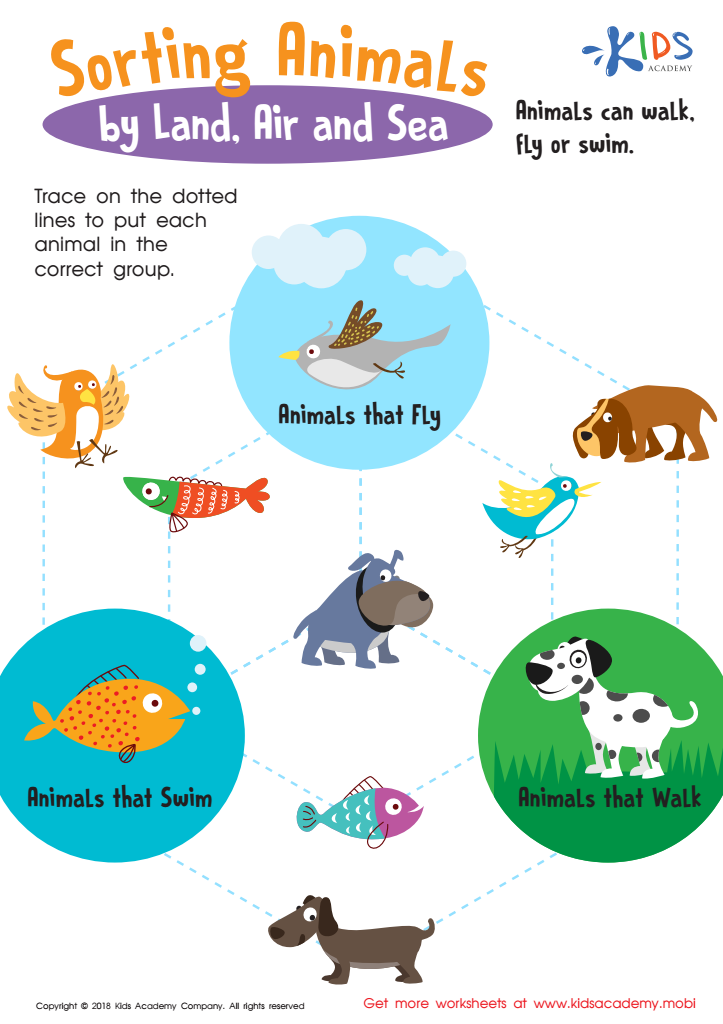
Sorting Animals by Land, Air and Sea Worksheet








Animal Classification Normal Math is an engaging way to integrate foundational math concepts with science for young learners, specifically ages 4-7, who are naturally curious about animals. This method encourages critical thinking as children learn to classify animals based on specific attributes, such as habitat, diet, and physical characteristics, while also introducing them to basic mathematical concepts like sorting, patterns, and counting.
Parents and teachers should care about this approach because it fosters an integrated learning environment, allowing children to make connections between different subjects. Understanding animal classification not only enriches their knowledge of biology but also enhances their mathematical reasoning skills. As they categorize animals, kids practice sorting items by attributes, which reinforces skills such as comparison, pattern recognition, and data organization.
Moreover, engaging in hands-on activities using animal classification can make learning more interactive and increase retention. Children develop language skills as they learn related vocabulary and storytelling techniques, enhancing communication skills. Ultimately, by nurturing a love for science and math through play and exploration, we prepare young learners for more advanced subjects in school, equipping them with essential analytical skills for their future education. Fostering an interest in these areas can lead to lifetime curiosity and learning.








