Number Recognition Normal Skip Counting Worksheets for Ages 4-7
3 filtered results
-
From - To
Explore our engaging Number Recognition and Normal Skip Counting Worksheets designed specifically for children aged 4-7! These fun, interactive resources help young learners build vital math skills through skip counting, enhancing their number recognition abilities. Each worksheet is tailored to foster early numeracy while keeping kids entertained. Perfect for homeschooling or classroom activities, our worksheets promote cognitive development, improve counting fluency, and encourage problem-solving. With colorful illustrations and progressive difficulty levels, children will enjoy mastering numbers in a stress-free environment. Visit our website today to download these invaluable educational tools and support your child’s math journey!
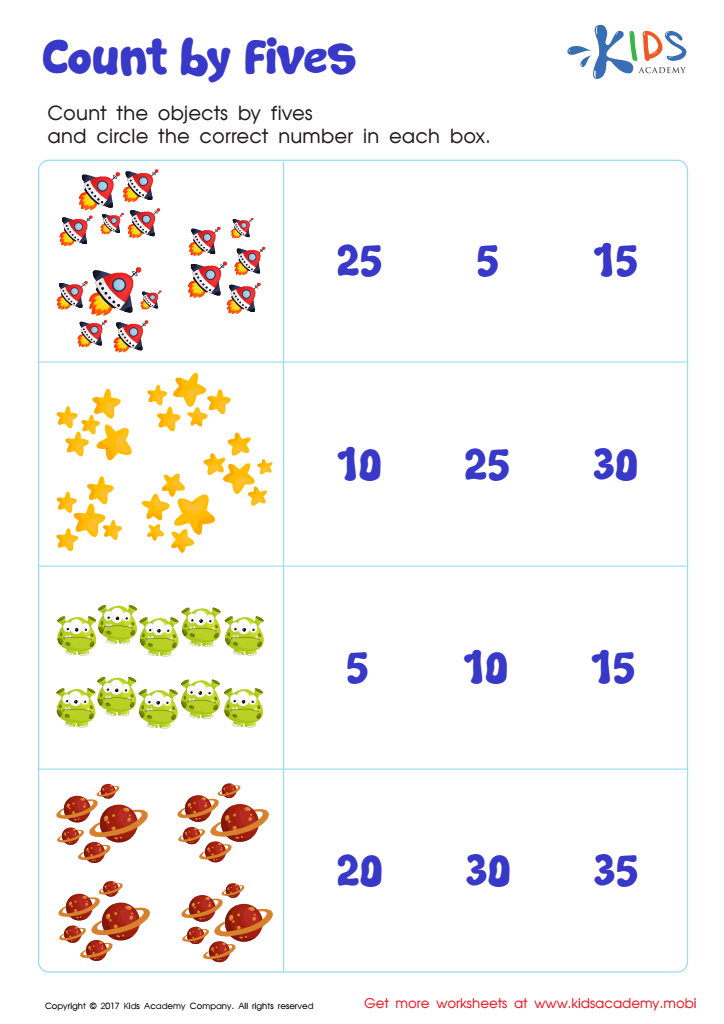
Skip Counting by 5s: Space Math Printable
 Assign to My Students
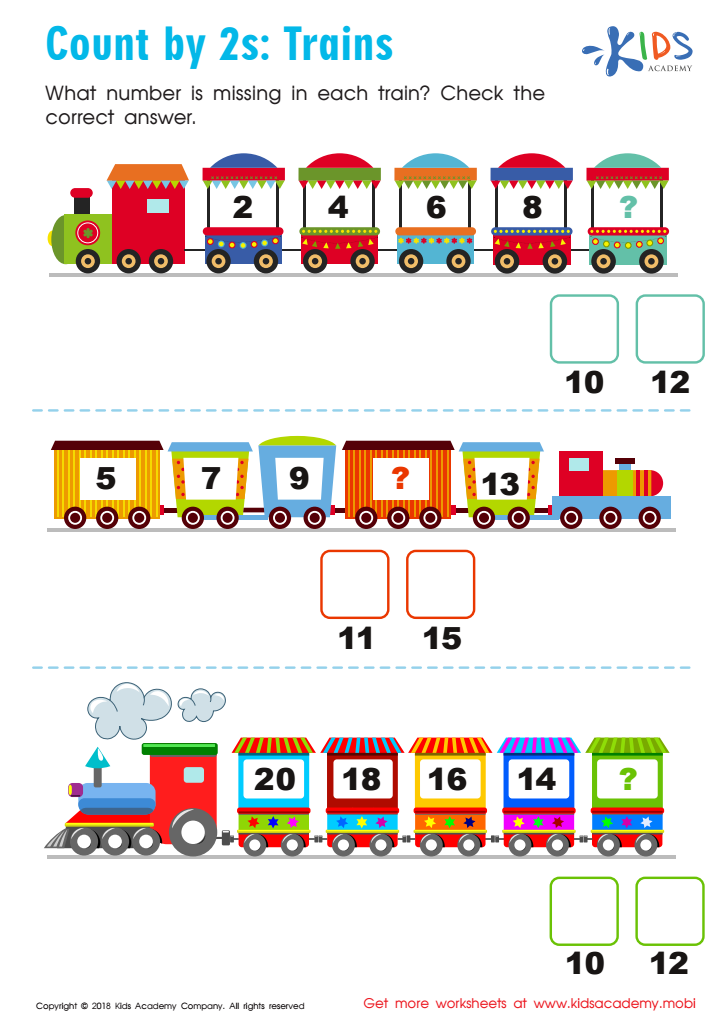
Count by 2's: Trains Worksheet
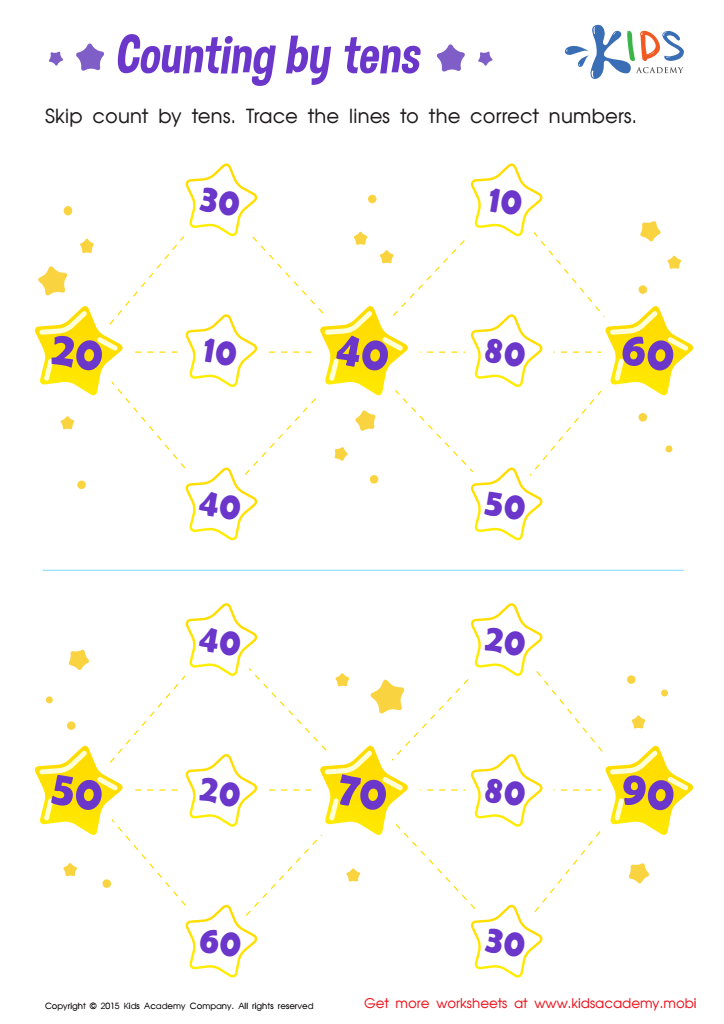
Learn Dozens: Counting by Tens Printable




.jpg)



Number recognition and skip counting are foundational skills in early math education, crucial for children aged 4-7. Parents and teachers should care about these skills because they form the basis of numerical literacy and help ignite a child's interest in math. Number recognition aids children in identifying and understanding the significance of numbers, which is essential for everyday activities, such as telling time, recognizing prices, or scoring in sports.
Skip counting, on the other hand, involves counting by specific intervals (like twos, fives, or tens) and enhances children’s ability to understand patterns, sequences, and basic arithmetic concepts like addition and multiplication. This skill not only supports quicker calculation but also builds confidence in solving mathematical problems. Additionally, when young learners grasp skip counting, they can better comprehend complex math topics as they progress in their education.
Furthermore, both number recognition and skip counting promote cognitive development, critical thinking, and problem-solving skills. By encouraging these skills early on, parents and teachers set a solid groundwork for a child's future learning trajectory, ultimately fostering a positive attitude towards math and helping them succeed in more advanced mathematical concepts. Therefore, prioritizing these skills is essential for nurturing competent, confident learners.








