Normal Time Worksheets for Ages 4-7
5 filtered results
-
From - To
Unlock the world of time for young learners with our Normal Time Worksheets for ages 4-7! These engaging, printable worksheets are specially designed to help children grasp the concept of telling time. Featuring fun activities that encourage recognition of both analog and digital clocks, our resources make learning about hours, minutes, and daily routines exciting and interactive. Perfect for home or classroom use, these worksheets cater to various learning styles, ensuring that every child can relate to and understand time more easily. Empower your child’s learning journey today with our delightful and educational time-based activities!
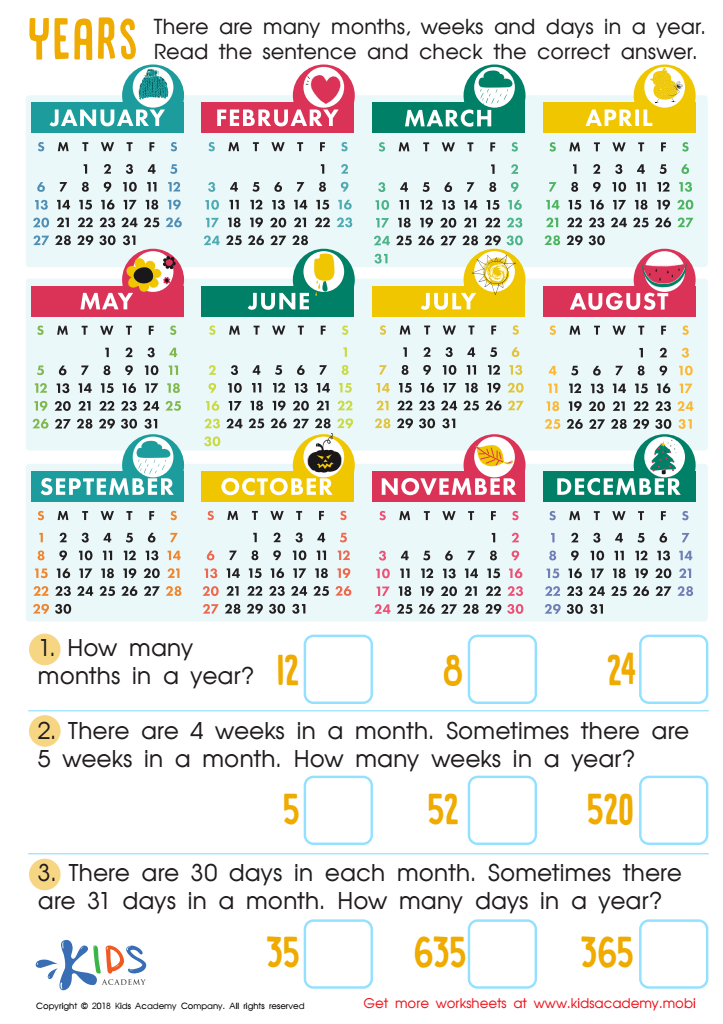
Years Worksheet
 Assign to My Students
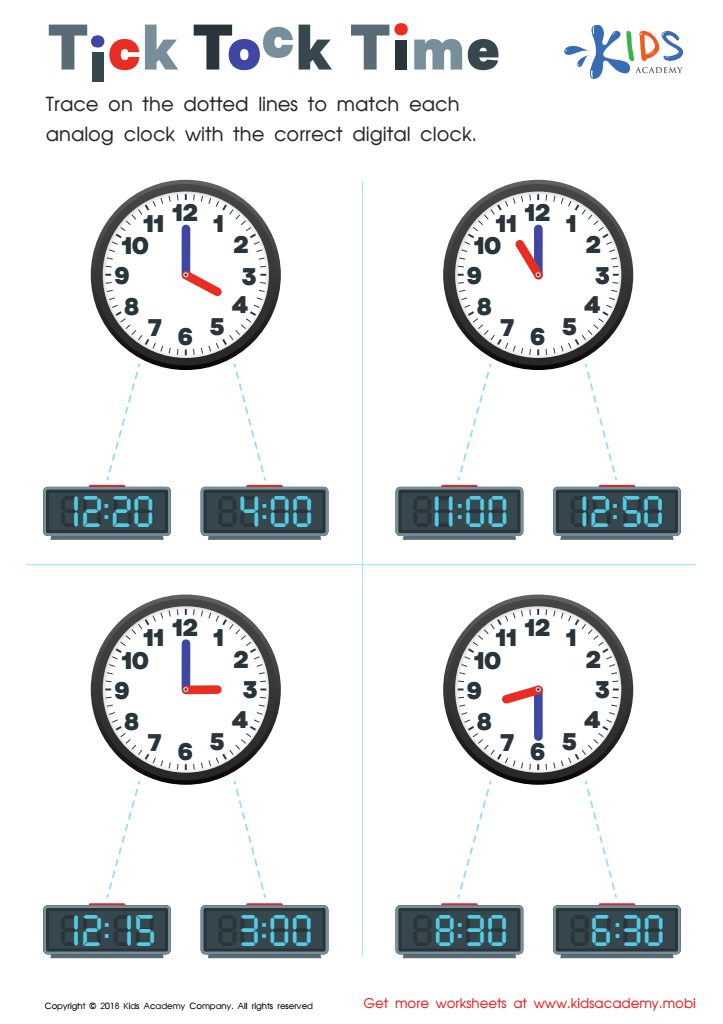
Tick Tock Time Worksheet
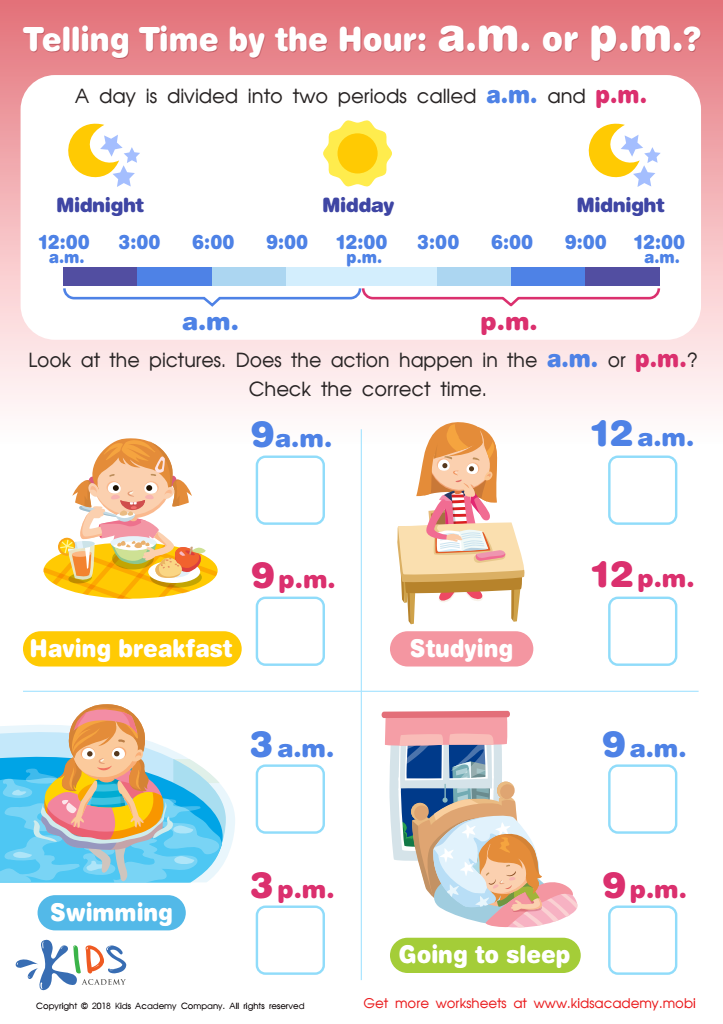
Tilling Time by the Hour: a.m. or p.m.? Worksheet
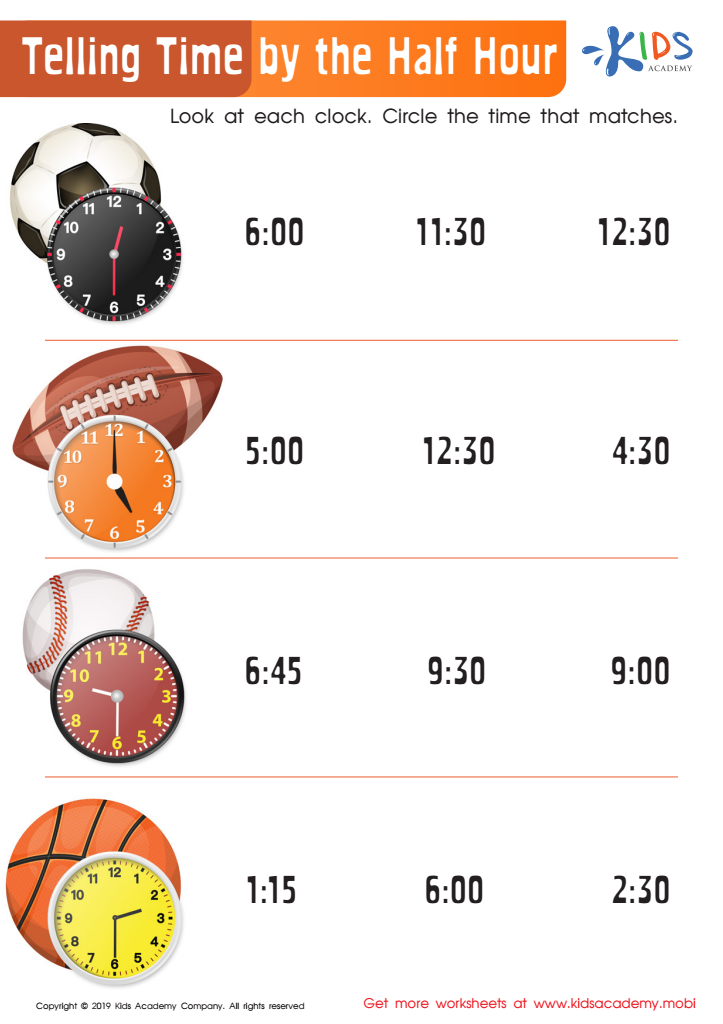
Telling Time by the Half Hour Worksheet
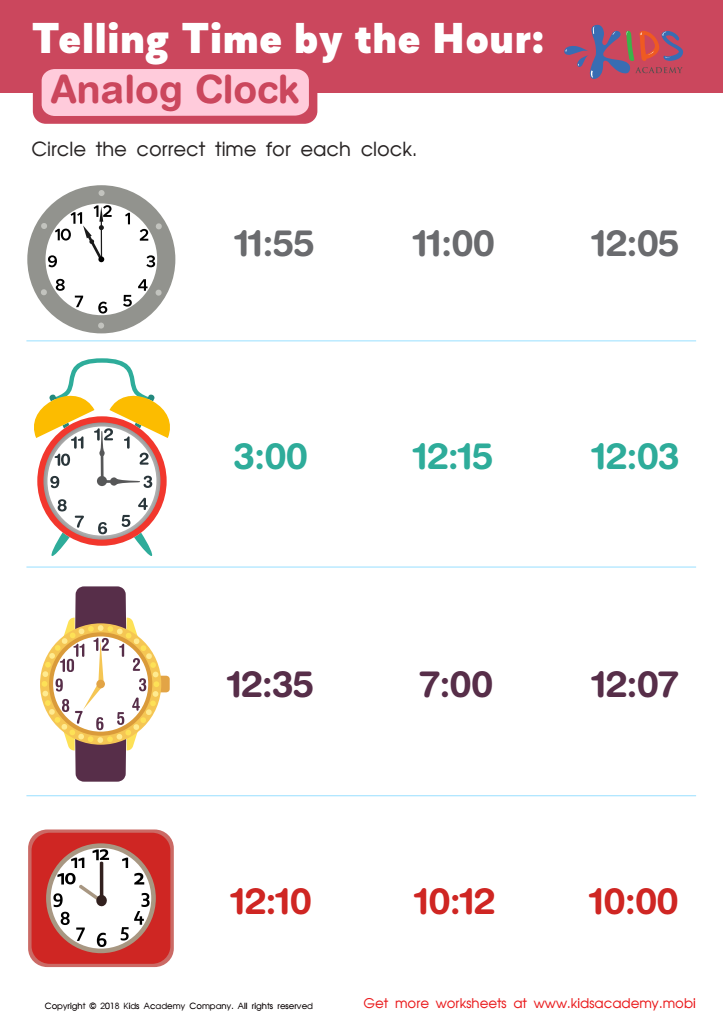
Telling Time by the Hour: Analog Clock Worksheet







Normal Time, or understanding the concept of time, is crucial for children aged 4-7 as it provides them with a foundational skill that plays a significant role in their daily lives and learning. At this age, children are developing their cognitive abilities and learning how to navigate social interactions. Understanding time helps them structure their day, establishing routines that promote security and predictability.
Parents and teachers should care about teaching Normal Time because it enhances children's time management skills, enabling them to make sense of sequences in daily activities ——from knowing when to play, eat, or go to school. Moreover, these skills are linked to their academic success; for instance, recognizing how long a minute is can help with tasks like reading or writing promptly.
Additionally, teaching Normal Time cultivates responsibility and independence, as children learn to ask for help or manage tasks within a given timeframe. It also fosters patience and anticipation, key elements in social play and sharing.
By prioritizing this aspect of development, adults support children in becoming organized, confident learners, laying the groundwork for future endeavors and lifelong skills. Such concepts redefine how children interact with the world, making it an essential focus for parents and educators.








