
Phonics Skills Normal Reading Worksheets for Ages 4-7
8 filtered results
Difficulty Level
Grade
Age
-
From - To
Subject
Activity
Standards
Discover engaging Phonics Skills Normal Reading Worksheets designed for children aged 4-7! Our worksheets are perfect for early learners, providing essential practice in phonics to build foundational reading skills. Each worksheet incorporates fun activities that help children recognize sounds, blend letters, and improve their reading comprehension. Tailored to meet the developmental needs of young learners, these resources promote a love for reading while boosting confidence and phonetic awareness. Explore a variety of exciting themes and formats to keep your child motivated. Enhance your child's learning journey with our printable worksheets, fostering essential literacy skills for a lifelong love of reading!
Favorites
With answer key
Interactive
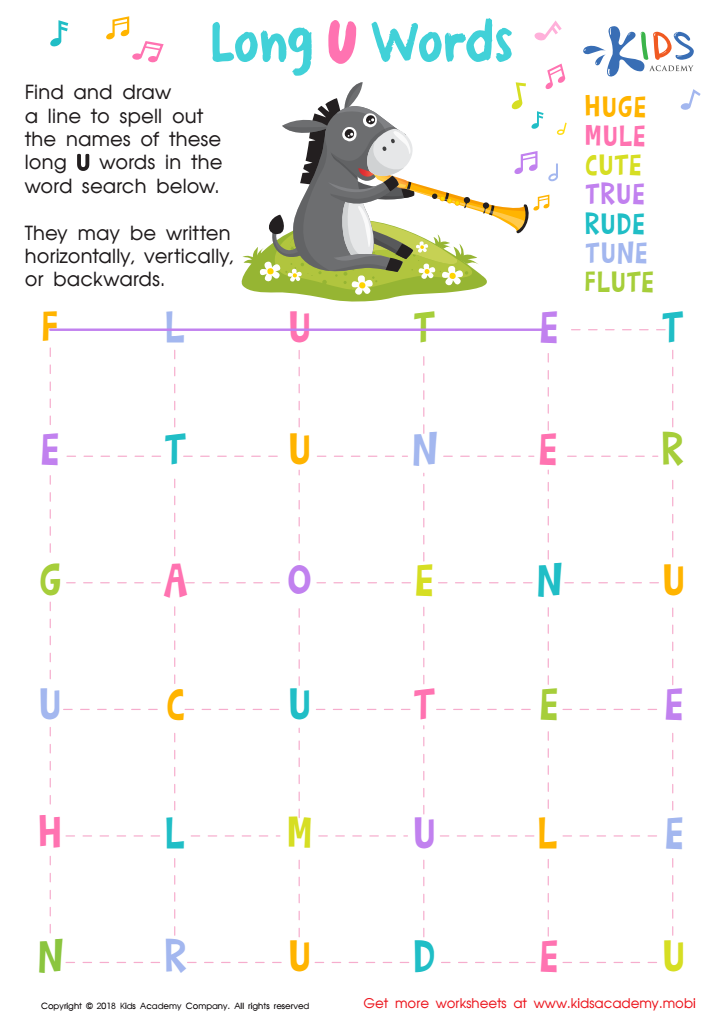
Long /u/ Words Worksheet
Your child needs to learn phonetics to enunciate and differentiate words. This fun worksheet encourages them to find and draw lines connecting the long 'U' words in the word search. Help them read the words on the right side of the picture, then look for them in the word search (horizontally, backwards or vertically).
Long /u/ Words Worksheet
Worksheet
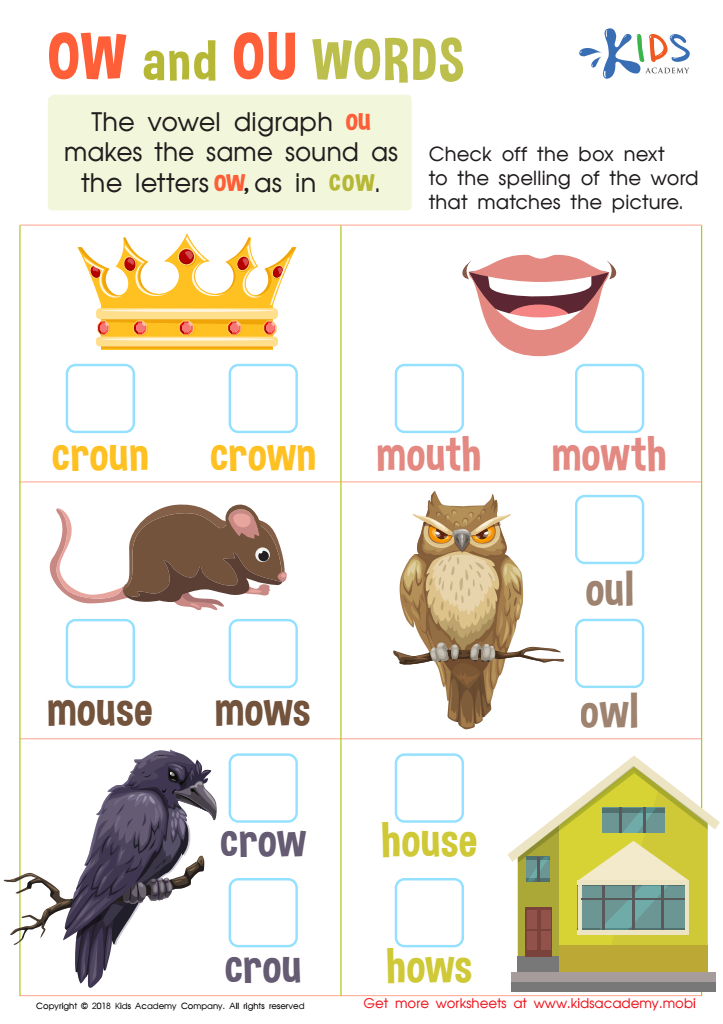
Reading: OW and OU Words Worksheet
Help your kids learn phonetics! Explain the different sounds and long/short variations. Emphasize that some vowel sounds are the same, e.g. ou = ow in cow. For practice, have them read aloud the words in the worksheet and check the box next to the spelling that matches the picture.
Reading: OW and OU Words Worksheet
Worksheet
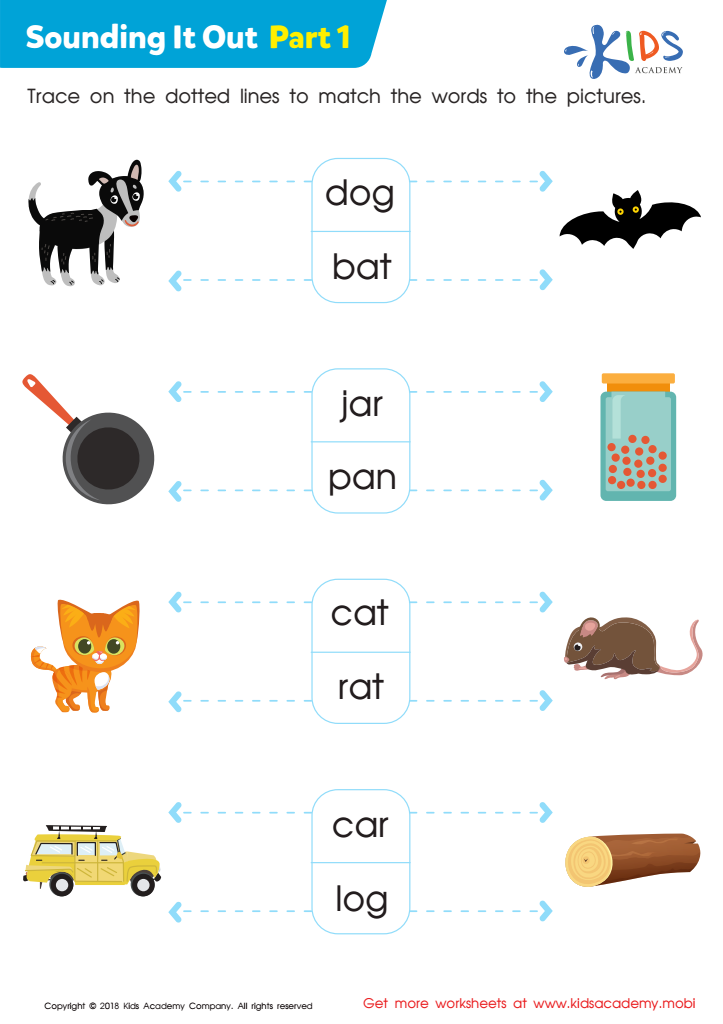
Sounding it Out: Part 1 Worksheet
Help kids learn to read with this fun worksheet! Kids use picture clues to sound out words and trace the dotted lines to match each word to its corresponding image. Stimulating and interactive, this printable is a great way for little learners to practice phonics.
Sounding it Out: Part 1 Worksheet
Worksheet
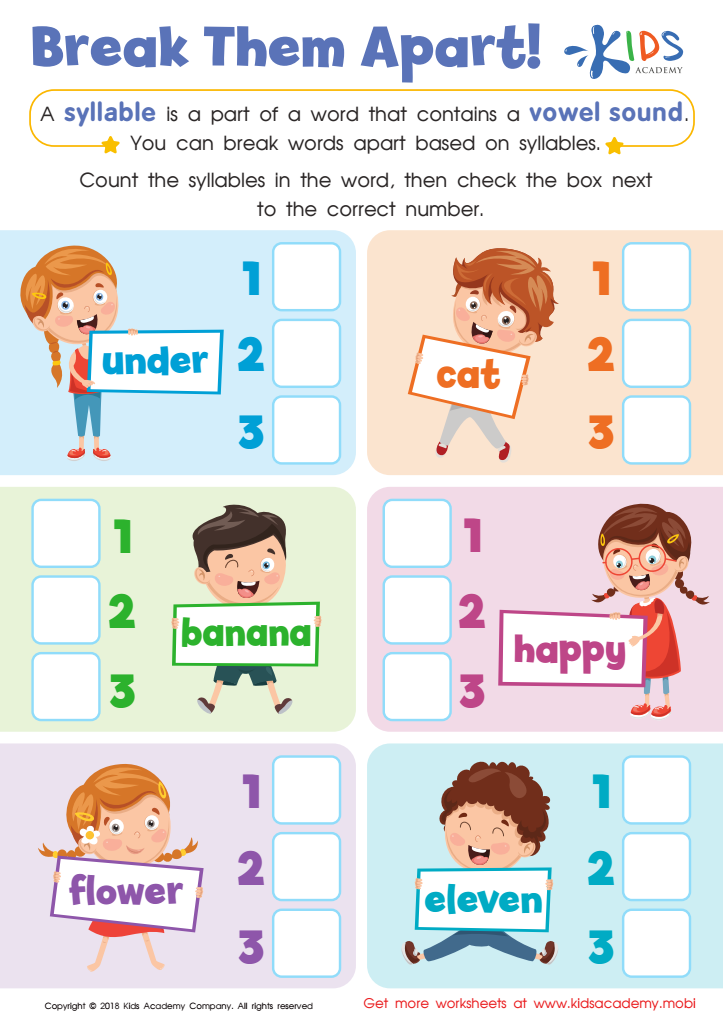
Reading: Break Them Apart Worksheet
See if students understand syllables with this fun worksheet. It teaches them that a syllable is a word part with a vowel sound. Kids read each word and choose how many parts it has. Doing this often helps them decode new words and gain confidence.
Reading: Break Them Apart Worksheet
Worksheet
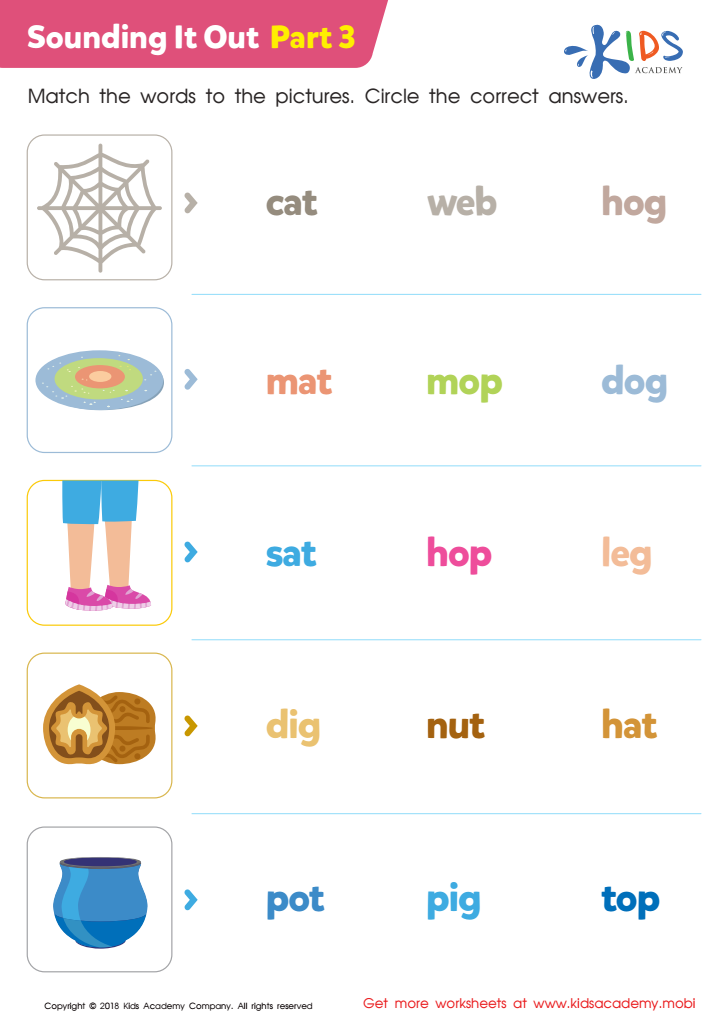
Sounding it Out: Part 3 Worksheet
Once Parts 1 and 2 are complete, this printable phonics worksheet will help kids take their reading skills to the next level! As they gain confidence, give them hints less often and direct their attention to three words in a row. Ask them to read and circle the correct word to complete!
Sounding it Out: Part 3 Worksheet
Worksheet
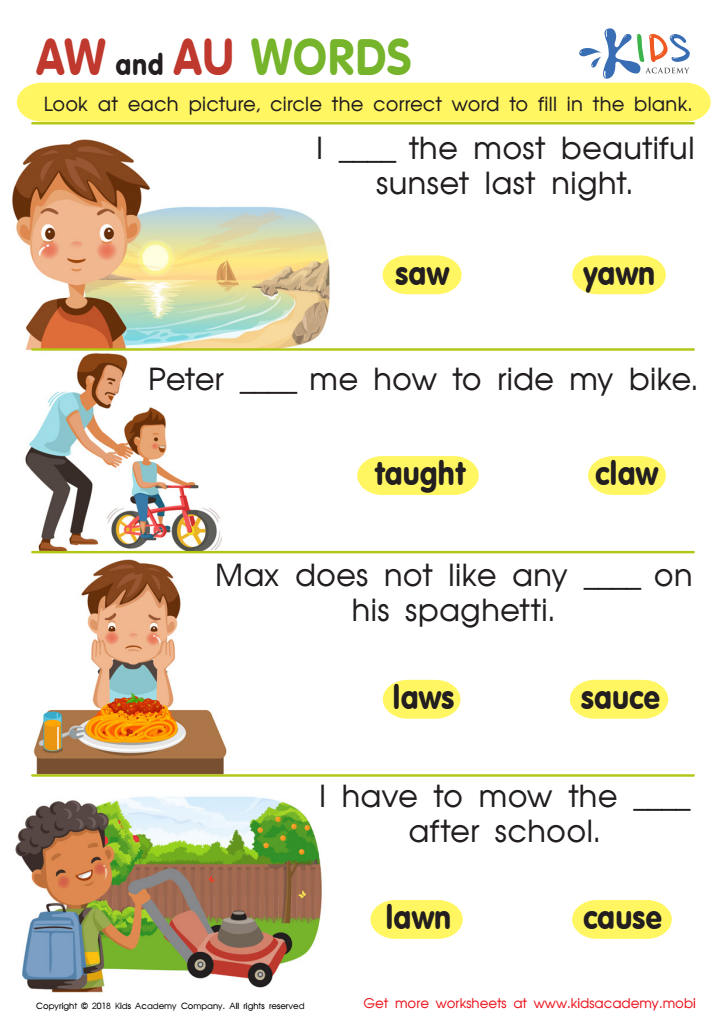
Reading: AW and AU Words Worksheet
This worksheet helps kids recognize that /au/ and /aw/ can make the same sound. Students read sentences and pick the correct word with one of the digraphs. Understanding digraphs improves decoding and reading fluency. Perfect for reading and phonics classes.
Reading: AW and AU Words Worksheet
Worksheet
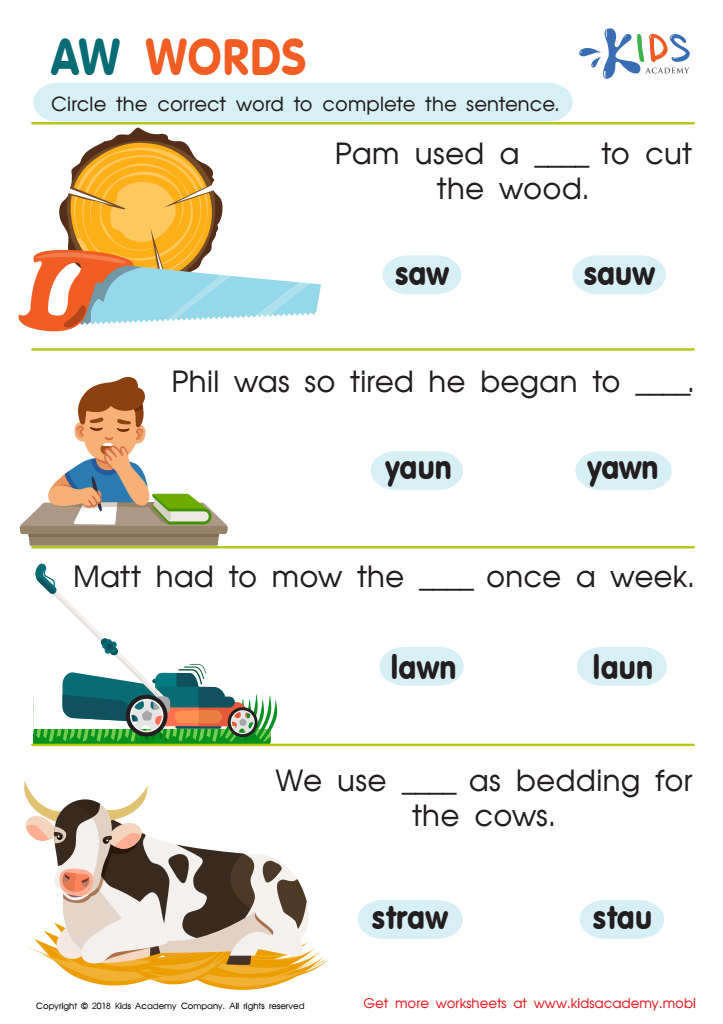
Reading: AW Words Worksheet
Practice decoding the /aw/ digraph with this printable. Students read sentences and select the word with the correct spelling to complete each one. Note, /aw/ is sometimes spelled /au/, so this worksheet helps prevent confusion. Have fun, and practice hard!
Reading: AW Words Worksheet
Worksheet
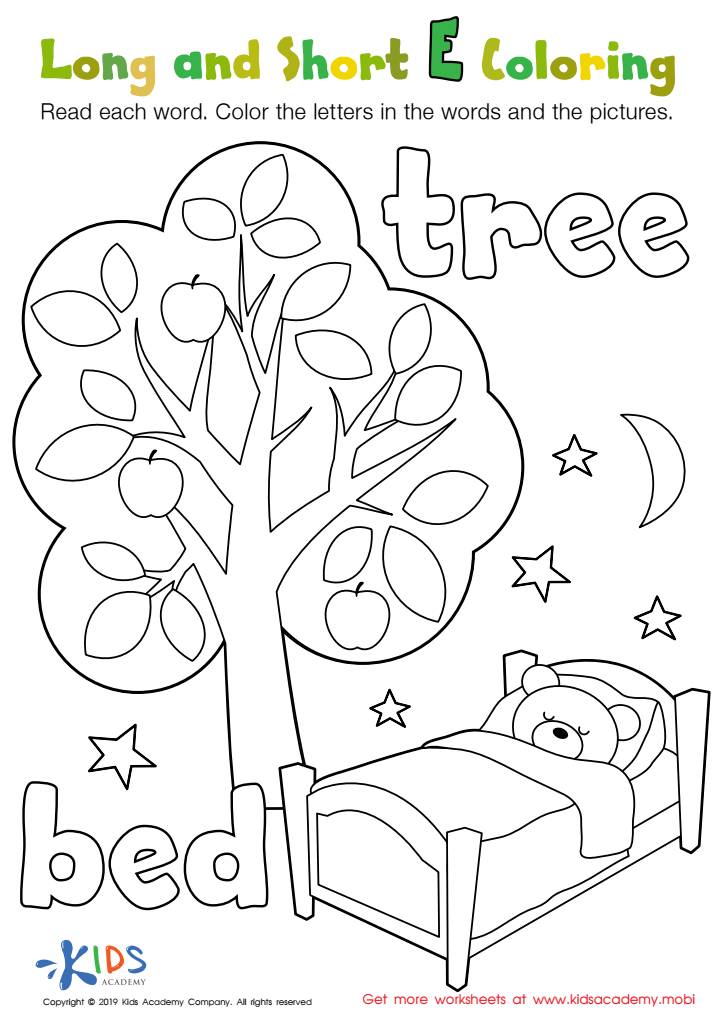
Long and Short E Worksheet
This fun printout makes learning phonics enjoyable for Grade 3 students. Get them to read the words “tree” and “bed” to recognize the different sounds of the letter “E”. After hearing the words they can color the words and the pictures to understand differences between long and short vowels.
Download (PDF)
 Assign to My Students
Assign to My Students
Long and Short E Worksheet
Worksheet
Join Kids Academy for Free
Who is primarily going to use this learning content?







Phonics skills are foundational for mastering reading in young children aged 4-7. Teaching phonics equips students with the ability to understand how letters correspond to sounds, allowing them to decode and spell words effectively. These skills are critical for developing reading fluency, comprehension, and overall literacy.
For parents and teachers, promoting phonics skills ensures children can navigate written language, which is essential for academic success across subjects. Mastery of phonics fosters confidence, making the transition to more complex reading material smoother and less intimidating. Additionally, early phonics instruction can mitigate future reading challenges, setting the stage for a lifelong love of reading.
The benefits extend beyond academics; proficient readers develop better vocabulary and communication skills, which are key to social interactions and emotional intelligence. By focusing on phonics, parents and teachers play a crucial role in laying a strong foundation for children’s futures, ensuring they become self-sufficient, capable learners.
Moreover, encouraging phonics promotes engagement and enjoyment in reading environments, creating positive associations with literacy. In essence, prioritizing phonics skills is an investment in a child's educational journey, equipping them with essential tools needed for success in school and beyond.








