Filters

30 filtered results

Clear all filters
Favorites
With answer key
Interactive

30 filtered results

Difficulty Level

Grade


Check out this FREE Trial Lesson on Reading for age 4-7!

Sight Word Review

Favorites
With answer key
Interactive
  • 4-7
  • Spelling practice
  • Reading
  • Normal
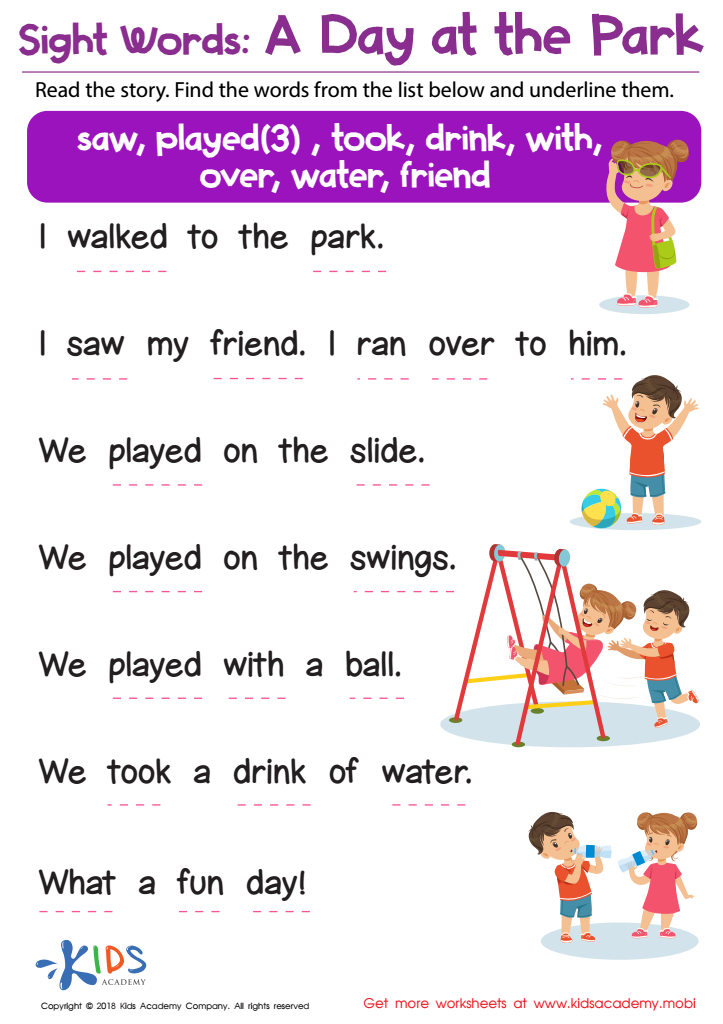
Sight Words: A Day at the Park Worksheet

Sight Words: A Day at the Park Worksheet

This worksheet offers kids practice reading sight words in a story. With picture clues and repetitive wording, they'll work with words that can't be sounded out to reinforce their learning. This is an important step in the reading process that helps kids become more confident readers.
Sight Words: A Day at the Park Worksheet
Worksheet
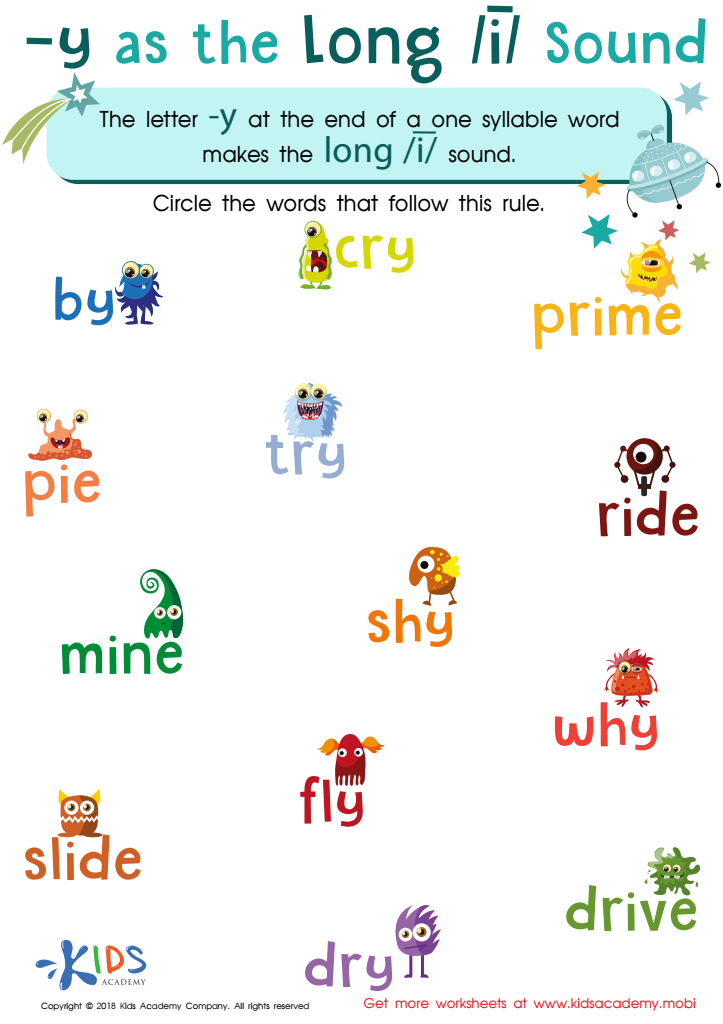
Reading: Y as Long I Worksheet

Reading: Y as Long I Worksheet

Students need practice and exposure to letters that make different sounds for decoding and reading success. This printable is a great resource for language arts classes: it explains that words ending with Y and having only one syllable make the long I sound. Students will circle all words with Y that have this sound.
Reading: Y as Long I Worksheet
Worksheet
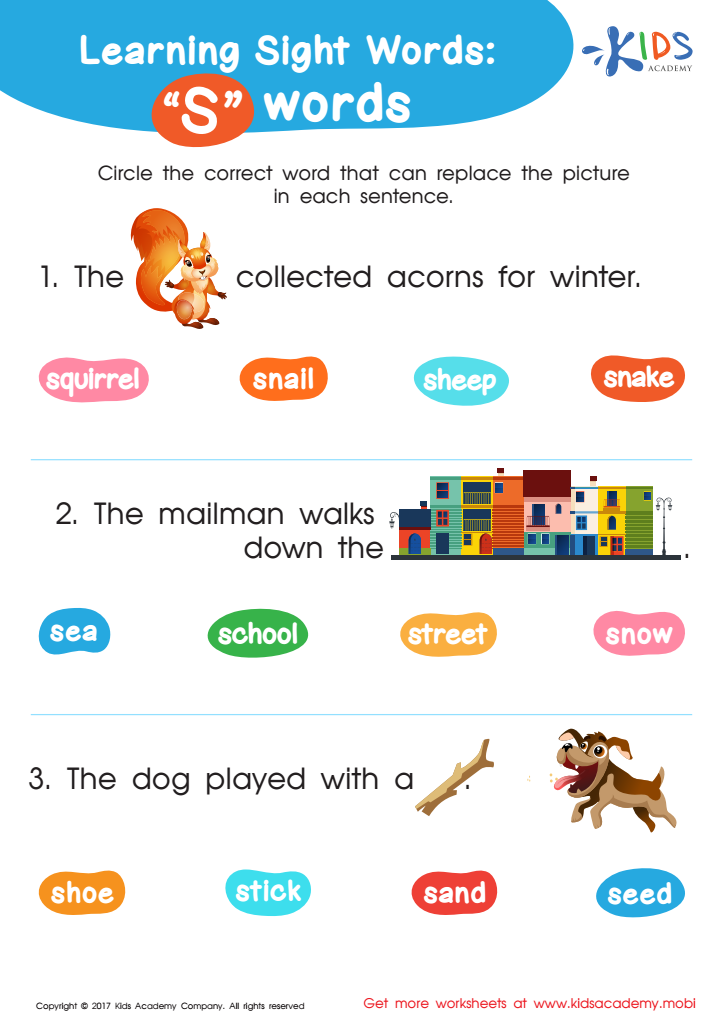
2nd grade sight words worksheet- s words

S Words Sight Words Worksheet

This 2nd grade worksheet encourages kids to practice using context clues when identifying sight words that begin with 's'. Engage them with colorful pictures to enhance the learning, helping them to understand the context of each sentence and choose the correct word.
S Words Sight Words Worksheet
Worksheet
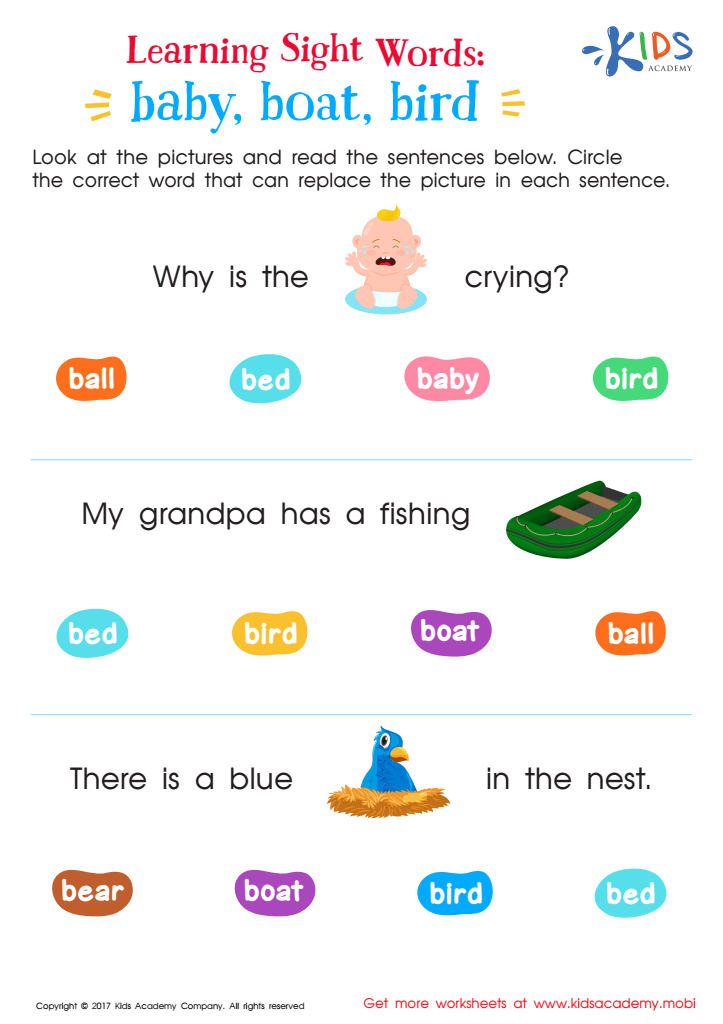
Sight Word Worksheet: Baby, Boat, Bird

Baby, Boat, Bird Worksheet Sight Words Worksheet
Sight words are an essential part of fluency; help kids build it by writing and reading them. This worksheet is a great way to start.
Baby, Boat, Bird Worksheet Sight Words Worksheet
Worksheet
Animal Word Search Worksheet

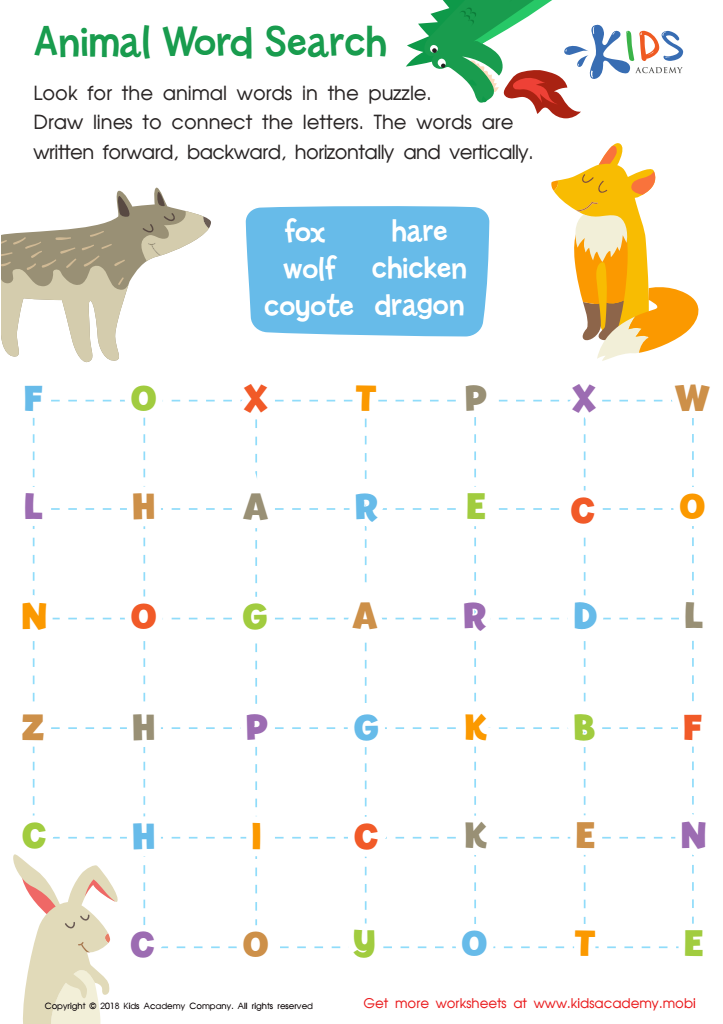
Animal Word Search Worksheet

Students can have fun and strengthen spelling and vocabulary skills with this word search worksheet. Search for animal words and circle the letters in the puzzle. Words can be found forwards, backwards, horizontally or vertically, providing a great challenge to foster critical thinking skills. An enriching activity for all ages!
Animal Word Search Worksheet
Worksheet
Irregular Words Worksheet


Irregular Words Worksheet

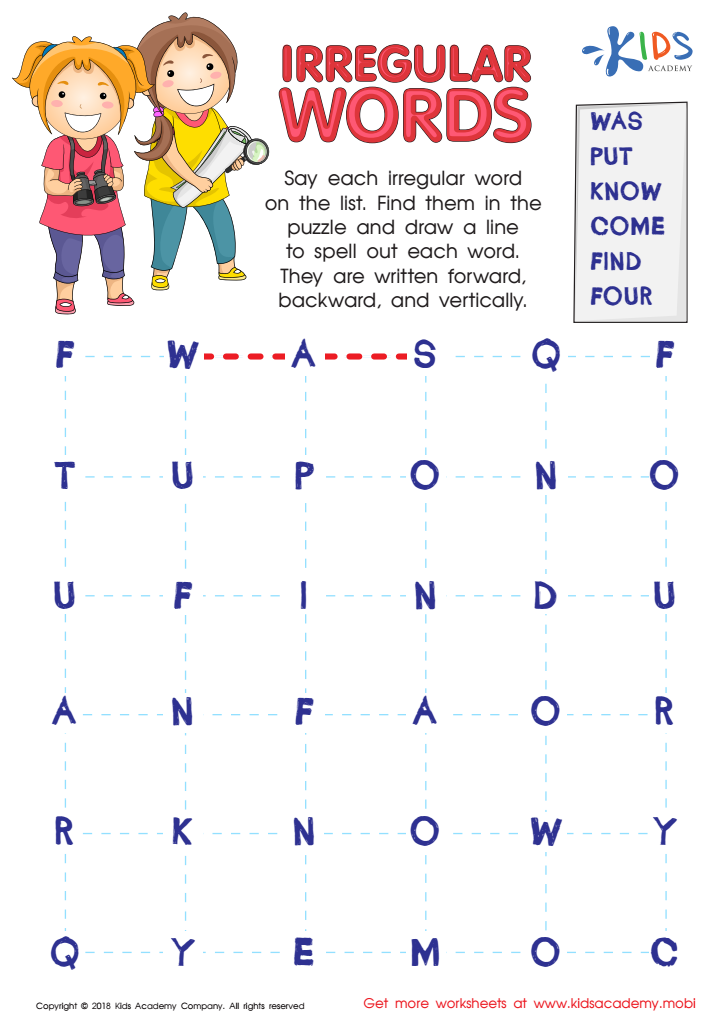
This fun word search worksheet helps kids practice reading irregular words and build their sight word banks. They'll also get practice with visual discrimination and fine motor skills as they hunt down the words.
Irregular Words Worksheet
Worksheet


Spelling practice and normal reading are essential components of early literacy development for children aged 4-7. During these formative years, young minds are exceptionally receptive to language acquisition, and the skills they develop can impact their educational journey and lifelong learning.

Firstly, spelling practice aids in understanding the relationship between letters and sounds, also known as phonemic awareness. This foundational skill is crucial for decoding words, enabling children to read more fluently. When children consistently practice spelling, they build muscle memory for common word patterns, improving their writing abilities and fostering more effective communication.

Secondly, regular reading exposes children to a wide range of vocabulary, sentence structures, and grammatical rules. It enhances their comprehension skills and nurtures a love for reading, which can boost their overall academic performance. Exposure to diverse stories and information broadens their horizons, stimulates creativity, and promotes empathy by allowing them to experience various perspectives.

Both spelling practice and reading help strengthen cognitive abilities such as memory, attention, and critical thinking. Additionally, mastering these skills early boosts self-confidence, encouraging a positive attitude toward learning. In summary, prioritizing spelling practice and normal reading for young children lays a robust foundation for their academic and personal growth, setting them up for future success.