
Understanding ecosystems Normal Animals Worksheets for Ages 4-7
3 filtered results
Difficulty Level
Grade
Age
-
From - To
Subject
Activity
Standards
Explore the fascinating world of ecosystems with our "Understanding Ecosystems Normal Animals Worksheets" designed for children aged 4-7. These engaging worksheets introduce young learners to basic ecological concepts through fun activities and vibrant illustrations. Kids will discover the roles of various animals within their habitats, the importance of food chains, and the interconnectedness of nature. Perfect for home or classroom use, these worksheets promote critical thinking, creativity, and environmental awareness. Help your little ones develop a love for science and the natural world while enhancing their learning experience with our easy-to-use and enjoyable printables!
Favorites
With answer key
Interactive
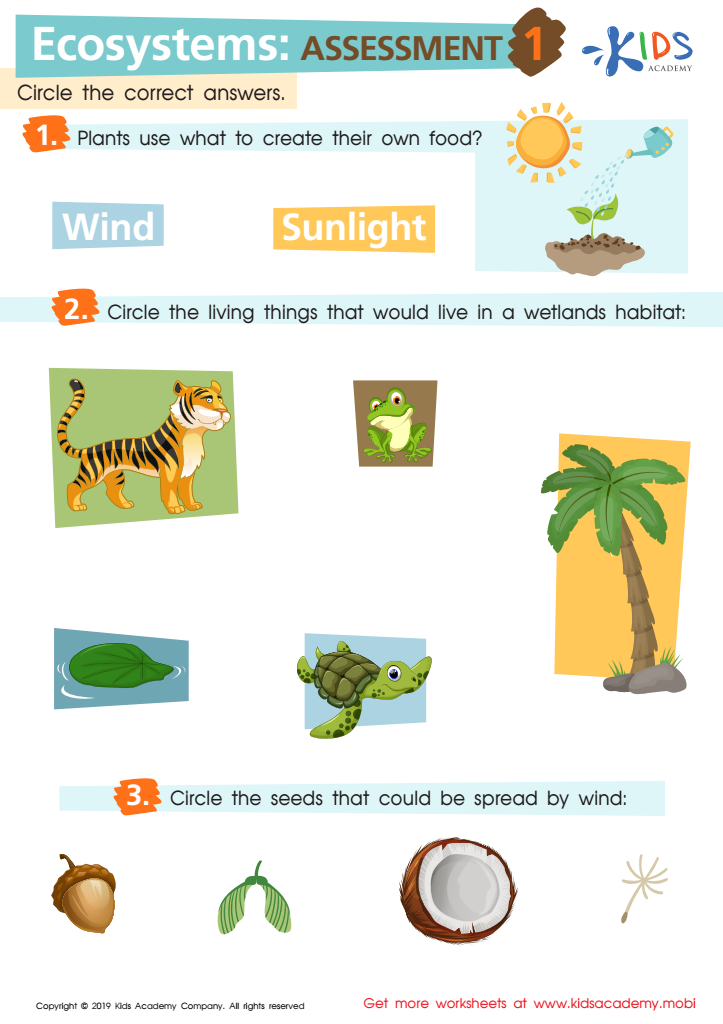
Ecosystems: Assessment 1 Worksheet
Before starting the worksheet, remind your child of the basics of the ecosystem, e.g. plants need light and winds carry small seeds. Encourage them to identify the images in the colorful printout. Ask them the questions and help them circle the correct answers.
 Assign to My Students
Ecosystems: Assessment 1 Worksheet
Worksheet
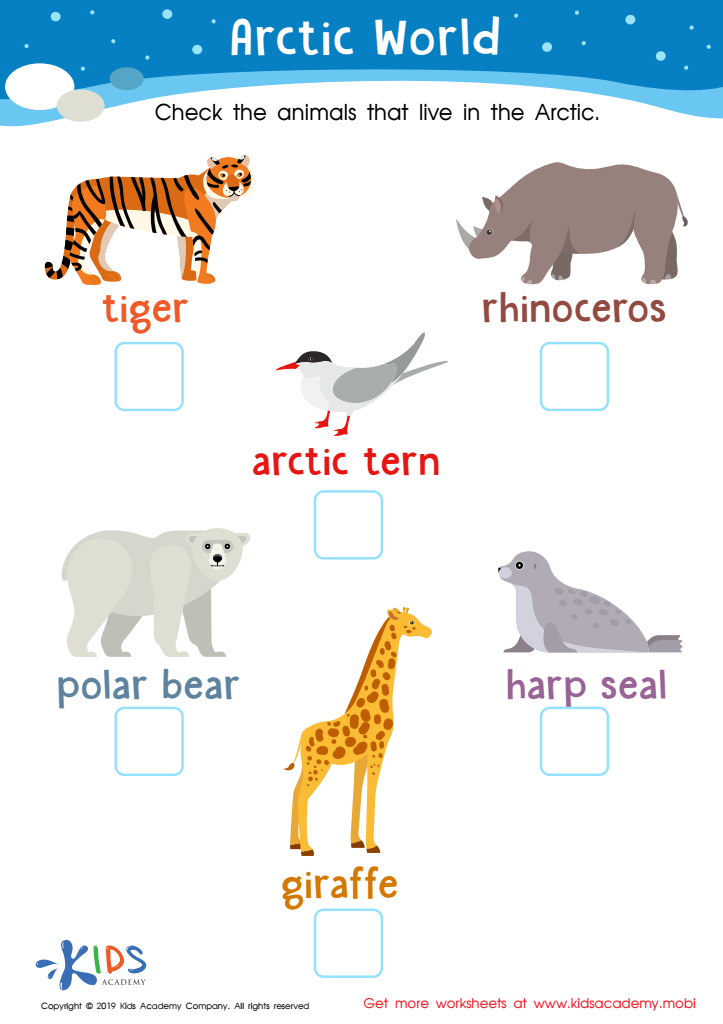
Arctic World Worksheet
Ask your students if they know where the Arctic is located and what lives there. If not, use a world atlas to show them. The Arctic is very cold and snow-covered; native animals have adapted to survive the harsh conditions. Look at the animals in the worksheet and help your students decide which ones live in the Arctic.
Arctic World Worksheet
Worksheet
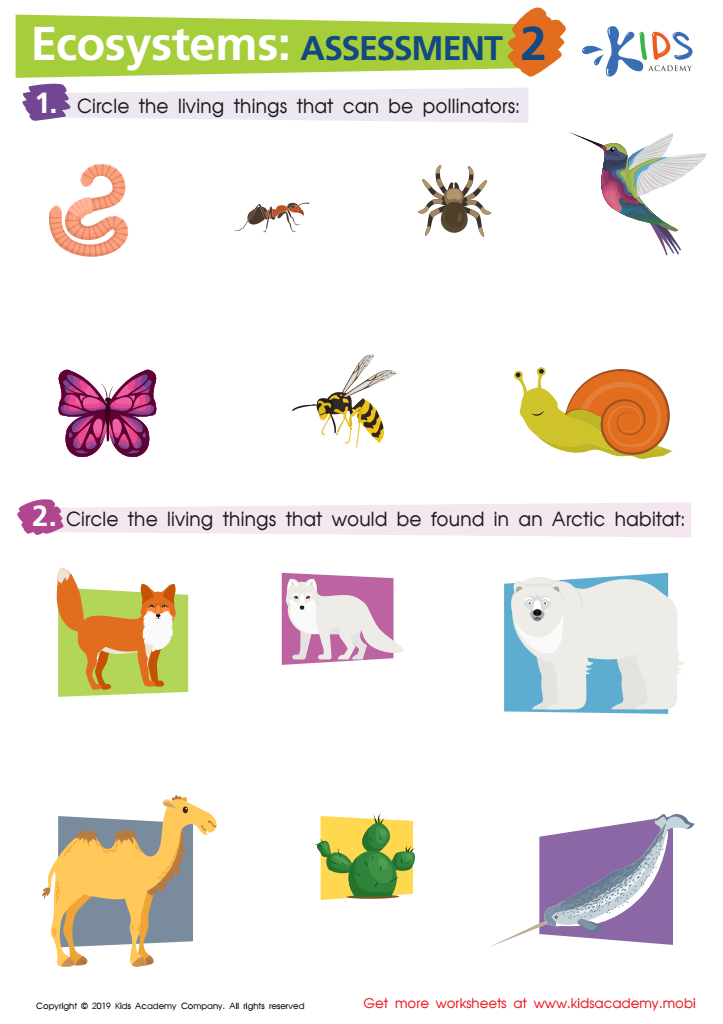
Ecosystems: Assessment 2 Worksheet
Pollinators are living or non-living things that help pollen spread. Test your child's knowledge of the ecosystem with this worksheet. Point out animals in the picture, then ask the simple questions. Help your child circle the right answers.
Ecosystems: Assessment 2 Worksheet
Worksheet
Join Kids Academy for Free
Who is primarily going to use this learning content?



%20(1).jpg)




Understanding ecosystems and normal animals is essential for children aged 4-7, as it builds a foundation for their appreciation of nature and environmental stewardship. At this young age, children are naturally curious and eager to explore the world around them. Teaching them about ecosystems fosters critical thinking skills as they learn how living and non-living things interact.
Parents and teachers play a pivotal role in guiding this learning process. By introducing basic concepts of ecosystems—such as food chains, habitats, and the importance of biodiversity—they help children recognize the interconnectedness of life. Understanding normal animals, such as those typical to their environment, fosters empathy and respect for wildlife, instilling a sense of responsibility towards nature.
Moreover, engaging children with hands-on activities like nature walks, observing animals, or gardening enhances their emotional well-being and connections to the environment. It empowers them to make informed choices as future stewards of the planet.
By caring about these educational aspects, parents and teachers contribute not only to children's cognitive development but also to their emotional and social growth, nurturing a generation capable of understanding and addressing environmental issues in the future.








