Vocabulary enhancement Normal Animals Worksheets for Ages 4-7
8 filtered results
-
From - To
Boost your child’s vocabulary with our Vocabulary Enhancement Normal Animals Worksheets for Ages 4-7. Designed to engage young learners, these fun and educational worksheets foster a love for nature while enhancing language skills. Each worksheet features vivid illustrations and captivating activities that teach names, characteristics, and habitats of various animals. Ideal for early learners, these age-appropriate resources not only expand vocabulary but also improve reading and comprehension skills. Perfect for homeschooling or classroom use, encourage your child's curiosity and learning journey today with our expertly crafted animal worksheets. Start exploring now and watch their vocabulary flourish!
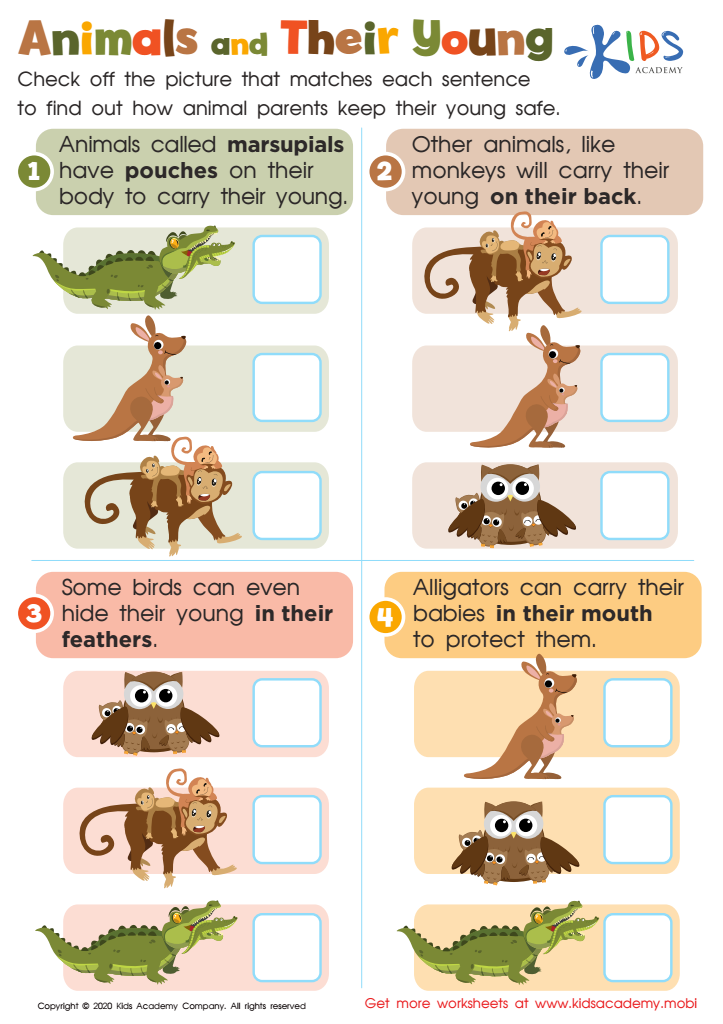
Animals and Their Young Worksheet
 Assign to My Students
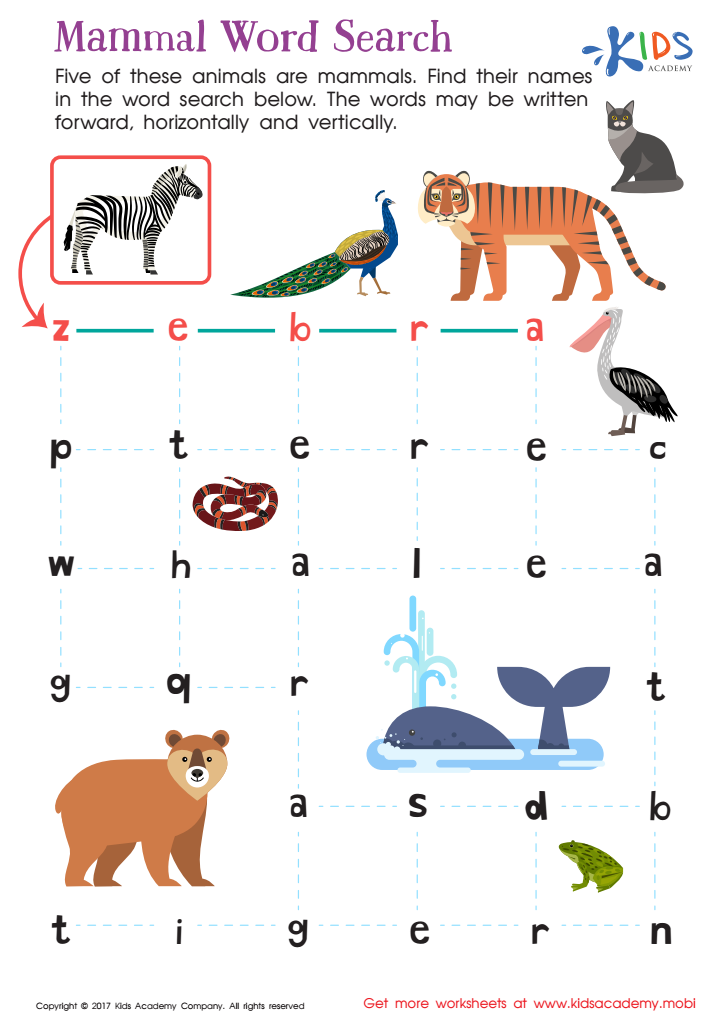
Printable Mammal Word Search
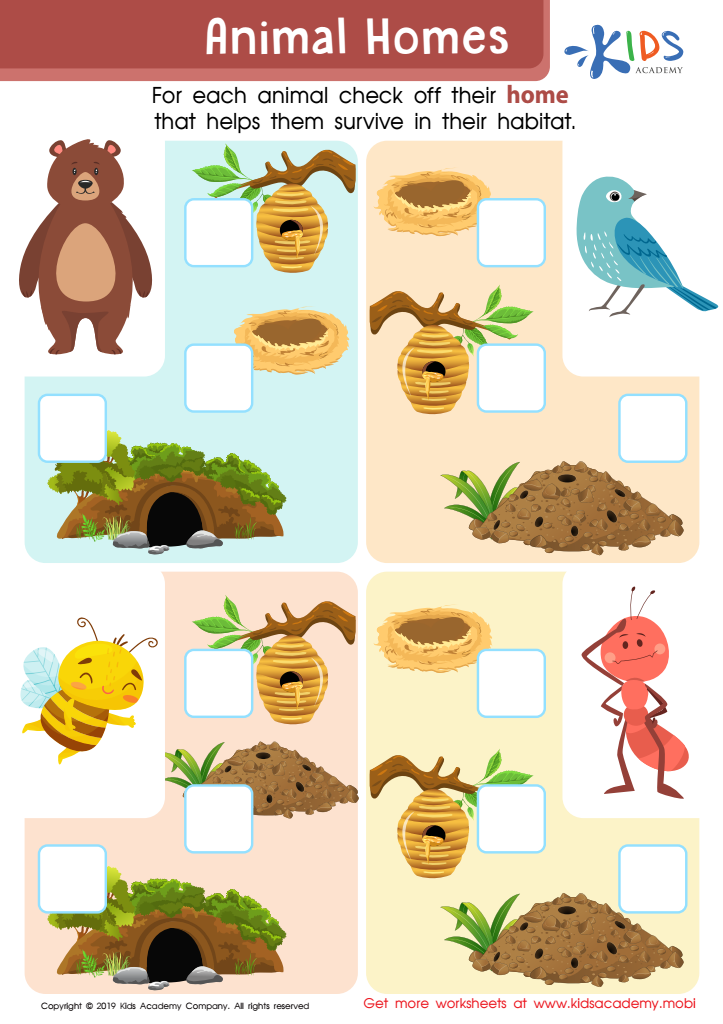
Animal Homes Worksheet
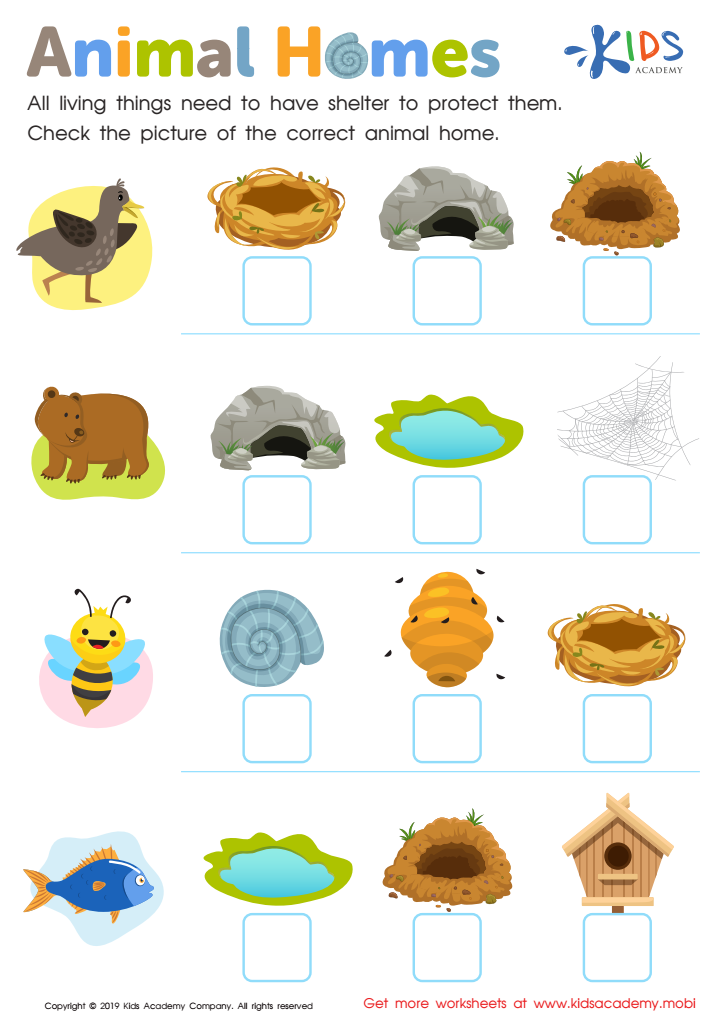
Animal Homes Worksheet
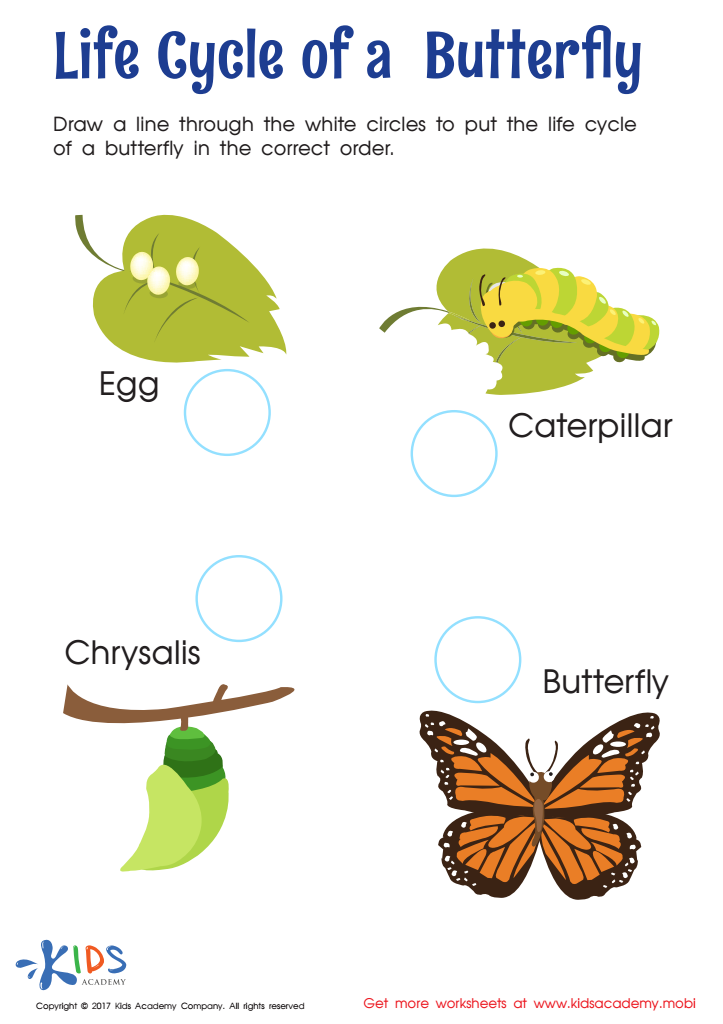
Life Cycle of Butterfly Worksheet
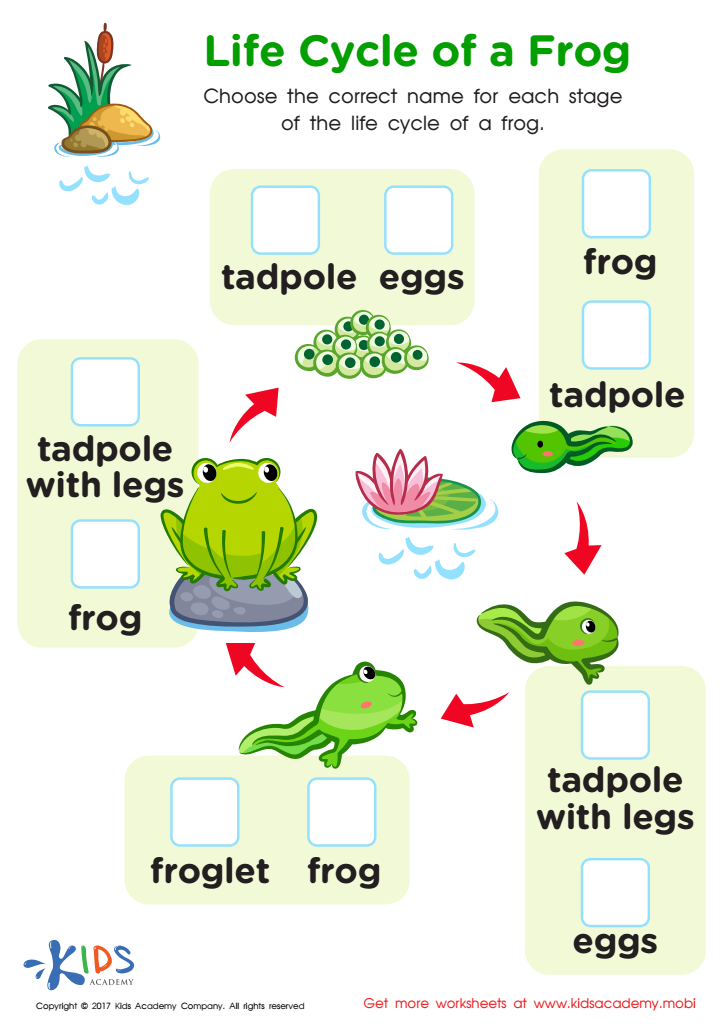
Life Cycle Frog Printable
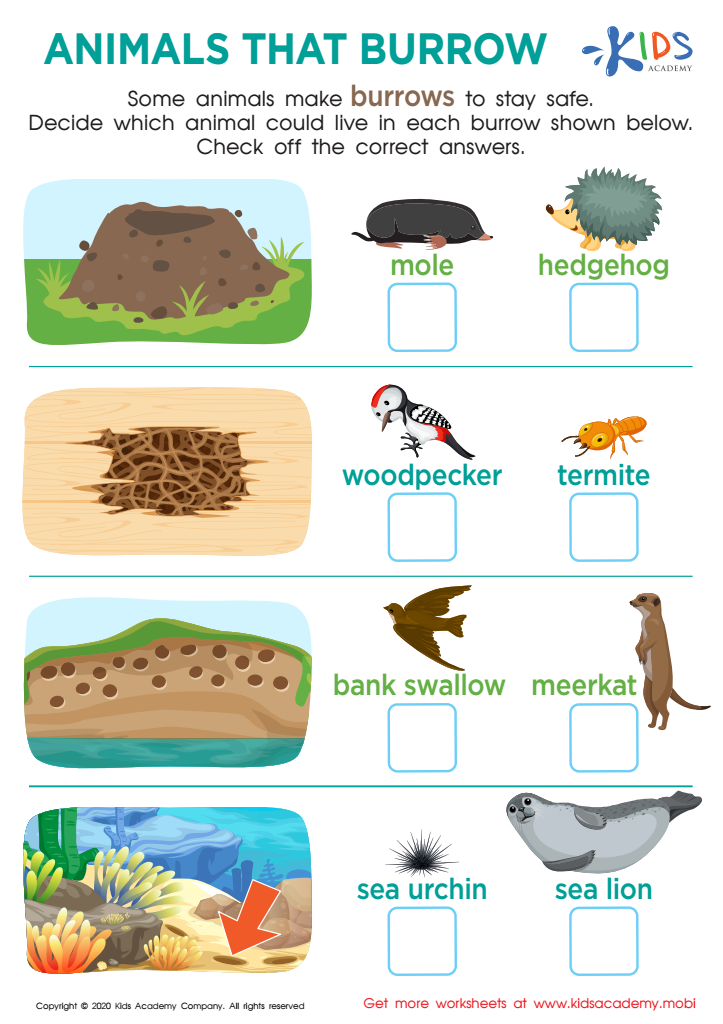
Animals That Burrow Worksheet








Vocabulary enhancement in children aged 4-7 is crucial for their overall development both academically and socially. During these formative years, children's brains are highly receptive to new information, making it an ideal time to introduce a rich and varied vocabulary. Focusing on "Normal Animals" as a topic can be incredibly engaging and educational for young learners.
Firstly, learning about animals piques children's natural curiosity and makes the learning process enjoyable. Describing animals and their characteristics not only introduces new words but also reinforces word comprehension and usage. For example, words like "habitat," "nocturnal," or "camouflage" enrich children's understanding of the world around them.
Secondly, a robust vocabulary is foundational to reading and writing skills. When children know more words, they find it easier to understand texts and express themselves clearly. This boosts confidence in communication, which is critical for building relationships with peers and adults.
Lastly, vocabulary enhancement fosters critical thinking and cognitive skills. By learning and recalling different attributes of animals, children practice categorization, comparison, and analytical thinking.
Investing time in vocabulary expansion at this young age has long-term benefits, setting children up for success in school and beyond. Therefore, teachers and parents should actively engage in vocabulary-building activities that are both fun and educational.








