Color Identification Normal Social Studies Worksheets for Ages 4-7
3 filtered results
-
From - To
Explore our engaging "Color Identification Normal Social Studies Worksheets" designed specifically for children aged 4-7! These worksheets provide a fun and interactive way for young learners to develop their color recognition skills while simultaneously reinforcing foundational social studies concepts. Ideal for classroom activities or home practice, each worksheet features vibrant illustrations and age-appropriate prompts that encourage creativity and critical thinking. Perfect for enhancing learning through play, these engaging materials help foster early developmental skills, making social studies enjoyable for young minds. Download our printable worksheets today and watch your child shine as they learn about the colorful world around them!

Fireman Worksheet
 Assign to My Students
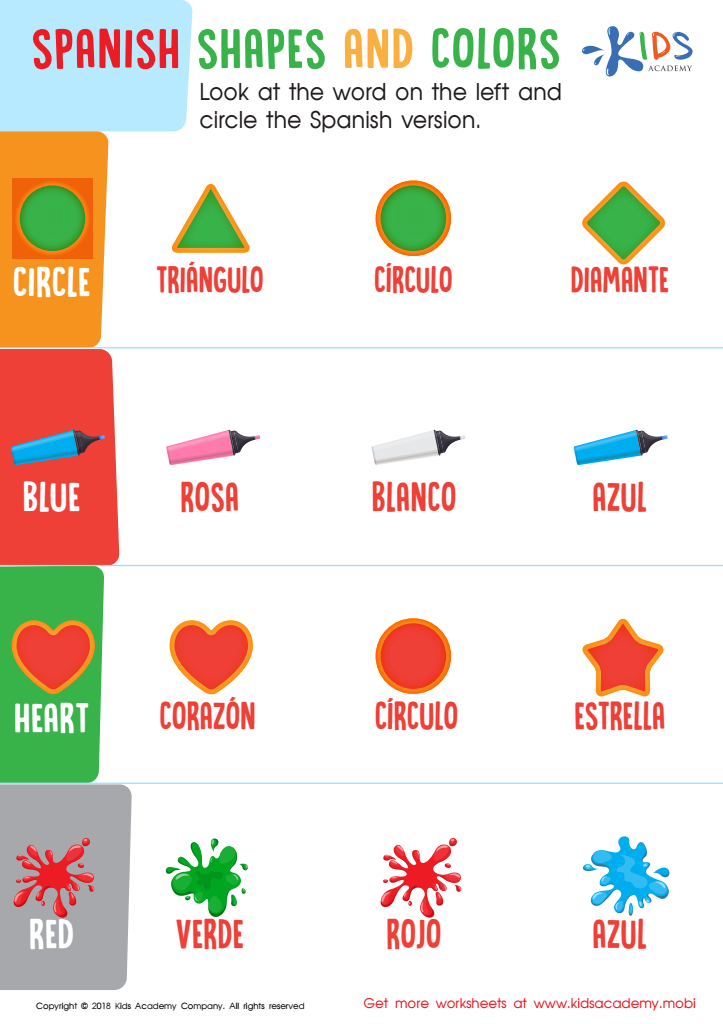
Spanish Shapes and Colors Worksheet

Playground Worksheet








Color identification is a foundational skill that significantly impacts social studies learning for children aged 4-7. Parents and teachers should care about this early development because colors are often tied to the concepts and themes within social studies. Understanding colors helps children engage with maps, flags, and cultural symbols, which play a crucial role in learning about their community and the world.
Moreover, color identification enhances early literacy and vocabulary development. When children can recognize and name colors, they gain confidence in expressing themselves and describing their observations. This foundational vocabulary is vital when discussing social topics, allowing children to describe their environment, participate in discussions, and better understand the varied experiences and cultures represented around them.
In addition, color recognition promotes cognitive skills, encouraging children to sort, categorize, and express their ideas creatively. These skills are critical when exploring topics like diversity, geography, or community—a critical component of social studies. Finally, fostering a deep understanding of colors prepares children to appreciate art and symbols as part of social studies, facilitating a richer comprehension of the diverse world they are navigating. Overall, color identification supports a well-rounded educational experience that can lead to more informed and engaged citizens.