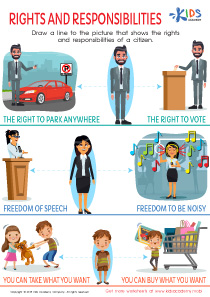
Critical thinking skills Normal Social Studies Worksheets for Ages 4-7
3 filtered results
Difficulty Level
Grade
Age
-
From - To
Subject
Activity
Standards
Enhance your child’s critical thinking abilities with our engaging Normal Social Studies Worksheets designed for ages 4-7. These worksheets provide fun and interactive activities that encourage young learners to analyze, question, and develop their reasoning skills within the context of social studies. Ideal for early education, each worksheet promotes curiosity about the world, enabling children to explore important themes such as community, culture, and environments. With age-appropriate content, these resources foster independent thinking and problem-solving. Easy to print and perfect for both classroom and home learning, our critical thinking worksheets help set the foundation for lifelong learning. Explore now!
Favorites
With answer key
Interactive
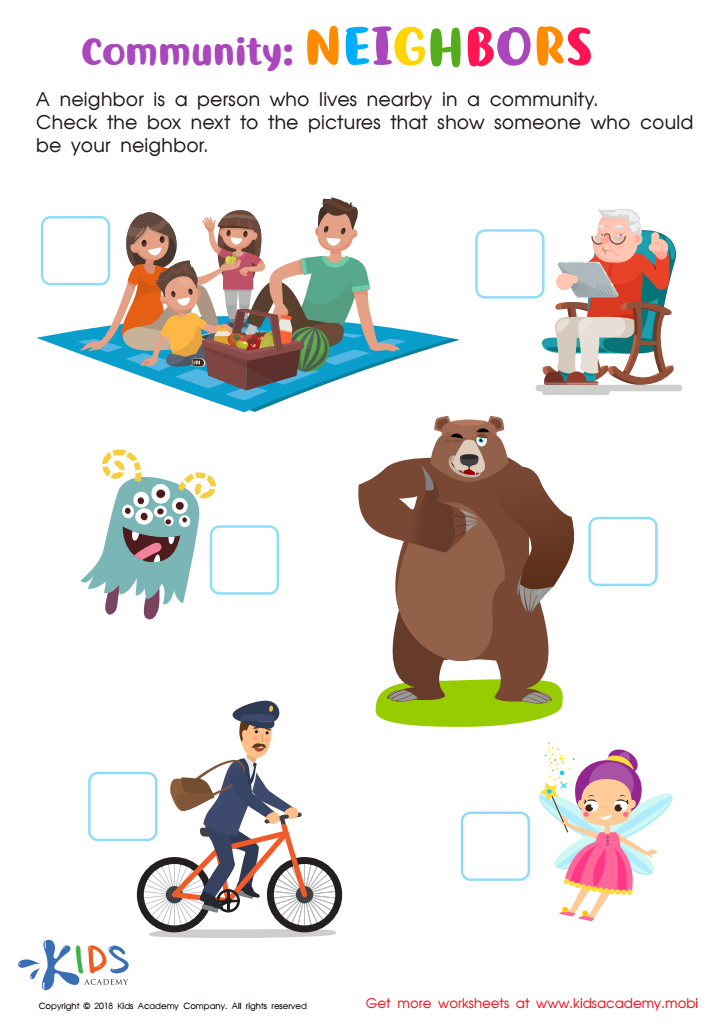
Community: Neighbors Worksheet
This free worksheet helps young learners understand who neighbors are and how they fit into their community. Have your student check out the options, decide which can and can't be neighbours and develop essential social and emotional skills. It's a fun and cheery way to learn about the social sciences!
 Assign to My Students
Community: Neighbors Worksheet
Worksheet
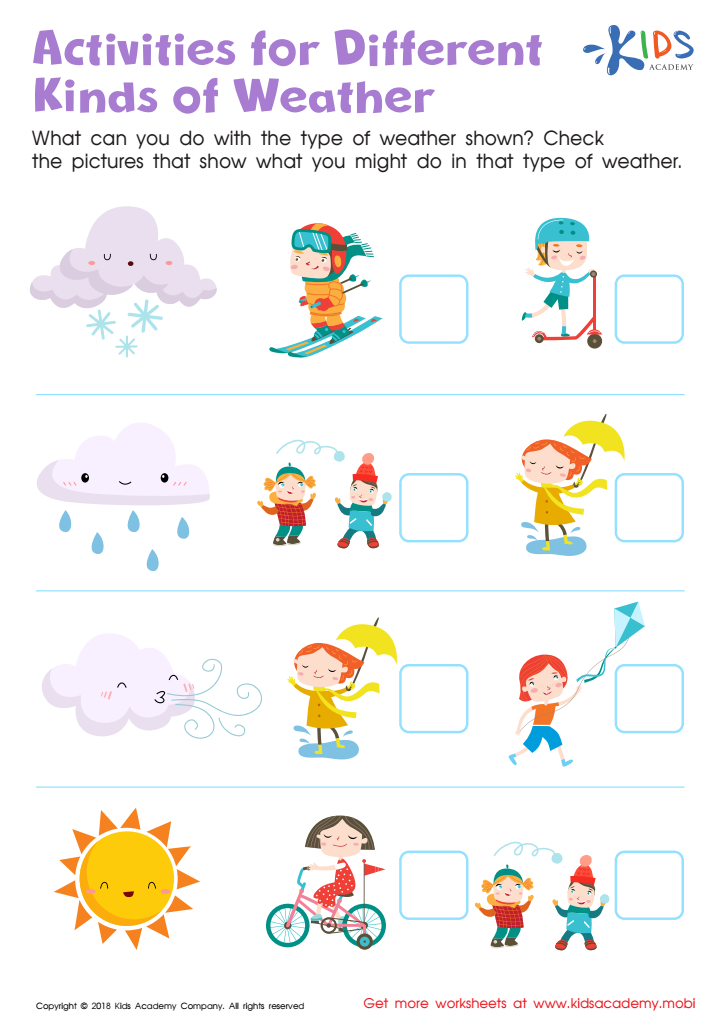
Activities for Different Kinds of Weather Worksheet
Help your child explore the changing seasons with this interactive worksheet. Ask them to name the different seasons and activities associated with each type of weather. Show the pictures and explain what they can do in that kind of weather. Have them check off the activities to help them learn and enjoy the changing seasons.
Activities for Different Kinds of Weather Worksheet
Worksheet
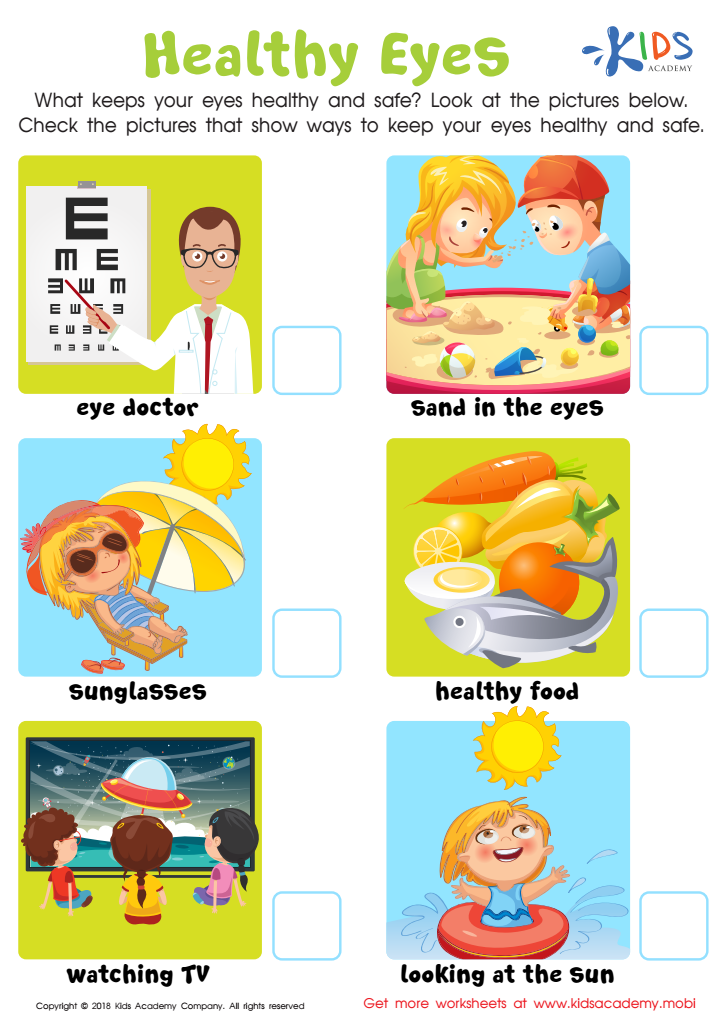
Healthy Eyes Worksheet
Does your child know how to care for their eyes? Help them understand with this worksheet. Look through the pictures together and discuss the different ways to keep the eyes healthy and safe. These include visits to the doctor, wearing sunglasses, and eating healthy food.
Healthy Eyes Worksheet
Worksheet
Join Kids Academy for Free
Who is primarily going to use this learning content?







Critical thinking skills are essential for children, especially in social studies for ages 4-7. At this stage, children begin to understand their roles within their communities and the broader world, and developing critical thinking skills enhances their ability to make sense of these contexts.
Parents and teachers should care about fostering these skills because critical thinking encourages curiosity, promotes problem-solving, and enhances decision-making. When children learn to ask questions, analyze information, and view situations from multiple perspectives, they develop deeper understanding and empathy towards others. These skills also prepare young learners to navigate social dynamics, such as understanding different cultures or resolving conflicts.
Moreover, highlighting critical thinking within social studies lays the groundwork for responsible citizenship. Young learners are not only encouraged to absorb information but also to critique and understand it—an invaluable skill as they grow into informed citizens. Additionally, fostering critical thinking can make learning more engaging and meaningful, ensuring children appreciate the relevance of social studies in their lives.
Ultimately, equipping children with critical thinking skills from an early age can contribute to their academic success, enhance their social interactions, and prepare them for an increasingly complex world.