
Phonological awareness Normal Elementary Phonics Worksheets for Ages 4-8
3 filtered results
Difficulty Level
Grade
Age
-
From - To
Subject
Activity
Standards
Enhance your child's phonological awareness with our engaging Elementary Phonics Worksheets designed specifically for ages 4 to 8. These worksheets promote essential reading skills through fun activities that focus on recognizing sounds, rhymes, and syllables. By engaging with interactive exercises, children develop a solid foundation in language, setting them up for reading success. Ideal for both homeschooling and classroom settings, these printable resources make learning enjoyable while strengthening critical literacy skills. Explore a variety of themes that capture your child's interest and spark their love for reading. Download now to give your child the gift of phonological awareness!
Favorites
With answer key
Interactive
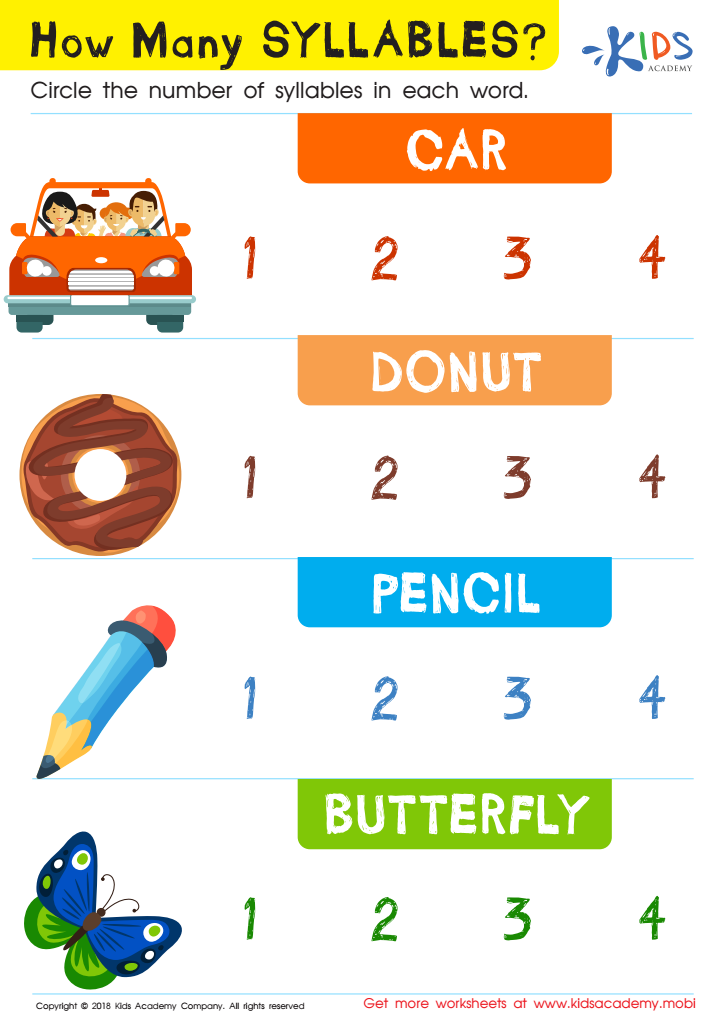
How Many Syllables? Worksheet
Syllabication or 'chunking' helps students decode words more quickly and increase fluency. This traceable worksheet is great for emerging readers, combining fun and fine motor practice with chunking words and counting syllables.
 Assign to My Students
How Many Syllables? Worksheet
Worksheet
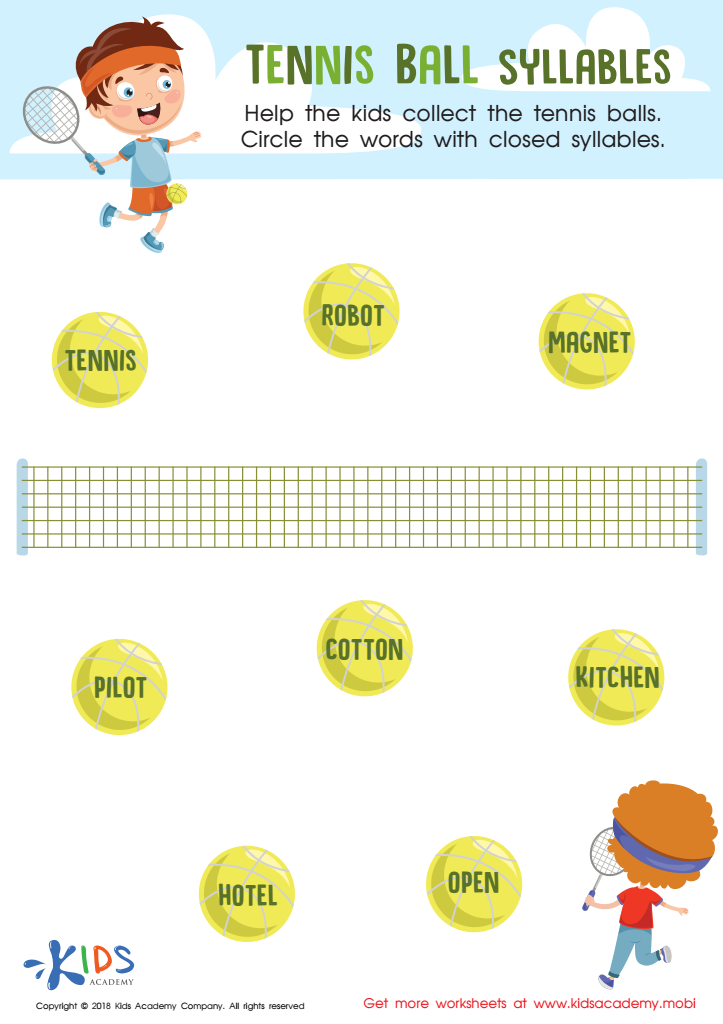
Tennis Ball Syllables Worksheet
To help your kids become fluent speakers, they need to learn syllables. A word can have one to seven syllables, with longer words having more. For this level, they will be working with one or two syllables. Assist them as they circle the words with closed syllables in this worksheet.
Tennis Ball Syllables Worksheet
Worksheet
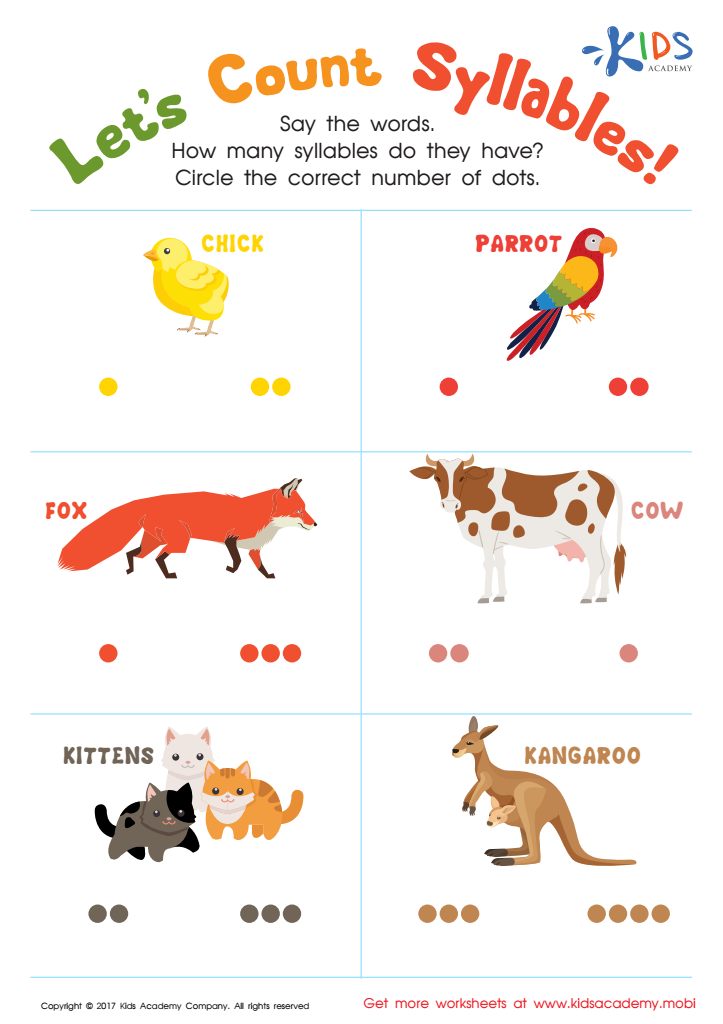
Lets Count Syllables Worksheet
This fun animal worksheet makes learning to read easier by breaking words into syllables. Bright, cheery pictures give context and help kids choose the right syllable count. Count together and enjoy as your child learns and gains success!
Lets Count Syllables Worksheet
Worksheet
Join Kids Academy for Free
Who is primarily going to use this learning content?




Phonological awareness is a critical foundational skill for young learners, particularly for those aged 4-8, as it underpins their ability to acquire reading and writing skills. This awareness involves recognizing, manipulating, and deriving meaning from the sounds in spoken language. Parents and teachers should prioritize phonological awareness because it directly influences literacy development and impacts long-term academic success.
By nurturing phonological consciousness, children learn to identify and work with sounds at various levels—such as syllables, onsets, and rhymes—allowing them to make connections between sounds and letters in the reading process. This skill is a strong predictor of future reading achievement; children who struggle with phonological awareness often face challenges in decoding words, leading to reading difficulties.
Moreover, engaging in phonological awareness activities fosters vocabulary expansion and enhances listening skills. Through playful approaches, such as rhyming games and sound detection, children develop a love for language while building self-confidence.
In addition, by incorporating phonics-based instruction that complements phonological awareness, teachers and parents can equip children with the tools they need for successful reading strategies, critical thinking, and effective communication. Ultimately, prioritizing these skills creates a strong base that empowers children to thrive academically and socially.






