Phonological awareness Normal Phonics Worksheets for Ages 4-8
3 filtered results
-
From - To
Our "Phonological Awareness Normal Phonics Worksheets for Ages 4-8" are designed to enhance early reading skills through engaging and effective activities. Tailored for young learners, these worksheets focus on developing crucial phonological skills such as rhyming, alliteration, and syllable segmentation. Each activity utilizes fun and interactive methods to help children recognize and manipulate the sounds in words, setting a strong foundation for successful reading. Perfect for classrooms or at-home practice, our worksheets are an essential tool for sparking a love of learning and achieving early literacy milestones. Empower your child's phonics journey today!
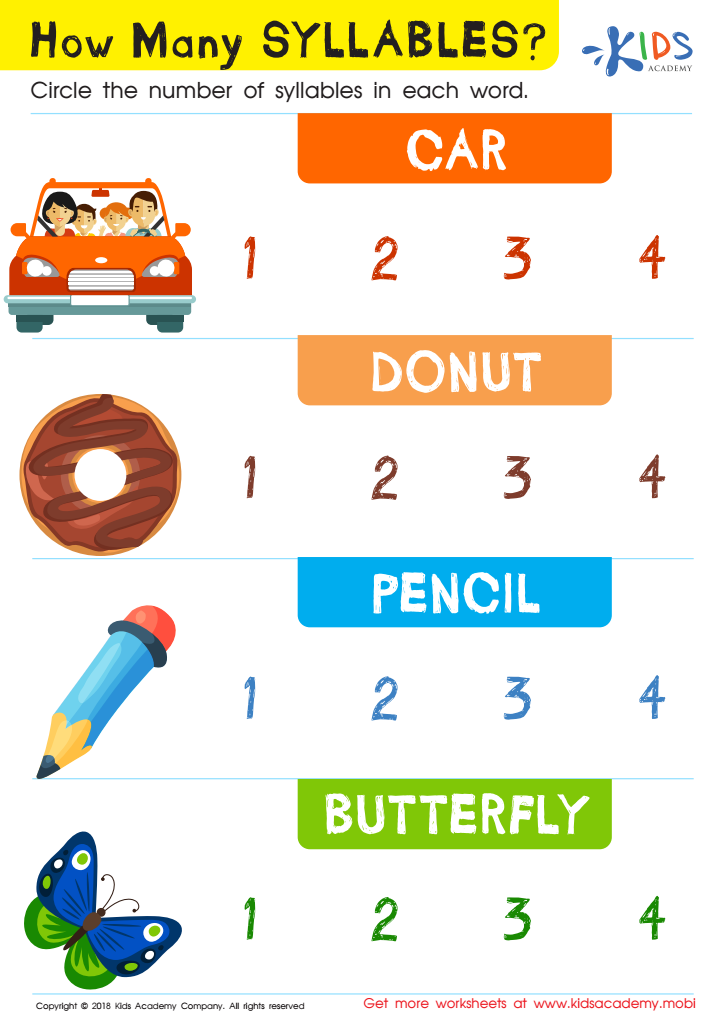
How Many Syllables? Worksheet
 Assign to My Students
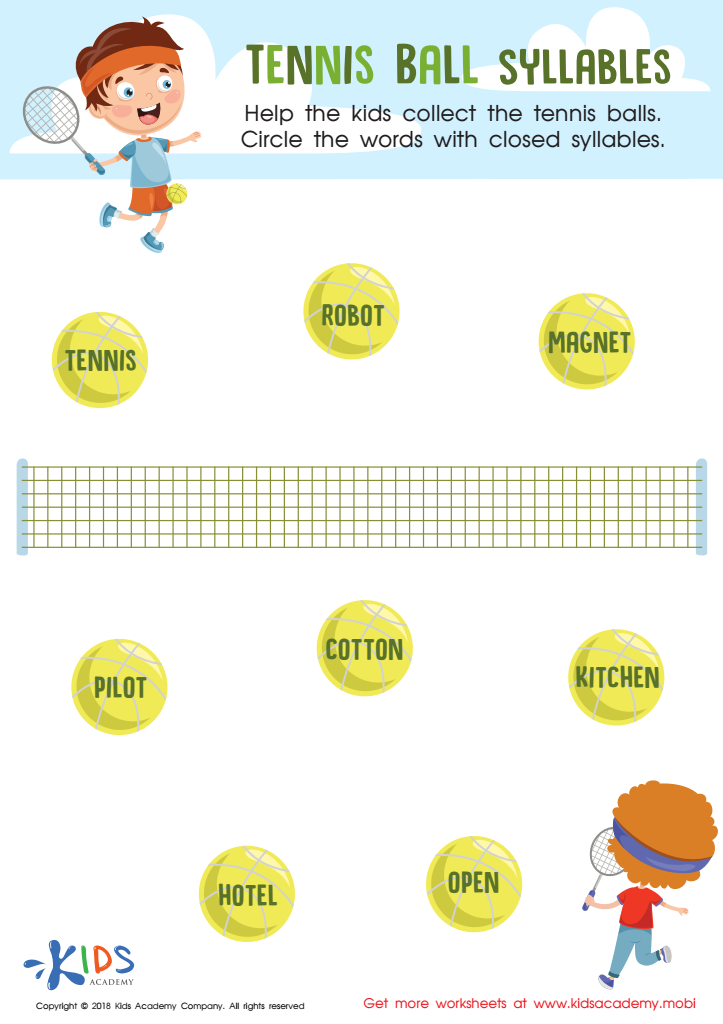
Tennis Ball Syllables Worksheet
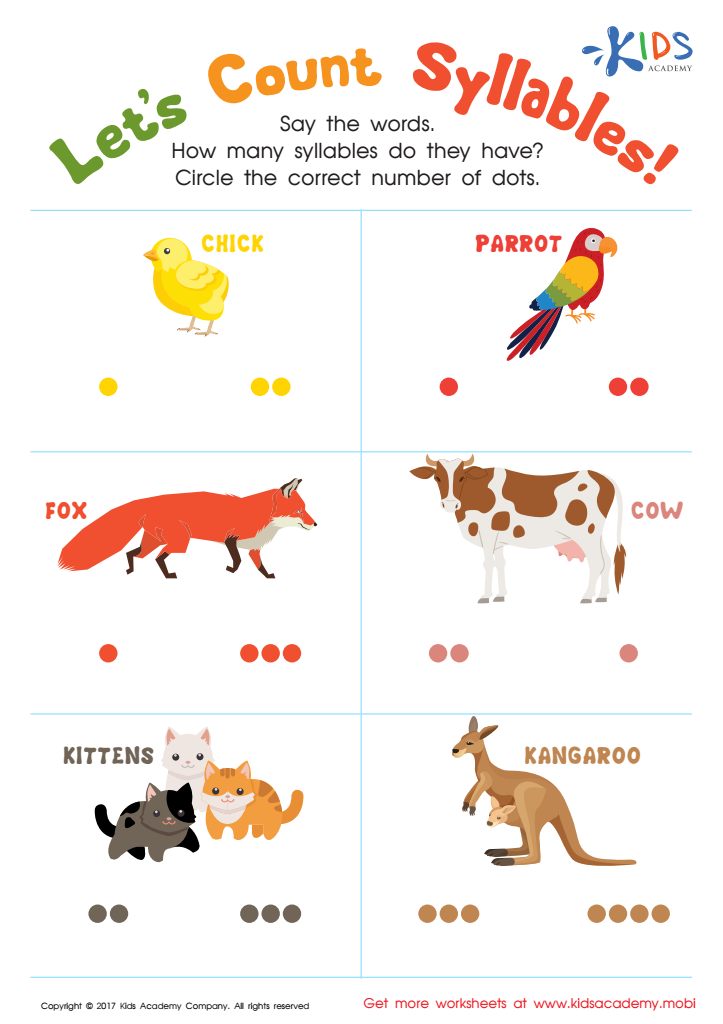
Lets Count Syllables Worksheet








Phonological awareness is a crucial skill for young children, aged 4-8, because it forms the foundation for successful reading development. This awareness refers to the ability to recognize and manipulate the sounds within spoken language, including recognizing rhymes, counting syllables, and identifying individual phonemes. When children develop a strong phonological awareness, they are better equipped to understand how sounds map onto letters (phonics), which is essential for decoding words while reading.
Phonological awareness is linked to early literacy skills, facilitating easier and more fluent reading and writing. For example, if children can segment and blend sounds effectively, they are more likely to spell words correctly and read with confidence. This ability to connect sounds to written language is critical in making reading feel more intuitive and less frustrating.
Parents and teachers should therefore actively engage in activities that promote phonological awareness, such as reading aloud, playing rhyming games, and deliberately emphasizing sounds in various words. Nurturing these skills not only aids in academic achievement but also boosts children's self-esteem and love for learning. By fostering a strong phonological foundation, parents and educators set children on a path toward lifelong literacy and cognitive success.







