Sound recognition Normal Phonics Worksheets for Ages 4-8
11 filtered results
-
From - To
Give your child's literacy journey a boost with our "Sound Recognition Normal Phonics Worksheets for Ages 4-8." Designed to engage young learners, these fun, educational activities help kids identify consonant and vowel sounds through colorful illustrations and practical exercises. Perfect for preschool to second-grade students, our worksheets build a strong foundation in reading skills, from letter recognition to word formation. Enhance classroom lessons or home practice with our expert-crafted phonics resources, promoting phonemic awareness while fostering a love for learning. Set your child on the path to reading success with these essential tools!
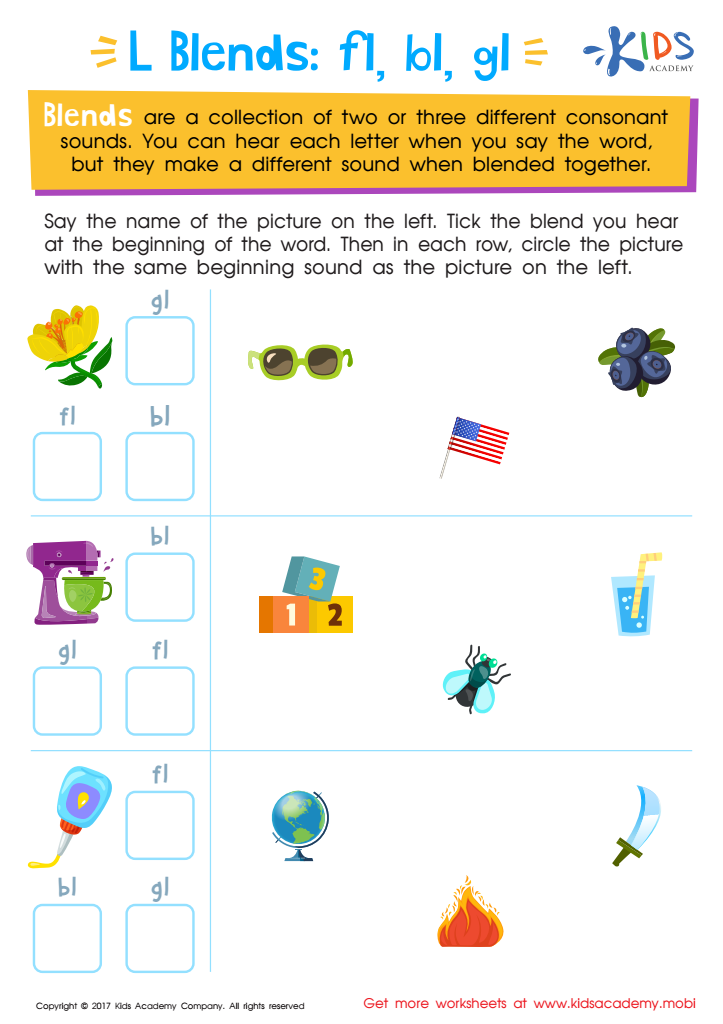
Blending Consonants: "Fl", "Bl" and "Gl" Printable
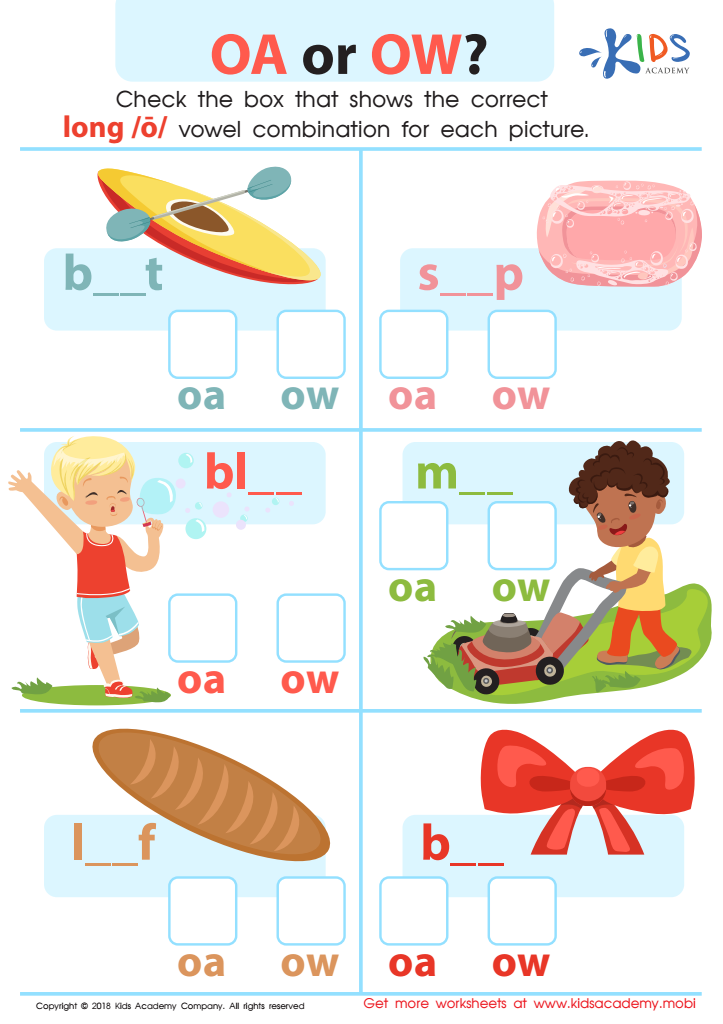
Reading: OA or OW Worksheet
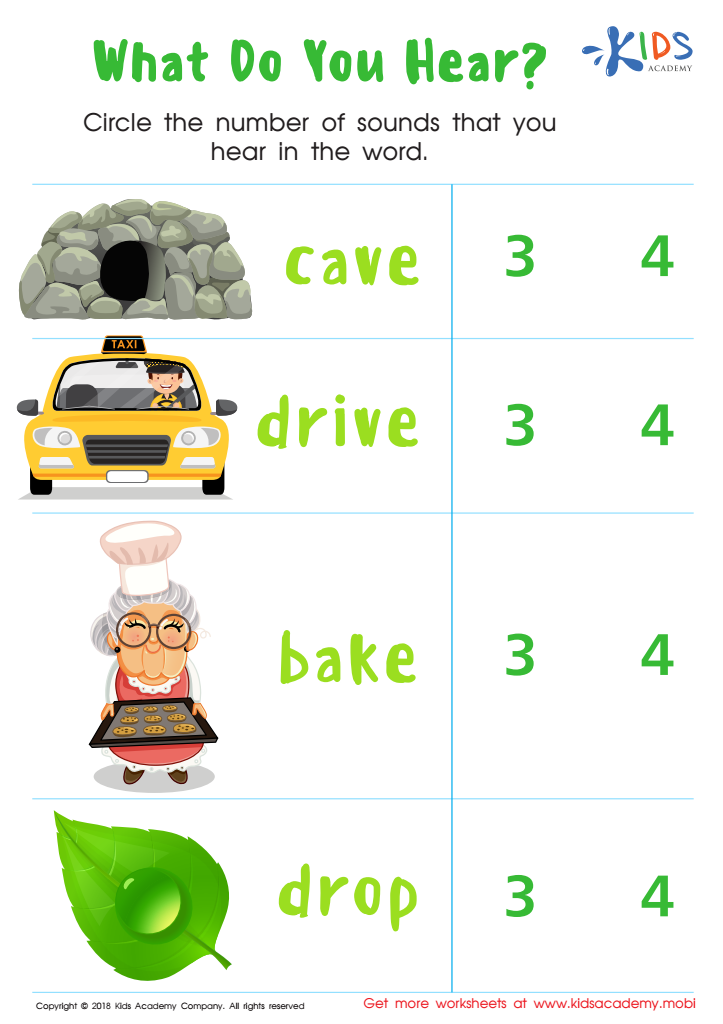
What Do You Hear? Worksheet
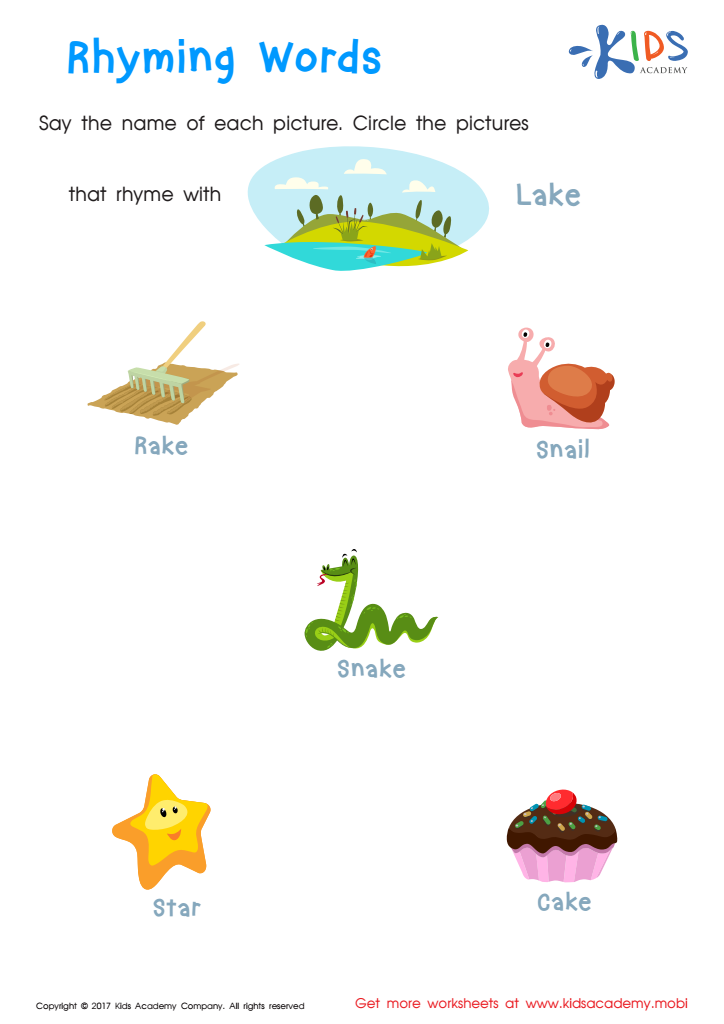
Rhyming Words Rhyming Worksheet
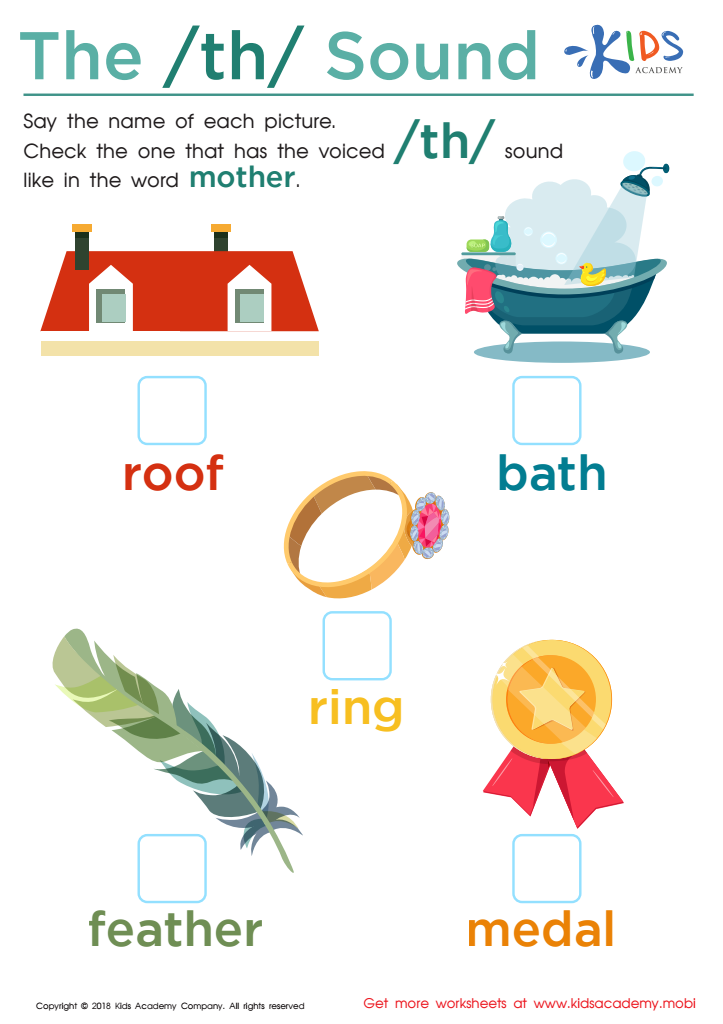
The /th/ Sound Worksheet

Long and Short U Worksheet
 Assign to My Students
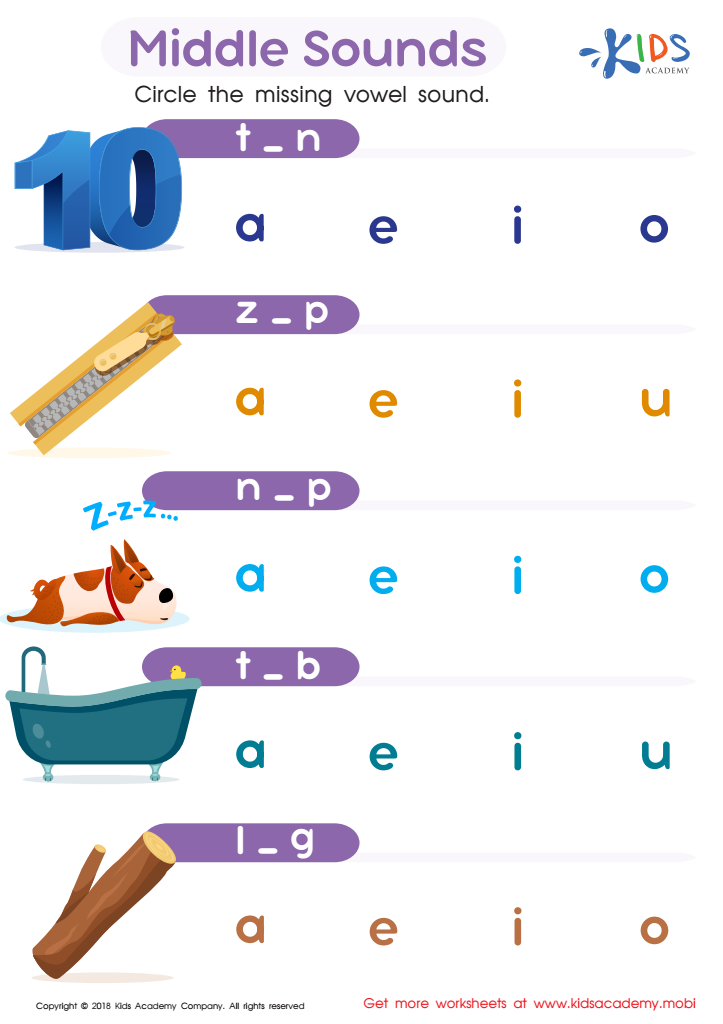
Middle Sounds Worksheet
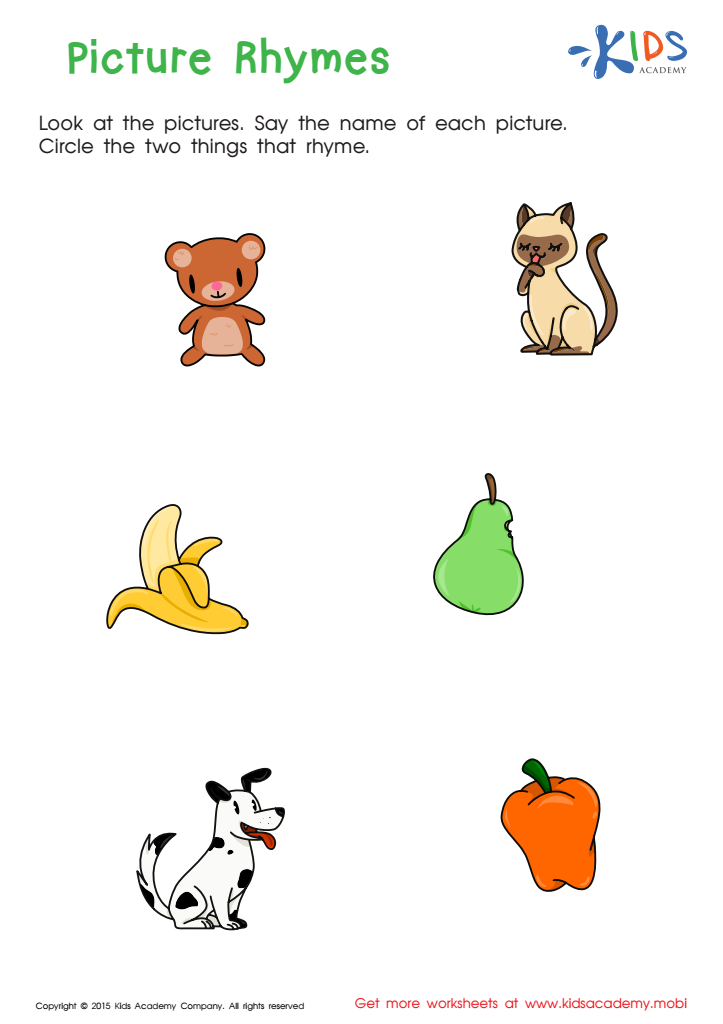
First Words: Picture Rhymes Worksheet
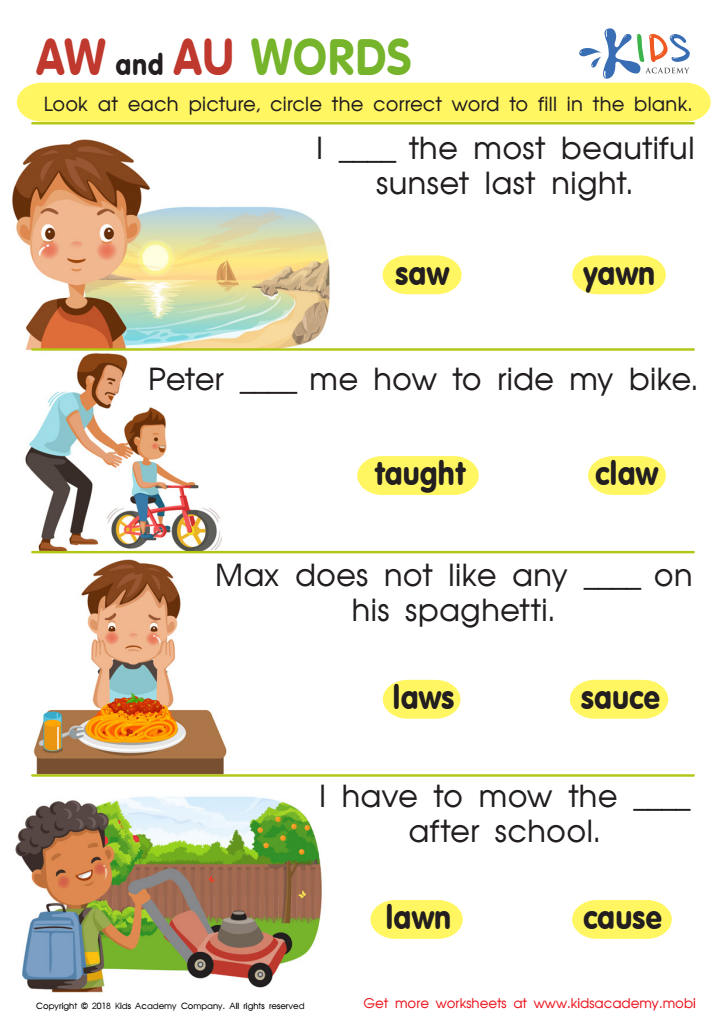
Reading: AW and AU Words Worksheet
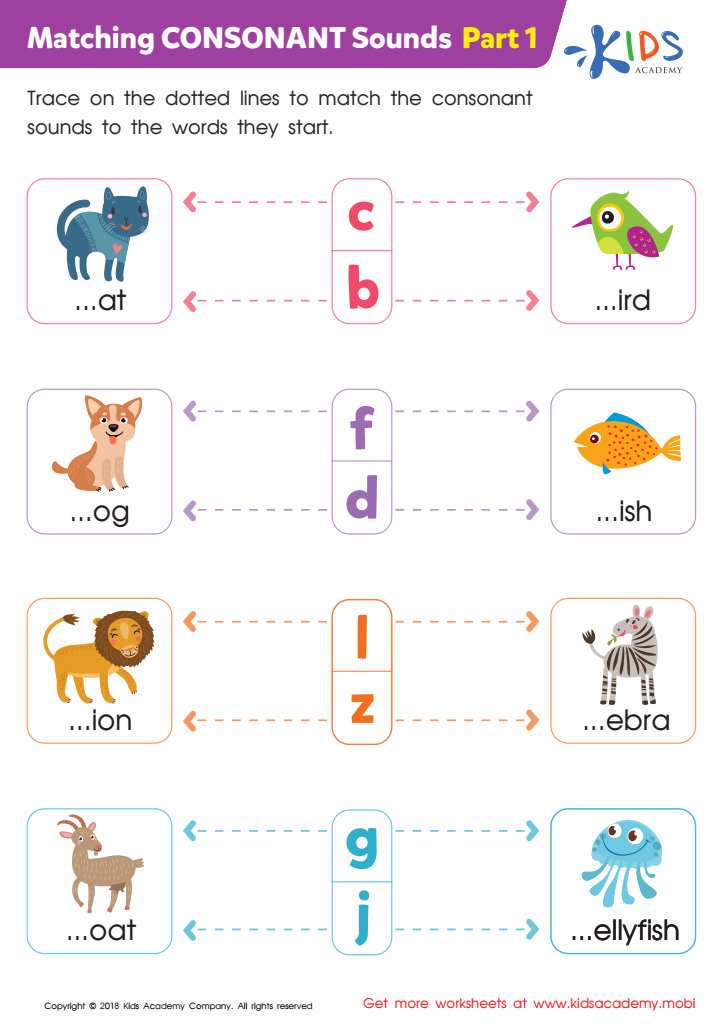
Matching Consonant Sounds: Part 1 Worksheet
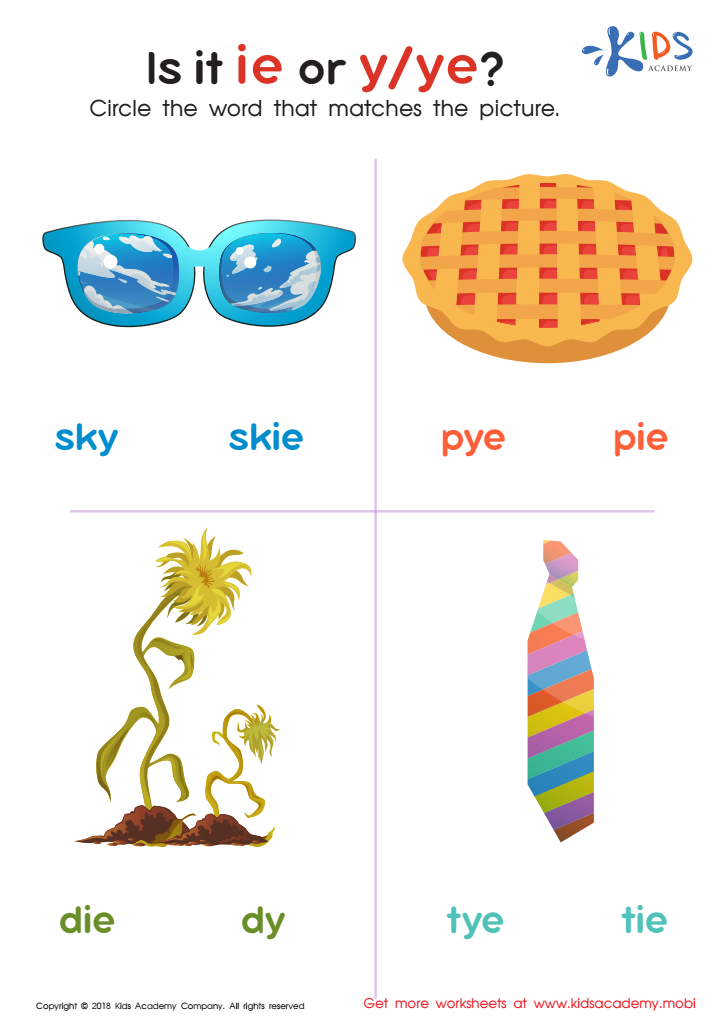
Is It IE or Y/Ye? Worksheet








Sound recognition and normal phonics are critical components in the early stages of children's reading development, particularly for ages 4-8. When parents and teachers are proactive about fostering these skills, they set a strong foundation for lifelong literacy and learning.
First, sound recognition helps children identify and differentiate between phonemes—the smallest units of sound. This skill is crucial for decoding words, which is the process of translating written text into spoken language. By mastering phonemes, children can more easily piece together the sounds that make up words, enhancing their reading fluency and comprehension.
Phonics instruction goes hand-in-hand with sound recognition by teaching the relationship between letters and sounds. This knowledge enables children to read new words independently by breaking them down into manageable sounds. The ability to decode new words enhances their reading vocabulary and boosts their confidence.
Strong phonics and sound recognition skills also influence spelling and writing. By understanding sound-letter correspondences, children can spell words more accurately and express their ideas more clearly in writing.
In summary, prioritizing sound recognition and phonics for children aged 4-8 is integral for developing foundational literacy skills. It not only improves reading ability but also encourages better spelling, writing, and overall academic performance, setting the stage for future educational success.







