
Spelling Skills Normal Vowels Worksheets for Ages 4-8
3 filtered results
Difficulty Level
Grade
Age
-
From - To
Subject
Activity
Standards
Enhance your child's literacy with our Spelling Skills Normal Vowels Worksheets, designed for ages 4-8. These engaging worksheets help young learners master the basic vowels: A, E, I, O, and U, through fun exercises that promote spelling awareness. From letter recognition to simple word formation, each activity encourages kids to practice their spelling skills in an interactive way. Our carefully crafted materials cater to different learning styles, making it simple for educators and parents to support their child's reading development. Download these printable worksheets today and watch your child gain confidence in their spelling abilities while having fun!
Favorites
With answer key
Interactive
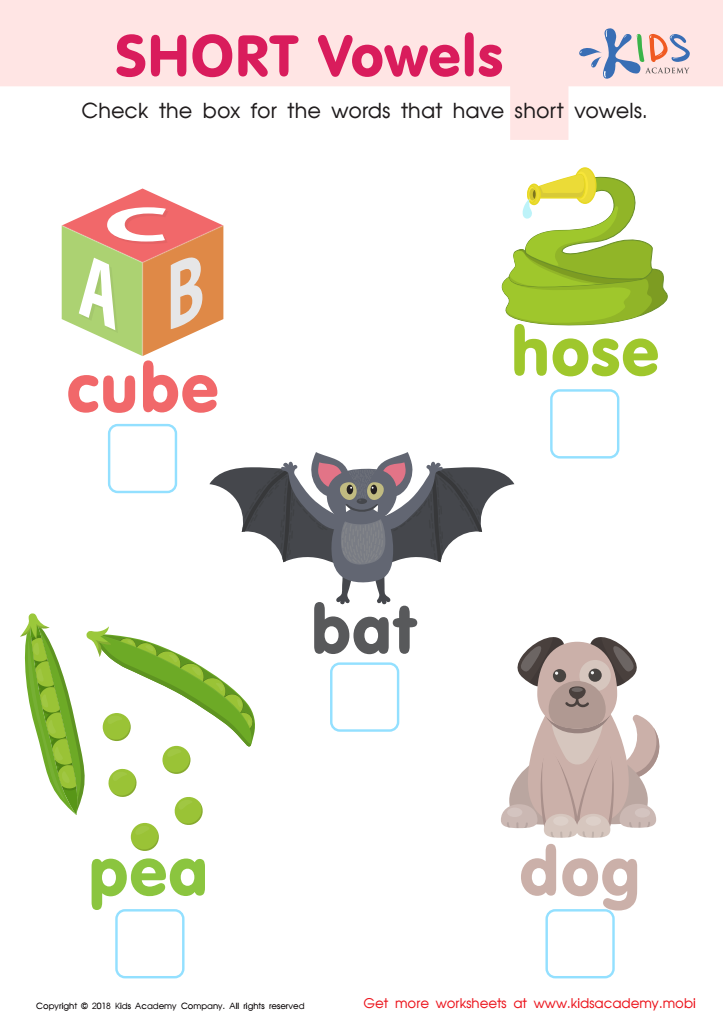
short vowels Worksheet
Say "dog" and notice how long it takes to pronounce the vowel. Is it short or long? Compare it to "pea" and use this worksheet to quickly assess your child's mastery. Have them name each picture and listen for the vowel sounds. Only check the boxes for words with short vowel sounds.
 Assign to My Students
short vowels Worksheet
Worksheet
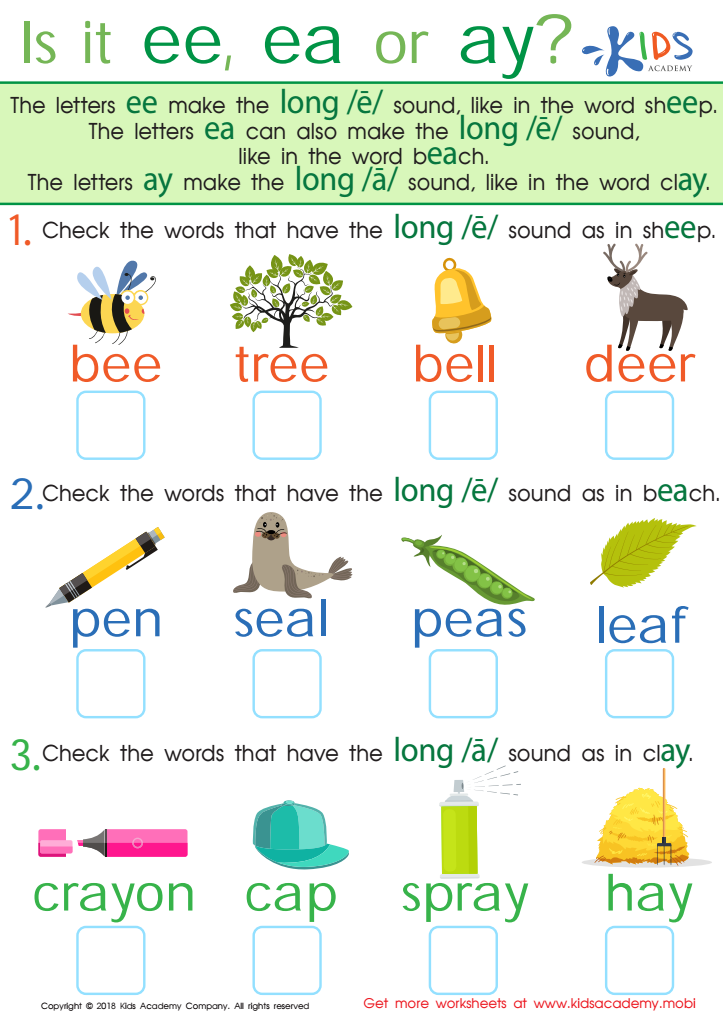
Is It EE, EA, or AY? Worksheet
When 'ee', 'ea' and 'ay' are in words, they usually make the long /e/ and /a/ sounds. Examples of words with 'ee' are "sheep", 'beach' and 'seat' with 'ea', and 'clay' and 'play' with 'ay'. Check this colourful worksheet with your kids; help them find the words that make the long /e/ sound like 'sheep'.
Is It EE, EA, or AY? Worksheet
Worksheet
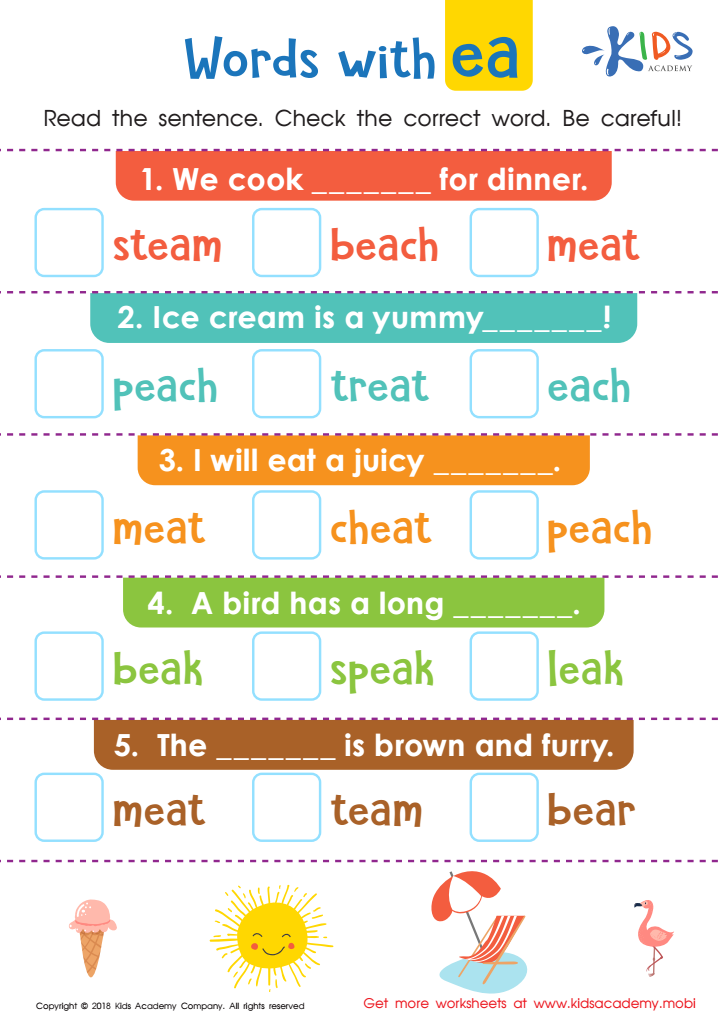
Words with ea Worksheet
Beginning readers may struggle with -ea vowel digraphs, which can have multiple sounds and be tricky to decode. This cheerful worksheet helps kids practice reading sentences with missing -ea words, using context clues to fill in the blanks. They'll also be exposed to various -ea sound examples, and build their sight word knowledge.
Words with ea Worksheet
Worksheet
Join Kids Academy for Free
Who is primarily going to use this learning content?





Parents and teachers should prioritize spelling skills, particularly with normal vowels, for children aged 4-8 because these foundational skills directly impact a child's literacy development and overall academic success. Mastering normal vowels helps children decode words more effectively, enhancing their reading comprehension and fluency. Strong spelling skills also bolster writing abilities, enabling young learners to express their thoughts clearly and confidently.
At this developmental stage, children are adept at recognizing patterns in language, and focusing on normal vowels aids in phonemic awareness—an essential aspect of learning to read. It allows them to differentiate between similar-sounding words and enhances their ability to blend sounds, which is critical for both spelling and reading.
Moreover, spelling is intrinsically linked to a child's self-esteem. Success in spelling activities builds confidence, encouraging children to participate more actively in reading and writing tasks. Instilling a love for words and a fascination with language at this age can ignite a lifelong passion for literacy. When caregivers and educators work together to support the spelling of normal vowels, they equip children with essential skills that lay a strong foundation for their educational journeys and foster a positive, engaging learning environment.






