Word Recognition Normal Vowels Worksheets for Ages 4-8
6 filtered results
-
From - To
Enhance your child's reading skills with our engaging "Word Recognition Normal Vowels Worksheets" designed for ages 4-8. These worksheets focus on familiarizing young learners with normal vowels through fun and interactive activities. Each worksheet is crafted to improve word recognition and boost literacy skills, helping kids identify and understand vowel sounds in context. Perfect for homeschoolers or extra practice, our resources encourage children to explore language in a joyful way. Teachers and parents will appreciate the variety of exercises that cater to different learning styles, ensuring every child builds a strong foundation in reading. Start your child’s learning adventure today!
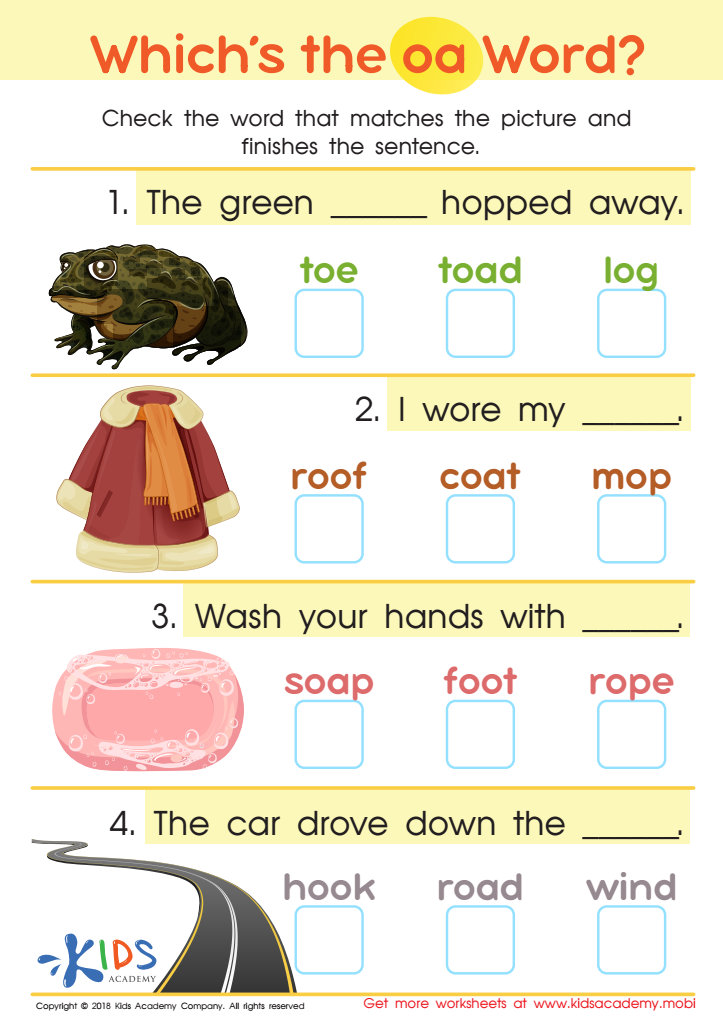
Which's the OA Word? Worksheet
 Assign to My Students
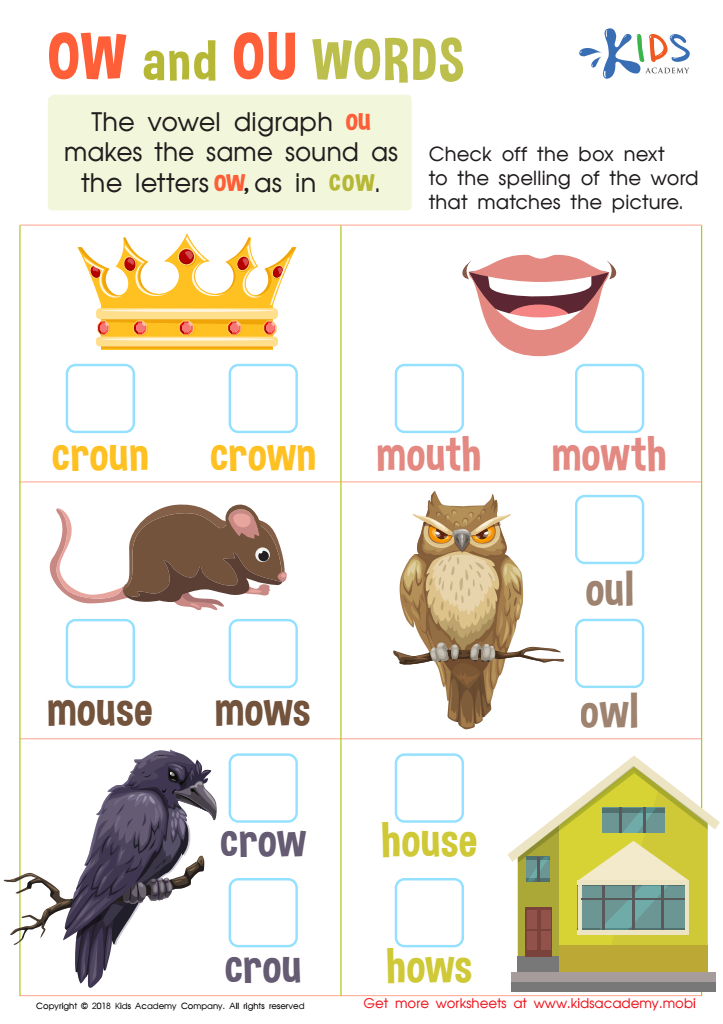
Reading: OW and OU Words Worksheet
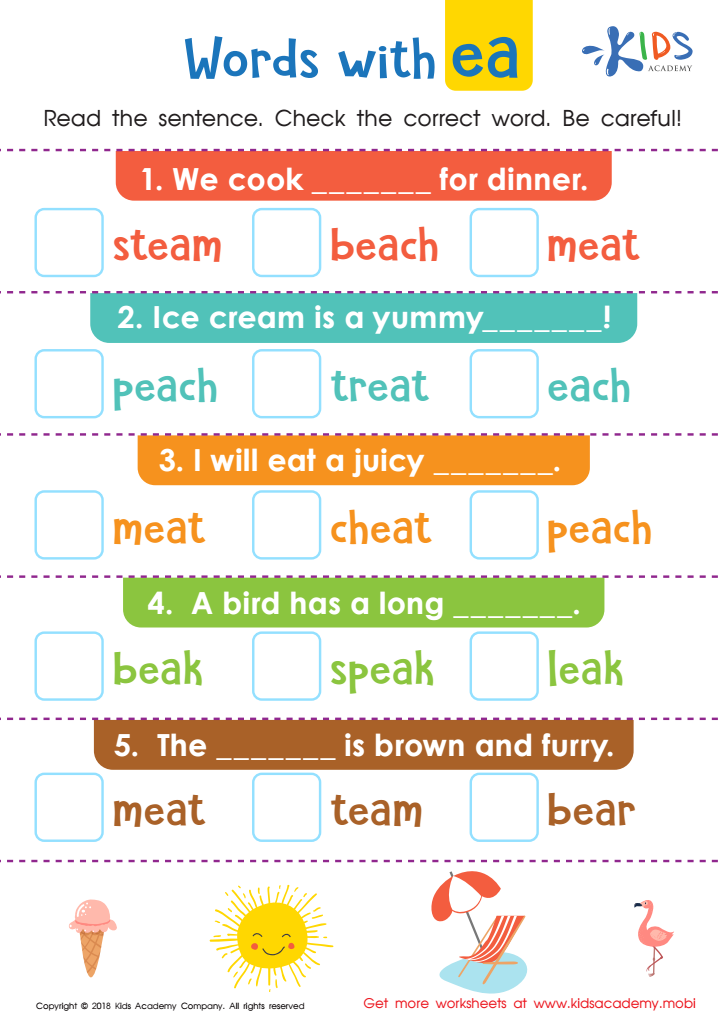
Words with ea Worksheet
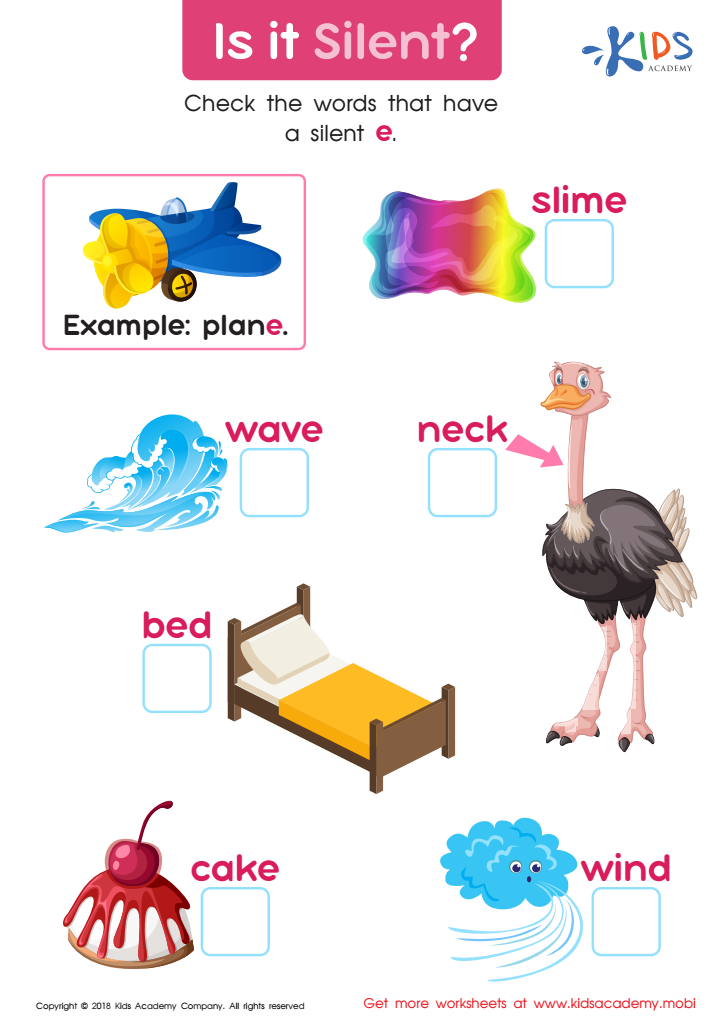
Is It Silent? Worksheet
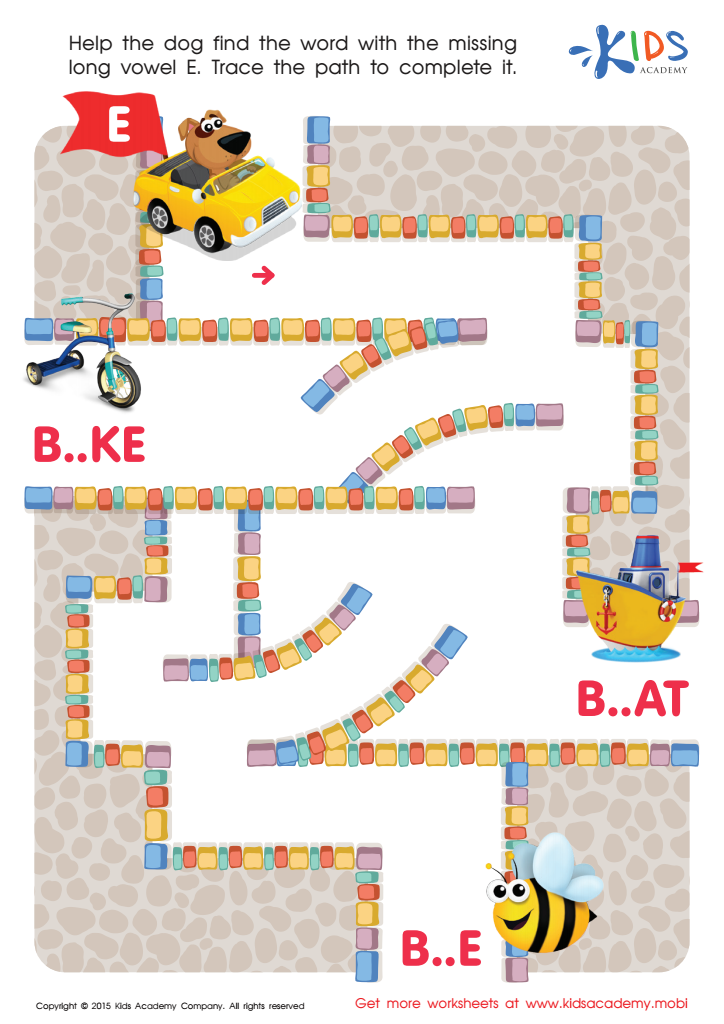
Long Vowel Sound E Worksheet
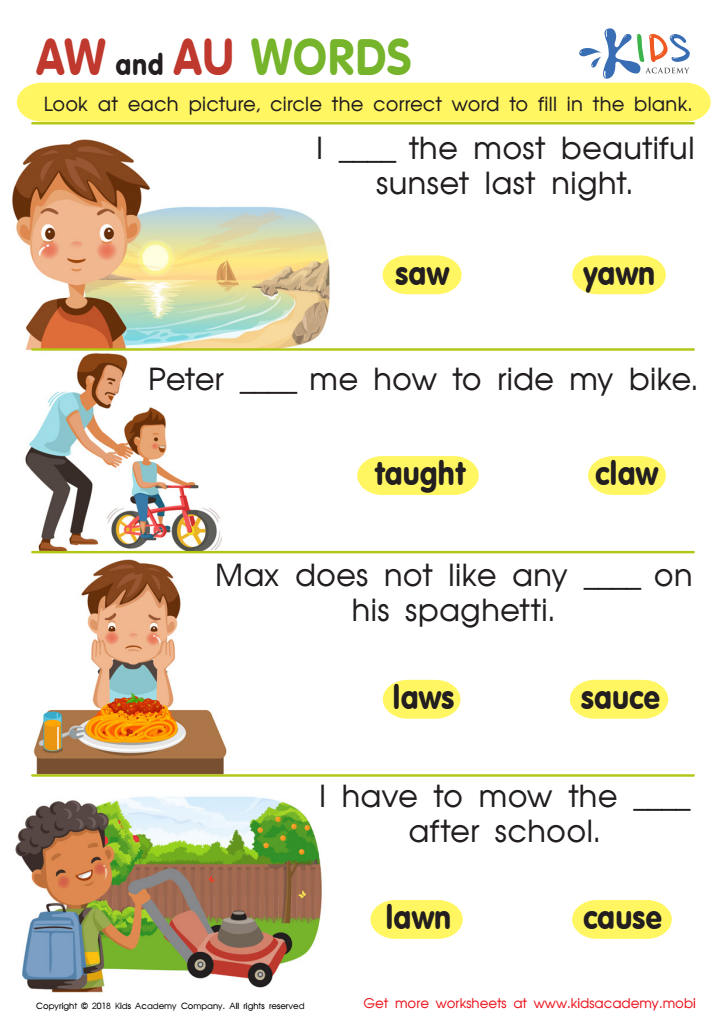
Reading: AW and AU Words Worksheet





Word recognition is a crucial early literacy skill for children aged 4-8, and understanding normal vowels plays a significant role in this process. Vowels are the backbone of our language; they are fundamental in shaping the sounds of words. Mastery of normal vowels helps children decode unfamiliar words, enhancing their reading fluency and comprehension.
When parents and teachers focus on teaching normal vowels, they equip children with the ability to sound out words, which builds their confidence and encourages a positive attitude toward reading. This foundational skill supports overall literacy development, including spelling and writing, as children learn to recognize patterns in words.
Moreover, early mastery of word recognition can lead to higher academic achievement and perseverance in later school years. Children who read well are often better communicators and critical thinkers. Additionally, fostering a love for reading through engaging vowel activities can spark interest in literature, thereby enriching a child's worldview.
Ultimately, an emphasis on vowel recognition creates a solid literacy foundation, promoting lifelong reading habits and success beyond the classroom. Caring for these skills not only helps children academically but also enriches their personal and social growth. Hence, prioritizing word recognition normal vowels is essential for a child’s overall development.






