Phonics Skills Normal Coloring Pages Worksheets for Ages 4-8
3 filtered results
Difficulty Level
Grade
Age
-
From - To
Subject
Activity
Standards
Explore our engaging Phonics Skills Normal Coloring Pages Worksheets, designed for children aged 4-8! These vibrant worksheets combine the joy of coloring with essential phonics practice, helping young learners build critical reading skills in a fun and interactive way. Each page features delightful illustrations that reinforce letter recognition, sound association, and vocabulary development. Perfect for at-home learning or classroom activities, these coloring pages encourage creativity while enhancing phonemic awareness. Whether your child is just starting or refining their phonics skills, our thoughtfully crafted worksheets provide an enjoyable learning experience. Download and print them to spark your child's love for reading today!
Favorites
With answer key
Interactive
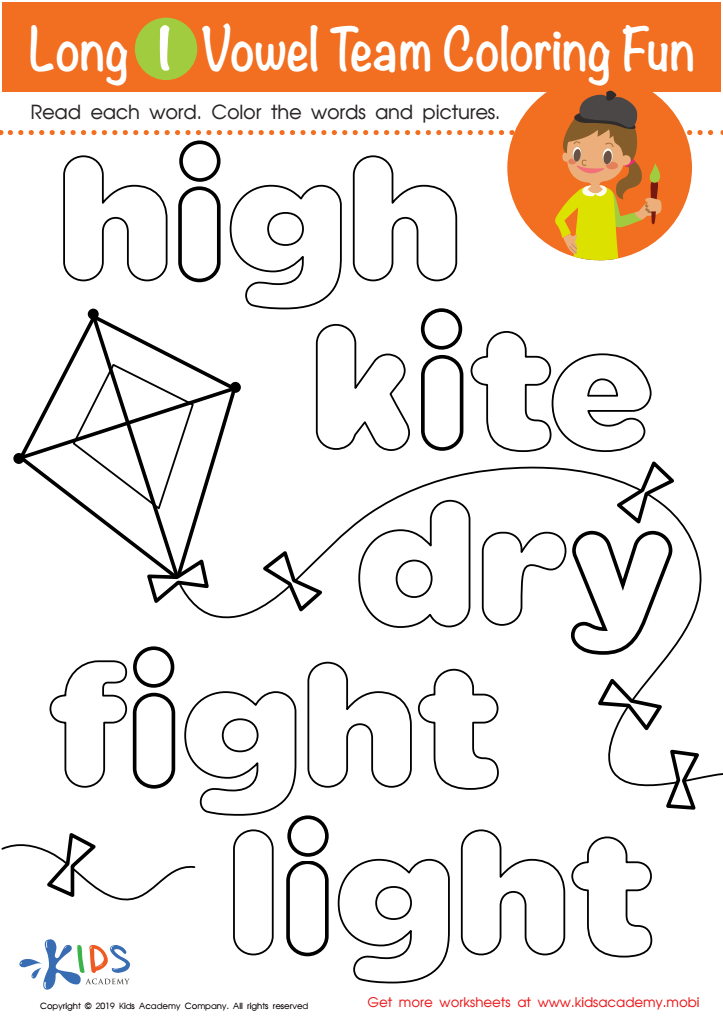
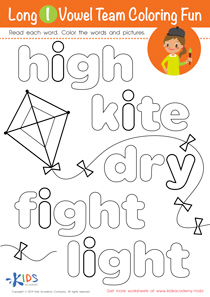
Long I Vowel Team Coloring Worksheet
This worksheet provides practice with letter combinations that make the long "i" sound while enhancing creativity and motor skills with a fun coloring activity. Unknowingly, new readers learn key phonics skills while having fun!
Download (PDF)
 Assign to My Students
Assign to My Students
Long I Vowel Team Coloring Worksheet
Worksheet
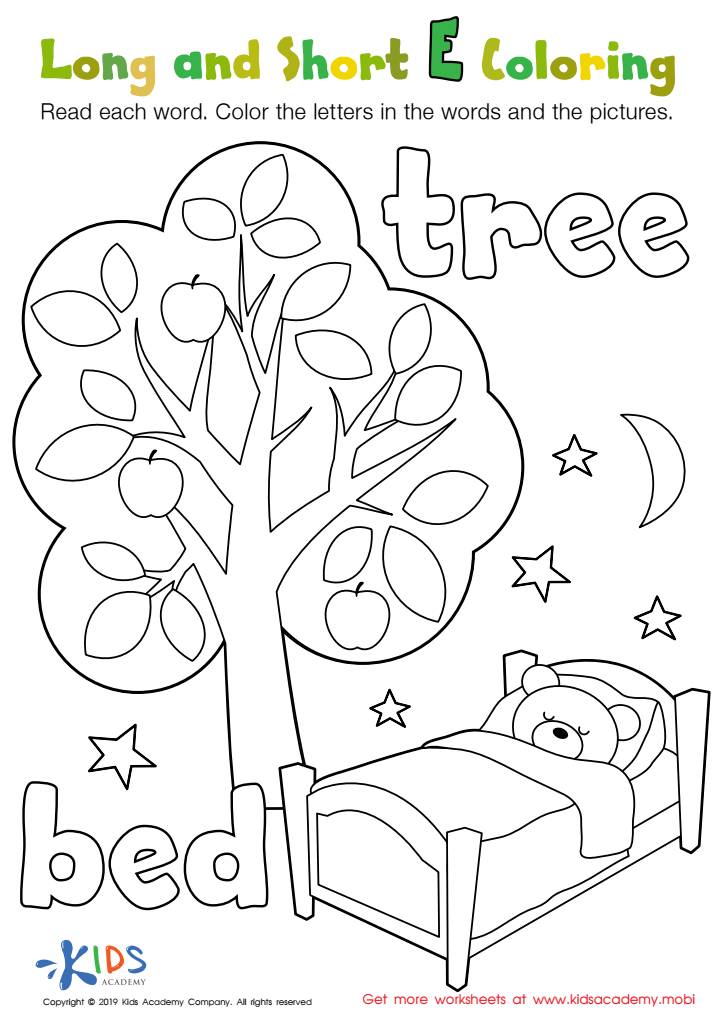
Long and Short E Worksheet
This fun printout makes learning phonics enjoyable for Grade 3 students. Get them to read the words “tree” and “bed” to recognize the different sounds of the letter “E”. After hearing the words they can color the words and the pictures to understand differences between long and short vowels.
Download (PDF)
Assign to My Students
Assign to My Students
Long and Short E Worksheet
Worksheet
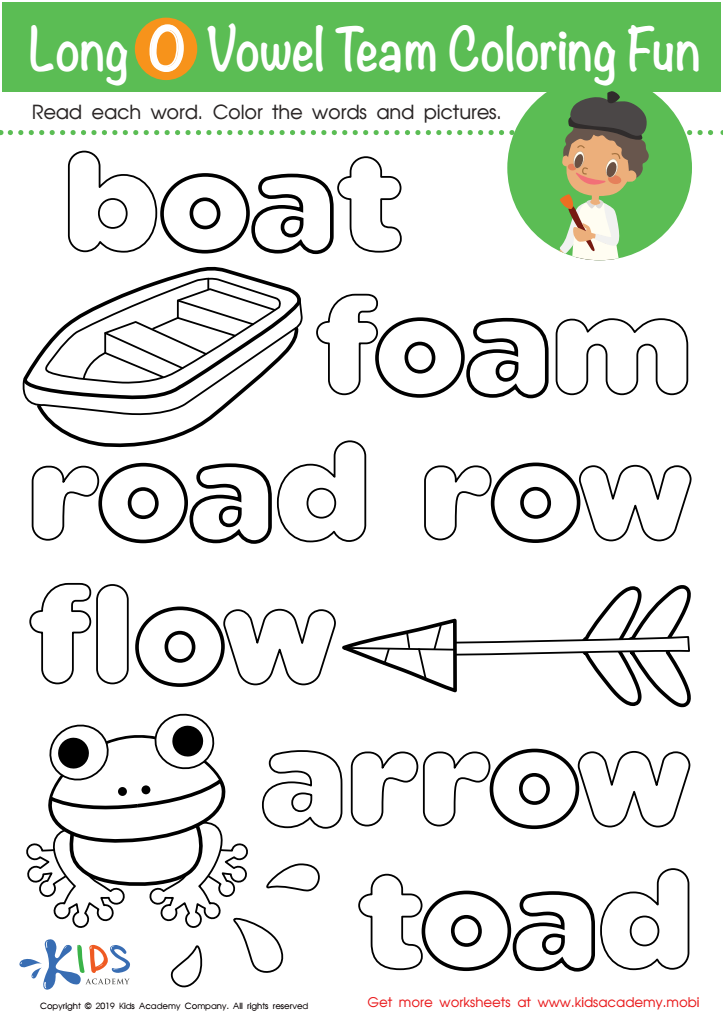
Long O Vowel Team Coloring Worksheet
Divide your class into teams and have them work together to identify and pronounce the long O sound in words like "boat" and "flow". As they read aloud, have the rest of the class listen attentively. Then let teams color in the words and matching pictures, reinforcing the lesson. This simple printout is perfect for phonics lessons and a fun way to energize your class.
Download (PDF)
Assign to My Students
Assign to My Students
Long O Vowel Team Coloring Worksheet
Worksheet
Join Kids Academy for Free
Who is primarily going to use this learning content?



.jpg)



Phonics skills coloring pages for ages 4-8 are an engaging way to support early literacy development. Parents and teachers should care about these resources because they offer a fun and interactive method to introduce and reinforce phonemic awareness and letter recognition. As young children color pictures related to letters, sounds, and vocabulary, they naturally form connections between phonics sounds and their visual representations. This multisensory approach appealingly taps into both creativity and learning, making reading more enjoyable.
Furthermore, these coloring activities can promote fine motor skills, essential for writing development. As children practice holding crayons and making various strokes, they simultaneously build hand-eye coordination.
In addition, phonics coloring pages serve as excellent supplementary tools while allowing for differentiated instruction. They can cater to various learning styles and modalities, ensuring students can grasp phonics based on their unique preferences.
Overall, phonics skills coloring pages are a valuable resource fostering a love for reading while laying a strong foundation for lifelong literacy skills. By incorporating such playful educational activities, parents and teachers can create a rich learning environment that encourages curiosity and self-expression. Supporting phonics through fun can lead to positive learning experiences and better literacy outcomes.