Color recognition Normal English for Beginners Worksheets for Ages 4-8
9 filtered results
-
From - To
Enhance your child’s color recognition with our engaging worksheets designed for beginners aged 4-8. These fun and educational activities are perfect for young learners to master primary and secondary colors while practicing their English skills. Each worksheet offers colorful pictures and simple exercises to help kids identify and name colors, boosting their confidence in using English. Our materials are tailored for children who are new to English, ensuring learning remains enjoyable and effective. Unlock a world of vibrant learning and watch your child’s color vocabulary blossom with our expertly crafted resources. Explore our collection and make color learning exciting!
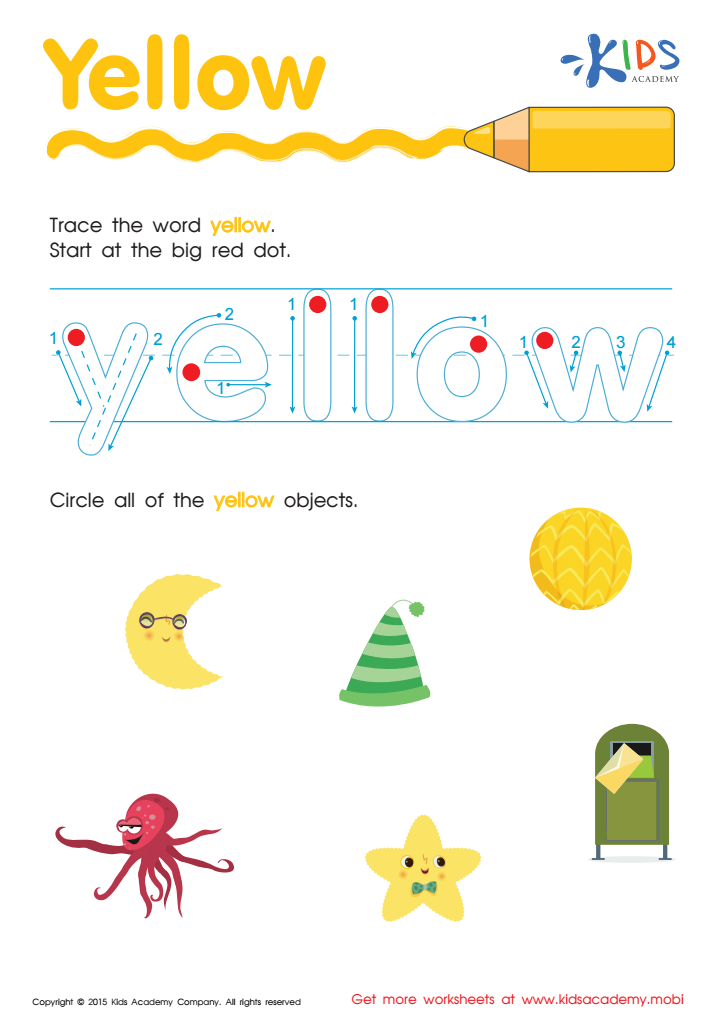
Yellow Tracing Color Words Worksheet
 Assign to My Students
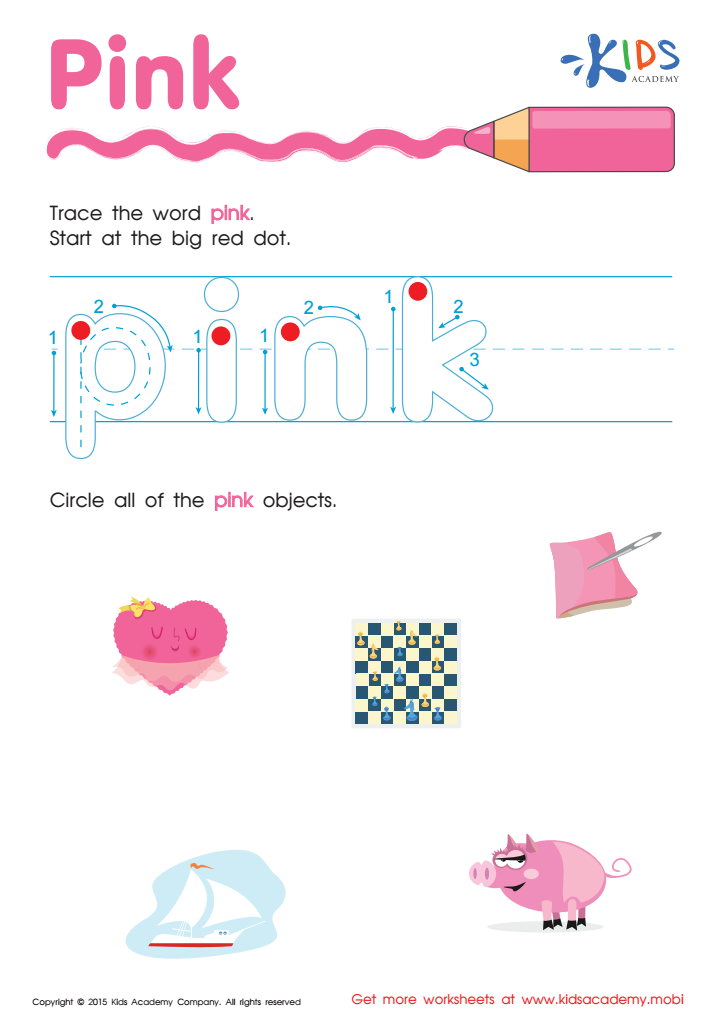
Pink Tracing Color Words Worksheet
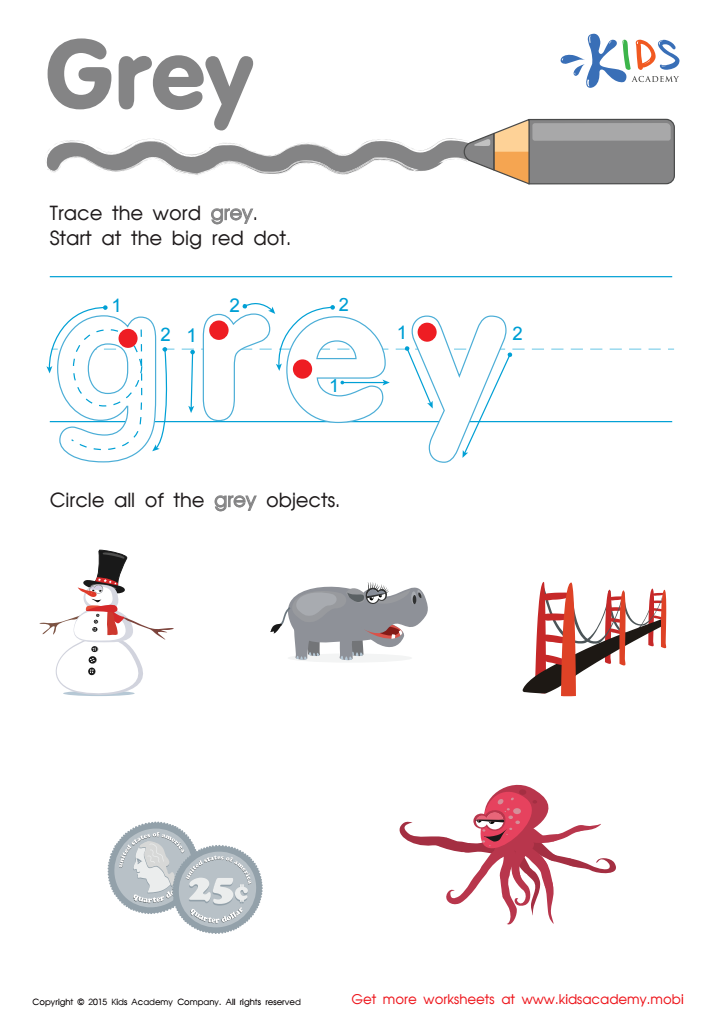
Grey Tracing Color Words Worksheet
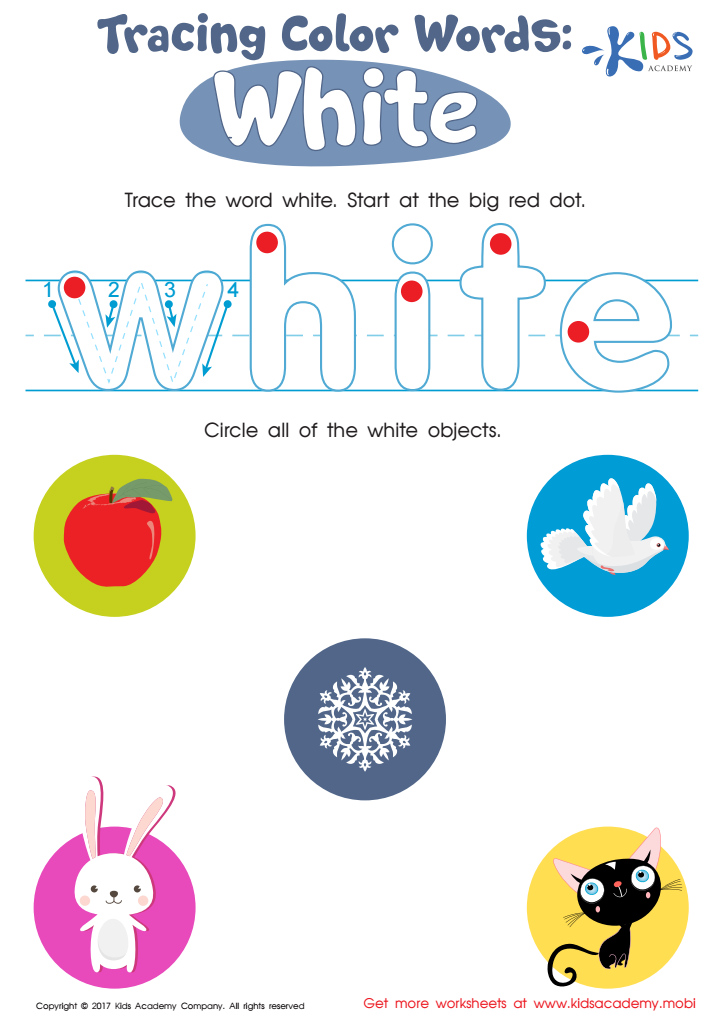
White Tracing Color Words Worksheet
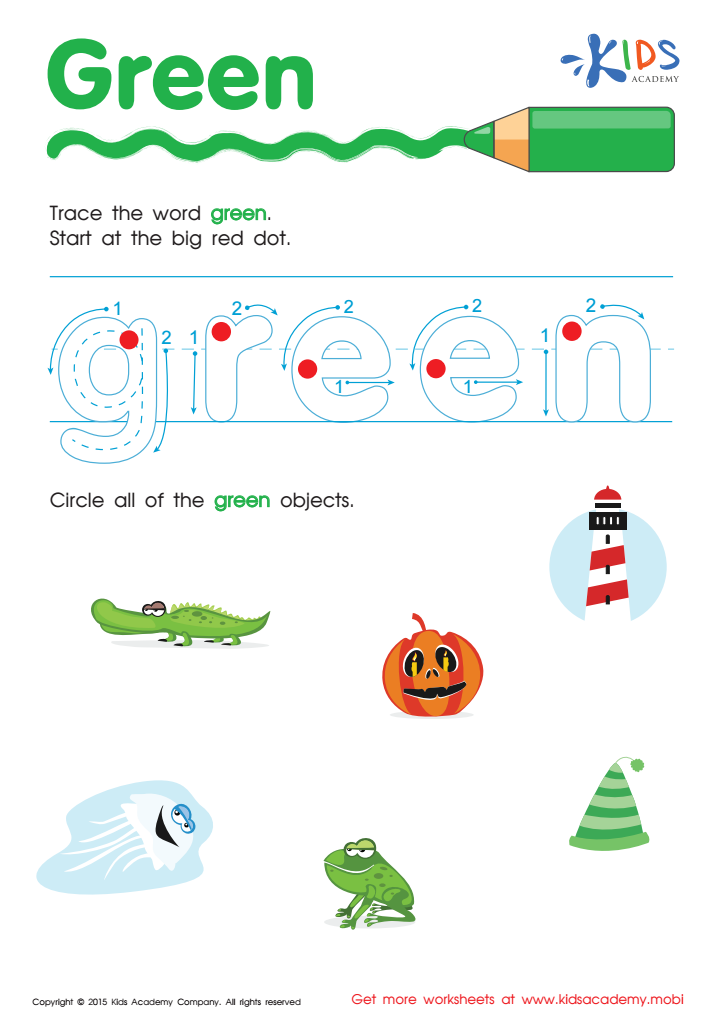
Green Tracing Color Words Worksheet
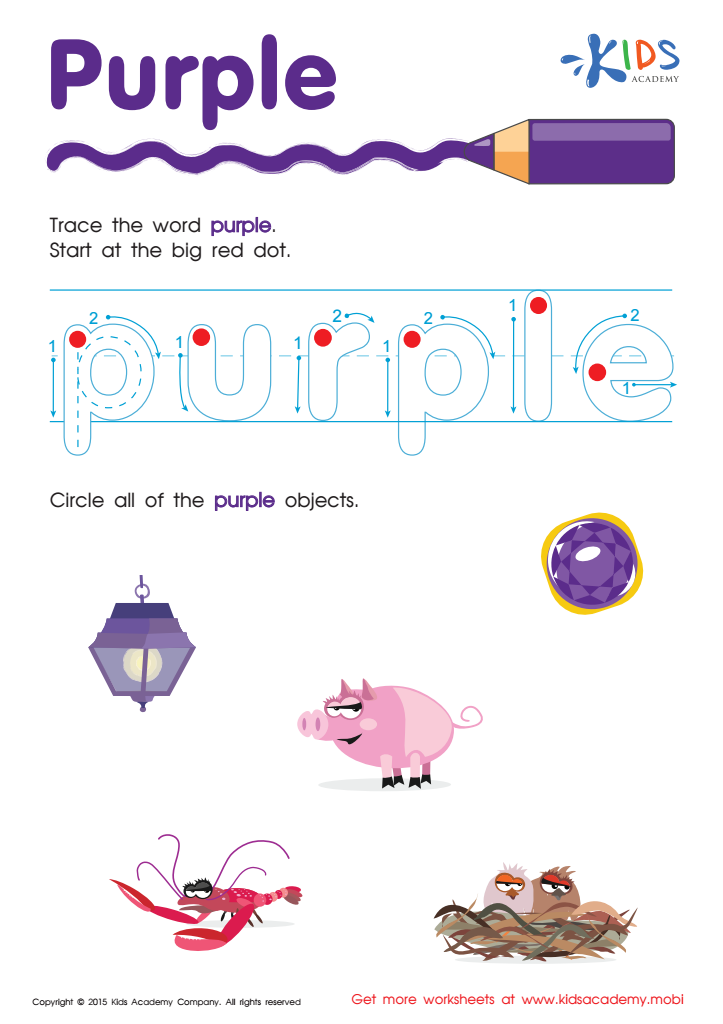
Purple Tracing Color Words Worksheet
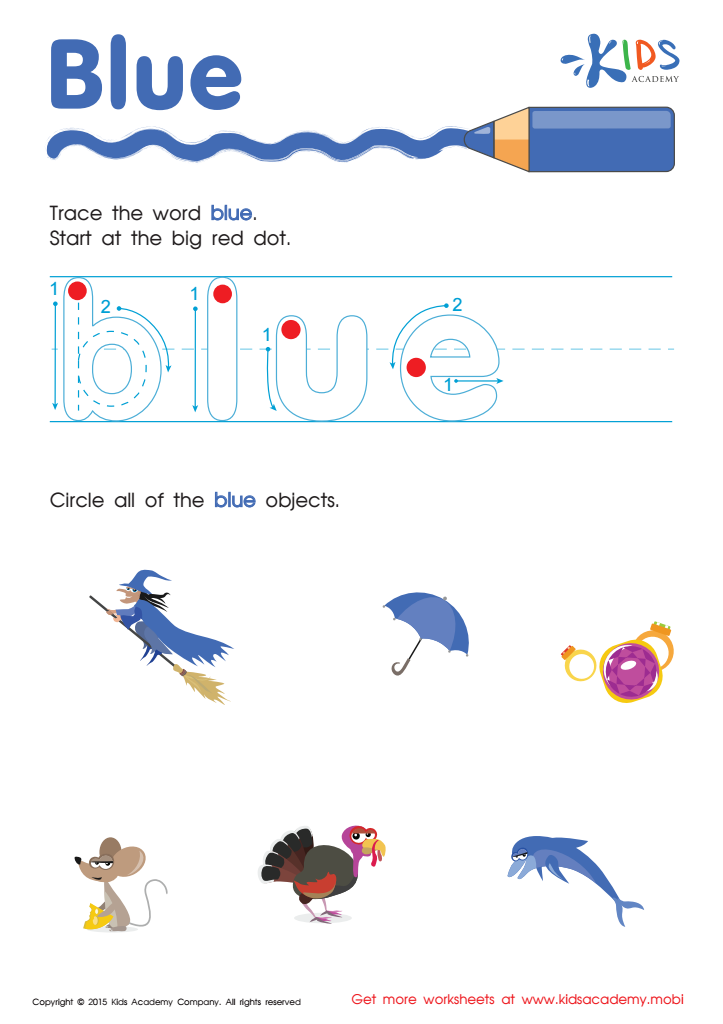
Blue Tracing Color Words Printable
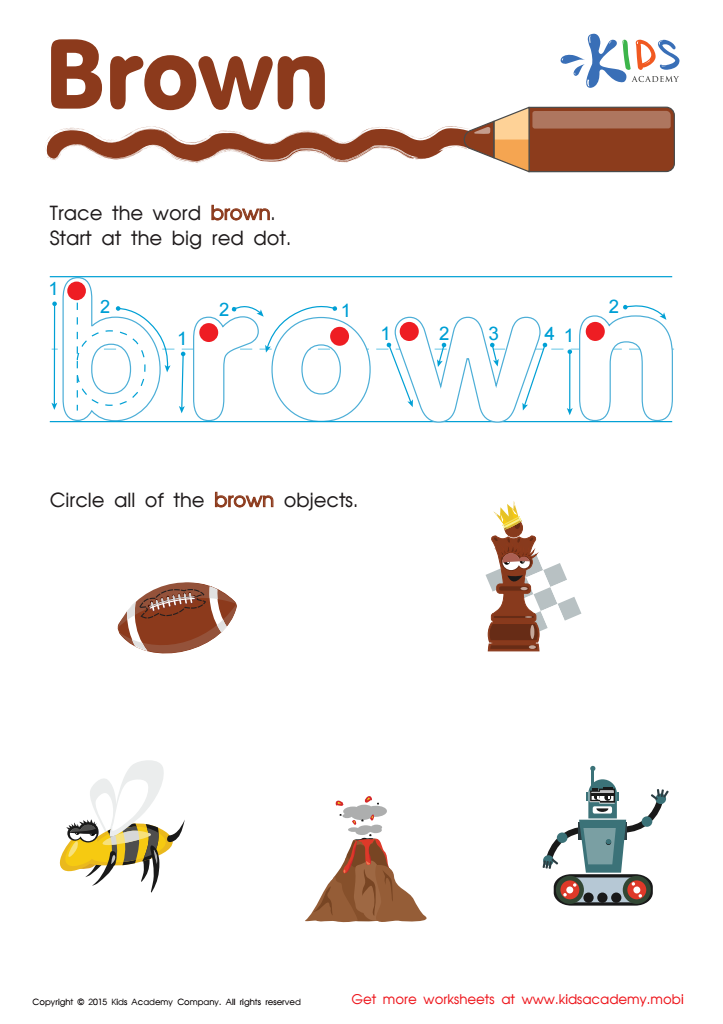
Brown Tracing Color Words Worksheet
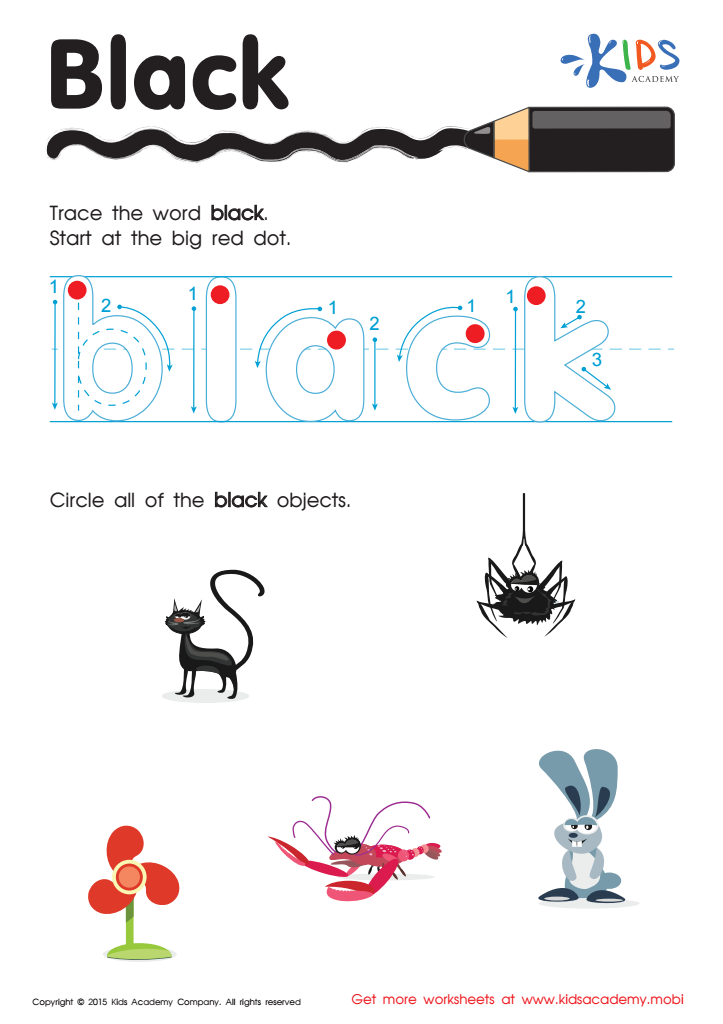
Black Tracing Color Words Printable





Color recognition is a fundamental skill that parents and teachers should actively nurture in children ages 4-8. Introducing colors is not just about identifying and naming them; it plays a crucial role in a child's overall cognitive development. When kids learn colors, they also start to sharpen their visual discrimination, which helps in distinguishing various features in their environment. This skill is essential for reading readiness as it lays the groundwork for differentiating between different letters and shapes.
Moreover, understanding colors aids in the development of language skills. Describing and naming colors enhances a child's vocabulary and communication abilities. It opens up new ways for children to express themselves and understand the world around them.
Color recognition also encourages creativity and imagination. Engaging with colors in activities like drawing or sorting helps children explore their creative side and boosts their confidence.
Socially, playing color-based games fosters teamwork and cooperative play, which are important social skills for young learners.
Lastly, recognizing colors can be a safety tool. Knowing colors enables children to follow important visual cues or signals, such as traffic lights.
In summary, teaching color recognition supports multiple areas of a child's growth—cognitive, linguistic, creative, social, and practical—making it an essential part of early education.