Basic Mathematics Normal Worksheets for Ages 4-8
5 filtered results
-
From - To
Discover our engaging Basic Mathematics Normal Worksheets designed for children aged 4 to 8. These worksheets provide a solid foundation in essential math skills, including addition, subtraction, and early problem-solving. Our resources are interactive and visually appealing, ensuring that learning math is both fun and effective. Parents and educators can easily access printable worksheets that cater to various skill levels, helping young learners build confidence and proficiency. Promote your child's mathematical understanding with a variety of exercises that encourage critical thinking and creativity. Explore our collection today and watch your little ones thrive in their mathematical journey!
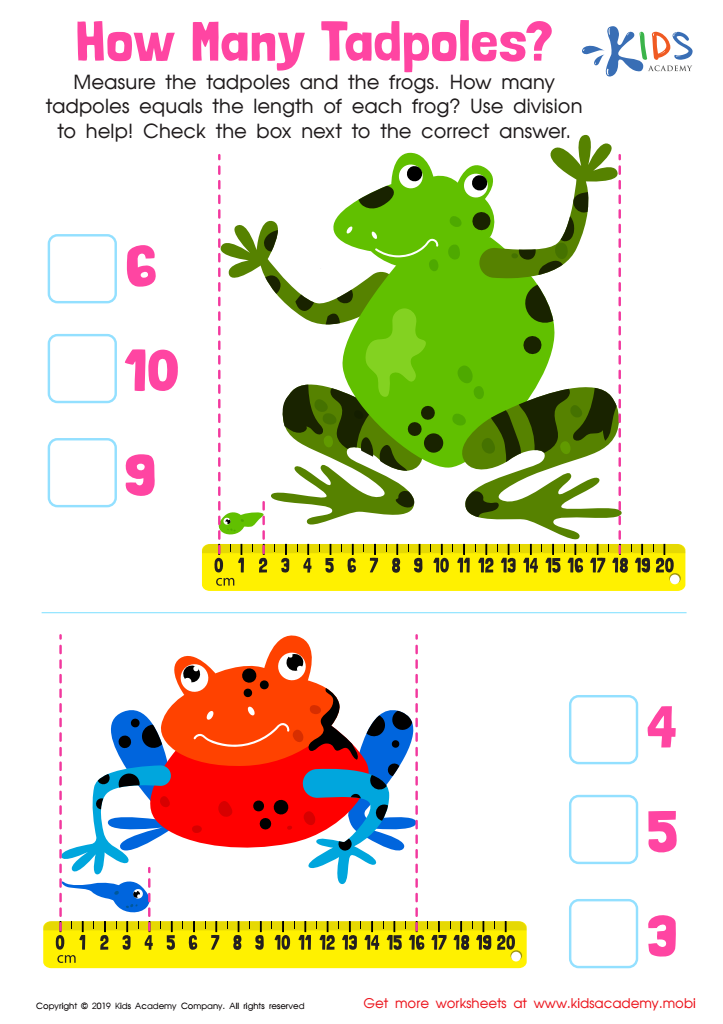
How Many Tadpoles Worksheet
 Assign to My Students
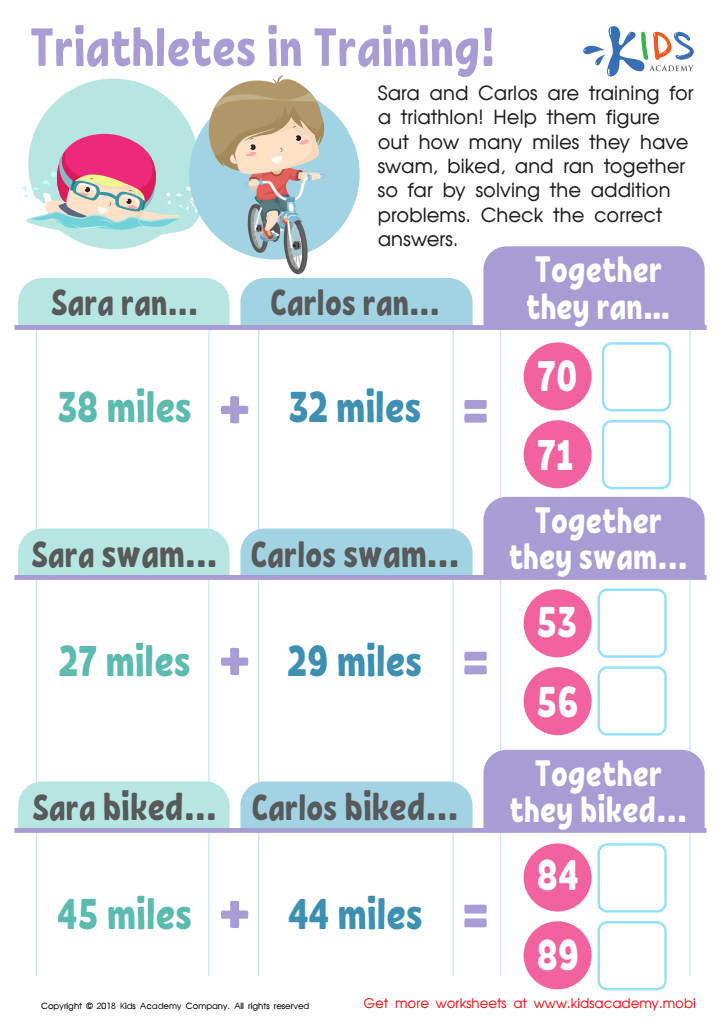
Triathletes in Training Worksheet
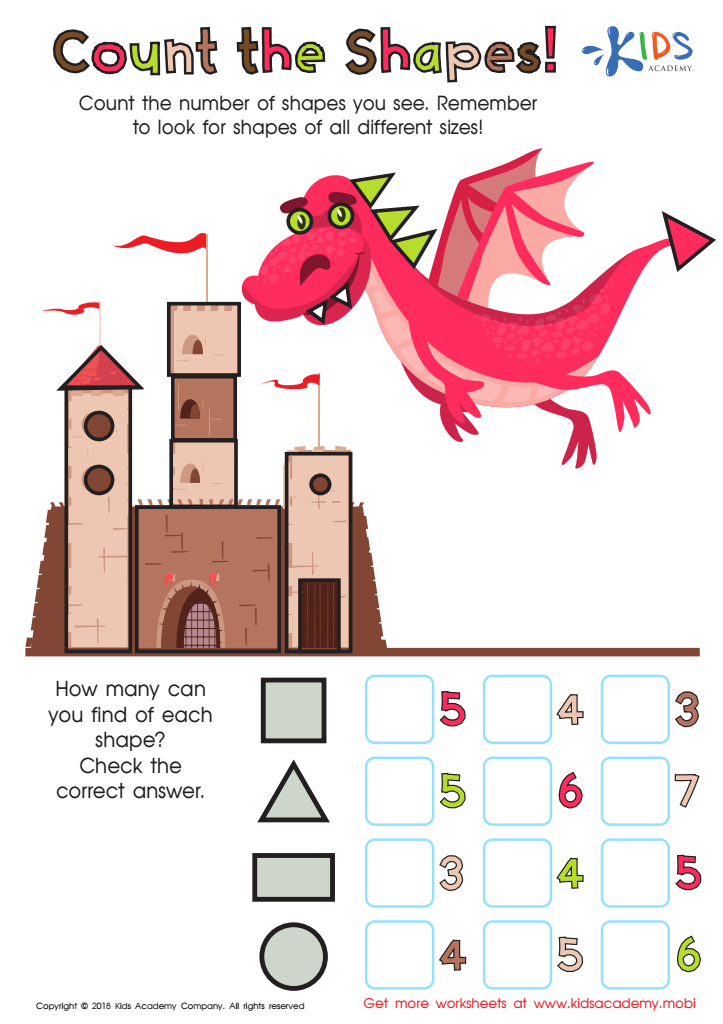
Count the Shapes Worksheet
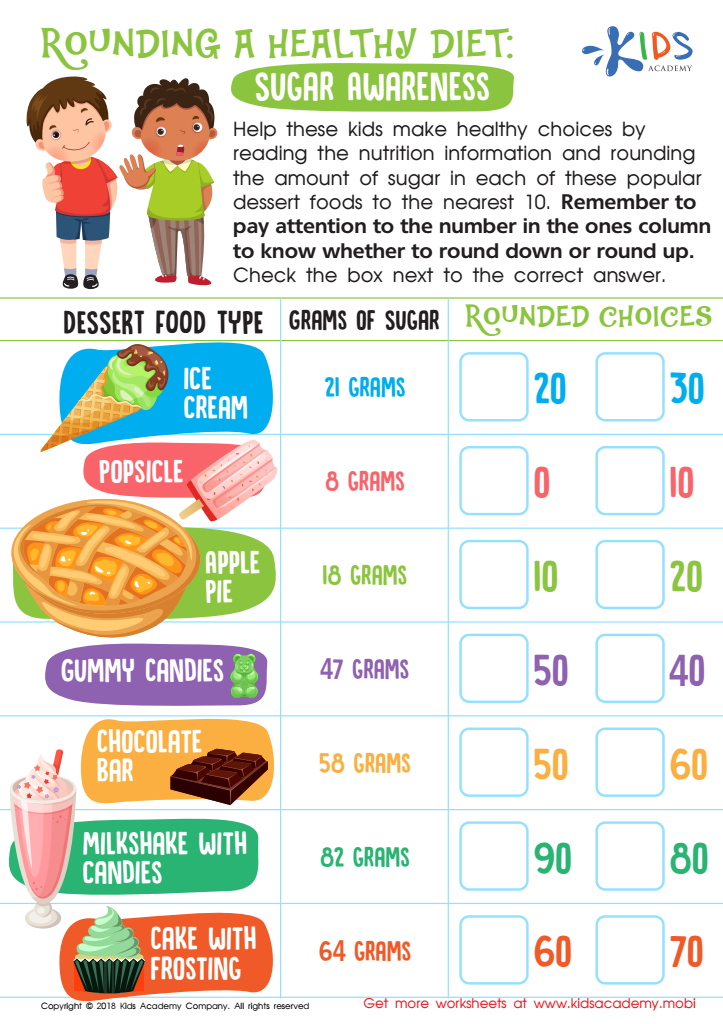
Rounding Healthy Diet Worksheet
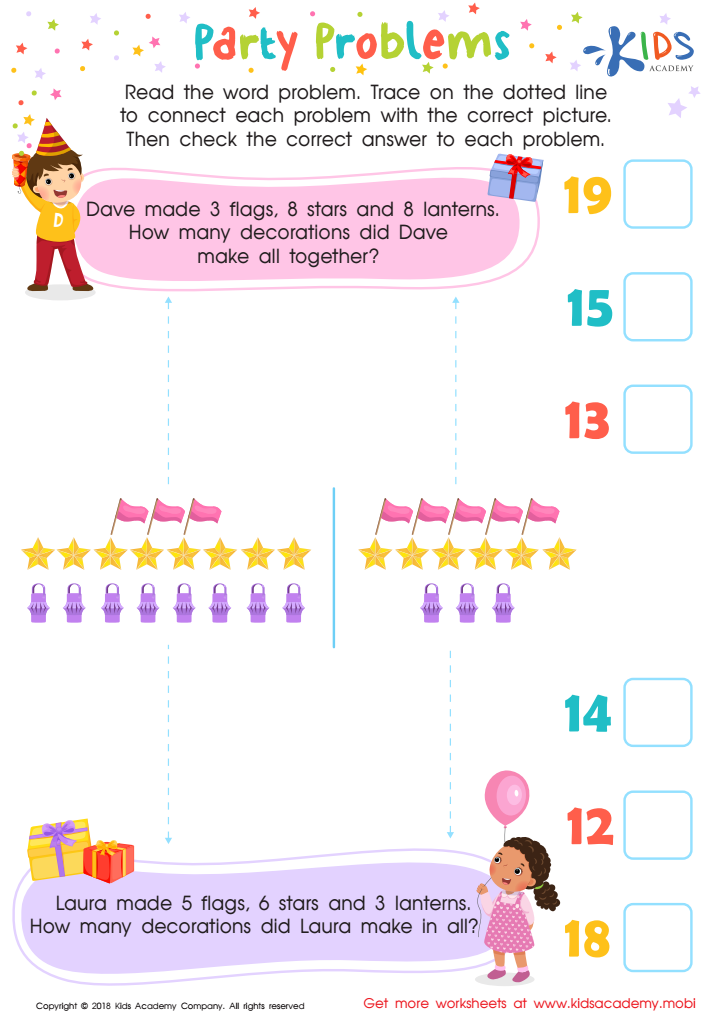
Party Problems Worksheet








Parents and teachers should prioritize basic mathematics for children aged 4-8 because these foundational skills are crucial for their overall cognitive development and future academic success. At this early stage, children develop key mathematical concepts such as number recognition, counting, basic addition and subtraction, and understanding patterns. These skills foster critical thinking, problem-solving, and logical reasoning abilities that are essential for all areas of learning.
Engaging children in basic math through playful activities enhances their mathematical thinking while making learning enjoyable. Establishing a solid math foundation during these formative years not only boosts confidence but also promotes a positive attitude towards math as they progress in their education. Moreover, early numeracy skills have been linked to improved academic performance later in life, as math is a core subject that influences proficiency in various disciplines.
Parents and teachers also play a vital role in supporting children’s mathematical journeys. By providing encouragement, resources, and diverse learning opportunities, they create a nurturing environment conducive to exploration and curiosity. Fostering a love for math early on instills lifelong learning habits and prepares children for a world where quantitative reasoning is increasingly important. Therefore, prioritizing basic mathematics for young learners is essential for their holistic development.








