Basic subtraction skills Normal Worksheets for Ages 4-8
3 filtered results
-
From - To
Discover our engaging Basic Subtraction Worksheets designed for children ages 4-8, available on Kids Academy! These carefully crafted resources provide a fun and effective way to develop essential subtraction skills. Each worksheet features colorful illustrations and a variety of exercises, helping young learners grasp basic concepts through practice and repetition. Children will gain confidence as they tackle simple subtraction problems, enhancing their critical thinking and problem-solving abilities. Ideal for both classroom and home use, our worksheets cater to different learning styles and help reinforce early math skills. Start your child's math journey today with our interactive and effective subtraction resources!
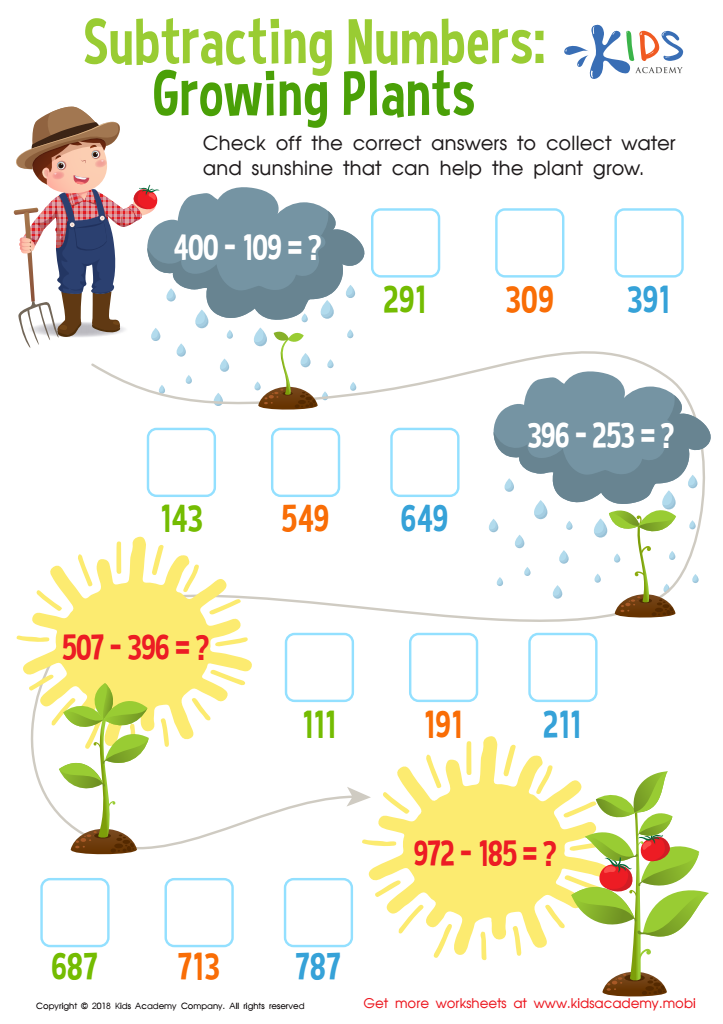
Subtracting Numbers: Growing Plants Worksheet
 Assign to My Students
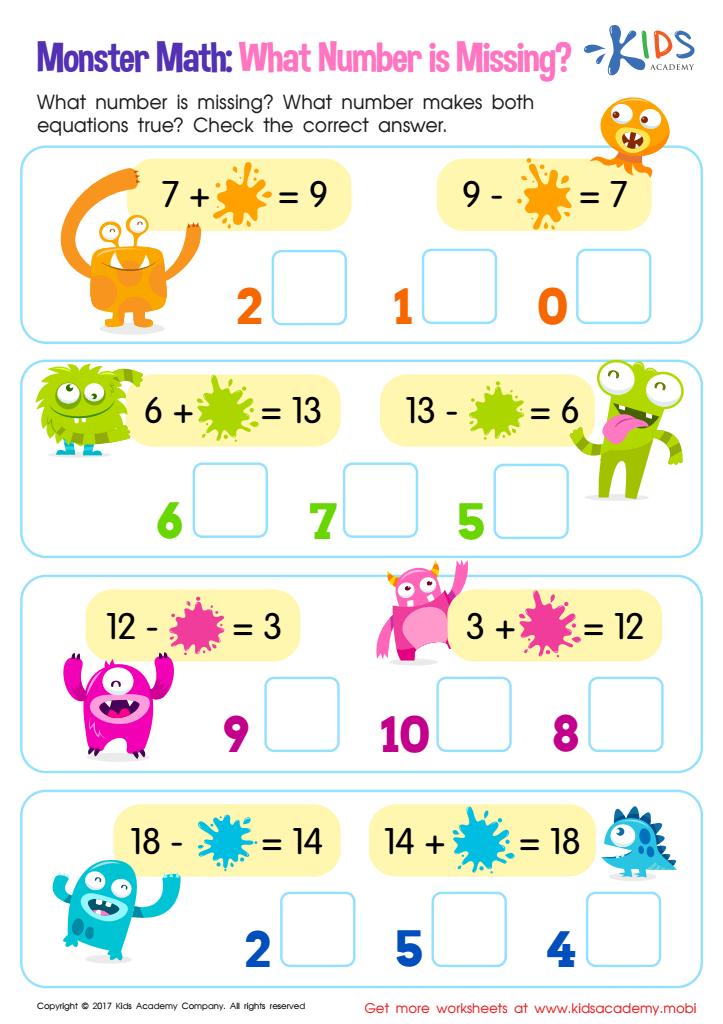
Missing Number: Monster Math Worksheet
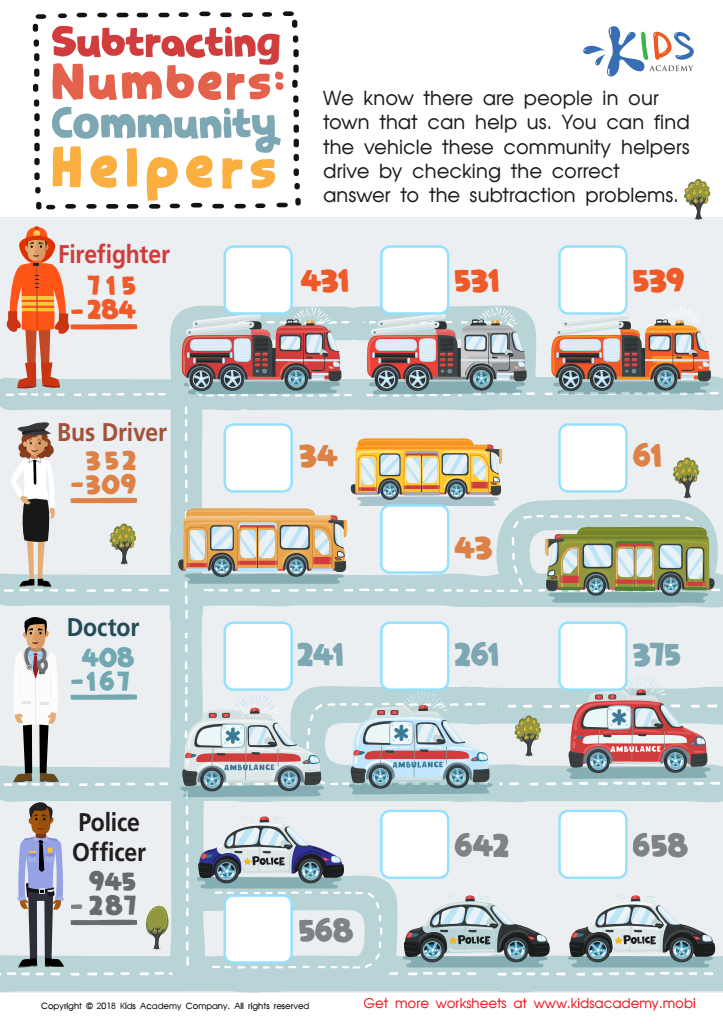
Subtracting Numbers: Community Helpers Worksheet





.jpg)

Basic subtraction skills are essential for children aged 4-8 as they serve as foundational building blocks for future mathematical understanding. At this developmental stage, children are naturally curious and open to learning, making it an ideal time to introduce them to subtraction concepts. Mastering these skills not only enhances their cognitive abilities but also fosters critical thinking as they learn to manipulate numbers and understand relationships between quantities.
Moreover, early proficiency in subtraction sets the stage for more advanced math concepts like addition, multiplication, and division, ensuring students are well-prepared as they progress through their education. By engaging in fun, hands-on activities, parents and teachers can create a positive learning environment that cultivates enthusiasm for math.
Additionally, the ability to subtract helps children navigate real-life situations such as sharing, comparing, and budgeting their resources, contributing to their everyday decision-making skills. Furthermore, basic subtraction practices can boost children's confidence and self-esteem, as they experience the satisfaction of problem-solving. Ultimately, fostering basic subtraction skills in young learners is crucial for academic success and equips them with essential life skills, making it a priority for both parents and teachers.








